
Trade the city for a Big 5 winter safari at Aquila Private Game Reserve
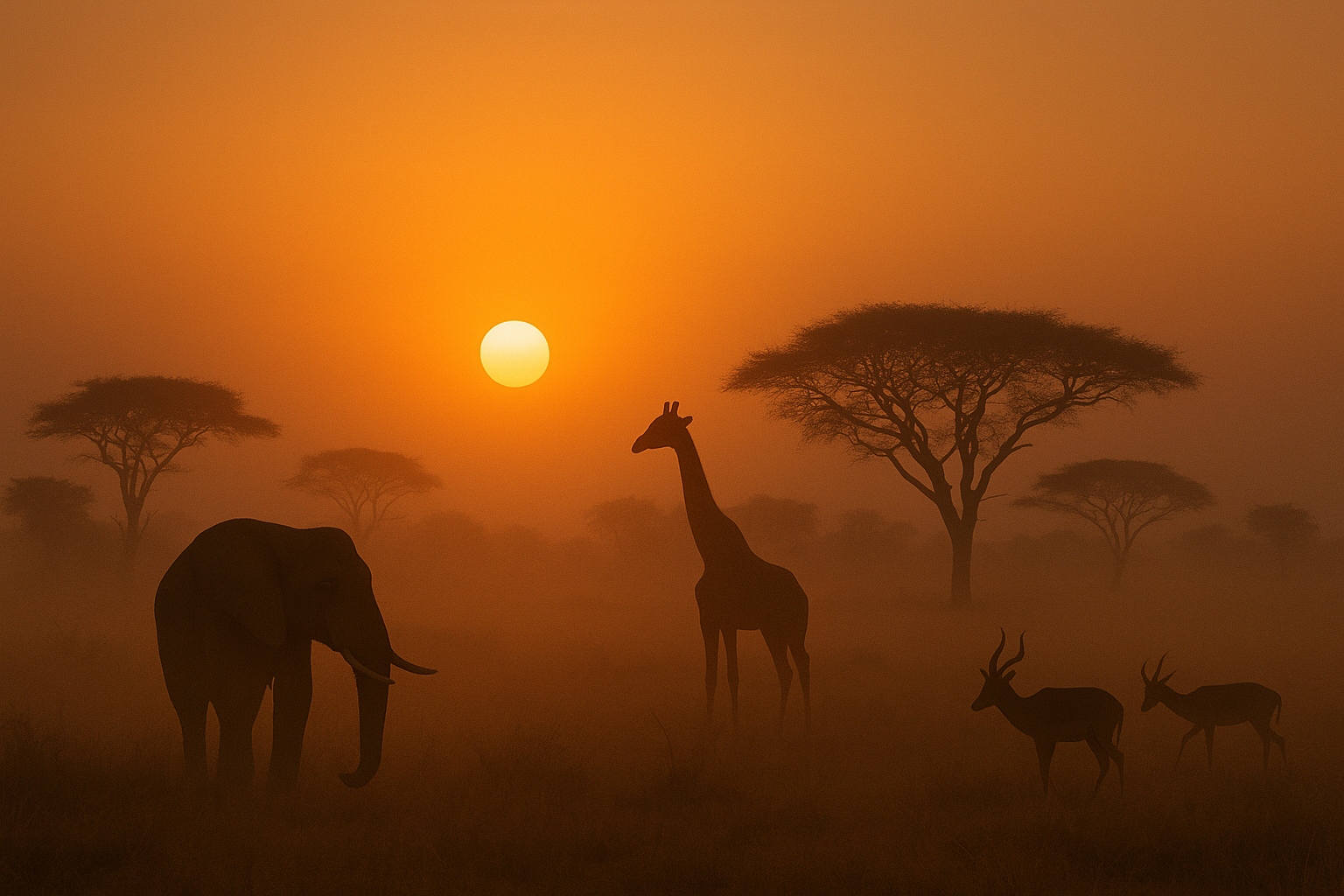
Experience winter magic at Aquila Private Game Reserve. Safaris, spa, and conservation efforts await in the stunning Karoo landscape.
Aquila Private Game Reserve in winter is truly special! Imagine diamond-like frost sparkling at dawn and vibrant sunrises painting the sky. You get to see amazing wildlife, go on exciting safaris, and even ride horses. At night, the stars put on a grand show. Plus, the reserve works hard to protect animals and help local communities, making your visit extra meaningful.
What makes Aquila Private Game Reserve unique during winter?
Aquila Private Game Reserve in winter offers a spectacular sensory experience, from diamond-like frost at dawn to vibrant sunrises painting the Karoo. Guests can enjoy wildlife viewing, diverse activities like quad-bike safaris or horse riding, and stargazing. The reserve also focuses on conservation and community support, with special winter offerings.
Get Cape Town news in your inbox
Stay updated with the latest stories from the Mother City.
The Awakening Hour: First Light on the Karoo
Winter transforms Aquila Private Game Reserve and Spa into a living canvas where light, fragrance, and sound collide in spectacular fashion. When morning breaks at 06:00, temperatures cling stubbornly just above freezing, transforming the quartz gravel underfoot into scattered diamonds that catch the earliest glimmers of day. Game-drive vehicles materialise through the mist like patient beasts, their exhaust mingling with the sharp sweetness of wild sage and the earthy musk left behind by buffalo herds. Rangers distribute brushed-cotton ponchos that still whisper with yesterday's campfire memories; guests bundle themselves against the chill while kettles sing over open flames. Tin mugs circulate, filled with boeretroos - that traditional farmer's coffee that fortifies against the cold. Somewhere beyond the acacia thicket, the earth itself seems to exhale - a lion's cough rumbling from depths that suggest ancient stone and sleeping power.
At 07:12, everything changes. Sunlight strikes the mountain peaks and the reserve erupts into colour. What moments before appeared as grey Karoo scrub now burns amber, then deep copper. Dewdrops suspended on spider webs catch the light and scatter it into miniature rainbows. Elephants emerge from the thicket, processing across the dry riverbed with the solemnity of royalty, their calves trotting in protective shadow beneath their mothers' bellies, ears flapping like oversized mittens against the morning chill. White rhinos halt mid-stride, one foreleg raised in contemplation, weighing the propriety of crossing before human observers. Above them, black-shouldered kites hang motionless, ruby eyes tracking every twitch of gerbil movement in the grass below. The ranger cuts the engine. Silence rushes in, almost tangible, broken only by the soft mechanical whisper of camera shutters and the steady rhythm of a giraffe working through the leaves of a sickle bush.
Morning Abundance: Feasts and Choices
Back at camp, breakfast unfolds beneath canvas awnings where braziers push back the cold. Cast-iron pots cradle maize porridge, enriched with condensed milk and fragrant nutmeg. Venison bobotie steams with curry leaf and apricot. Rooibos-smoked bacon crackles beside golden paddles of fried banana. Chefs in woollen beanies work the griddle, flipping buttermilk pancakes that vanish before they can be properly plated. From a nearby fever tree, vervet monkeys observe with calculating intelligence, measuring distances and human inattention; a single raised finger from a ranger sends them muttering into higher branches, their breakfast ambitions temporarily thwarted.
The middle hours offer possibilities that shimmer like heat mirages. Some guests drift toward the 35-metre infinity pool, where solar panels and a biomass boiler - fuelled by invasive black-wattle wood - maintain the water at a perfect 28 °C. From this vantage, the reserve spreads in tawny folds, occasionally marked by the graphite silhouettes of blesbok grazing distant slopes. Others find their way to the stables, where twelve Boerperd horses stand ready, their winter coats grown thick as plush toys. A two-hour trail winds through protea stands and past Iron Age tool fragments - silent witnesses to 120,000 years of human presence, reminders that this land has always served as both larder and sanctuary. The horses know this path intimately, pausing unbidden at fossilised termite mounds to scratch their itches against weathered sandstone.
For those drawn to mechanical horsepower rather than the living kind, quad-bike safaris trace old shepherd routes into the upper escarpment. Throttles limit speeds to 30 km/h, protecting the soil from compression, yet the climb still quickens pulses as riders crest ridges and gaze down upon the Karoo's folded geology - sedimentary layers stacked like pancakes from the Devonian era, when this ground lay beneath an ancient sea. Watchful eyes scan the shale for spiral casts of goniatites, those distant nautilus relations that occasionally emerge from their stone tombs.
The Moving Table: Lunch and Afternoon Pursuits
Lunch refuses to stay put. The culinary team packs wicker hampers with pickled fish bredies, coriander-seed roast butternut, and mosbolletjies - those sweet grape-must buns that arrived with French Huguenot refugees in 1688. Tables materialise on the northern dam wall, where yellowfish rise to snatch drifting ants from the surface and fish eagles patrol overhead, their yodels bouncing off the water like questions thrown into empty space. White-backed vultures wheel in rising columns, riding thermals that lift from sun-warmed basalt slopes.
As afternoon stretches toward evening, vehicles gather on the western plains where three brothers - black-maned lions of Kalahari extraction - typically spend these hours. Today they drape themselves across a termite mound, ribcages rising and falling in mesmeric rhythm. The ranger murmurs that the eldest carries a scar across his nose, a pale lightning bolt souvenir from a 2019 territorial dispute, still visible at eighty metres. Cameras chatter; voices fall silent. A fork-tailed drongo alights on the vehicle's roll bar, eyes bright with insect-hunting opportunity. When the pride finally stirs - first one, then all three - the ground itself seems to shift beneath their mass. They pass so near that guests catch the metallic scent of their breath, distinguish the amber fragments in their eyes. Wonder escapes someone's lips in hushed profanity; the ranger simply nods, acknowledging the unspoken covenant between visitor and visited.
Fire, Song, and Starlight: The Night Unfolds
Twilight triggers the boma's transformation. Acacia logs, pre-soaked in citrus oil to tame their sparks, spiral upward in a dance of orange flame. Guests settle onto stump stools draped with Namaqualand sheepskins while lanterns hiss to life. From behind the fever trees, a Swazi choir emerges in traditional lihiya dress, their harmonies climbing in minor keys that raise the skin in automatic response. The repertoire moves through gospel and struggle-era anthems, resolving finally in a lullaby that dissolves into fire-crackle. Marshmallows appear on forked sticks; someone produces Amarula, drizzling the cream liqueur until sugar caramelises into toffee shells. Above, the winter sky performs its own revelation: Venus first, then Orion's jewelled belt, finally the Milky Way's dense river throwing faint shadows on the sand below.
Night drives depart at 20:30, red-filtered spotlights transforming the bush into an acoustic landscape. The saw-edged grunt of a leopard answering contact calls. The delicate chime of a bronze-wing courser landing on shale. The soft pop of beetle wings in flight. A serval cat freezes in the beam, eyes glowing green as peridot stones, then launches three metres straight upward to intercept a moth with liquid grace. At 22:00, engines die on an open plain. The ranger produces a green laser and delivers an impromptu astronomy lesson: finding south via the Southern Cross, the Karoo's privileged position beneath the galactic centre, winter's dust-free clarity that yields the planet's sharpest celestial views. Guests rotate through a Celestron 8-inch Schmidt-Cassegrain telescope, centring the Jewel Box cluster, Omega Centauri's ghostly haze, Saturn's rings knife-sharp against absolute black.
Meanwhile, accommodations have become warm sanctuaries. Electric blankets glow; hot-water bottles in crocheted sleeves wait between 300-thread-count sheets. Some cottages offer outdoor rock showers fed by geothermal loops - the delicious contradiction of 38 °C water cascading through 4 °C air. Nightcaps arrive on butler trays: honeybush whiskey, perhaps, or malva pudding served unexpectedly in teacups. From private decks, the constellation of staff village fires below resembles an inverted galaxy, earthly stars against dark hills.
Sanctuary and Stewardship: Spa and Conservation
Tranquila Spa operates until midnight through winter months. Treatment menus marry Karoo botanicals with imported essences: buchu and rooibos body polish yielding to shea-butter cocoons; Kalahari melon-seed oil hot-stone massage; fermented marula wraps that leave skin perfumed with fruity earth. Ten treatment rooms encircle a central courtyard where an outdoor heated pool steams like a witch's cauldron; submerged loungers support bathers sipping rooibos kombucha while meteors scratch white signatures across the dark. The relaxation lounge projects slow-motion elephant footage - captured by the reserve's research drones - onto ceiling screens, creating the sensation of floating through dust clouds beside grey giants.
Conservation efforts continue round the clock. Veterinarians track a crash of white rhinos recently dehorned as anti-poaching protection; microchips in the horn stumps transmit temperature data, flagging infection within hours. Eight cheetahs occupy a 200-hectare boma, conditioning for release into meta-population reserves across Limpopo and Malawi. Adoption runs ZAR 85,000 per animal, covering satellite collar time, veterinary care, and community livestock compensation. Since 2017, Aquila has rewilded 23 cheetahs; 11 have successfully raised wild cubs - a measured triumph against genetic isolation.
The Eco Synergy Centre welcomes guided tours at 10:00 and 15:00, demonstrating closed-loop ingenuity: grey-water gardens nourish tilapia ponds; fish waste fertilises heirloom tomatoes and Khaya senegalensis saplings bound for township greening. A biomass digester converts kitchen scraps into methane for the staff canteen, its slurry becoming fertiliser. Solar arrays currently supply 60% of electricity, targeting 90% by 2026. QR codes on interpretive boards link to real-time energy dashboards, revealing each guest's carbon offset - averaging 18 kg per night.
Community connections extend past the perimeter fence. A mobile dental clinic serves Touws River two weeks monthly, a railway town where unemployment touches 60%. A craft cooperative transforms invasive wattle into cutlery, frames, and toy cars sold in the gift shop, with 85% of proceeds reaching artisans directly. Local students enjoy monthly environmental-education sleepovers, funded by a bed levy on every overnight stay - an automatic solidarity contribution.
Winter specials span 1 May to 31 August: two midweek nights earn a complimentary helicopter flip over the escarpment, a R1,500 spa voucher, and estate-bottled Cape port. Children under twelve sharing accommodations participate free in the Junior Ranger programme, graduating with cloth badges hand-stitched by the cooperative. The 06:00 drive includes hand-warmers and spiced red espresso; evening excursions feature Karoo lamb sosaties in tamarind glaze with fire-baked potbrood.
By 23:30, camp settles into stillness, broken only by distant spotted eagle-owl calls. Security patrols sweep the perimeter on foot, infrared beams and two-way radios murmuring in Afrikaans and isiXhosa. Inside, guests surrender to feather mattresses, curtains deliberately left open so that morning's sunrise might arrive unannounced - a golden coin slipped beneath every dreaming door.
[{"question": "What makes Aquila Private Game Reserve unique during winter?", "answer": "Aquila Private Game Reserve in winter offers a spectacular sensory experience, from diamond-like frost at dawn to vibrant sunrises painting the Karoo. Guests can enjoy wildlife viewing, diverse activities like quad-bike safaris or horse riding, and stargazing. The reserve also focuses on conservation and community support, making your visit extra meaningful. Special winter offerings include complimentary helicopter flips, spa vouchers, and a Junior Ranger programme for children."}, {"question": "What kind of wildlife can I expect to see during a winter safari?", "answer": "During winter, you can expect to see a wide array of wildlife, including elephants, white rhinos, black-maned lions, black-shouldered kites, and giraffes. Night drives offer opportunities to spot nocturnal animals like serval cats and leopards. The crisp winter air often provides clearer visibility for spotting animals, and the drier conditions can concentrate wildlife around water sources."}, {"question": "What activities are available at Aquila Private Game Reserve in winter?", "answer": "Aquila offers a variety of activities to enjoy the winter landscape. These include traditional game drives, quad-bike safaris along old shepherd routes, and horse riding on Boerperd horses. For relaxation, there's a 35-meter infinity pool heated to 28 °C, and the Tranquila Spa offers treatments using Karoo botanicals. Evening activities include boma fires with traditional Swazi choirs, stargazing with a Celestron telescope, and night drives."}, {"question": "How does Aquila Private Game Reserve contribute to conservation and community support?", "answer": "Aquila is deeply committed to conservation and community support. They actively protect rhinos through dehorning and microchipping, and rewild cheetahs into meta-population reserves. Their Eco Synergy Centre demonstrates closed-loop ingenuity, converting waste into resources and generating renewable energy. For the community, they operate a mobile dental clinic, support a craft cooperative, and fund environmental education for local students through a bed levy on overnight stays."}, {"question": "Are there any special winter offers or packages?", "answer": "Yes, during the winter months (May 1 to August 31), Aquila offers special packages. If you stay two midweek nights, you can receive a complimentary helicopter flip over the escarpment, a R1,500 spa voucher, and estate-bottled Cape port. Children under twelve sharing accommodations can participate in the Junior Ranger programme for free. Morning drives include hand-warmers and spiced red espresso, while evening excursions feature Karoo lamb sosaties and fire-baked potbrood."}, {"question": "What are the accommodation facilities like in winter?", "answer": "Winter accommodations are designed for comfort and warmth. Cottages feature electric blankets and hot-water bottles in crocheted sleeves under 300-thread-count sheets. Some offer outdoor rock showers fed by geothermal loops, providing a unique experience of 38 °C water in crisp 4 °C air. Nightcaps like honeybush whiskey or malva pudding are served, and many rooms offer views of the staff village lights, resembling an inverted galaxy."}]

Oliver Daniels is a Cape Town journalist who chronicles the intersection of food, migration and identity in South Africa's kitchens—from wood-fired Gugulethu braai spots to Constantia vineyards. Born and raised on the slopes of Devil’s Peak, he still starts each week with a dawn walk across Table Mountain to catch the first Atlantic light before filing copy.
View all articles →