
Treasury to decide on basic income policy by July, MPs told
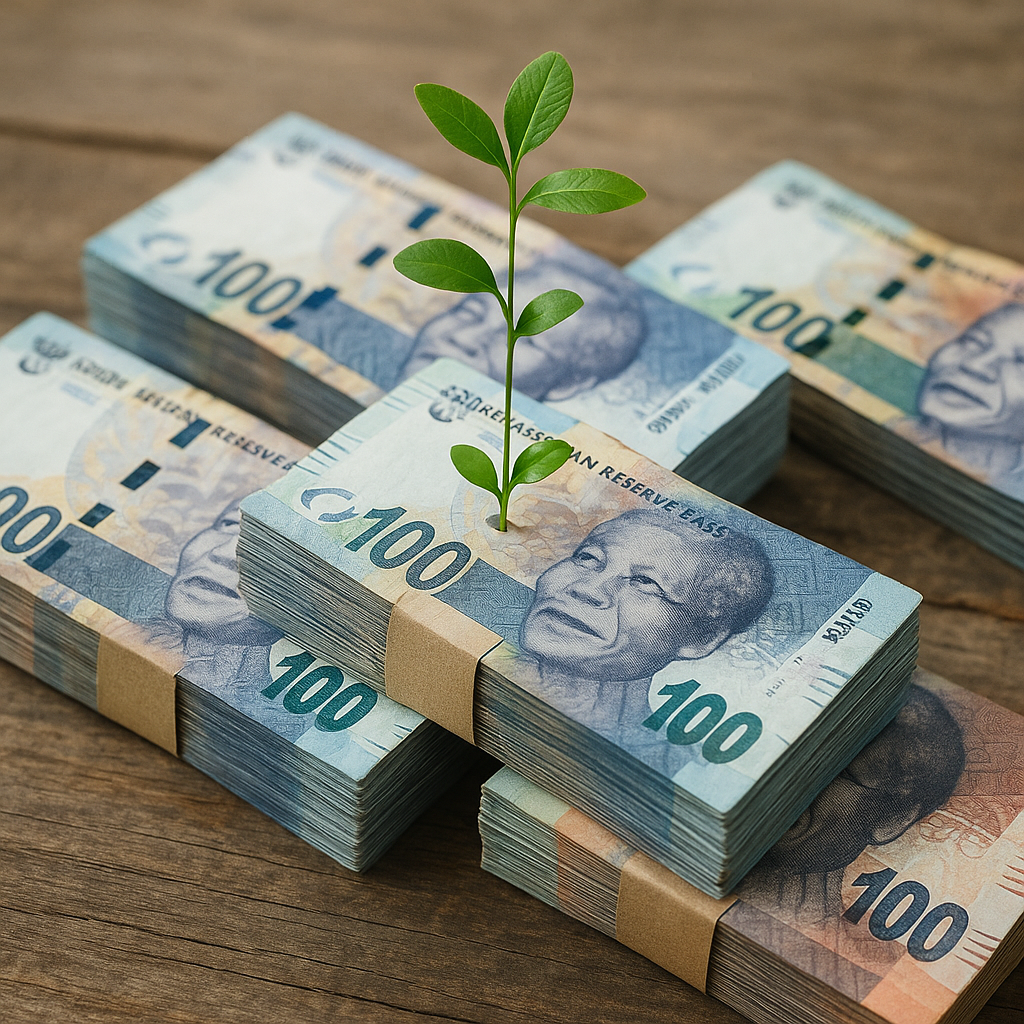
SA's proposed Basic Income Support aims to replace emergency relief with a systemic solution, debating costs, job impacts & design.
South Africa wants to turn a temporary emergency grant into a permanent helping hand for its people. This new plan, called Basic Income Support, aims to give R760 every month to adults who don't have other grants and earn little. It wants to help people find work and make sure the money doesn't just disappear. But, getting this big plan ready means solving tough money problems and making sure it really works for everyone.
What is South Africa's Basic Income Support (BIS) proposal?
South Africa's Basic Income Support (BIS) proposal is a planned legal, long-term cash transfer regime designed to replace the current SRD grant. Aimed at adults aged 18–59 not currently receiving other grants and below the tax threshold, it proposes R760 per month, costing R97.6 billion annually, or 1.3% of GDP.
Get Cape Town news in your inbox
Stay updated with the latest stories from the Mother City.
1. When Disaster Relief Outlived its Own Expiry Date
In the second week of March 2020, about 10 million people already survived on less than the cost of a modest food basket. The looming lockdown risked pushing millions more over that cliff. Government reached for the quickest lever at hand: a bare-bones cash transfer slipped into the Disaster Management regulations. Sixty months on, that stop-gap - known to most simply as the SRD grant - still lands in 8.5 million bank accounts every month, now set at R370.
What started as a cushion against sudden collapse is drifting toward permanence. The Department of Social Development has sketched a replacement called Basic Income Support (BIS), a legal, long-term regime rather than a regulation-based band-aid. The draft published in November 2024 promised an allowance “alongside, not instead of” job creation. Cabinet balked at the suggestion that unconditional money might replace wages and ordered the drafters to show - chapter and verse - how the new grant would push people toward work rather than away from it.
2. Treasury Holds the Keys
2.1 A May Workshop Under the Oaks of Tuynhuys
During the third week of May 2025, the Presidency convened a tightly choreographed, closed-door workshop. Around the table sat Home Affairs (identity data), Employment & Labour (public work schemes), Small Business Development (enterprise start-ups), Basic Education (skills pipelines), SASSA (payment rails), Stats SA (targeting analytics) and, most feared among them, National Treasury (fiscal guardians).
2.2 Six Questions That Must Be Answered
Treasury issued a three-page memo in February containing six deal-breakers:
- What behaviours are assumed when recipients enter or exit the scheme?
- How will the grant be clawed back via the tax system when recipients earn wages?
- Under low, medium and high growth paths, what happens to the Gini coefficient?
- Can today’s biometric and banking infrastructure carry a permanent load without huge leakage?
- How will the SRD end without pushing people off a fiscal cliff?
- Will the new, permanent transfer feed inflation in ways a temporary one never could?
2.3 A 158-Page Reply
By 31 May, the department had filed a 158-page response. Annexure C houses a dynamic micro-simulation built with SALDRU that tests three taper formulas. A 20 % claw-back keeps 78 % of the poverty-reduction punch while persuading prime-age men to add 3.4 hours of work each week. Treasury will pronounce its verdict in early July.
3. Making the Numbers Add Up
3.1 Who Would Get What and at What Price
DSD’s spreadsheet points to:
• 10.7 million adults, aged 18–59, outside existing grants and below the tax threshold.
• R760 a month in 2027 money - equal to the upper-bound poverty line.
• R97.6 billion a year, or 1.3 % of GDP.
3.2 Where the Money Could Come From
Annexure G lists four funding planks:
a) Broaden the VAT base - scrapping zero-rating on fuel and streaming services - brings in R29 billion.
b) Boost the plastic-bag and carbon fuel levies - add another R11 billion.
c) Fold six overlapping provincial grants into the new pot - save R24 billion.
d) Borrow the remaining R33 billion - an option Treasury loathes.
If revenue slips, the contingency menu already circulating includes a forty-cent fuel-levy hike and a two-percentage-point VAT jump from 15 % to 17 %, options that COSATU calls “a spark for tax revolt” and the retail lobby predicts will kill 180 000 jobs.
4. Designing a Grant That Plugs Into the Labour Market
4.1 Who Qualifies - And Who Does Not
The blunt “income below R624” rule will give way to a two-tier screen:
Tier 1: A household score stitched together from Census 2022, SARS records, the Deeds Registry and NSFAS data.
Tier 2: A self-declaration of work status, cross-checked every three months against UIF and PERSAL.
Projections claim the new method will cut exclusion errors from 38 % to 12 % and keep inclusion errors under 6 %, but only if 90 % of the eligible pool signs up. At 70 % uptake, the poverty gap closes by merely 32 %.
4.2 A Light Touch of Obligation
Cabinet demanded “activation.” The compromise is a soft quid-pro-quo: recipients sign into a “Working” portal that advertises micro-jobs, apprenticeships and township-economy openings. Attend three digital-skills nano-courses or counselling sessions and a R75 monthly bonus lands in the wallet. Ignore three job offers in a row and half the grant disappears for one month. Civil society calls the scheme “work-for-the-dole on your phone.”
4.3 New Rails, Lower Fees
SASSA’s plastic card plus bank account will migrate to a central-bank digital wallet linked to the upcoming retail-Rand pilot. Instant ledger entries and zero interchange fees could shave R1.1 billion a year off SASSA’s service-provider bill, according to Genesis Analytics.
5. Work, Wages and the Digital “Drawbridge”
5.1 Seed Money for Tiny Firms
Register or expand a micro-enterprise through SEDA and you receive a once-off R3 500 capital drip (R583 a month for six months). Once annual turnover tops R30 000, the grant tapers by 10 cents for every rand earned. Pilot sites in KwaNobuhle and Orange Farm report that 62 % of participants stay compliant after 18 months and each creates 1.2 paid jobs on average.
5.2 Municipal Odd Jobs on Tap
Instead of resurrecting the EPWP wage top-up, the policy imagines a digital noticeboard where municipalities list short tasks - planting trees, capturing data, helping in classrooms. BIS recipients bid at a minimum R65 an hour; the first R3 000 a quarter is taper-free. Treasury worries the model is a hidden subsidy that will elbow out formal jobs; DSD responds that most listed gigs are currently vacant or done by volunteers.
5.3 A Safety Net That Pauses, Not Snaps
As formal earnings tracked through IRP5 near R3 850 a month, the wallet pings an alert. One click pauses the grant without cancelling the application. Lose the job within a year and the transfer restarts instantly - no fresh forms, no back-of-the-queue misery.
6. Oversight, Consultation and the Long Countdown to March 2027
An independent BIS Council under the Deputy President will include ministers, labour unions, community reps and two fintech experts on staggered three-year terms. An “Algorithmic Ombud” inside the Information Regulator must audit the targeting engine for race or gender bias. Parliament will get quarterly dashboards on inclusion, exclusion and labour-market exits.
If Treasury green-lights the file in July 2025, the calendar runs like clockwork:
• August–September: SEIAS review.
• October: Cabinet gazettes the policy.
• November 2025–February 2026: national hearings, plus WhatsApp voice-note submissions in all eleven official languages.
• March–June 2026: redraft.
• July 2026: Cabinet approves a Social Assistance Amendment Bill.
• August–November 2026: parliamentary committees chew it over.
• February 2027: NCOP concurs.
• March 2027: the President signs.
Parallel safety nets are already written into the contingency plan: an automatic SRD extension to September 2027 if the Bill stalls, and a sunset review - plus a possible referendum - if debt ever climbs above 85 % of GDP.
The queues outside post offices at dawn tell a simpler story. One woman in Khayelitsha summed up the stakes last month: “I’m not asking for a raise, I’m asking for a floor.”
[{"question": "What is South Africa's Basic Income Support (BIS) proposal?", "answer": "South Africa's Basic Income Support (BIS) proposal is a planned legal, long-term cash transfer regime designed to replace the current SRD grant. Aimed at adults aged 18\u201359 not currently receiving other grants and below the tax threshold, it proposes R760 per month, costing R97.6 billion annually, or 1.3% of GDP. The goal is to provide a safety net while encouraging participation in the labor market."}, {"question": "Why is South Africa transitioning from the SRD grant to BIS?", "answer": "The SRD grant was initially an emergency measure introduced during the COVID-19 lockdown in March 2020 to prevent millions from falling into extreme poverty. Although it was a temporary measure, it has continued for 60 months. Recognizing its drift towards permanence, the government is looking to replace this regulation-based 'band-aid' with a legal, long-term Basic Income Support system that is more structured and sustainable, and designed to integrate with job creation efforts."}, {"question": "How will the Basic Income Support (BIS) be funded?", "answer": "The Department of Social Development's plan outlines four main funding sources: broadening the VAT base (e.g., scrapping zero-rating on fuel and streaming services) to bring in R29 billion, boosting plastic-bag and carbon fuel levies for an additional R11 billion, folding six overlapping provincial grants to save R24 billion, and borrowing the remaining R33 billion. Contingency plans also include a potential forty-cent fuel-levy hike and a two-percentage-point VAT increase if needed."}, {"question": "Who will be eligible for the Basic Income Support, and how will eligibility be determined?", "answer": "The BIS is aimed at 10.7 million adults aged 18\u201359 who are outside existing grant systems and are below the tax threshold. Eligibility will be determined through a two-tier screening process: Tier 1 involves a household score compiled from Census 2022, SARS records, Deeds Registry, and NSFAS data. Tier 2 requires a self-declaration of work status, which will be cross-checked every three months against UIF and PERSAL records. This new method aims to significantly reduce exclusion errors and maintain low inclusion errors."}, {"question": "How does the BIS proposal aim to encourage work and discourage dependency?", "answer": "The BIS plan includes several mechanisms to promote workforce participation. Recipients must sign into a 'Working' portal advertising micro-jobs, apprenticeships, and township-economy openings. Completing digital-skills nano-courses or counselling sessions can earn a R75 monthly bonus. Conversely, ignoring three job offers in a row could lead to half the grant disappearing for a month. The proposal also includes 'seed money' for micro-enterprises and a digital noticeboard for municipal odd jobs, with a tapering mechanism as income increases to ensure the grant acts as a safety net, not a replacement for earned wages."}, {"question": "What is the timeline for the implementation of the Basic Income Support (BIS)?", "answer": "If approved by Treasury in July 2025, the process involves several stages: SEIAS review (Aug-Sep 2025), Cabinet gazetting the policy (Oct 2025), national hearings (Nov 2025-Feb 2026), redrafting (Mar-Jun 2026), Cabinet approval of the Social Assistance Amendment Bill (Jul 2026), parliamentary review (Aug-Nov 2026), NCOP concurrence (Feb 2027), and presidential signing (Mar 2027). The goal is for the BIS to be fully operational by March 2027, with contingency plans for an SRD extension if the Bill is delayed."}]

Sarah Kendricks is a Cape Town journalist who covers the city’s vibrant food scene, from township kitchens reinventing heritage dishes to sustainable fine-dining at the foot of Table Mountain. Raised between Bo-Kaap spice stalls and her grandmother’s kitchen in Khayelitsha, she brings a lived intimacy to every story, tracing how a plate of food carries the politics, migrations and memories of the Cape.
View all articles →