
UAE introduces visa on arrival for eligible South African travellers
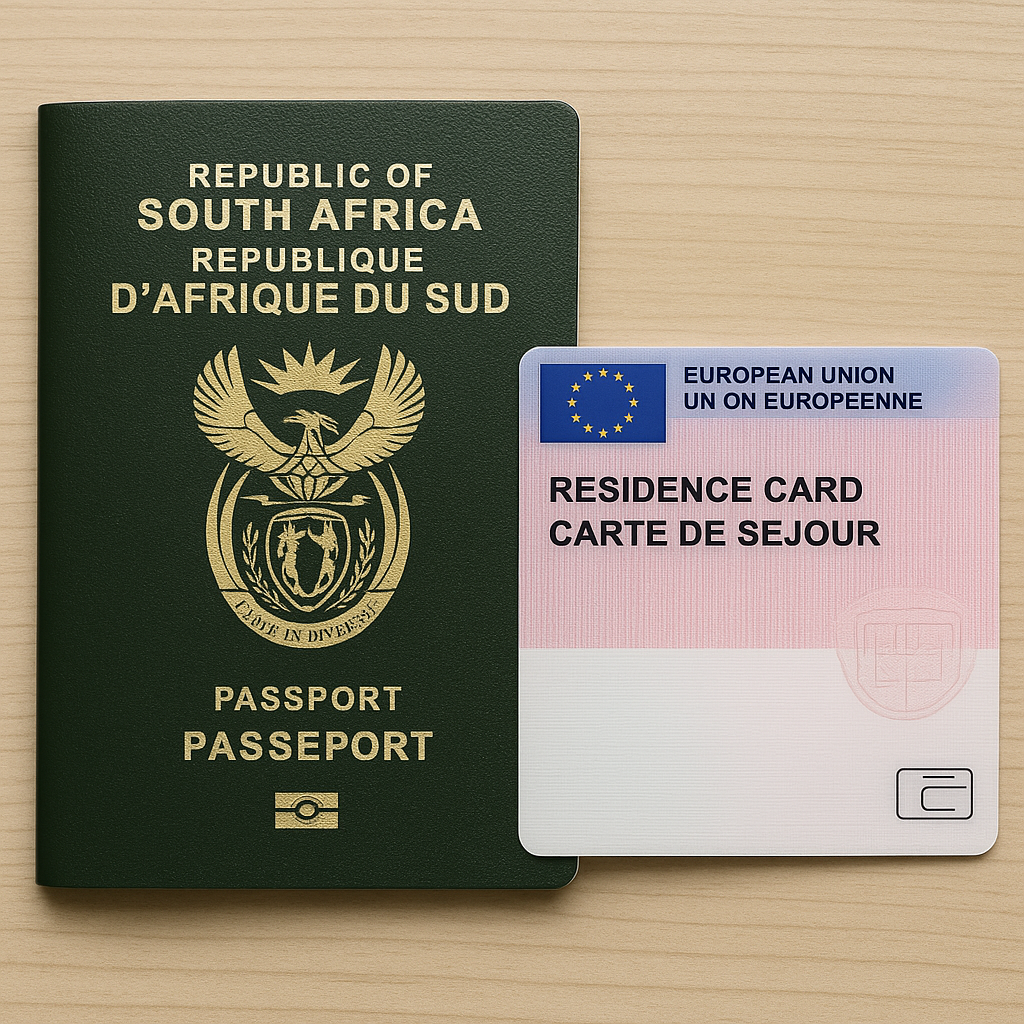
UAE reforms 2026 visa for South Africans with Western residency, granting on-arrival access. Red tape and exclusions remain.
Exciting news! South Africans with valid residency in certain Western countries can now easily visit the UAE, getting a visa right when they arrive. This means if you live in places like the US, UK, or EU for over 180 days, you can skip the old, costly pre-paid visa. It's a big change, making travel much simpler for many South Africans living abroad, though those still in South Africa need to follow the usual rules. Get ready for easier trips to Dubai and beyond!
What are the new UAE visa rules for South Africans?
South Africans with valid residence permits from approved Western countries (EU, US, UK, Australia, Canada, Japan, New Zealand, Singapore, South Korea) can now get a visa-on-arrival in the UAE. They must have maintained uninterrupted lawful residency for over 180 days in these nations, allowing for 14 or 60-day stays, bypassing the previous prepaid visa requirement.
Get Cape Town news in your inbox
Stay updated with the latest stories from the Mother City.
Dubai, 25 June 2026 - At precisely one minute past midnight, immigration terminals across the United Arab Emirates activated a sweeping overhaul of entry protocols. Officers at Dubai International, Abu Dhabi's Zayed Port, and regional airports in Sharjah and Ras Al Khaimah began processing South African visitors differently - provided they carried more than their national passport. These travellers needed a secondary credential: valid residence permits from nine designated nations. Whether displaying the deep red European Union card, the distinctive American green-card stamp, or Canada's light blue permanent resident document, this additional paperwork transformed their entry experience entirely.
Federal Resolution No. 18 of 2026, published simultaneously in Arabic and English through the UAE Ministry of Foreign Affairs digital portal, marks the most comprehensive revision of Gulf visa exemptions since global travel resumed after pandemic disruptions. South Africa now joins an exclusive category permitting either fourteen or sixty-day visa-on-arrival status, contingent upon demonstrating "uninterrupted lawful residence exceeding one hundred eighty days" in approved territories. The privileged nine comprise: all twenty-seven European Union members, the United States, United Kingdom, Australia, Canada, Japan, New Zealand, Singapore, and South Korea.
What Stayed Static and What Shifted
South Africans touching down yesterday without supplementary residency documentation continued facing the established protocol: queuing at prepaid visa counters where costs begin at 350 dirhams (approximately 1,750 South African rand) for thirty-day single-entry permits and escalate to 960 dirhams (roughly 4,800 rand) for ninety-day multiple-entry alternatives. The reform preserves this requirement entirely. Nationals residing in Johannesburg, Durban, or Cape Town lacking foreign residency must continue securing advance authorization through official UAE digital platforms or airline partnerships with Emirates, Etihad, or flydubai.
The transformation affects South Africans already embedded in Western economies. A technology consultant renting in Lisbon, a resource specialist established in Perth, or financial professional stationed in Vancouver now deplanes and approaches designated "Marhaba" immigration stations. There, officers issue stamps authorizing fourteen or sixty-day stays based on individual evaluation. The assessment criteria remain deliberately vague: official circulars cite "visit purpose, accommodation verification, return transportation, and financial capacity" without specifying minimum account balances or lodging requirements. This discretionary framework creates both opportunity and uncertainty for eligible travellers.
Decoding the One-Hundred-Eighty-Day Mechanism
Legal practitioners throughout Dubai immediately identified a critical temporal calculation: the residency duration requirement operates retrospectively from arrival date rather than application submission. Practically, visitors must evidence six consecutive months physically absent from South Africa. Brief seasonal returns to Pretoria or Durban do not necessarily invalidate qualification, though extended homeland visits exceeding standard vacation periods disrupt continuity. Officers additionally require residence permits maintaining "minimum ninety days remaining validity," automatically excluding individuals whose foreign authorization approaches expiration.
Eligible travellers may substantiate residency through multiple pathways. They present physical residence cards accompanied by passport entry stamps from issuing nations within the qualifying window. Alternatively, they submit electronic residency confirmation letters bearing official immigration authority signatures and UAE consular authentication. A third acceptable method involves producing boarding passes or electronic gate receipts demonstrating departure from the residence country within forty-eight hours preceding UAE arrival.
Family inclusion operates under specific constraints. A South African professional holding German residency may facilitate immediate spousal and dependent entry when all parties present simultaneously at immigration processing, sharing surnames or furnishing certified marriage and birth documentation. No advance digital application proves necessary, though authorities photograph family units collectively and verify against international family travel databases.
Technological Infrastructure and Privacy Considerations
Since January 2026, facial recognition systems have progressively deployed across all UAE international terminals. South Africans possessing qualifying residency may now enroll biometric profiles during initial entry, subsequently utilizing automated "Smart Gate" clearance for twenty-four months without human officer interaction. Data storage occurs under Federal Decree-Law No. 45 of 2021 governing personal information protection, though critics highlight provisions permitting indefinite retention for undefined "security purposes" lacking temporal limitations.
Policy Origins and Economic Drivers
While Gulf governments rarely disclose lobbying documentation, diplomatic sources informed Reuters that Emirates airline and Dubai's Department of Economy & Tourism orchestrated twelve months of sustained advocacy. South Africa represents Emirates' fourth most significant African origin market trailing Egypt, Nigeria, and Kenya, yet passenger volumes remain thirty percent beneath pre-pandemic benchmarks. By facilitating movement for approximately 180,000 South Africans already possessing Western residency, Dubai targets recovery of lucrative corporate travel segments - meetings, incentives, conferencing, and exhibitions - that migrated to competing Doha and Istanbul hubs during health crisis disruptions.
Regional observers anticipate Saudi Arabia's imminent announcement of comparable tourist visa adjustments before the 2027 peak travel season, suggesting broader Gulf coordination.
Statistical Context and Projected Impact
Several figures illuminate this policy's significance. South African passport strength registers merely fourteen percent on the Arton Capital Index, positioning ninety-first globally. The reform elevates destinations offering visa-free or visa-on-arrival South African access from sixty-three to sixty-four nations. Statistics South Africa's 2025 emigration analysis identifies 1.2 million nationals holding residency across the nine designated countries. Tourism economists project 350,000 potential UAE visitors within the reform's first year, potentially contributing $420 million additional revenue to Dubai's retail and hospitality sectors. The 180-day residency floor applies universally, with published guidance containing no exemption mechanisms.
Emerging Complications and Boundary Scenarios
Six hours post-implementation, documentation challenges surfaced publicly. A South African doctoral candidate stationed in the Netherlands reported denial because her Dutch residence authorization dated February 1, 2026 - five days shy of the threshold. UAE carriers advocate for "portability" provisions treating Schengen-area residence cumulatively, though officers currently enforce rigid interpretation.
Maritime and transit contexts generate additional ambiguity. MSC Cruises operates Cape Town–Dubai–Venice itineraries depositing South African passengers for eleven-hour port calls; these travellers bypass UAE immigration entirely. However, passengers selecting twenty-four-hour shore excursions must satisfy residency requirements.
Dual nationality presents particular pitfalls. UAE authorities reject "nationality masking" attempts. South African–Australian citizens entering on South African passports while producing Australian driving licenses as residence proof face automatic rejection - residence documentation must align precisely with presented travel documents.
Commercial Responses and Travel Industry Adaptation
Dubai's Department of Economy & Tourism launched concurrent "Summer 35" promotional programming. South Africans demonstrating 180-day residency in approved countries receive immediate 35 percent accommodation discounts at sixty-five participating properties including Atlantis The Royal and Mandarin Oriental. Reservations require completion through Visit Dubai platforms, limited to five nightly stays per passport, with promotion concluding September 30 - effectively compelling utilization during northern summer months.
Health Coverage and Regional Implications
Unlike neighboring Qatar, UAE authorities do not currently mandate inbound medical insurance, though industry anticipation suggests policy evolution before 2027 Ramadan peak periods. Travellers should maintain minimum $100,000 medical coverage given Dubai private hospitals' treatment refusal without advance financial guarantees. South African health schemes typically exclude UAE territory, necessitating supplemental travel policies costing approximately 380 rand through Hollard or 420 rand via Santam.
Emirates now embeds basic $50,000 medical coverage within South Africa-issued tickets, though protection terminates upon final destination arrival - travellers planning Dubai holidays with Oman extensions require separate policies.
Oman's Royal Police declared immediate recognition of UAE visa-on-arrival stamps as de-facto fourteen-day Oman entry authorization. Bahrain and Saudi Arabia maintain existing frameworks, though travel professionals predict cascading adoption. Kuwait already exempts UAE residence holders from visa requirements; extending this privilege to UAE visa-on-arrival recipients would establish seamless Gulf Cooperation Council mobility for Western-based South Africans.
Security Dimensions and Diplomatic Calculations
Western diplomatic officials privately endorse the arrangement, observing that UAE risk exposure diminishes when relying upon United Kingdom Home Office, European border agency, or American Customs and Border Protection vetting procedures. By delegating comprehensive background verification to established partners, Abu Dhabi achieves diplomatic advantages without compromising internal screening standards. South Africa's 2023 Financial Action Task Force grey-listing rendered such third-country validation politically advantageous.
Conversely, South Africa's State Security Agency raised data sovereignty concerns. Dubai's indefinite biometric retention and UAE security service sharing occur absent bilateral data protection agreements between Pretoria and Abu Dhabi. Smart Gate utilization effectively requires South Africans to relinquish privacy protections they might maintain in London or Berlin.
Essential Pre-Departure Verification
Travellers must confirm nine critical elements before boarding:
- Residence cards from approved nations valid ninety-plus days beyond arrival
- Uninterrupted 180-day residency calculated retrospectively from entry date
- Identical name presentation across passport and residence documentation
- Return or onward tickets within permitted stay duration
- Accommodation verification through hotel vouchers or airline-sponsored stopover documentation
- Certified marriage or birth certificates for family travel
- Medical insurance covering minimum $100,000 UAE exposure
- Residence-country boarding passes dated within forty-eight hours of arrival
- 200 dirhams (approximately 1,000 rand) available for nominal visa fees, recognizing occasional terminal card processing failures
Single requirement failures redirect travellers to prepaid visa processing, where the least expensive immediate tourist visa costs 350 dirhams with two-to-four-hour issuance timelines.
Future Trajectory
Tourism analysts anticipate Qatar and Kuwait implementing reciprocal frameworks before December 2026's FIFA Club World Cup, potentially consolidating Gulf territory into unified transit space for affluent, internationally connected South Africans. Until such coordination materializes, UAE policy functions less as universal access liberalization than preferential channel creation - rewarding individuals who previously relocated to wealthy economies through substantial personal investment, while maintaining barriers for domestic South African populations lacking similar resources.
[{"question": "
What are the new UAE visa rules for South Africans with Western residency?
", "answer": "South Africans holding valid residence permits from approved Western countries (EU, US, UK, Australia, Canada, Japan, New Zealand, Singapore, South Korea) for over 180 uninterrupted days can now obtain a visa-on-arrival in the UAE. This allows for stays of 14 or 60 days, bypassing the previous requirement for a pre-paid visa. This change applies to those residing in these countries, not South Africans living in South Africa."},{"question": "
Which Western countries' residency permits are accepted for the new UAE visa-on-arrival?
", "answer": "The approved countries include all 27 European Union members, the United States, United Kingdom, Australia, Canada, Japan, New Zealand, Singapore, and South Korea. Your residence permit from one of these nations must be valid for at least 90 days beyond your intended arrival date in the UAE."},{"question": "
What is the '180-day uninterrupted lawful residency' requirement?
", "answer": "This means you must have continuously resided in one of the approved Western countries for more than 180 days, calculated retrospectively from your arrival date in the UAE, without extended breaks back in South Africa. Brief seasonal returns are generally fine, but long visits home could disrupt the continuity. Evidence of this residency can be shown through physical residence cards, passport entry stamps from the issuing nations, or electronic residency confirmation letters."},{"question": "
What documents are essential for South Africans to present upon arrival for the new visa?
", "answer": "Travellers must have: residence cards from approved nations valid 90+ days beyond arrival; proof of uninterrupted 180-day residency; identical name presentation across passport and residence documentation; return or onward tickets within the permitted stay; accommodation verification; certified marriage or birth certificates for family travel; medical insurance covering a minimum of $100,000 UAE exposure; residence-country boarding passes dated within 48 hours of arrival; and approximately 200 dirhams for nominal visa fees."},{"question": "
Does this new visa pathway apply to all South Africans?
", "answer": "No, this new visa pathway is specifically for South Africans who hold valid, long-term residency in the designated Western countries. South Africans residing in South Africa, or those without the specified Western residency, must continue to follow the established protocol of securing advance authorization through official UAE digital platforms or airline partnerships, with prepaid visa costs starting at 350 dirhams."},{"question": "
How do family members qualify under these new rules?
", "answer": "A South African professional holding valid Western residency can facilitate immediate entry for their spouse and dependents. All family members must present simultaneously at immigration, sharing surnames or providing certified marriage and birth documentation. No advance digital application is needed for family inclusion under these specific circumstances."}]
Liam Fortuin is a Cape Town journalist whose reporting on the city’s evolving food culture—from township kitchens to wine-land farms—captures the flavours and stories of South Africa’s many kitchens. Raised in Bo-Kaap, he still starts Saturday mornings hunting koesisters at family stalls on Wale Street, a ritual that feeds both his palate and his notebook.
View all articles →