
US Ambassador Bozell challenging Ramaphosa?
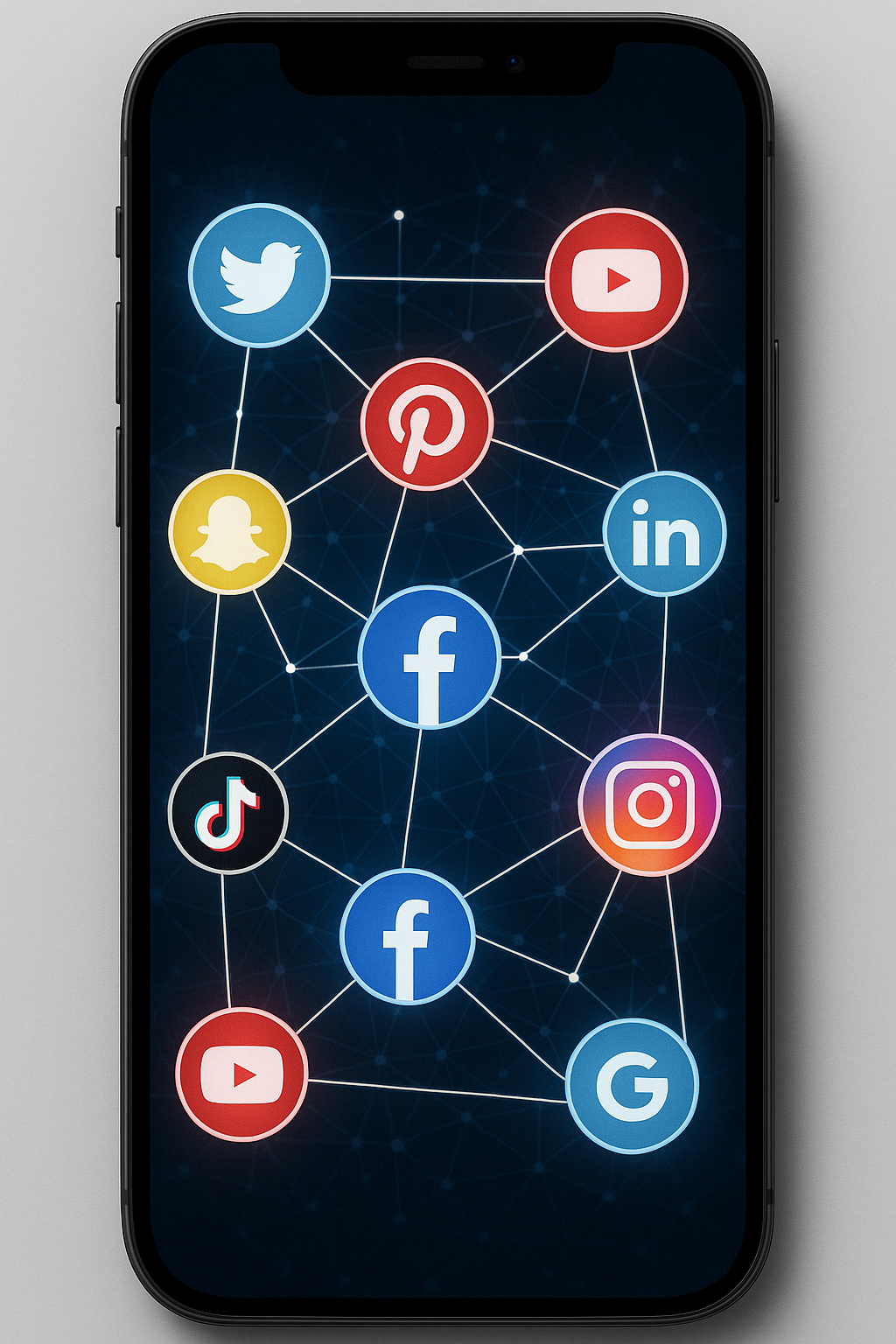
A 280-character tweet exposes fault lines in US–South Africa relations, highlighting 21st-century diplomacy fought on smartphone screens.
A single tweet, just 71 words, from a US ambassador, has caused a huge fight between Washington and South Africa. This tweet called out South Africa's 'non-alignment' and made it seem like they were choosing sides with countries like China and Iran. This quick message made South Africa's money drop and brought up talk of trade trouble. Now, their relationship is really tense, showing how even a small online post can cause big problems between countries.
What is the current state of US-South Africa relations?
The US-South Africa relationship is currently strained, marked by public disagreements over South Africa's non-alignment stance. A recent controversial tweet from the US Ambassador highlighted Washington's impatience, leading to economic repercussions like a dip in the rand and potential trade sanctions, while South Africa strengthens ties with partners like China and Iran.
Get Cape Town news in your inbox
Stay updated with the latest stories from the Mother City.
The Tweet That Shook the Union Buildings
At 08:07 SAST on 23 June 2026, Ambassador Leo Brent Bozell III pressed send on a 71-word post on X. The first sentence - “Pretoria calls this ‘non-alignment.’ We call it what it is: a choice.” - was paired with a split-screen image: left, South African diplomats shaking hands with Iran’s Deputy Foreign Minister Saeed Khatibzadeh; right, Deputy President Paul Mashatile greeting Chinese Vice-President Han Zheng. Four hours later the message had been reposted 28 000 times, translated into French, Portuguese and isiZulu, and forced DIRCO’s leadership into an emergency closed-door session.
For career-watchers the post felt like the coda to three months of rising volume between the two capitals, a dispute that now plays out frame-by-frame on smartphone screens rather than in oak-panelled conference rooms. By lunchtime the South African rand slipped 0.9 % against the dollar, and #AmbassadorUnhinged was trending nationwide.
Where “Non-Alignment” Really Comes From
Though Pretoria formally embraced non-alignment in 1994, the idea is far older on the continent. At the 1955 Bandung Conference, still-colonised South Africa was represented in absentia by ANC envoys who copied India, Ghana and Egypt’s insistence that new states keep equal distance from both Cold-War camps. Nelson Mandela revived that stance after his release, ignoring Washington’s fury when he flew to Tripoli in 1991 and Havana in 1992.
When George W. Bush pushed for the 2003 invasion of Iraq, Thabo Mbeki stood with Berlin and Moscow and Paris against the motion. Today the vocabulary has changed - BRICS, “polycentric order,” “strategic autonomy” - but the grammar is identical: court every major power so that no single one can dictate terms. The tweetstorm exposed how little patience Washington now has for that script.
The Two Partners Pretoria Is Betting On
Tehran’s Energy & Pharma Hook
South Africa buys more than 40 % of its crude abroad, and Iran offers both discounted barrels and barter deals that dodge the dollar. Tehran also controls the Strait of Hormuz, soon to supply the revived Mossel Bay gas-to-liquid plant. Beyond oil, Pretoria expects Iranian vaccine fill-and-finish sites in Isfahan to transfer meningitis technology to Aspen Pharmacare in Durban.
Beijing’s Rail, Hydrogen and Cable Plans
Since 2009 China has been South Africa’s biggest bilateral trading partner; since 2015 its largest infrastructure financier. Deputy President Mashatile’s June mission nailed down three headline projects:
- a 1 860 km Musina–Gqeberha high-speed freight line,
- a R18 billion green-hydrogen terminal at Boegoebaai, 70 % funded by Chinese policy banks,
- a second submarine-cable landing station at Melkbosstrand to cut reliance on Western-controlled Sat-3 and WACS.
All fit into Operation Vulindlela, chaired by Mashatile, which aims to crowd private money into energy and logistics gaps.
Diplomatic Démarches, Digital and Old-School
Senior DIRCO insiders describe a conveyor belt of protests, each thicker and sharper than the last. The April 2026 note ran to 13 pages and included what one counsellor called “a forensic annex of tweets.” Bozell’s June post is viewed inside Pretoria as a clear breach of Articles 9 and 41 of the Vienna Convention, which forbid interference in a host nation’s domestic debate.
Still, Pretoria avoids full expulsion, remembering 2025 when the South African envoy left Tel Aviv yet ties remained intact - later proving critical for hostage talks.
Washington’s Domestic Chessboard
Bozell is no ordinary envoy; he arrived from the Heritage Foundation where he thrived on culture-war headlines. His confirmation hearing was live-tweeted by Republican senators aiming to paint the Biden White House as “soft.” Inside that polarised arena, South Africa is a convenient shorthand for “weak on China and Iran.”
Senator Josh Hawley’s proposed 12.5 % “forced labour” tariff began as retaliation for South Africa’s hosting of naval drills with Russia and China off KwaZulu-Natal in January 2025. The ambassador’s post, therefore, is not venting; it is campaign-season signalling to hawks ahead of November’s mid-terms.
Trade Shockwaves: AGOA, Tariffs and the Value-Chain Shuffle
AGOA expires in 2028, but draft Senate language already demands that beneficiaries certify they have not “materially assisted designated state sponsors of terrorism.” Iran stays on that list. If the clause survives, South Africa would lose duty-free access for automotive wire-harnesses, citrus and wine - exports worth US $3.4 billion in 2025.
The parallel Hawley tariff would hit manganese ore, aluminium and catalytic converters with a 12.5 % levy. The Minerals Council warns a six-month suspension of AGOA could trim 0.8 % off GDP and cost 63 000 mining jobs. In response, Pretoria is fast-tracking shipments into the Gulf Cooperation Council via the March 2026 Saudi-South Africa Preferential Trade Area and eyeing RCEP markets further east.
The Five-Front Messaging War
Within 48 hours the online battlefield formed five distinct lanes:
1. GCIS posted a 56-second TikTok in Sesotho, IsiZulu and Afrikaans, using subway-map graphics to show “multiple global stops.”
2. The US Embassy ran a Twitter poll - “Should foreign policy be transparent?” - that attracted 31 000 votes, 87 % clicking “Yes.”
3. Parliament’s portfolio committee chair live-streamed his arrival for a closed session, telling journalists Bozell’s tone “reeks of Monroe Doctrine nostalgia.”
4. Think-tanks entered the fray: ISS pushed out a neutrality primer while the Atlantic Council released satellite images of Bandar Abbas berths allegedly co-funded by South African pensions through the BRICS bank.
5. Faith-based coalitions launched #StillAlignedWithHumanity, trending for eight hours.
Chips, Cables and Cloud Sovereignty
Officials tracking the row say the fight now ranges across three axes:
- Semiconductors: DTIC courts Huawei and SMIC to build a back-end testing site in Gqeberha, capitalising on 2023 Huawei bursary grads who speak Xhosa and Afrikaans.
- Rare Earths: Steenkampskraal holds world-class monazite ore. Ganfeng Lithium is close to a joint venture with IDC, yet any US reagent-export ban could stall solvent extraction.
- Cloud Sovereignty: AWS and Microsoft want to host national health-insurance data; Beijing offers a China-sourced “clean-room” cloud for genomic sequencing, raising firewall and localisation questions.
Protocols, Emojis and the Next Spat
The uproar revived a long-forgotten 2018 Foreign Service Academy paper, “Guidelines for Digital Engagement by Resident Missions,” which demands ambassadors get protocol clearance for any post over 200 characters that names a host official. DIRCO is now updating it to include meme templates, TikTok duets, and - under discussion - a mandatory “cooling-off emoji” that fires when sentiment algorithms detect a spike in hostility.
When Diplomacy Hits the Street
Far from the marble halls, the quarrel lands on ordinary lives. In Durban’s Warwick Triangle, Spaza owner Aisha Essop has stopped restocking American cereals after customs flagged a fifth of US consignments for extra anti-dumping checks. In Austin, a South African winemaker saw foot-traffic dip after a radio host replayed Bozell’s claim that “South Africa sides with Tehran.”
Meanwhile, crypto-savvy voice-over freelancers in Johannesburg and Lagos report a 12 % jump in demand from North American AI firms looking for “neutral” accents, a niche created by wariness of Chinese or Iranian data-labelling sites.
Track-2.5 Talks Over Rooibos
Informal channels multiply. Former finance minister Trevor Manuel and ex-US ambassador Dana Banks run a WhatsApp circle named the “Rooibos Roundtable,” meeting every second Sunday to swap unattributable memos on green-finance taxonomy or chip chokepoints. The group recently added a retired Iranian admiral and the China-Africa Business Council vice-chair. Their July leak to Business Day outlines a trilateral “critical-minerals OPEC,” rotating its secretariat among Maputo, Muscat and Chengdu every eighteen months, a south-south buffer against Western tariffs.
Decoding the Hashtag Warfare
UCT’s Centre for Rhetoric Studies examined 14 000 tweets using #NotSoNonAligned or #TrulyNonAligned between 23–25 June. Findings:
- 63 % of #NotSoNonAligned came from Virginia or Maryland - home to CIA, Pentagon and Foggy Bottom campuses.
- 71 % of #TrulyNonAligned originated from South African IP addresses, but 18 % bounced through São Paulo or Mumbai, hinting at diaspora amplification.
- The word “BRICS” rose 19 % in US-origin tweets, usually paired with “expansionist” or “revisionist,” while South African posts employed “collaborative” or “polycentric.”
Four Scenarios for the Next 18 Months
Stakeholders have sketched contingency trees now floating on Pretoria’s risk matrix:
- DIRCO Scenario A (35 % odds) – controlled escalation: a second démarche, Pretoria recalls its chargé for “consultations,” trade keeps flowing, Congress parks the AGOA vote for a 2027 mid-cycle review.
- NEDLAC Labour Caucus B (25 %) – mini-trade war: the tariff passes, Pretoria slaps anti-dumping duties on used US clothing; AGOA renewal hinges on a forced-labour MoU like Mexico’s USMCA side-letter.
- US Chamber C (20 %) – quiet climb-down: behind closed doors Pretoria accepts “enhanced due-diligence” audits in Coega; the tariff amendment vanishes.
- BRICS Policy Institute D (20 %) – tectonic shift: South Africa leans into the BRICS Bridge payment system, prices manganese in renminbi, the rand loses reserve status in the Common Monetary Area, prompting Eswatini and Namibia to shift forex into yuan.
Can Jazz Cool the Temperature?
Veteran arts envoy André Aldum is dusting off the 1976 “Jazz Ambassadors” playbook. The plan: send Abdullah Ibrahim, Thandiswa Mazwai and a new “Cape-Kwaito Ensemble” on a three-month US university circuit, bankrolled jointly by Silicon Valley philanthropists and South Africa’s National Lotteries Commission. The tour would skip Washington entirely, landing instead in Ohio, Alabama and Georgia - states where AGOA-linked jobs matter most. Two historically black colleges have already signalled interest in hosting concerts tied to mid-term voter-registration drives.
Whether a trumpet solo can drown out a tariff threat is an open question, but it may be the only stage where both nations can still meet without pre-conditions.
What caused the recent strain in US-South Africa relations?
A single tweet from US Ambassador Leo Brent Bozell III, posted on June 23, 2026, sparked a significant diplomatic incident. The 71-word tweet challenged South Africa's 'non-alignment' stance, implying they were siding with countries like China and Iran. This online post, coupled with accompanying images, led to a rapid escalation of tensions and economic repercussions.
What were the immediate consequences of the Ambassador's tweet?
Within hours of the tweet, the South African rand depreciated by 0.9% against the dollar, and the hashtag #AmbassadorUnhinged trended nationwide. The tweet forced South Africa's Department of International Relations and Cooperation (DIRCO) into an emergency closed-door session, highlighting the immediate and far-reaching impact of the digital diplomacy.
What is South Africa's historical stance on non-alignment?
South Africa formally adopted non-alignment in 1994, but the principle has roots in the 1955 Bandung Conference, where newly independent nations sought to maintain distance from Cold War powers. Nelson Mandela reinforced this stance, visiting countries like Libya and Cuba despite US disapproval. Today, this philosophy continues, though the terminology has evolved to include concepts like BRICS, 'polycentric order,' and 'strategic autonomy,' aiming to prevent any single power from dictating terms.
Which countries are South Africa currently strengthening ties with?
South Africa is deepening its relationships with Iran and China. With Iran, South Africa is securing discounted crude oil and exploring barter deals, along with technology transfers for vaccine production. With China, South Africa's largest bilateral trading partner, it is collaborating on major infrastructure projects, including a high-speed freight line, a green-hydrogen terminal, and a second submarine-cable landing station to enhance digital independence.
What are the potential economic impacts on South Africa due to the strained relations?
The strained relations could lead to significant economic repercussions. The US African Growth and Opportunity Act (AGOA), which grants duty-free access for South African exports, is set to expire in 2028, and proposed amendments could exclude South Africa if it's seen as assisting 'state sponsors of terrorism.' This could jeopardize US$3.4 billion in exports. Additionally, a proposed 12.5% tariff by Senator Josh Hawley on critical minerals could impact South Africa's mining sector, potentially leading to job losses and a dip in GDP.
How is South Africa attempting to mitigate the diplomatic and economic fallout?
South Africa is employing a multi-pronged strategy. Diplomatically, they view the ambassador's tweet as a breach of the Vienna Convention and are engaging in both formal démarches and informal 'Track-2.5 talks' through channels like the 'Rooibos Roundtable.' Economically, they are fast-tracking shipments into the Gulf Cooperation Council and exploring RCEP markets to reduce reliance on Western trade routes. Culturally, there's even a proposal to send South African jazz musicians on a US tour to foster goodwill in key states.
Thabo Sebata is a Cape Town-based journalist who covers the intersection of politics and daily life in South Africa's legislative capital, bringing grassroots perspectives to parliamentary reporting from his upbringing in Gugulethu. When not tracking policy shifts or community responses, he finds inspiration hiking Table Mountain's trails and documenting the city's evolving food scene in Khayelitsha and Bo-Kaap. His work has appeared in leading South African publications, where his distinctive voice captures the complexities of a nation rebuilding itself.
View all articles →