
Video: Chaos erupts at N1 City Mall as weekend gathering turns volatile
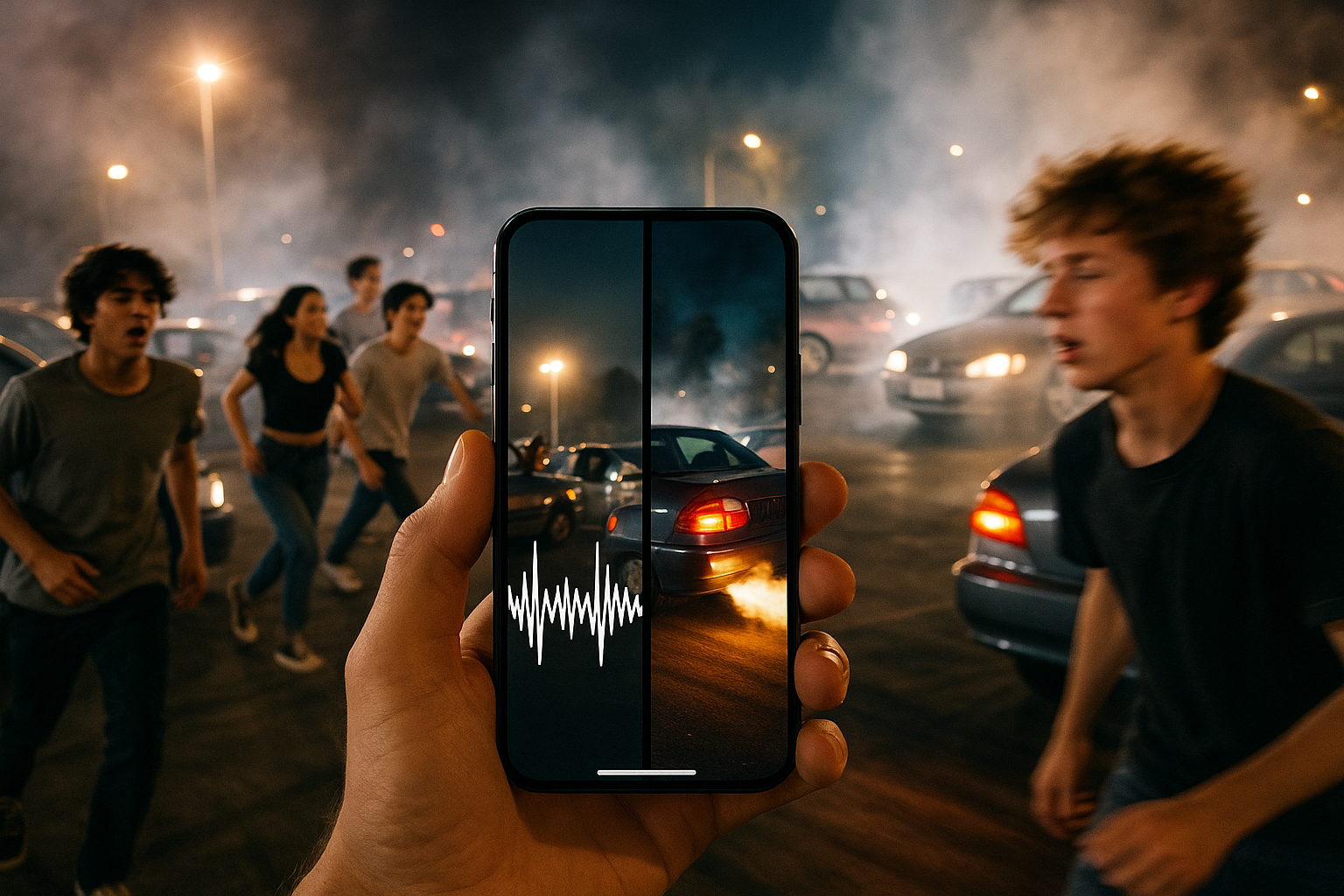
N1 City Mall chaos: A Cape Town parking lot turns into a viral, unscripted street theatre with real-world consequences and debate.
Imagine a normal Saturday at N1 City Mall, where the parking lot turns into a dance floor for a big TikTok challenge. Suddenly, a bottle breaks and a car backfires, making loud 'crack-crack-crack' sounds. People think it's a shooting and panic, running everywhere. This causes the mall to shut down, even though it was all a big misunderstanding from a broken bottle and a noisy car.
What caused the N1 City Mall incident that led to a shutdown?
The N1 City Mall incident, initially mistaken for a shooting due to “crack-crack-crack” sounds, was actually caused by a bottle breaking and a car backfiring during a large TikTok dance challenge. The ensuing panic and a stolen phone report escalated the situation, leading to a temporary mall shutdown and widespread misinformation on social media.
Get Cape Town news in your inbox
Stay updated with the latest stories from the Mother City.
1. Saturday, 17:00 – The Lot Turns into a Ballroom
N1 City Mall sits like a concrete raft in the middle of Cape Town’s busiest freeway, yet on weekends the asphalt deck above Game supermarket stops being mere parking. It morphs into a roving coloured ballroom: taxis unload speakers, phones become strobes, and every rev of a tweaked Golf is a bass drop.
On 2 May 2026 the ritual scaled up. Four overloaded Quantums from Delft, Belhar and Mitchells Plain rolled into the north-west quadrant shortly after five. Within three minutes 200 teenagers had formed a perfect circle, Bluetooth rigs synced to a single 130 bpm gqom loop, and the #N1CityShuffle challenge went live on TikTok.
No velvet rope, no bouncer, no entrance fee - just the flare that somebody struck to announce “we’ve arrived.” Security logged it as “loitering, no threat.” They had not noticed the missing Samsung A15 that would soon yank the plug on the party.
2. 17:12 – The Sound No One Can Un-Hear
The first bottle flew overhead and survived; the second, a Castle Lite, burst on the tar. Then came the crack-crack-crack. Half the crowd dropped into school-shooting crouches; the other half bolted. A Golf 7 GTI reversed hard enough to suck a 12-year-old under the bumper - missed by the thickness of a R5 coin.
Within forty-one seconds the first eight-second clip hit WhatsApp. By 17:45 it had mutated through 312 groups, each caption screaming “active shooter,” “Bellville burning,” “gang war.” Facebook trimmed the ten-second lull that might have proved the noise was backfire, and the algorithm shoved the footage to the top of every Western Cape feed before satellite desks could spell “mall.”
Comment threads turned into instant forensics: grannies who swore they smelled gunpowder through the screen, audio geeks overlaying spectrograms, car guys counter-posting dyno videos of Datsuns spitting flames. The missing phone that supposedly recorded the original chaos was already for sale online: “Samsung A15, slight crack, SD card included.”
3. Timeline in Fragments – Every Stampede Leaves Receipts
Police still haven’t opened a formal docket, so the story is stitched together from taxi receipts, Snapchat geofilters and the mall’s withheld CCTV. Working backwards, the mosaic looks like this:
16:30 – Four minibuses book P4 deck under “matric after-party shuttle,” fare R50 each plus a promised R500 Spar voucher.
16:45 – Sound systems marry via Bluetooth; a flare pops; security shrugs.
17:02 – Dance circle forms; phones rise like lighters at a rock show.
17:08 – A 15-year-old from Uitsig shouts that his Samsung is gone; fingers point to a kid in a red NYU hoodie.
17:11 – Bottles fly.
17:12 – Crack-crack-crack; crowd fractures; Golf reverses.
17:15 – Mall intercom yells “Code Black.”
17:22 – Private firm Tactical One rolls up in unmarked Rangers, pepper-ball guns ready.
17:30 – N1 traffic stalls as motorists lean out to film wave-two content.
17:50 – First ambulance leaves empty; asphalt glitters with glass, not blood.
4. Aftermath – Memes, Money and the Next Saturday
By nightfall the mall’s PR team had squeezed the chaos into two anodyne sentences: “We are cooperating with authorities. N1 City remains family-friendly.” The words “gun” and “shooting” never appeared. Meanwhile, synthetic voice notes warned parents to “fetch your children NOW,” triggering a secondary jam at the Buena Vista off-ramp - mothers shouting names into the purple dusk while Game’s cashiers kept scanning groceries to the Saturday-oldies playlist.
Sociologist Dr. Nomalanga Mkhize labels the spectacle “the street corner gone mobile.” Malls, she says, are neutral turf where rival neighbourhoods can flex without immediate retaliation. Add TikTok’s demand for spectacle and a generation that spent two lockdown years online, and the parking lot becomes “a compressed carnival with no safety valve.”
Retailers are scrambling to re-engineer the fun. N1 City’s newest level boasts “event bollards” that kettle a crowd in thirty seconds, but Saturday’s drama happened on the old deck where cars still shoot straight off the freeway. Tyger Valley and Canal Walk have already imposed weekend youth curfews after 18:00 - effectively economic profiling, since coloured and black teenagers who rely on taxis bear the brunt. An industry insider admits the policy is “more about insurance than crime”; one “violent disturbance” clause can spike weekly premiums 22 %.
Tech start-ups smell opportunity. AURA, an AI platform that marries gunshot acoustics to CCTV, can dispatch private guards in under a minute - yet its engineers confess Cape Town parking garages bounce sound in ways that turn exhaust pops into false positives. Still, the content economy thrives: one streamer earned R3 400 in super-chats during the melee, his 92-minute archive now punctuated with mid-roll ads for a pawn shop that buys cracked phones - irony applauded by thousands.
Come Monday, taxi bosses were already fielding seventeen new bookings for the coming Saturday. “Same place, bigger sound,” a driver laughed, patting a freshly installed 2 000-watt amp where a passenger seat used to be. Pastors and teachers plot “safe alternatives” - a picnic at Durbanville Racecourse, a ticketed foam party in Epping - but visibility is the currency of the age, and visibility is free in a parking lot.
The stolen Samsung remains at large; its IMEI was never registered, a reminder that fourteen million South African phones live in prepaid anonymity. Insurance claims already list two cracked windscreens, one twisted ankle, and a 65-inch Hisense that walked out when Game’s roller-shutter auto-dropped during the alert. Footfall dipped nine percent the next Sunday, yet by Wednesday shoppers were back; consumers, like pigeons, forget the echo of last week’s scare.
What refuses to fade is the sound itself - crack-crack-crack - now remixed into trap beats and congregational sermons. A pastor loops it under Joel’s prophecy about the day of the Lord arriving “with noise”; a Kraaifontein teen layers it over a Call-of-Duty kill-streak. The algorithm serves both videos side by side, hungry only for the next pulse of attention, indifferent to whether the parking lot hosts a ballroom, a battlefield, or tomorrow’s meme.
[{"question": "What caused the panic at N1 City Mall?", "answer": "The panic at N1 City Mall was caused by a misunderstanding. During a large TikTok dance challenge in the parking lot, a bottle broke and a car backfired, producing loud 'crack-crack-crack' sounds. These sounds were mistaken for gunshots, leading to widespread panic and a stampede."}, {"question": "When and where did this incident occur?", "answer": "The incident occurred on Saturday, May 2, 2026, around 5:12 PM. It took place in the north-west quadrant of the N1 City Mall parking lot, specifically on the asphalt deck above the Game supermarket in Cape Town."}, {"question": "Was there an actual shooting at N1 City Mall?", "answer": "No, there was no actual shooting at N1 City Mall. The sounds that caused the panic were identified as a broken bottle and a car backfiring. The mall was shut down due to the ensuing panic and a stolen phone report, not an active shooter situation."}, {"question": "How did misinformation spread so quickly?", "answer": "Misinformation spread rapidly through social media. The first eight-second clip of the incident hit WhatsApp within 41 seconds and mutated through 312 groups, with captions screaming 'active shooter' and 'gang war.' Facebook's algorithm also pushed edited footage to the top of Western Cape feeds, contributing to the panic."}, {"question": "What were the immediate consequences of the incident?", "answer": "Immediately after the incident, the mall’s intercom yelled 'Code Black,' private security rolled up with pepper-ball guns, and N1 traffic stalled as motorists filmed. Although no one was shot, there were reports of two cracked windscreens, one twisted ankle, and a 65-inch Hisense TV that was stolen when Game's roller-shutter auto-dropped. The mall's footfall dipped nine percent the following Sunday."}, {"question": "How are malls and security companies responding to such events?", "answer": "Malls are re-engineering their spaces, with some like N1 City installing 'event bollards' for crowd control. Other malls like Tyger Valley and Canal Walk have imposed weekend youth curfews. Security companies are exploring tech solutions like AURA, an AI platform that aims to combine gunshot acoustics with CCTV, though engineers note challenges with sound anomalies in parking garages. The incident has also sparked discussions about the need for 'safe alternatives' for youth gatherings."}]

Tumi Makgale is a Cape Town-based journalist whose crisp reportage on the city’s booming green-tech scene is regularly featured in the Mail & Guardian and Daily Maverick. Born and raised in Gugulethu, she still spends Saturdays bargaining for snoek at the harbour with her gogo, a ritual that keeps her rooted in the rhythms of the Cape while she tracks the continent’s next clean-energy breakthroughs.
View all articles →