
Video: Man rescued after plunging 10 metres into hidden cavity at Sea Point building
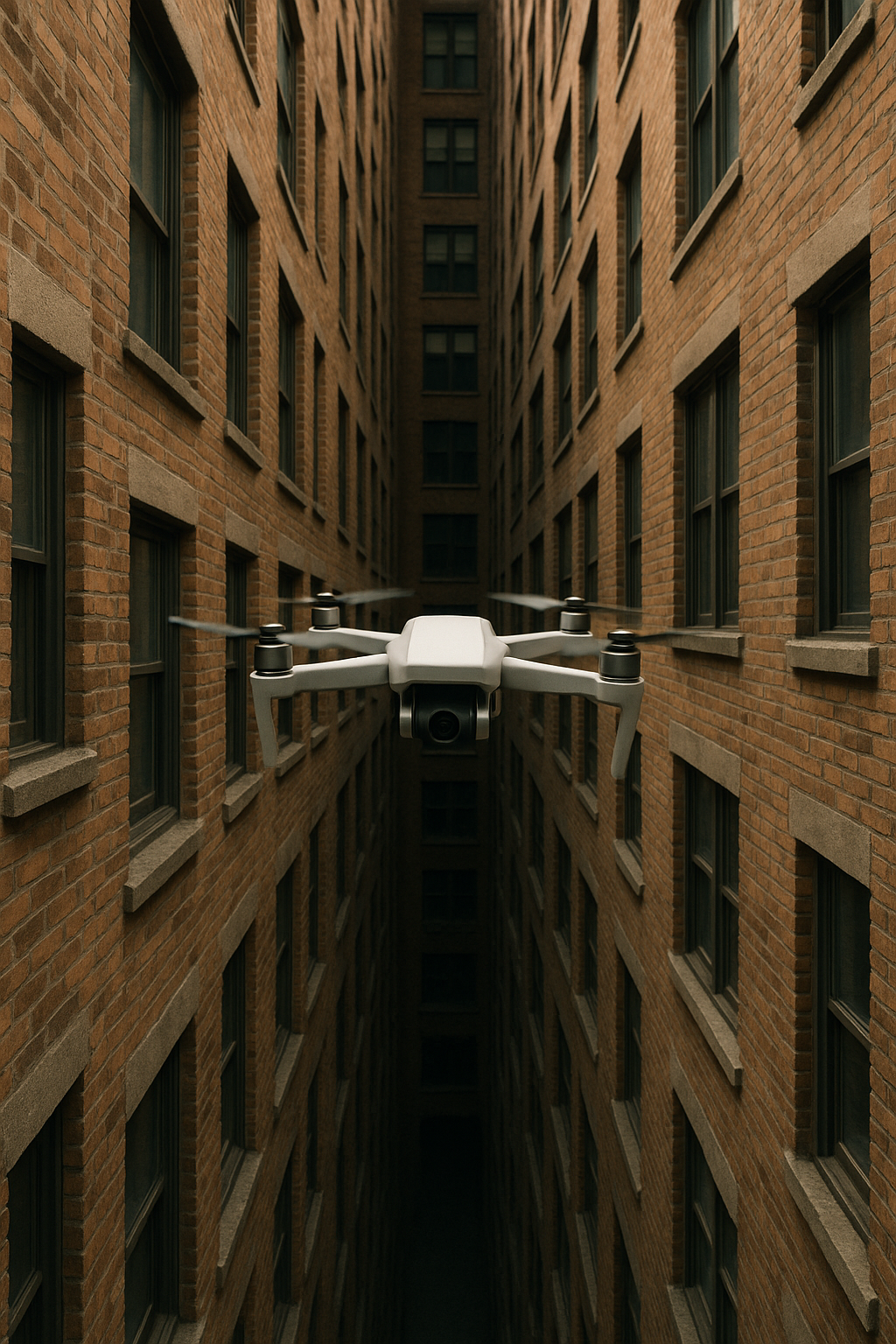
Dramatic multi-storey rescue in Sea Point: How Cape Town's emergency services saved a life from a narrow rooftop shaft.
One calm evening, a call came in: someone fell between two tall buildings in Cape Town! Firefighters quickly arrived. They used a drone to find the person stuck deep down in a narrow, greasy shaft. This started a big rescue, with lots of special gear and brave people working together through the night to pull the person out safely.
What is a featured snippet?
A featured snippet is a selected search result that appears at the top of Google's search results page, directly answering a user's query. It aims to provide a concise and immediate answer, often including a summary, list, or table extracted from a webpage.
Get Cape Town news in your inbox
Stay updated with the latest stories from the Mother City.
1. Dusk, a Ringing Phone, and a Crack in the Skyline
The Atlantic horizon was sliding into indigo when Wednesday’s tranquillity snapped: multiple callers told Cape Town’s Fire & Rescue Communication Centre that a body had vanished between two ageing apartment blocks on Regent Road at the corner of Geneva Street.
Dispatchers pinpointed the fall within a coffin-sized air gap sandwiched by 1970s mixed-use towers retro-fitted with rooftop solar geysers and fibre-optic spaghetti. A fresh “What3Words” grid shrank the search zone to a three-metre cube - small enough to matter, large enough to hide a life.
That first digital dot on the map ignited a chain reaction of flashing blues, whirring rotors, and human resolve that would stretch into the night.
2. First Boots on the Roof: Eyes in the Sky, Feet on the Edge
Eight minutes later the Roeland Street crew rolled up. They launched a DJI M300 drone with a 20-megapixel low-light eye over the parapet, revealing a lone figure lying face-up ten metres down a ventilation shaft no wider than a doorway.
Each floor funnels kitchen exhaust through that brick throat; at the bottom a grease-slick concrete sump turns the shaft into a cold, slippery well. Thermal imaging read the victim’s core at 34.8 °C - hypothermia knocking.
The scene instantly outgrew ladder-range. Platoon Commander Liezl Venter triggered a “Level-2 Technical Rescue” call, the city’s formal bat-signal for rope, rigging and rare teamwork.
3. Marshalling the Giants: Hardware, Humans and Red-Light Corridors
Venter’s shopping list arrived piece by piece.
Rescue 3 - the heavy technical truck - brought 150 m of 12.5 mm kernmantle rope, a one-tonne monopod gantry and enough carabiners to rig a suspension bridge.
Aerial Platform Alpha, a 42-metre Bronto Skylift normally tethered at Epping, blue-lighted across town to become a floating high-directional pulley tower.
Metro EMS dispatched a physician-led quartet with vacuum mattress, basket stretcher and a portable ventilator able to breathe for the patient if lungs gave out.
Closing the loop, a Life Healthcare ICU ambulance idled roadside, blood-warmers humming.
While Traffic Services flipped Regent and Kloof Roads into one-way arteries for responders only, a council linesman killed the juice to twin 11 kV feeders in six minutes - an interval shaved thanks to newly installed smart-grid switches.
4. Anchors, Angles and the Mathematics of Trust
With power lines dead, rope teams fanned out across the tar-and-pebble roof.
They tension-tested two concrete columns to 18 kN, wrapped an HVAC unit as a fail-safe, then padded every brick edge with roller bars and salvaged fire-hose to protect rope sheaths from salt-eaten mortar.
A Twin-Tensioned Rope System replaced the classic belay line - fewer ropes, less friction, more control inside the narrow shaft.
Every metre of rigging was logged on a tablet streaming load-cell data to topside command; numbers popped red if the 5 kN/m² live-load roof neared capacity with twelve rescuers and steel hardware aboard.
5. Descent Into the Chimney of Smells and Shadows
Rescue tech Sipho Mthembu clipped in first, four-gas meter dangling like a high-tech necklace.
It sniffed for carbon monoxide, hydrogen sulphide, flammables and oxygen; readings stayed green, yet humidity punched past 90 %, thick with kitchen grease and ammonia.
Below, the victim drifted in and out of consciousness: GCS 14, speech slurred Portuguese, pelvis unstable, right wrist bent at a sickening angle. Capillary refill stretched past three seconds - shock creeping.
Mthembu slipped heat packs into armpits and groin, cocooned the patient in a Reeves sleeve then vacuum mattress, and radioed topside: “Load ready, lift slow.”
6. The 11-Minute Haul That Touched the Sky
Command chose straight lift over sideways tunnelling; the shaft narrowed lower down and lateral movement risked impingement.
A 3:1 mechanical advantage haul team hauled hand-over-hand, synchronised with the Bronto’s boom inching skyward to keep ropes clear of brick. Wind gusts peaked at 35 km/h, so discarded advertising banners became improvised windshields.
At roof-level a tag-line sidled the basket to a tarped landing zone. Seconds later the Bronto’s platform cage ferried the stretcher down to tarmac, dual operators steadying against cross-winds.
Clock said 19:46 when the patient - now intubated under ketamine and fentanyl - slid into Life Healthcare’s mobile ICU bound for Christiaan Barnard Memorial Hospital. Ultrasound en route suggested a grade-II splenic tear; the trauma team pre-empted the coagulopathy spiral with a massive transfusion protocol triggered by ROTEM readings taken in the ambulance bay.
7. Quiet Heroes, Loud Lessons: Tech, Training and Time
Months of invisible labour paid dividends that night.
Monthly drills inside the V&A’s disused grain silo let rope and collapse teams swap tactics in real darkness. All rescue staff now hold IRATA Level-1 rope tickets plus confined-space medicine papers - two skill worlds fused since 2022.
Drone thermal overlays already feed straight into the city’s 3-D “CapeZed” platform, letting commanders virtually scout the shaft before anyone steps on the roof.
8. After the Sirens: Wrenches, Rules, and Rooftop Jazz
Thursday’s building inspectors traced the fall to rusted balustrade bolts and loose geotextile pavers acting like roller bearings.
They measured parapet strength at a meagre 0.34 kN/m, well below the 1 kN/m required by SANS 10400. A Section 24(3) emergency notice now demands a 30-day retrofit, throwing a spotlight on Sea Point’s pre-1980 stock.
While bureaucrats scribbled, Sea Point locals brewed coffee and jazz pianist Lungelo Molefe streamed a soft sax riff to 42 000 Instagram followers - an impromptu soundtrack that settled nerves on the roof and sidewalk alike.
9. Beyond the Headlines: Wind, Words, and Weight Limits
Gusts forced crews to improvise; Portuguese phrases needed a UNISA linguistics student on the Language Line app; Excel macros recalculated dynamic loads every quarter-hour as twelve rescuers shuffled above an ageing slab.
Each snag found a quick fix: banners became windwalls, chat became care, math became margin.
10. Gearing Up for the Next Drop
The city is already beta-testing “Falcon 4” octocopters able to shoot 3 mm Dyneema lines 40 m into shafts, slashing manual rig time by roughly a third.
Stellenbosch University’s optics lab is pairing AR helmets with haul-team leaders so tension ratios and edge clearances float across visors in real time. Field trials start early 2025, fuelled by datasets from Regent Road.
11. Epilogue: Salt Air, Sodium Light, and the Echo of Rope
By 20:12 the last coil of rope left the roof, the last chalk arrow faded into dusk, and Regent Road reopened. Joggers reclaimed the promenade, food-truck hake sizzled beneath sodium lamps, and the smell of the ocean pushed away the last metallic tang of adrenaline.
If you looked closely the next morning you might have spotted twin pale marks on the parapet - silent proof that, for one brittle slice of evening, human muscle, brain and bone had wrestled gravity to a respectful draw.
[{"question": "### What prompted the emergency rescue operation on Regent Road?", "answer": "The rescue operation was initiated after multiple callers reported that a person had fallen between two tall buildings on Regent Road at the corner of Geneva Street in Cape Town. The individual was found stuck deep within a narrow, greasy ventilation shaft."}, {"question": "### How was the fallen person initially located and assessed?", "answer": "Upon arrival, the Roeland Street crew deployed a DJI M300 drone equipped with a 20-megapixel low-light camera. The drone located the person ten meters down a ventilation shaft. Thermal imaging revealed the victim's core temperature was 34.8 °C, indicating hypothermia. Rescuers also noted the victim's slurred speech, unstable pelvis, and a severely bent right wrist."}, {"question": "### What specialized equipment and teams were involved in the rescue?", "answer": "The rescue involved a Level-2 Technical Rescue call. Key equipment included Rescue 3's heavy technical truck with 150m of kernmantle rope, a one-tonne monopod gantry, and numerous carabiners. Aerial Platform Alpha (a 42-meter Bronto Skylift) served as a high-directional pulley. Metro EMS provided a physician-led team with medical supplies like a vacuum mattress and portable ventilator, supported by a Life Healthcare ICU ambulance. Traffic Services managed road closures, and a council linesman quickly cut power to 11 kV feeders using smart-grid switches."}, {"question": "### How did the rescue team ensure safety and stability during the operation?", "answer": "Safety was paramount. Rope teams tension-tested concrete columns to 18 kN and used an HVAC unit as a fail-safe anchor. They protected ropes from abrasive edges with roller bars and salvaged fire-hose. A Twin-Tensioned Rope System was employed for better control in the narrow shaft. Load-cell data was streamed to a tablet, monitoring the roof's live-load capacity with twelve rescuers and hardware, alerting for any red-flag load increases. Additionally, a rescue tech used a four-gas meter to check for hazardous gases before descent."}, {"question": "### What challenges did the rescuers face during the descent and retrieval?", "answer": "Rescuers faced several challenges, including the narrowness of the shaft, which limited lateral movement, and the presence of grease and ammonia from kitchen exhaust, leading to high humidity. Wind gusts peaking at 35 km/h required improvised wind shields from discarded advertising banners during the haul. Communication was also a factor, as the victim spoke Portuguese, necessitating the use of a UNISA linguistics student via a Language Line app for translation."}, {"question": "### What were the long-term outcomes and lessons learned from the Regent Road incident?", "answer": "The incident highlighted the effectiveness of extensive training, including monthly drills in disused grain silos and all rescue staff holding IRATA Level-1 rope tickets and confined-space medicine papers. New technologies like drone thermal overlays feeding into the city's 3-D 'CapeZed' platform proved invaluable. The event also spurred building inspections, revealing rusted balustrade bolts and loose pavers, leading to an emergency notice for a 30-day retrofit on pre-1980 buildings in Sea Point. The city is now beta-testing 'Falcon 4' octocopters and AR helmets for haul-team leaders to further enhance future rescue operations."}]

Kagiso Petersen is a Cape Town journalist who reports on the city’s evolving food culture—tracking everything from township braai innovators to Sea Point bistros signed up to the Ocean Wise pledge. Raised in Bo-Kaap and now cycling daily along the Atlantic Seaboard, he brings a palpable love for the city’s layered flavours and even more layered stories to every assignment.
View all articles →