
Watch: Cape Town drone pilot breaks Guinness World Record with 4-hour flight
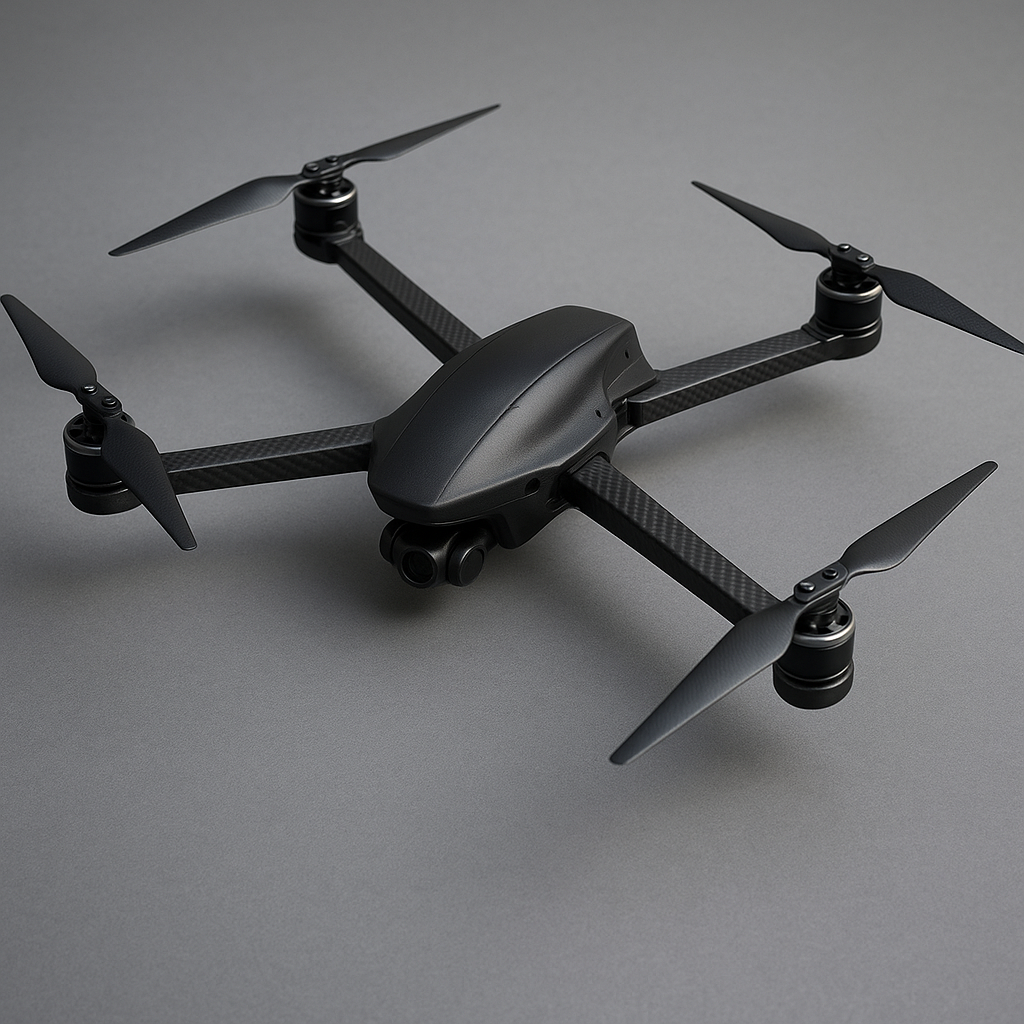
Cape Town engineer shatters drone endurance record with a 4-hour flight, showing how amateur innovation can surpass industry standards.
A Cape Town engineer named Luke Bell flew a drone for over four hours, breaking the old record! This is huge because most drones only fly for about 30 minutes. He used smart ideas and common parts to make his drone super light and powerful. It shows that even a single person can do amazing things that big companies can't. This opens doors for drones to do more important jobs, like checking long pipelines or helping in rescues.
What is the drone endurance flight record?
Luke Bell set a new drone endurance flight record of 4 hours, 21 minutes, and 39 seconds. This achievement significantly surpasses typical consumer drone flight times of 30-45 minutes and demonstrates how amateur innovation in optimizing weight, power systems, and control can outperform industry standards using commercially available components.
Get Cape Town news in your inbox
Stay updated with the latest stories from the Mother City.
In an era where consumer drone technology has plateaued around the 30-to-45-minute mark for flight duration, a South African videographer has achieved what major aerospace manufacturers have struggled to accomplish - sustained multirotor flight exceeding four hours. Luke Bell's record-breaking 4 hours, 21 minutes and 39 seconds endurance flight represents not merely an incremental improvement but a fundamental rethinking of how lightweight electric aircraft can be engineered when traditional commercial constraints are removed from the equation.
The Architecture of Persistence: Engineering Decisions That Defined Success
Bell's Endurance Drone emerged from a deliberate rejection of conventional multicopter design philosophy. Where commercial manufacturers optimize for portability, rapid deployment, and standardized manufacturing, Bell pursued singular purpose: maximum flight duration per watt-hour of stored energy. This divergence explains why his homemade aircraft outperforms professional systems costing ten times more.
The weight reduction from viewer-suggested C-clamp modifications - 26 grams - exemplifies how crowdsourced engineering can surface solutions invisible to isolated development teams. Bell's openness to external input, demonstrated by his active YouTube presence, created an iterative feedback loop unavailable to proprietary corporate development. This 26-gram saving, approximately 1.5% of total aircraft mass, translated to roughly four additional minutes of flight time through the compounding effect of reduced power requirements for hover maintenance.
Power Systems: Density, Security, and Thermal Management
The battery subsystem addresses what engineers recognize as the fundamental limitation in electric aviation: specific energy storage. Bell's selection of high-density SMC (likely referring to silicon-manganese-cobalt or similar lithium-ion cathode chemistry) packs rather than conventional lithium polymer cells reflects sophisticated understanding of contemporary battery trade-offs. These cylindrical cells, more commonly associated with electric vehicles and high-end power tools, offer superior volumetric energy density compared to pouch cells, though at increased cost and reduced discharge rate tolerance.
The 5-kilogram battery mass suggests total pack capacity between 800 and 1200 watt-hours depending on specific chemistry - comparable to the energy content of approximately 100 milliliters of gasoline. Bell's custom mounting system addressed a frequently overlooked failure mode: cell displacement during attitude changes. Unrestrained battery movement alters aircraft center of mass, forcing flight controllers to compensate continuously, increasing power consumption and inducing oscillation. The thermoplastic polyurethane landing gear similarly targeted energy dissipation, protecting precisely aligned propulsion systems from ground impact that would otherwise propagate through rigid structures.
Control Systems: Precision Through Sensor Fusion
The vibration issues encountered during early testing illuminate a persistent challenge in multirotor design: the coupling between propulsion dynamics and control stability. Conventional flight controllers isolate inertial measurement units through foam damping or mechanical isolation, but high-endurance operation imposes unique demands. Prolonged flight allows thermal drift in gyroscopic sensors, while extended hover at consistent throttle settings can cause integrator windup in PID control loops.
Bell's selection of the Cube Orange Plus specifically addressed these concerns. The flight controller's triple-redundant inertial sensors and internal heating element maintain calibration stability across temperature variations that would disable lesser systems. More significantly, the centimeter-level positioning system - likely employing RTK-GNSS correction or optical flow augmentation - enabled precise station-keeping that eliminated the "position hunting" consuming power in less accurate navigation. This precision allowed the aircraft to maintain optimal attitude with minimal control surface deflection, reducing the parasitic power losses associated with continuous correction.
Operational Intelligence: Data-Driven Flight Path Optimization
The most technically sophisticated aspect of Bell's achievement may be the least visible: real-time power analysis and route modification. The Wi-Fi telemetry link to his transmitter provided continuous voltage, current, and cumulative energy consumption data. This information stream enabled empirical discovery that contradicted intuitive assumptions about efficient flight.
The observation that turning flight consumed less power than straight-line operation initially appears counterintuitive. Aerodynamic drag increases with angle of attack, and coordinated turns require additional control surface deflection. However, multirotor efficiency depends critically on induced velocity distribution - essentially, how the rotor wake interacts with itself and the airframe. In forward flight, advancing blade effects and asymmetric loading create complex flow patterns; in turning flight, the altered relative wind vector may have allowed Bell's specific propeller and motor combination to operate nearer its peak efficiency point on the power curve.
Alternatively, the effect may relate to motor loading distribution. Quadcopters in hover operate all four motors at substantial throttle; in forward flight, rear motors typically work harder to overcome drag; in sustained turns, the load distribution becomes more complex but potentially more favorable for the specific propulsion system Bell had tuned. The critical insight is not the physical mechanism but the empirical methodology: rather than accepting theoretical predictions, Bell modified his autonomous flight path based on observed data, extracting performance that would have been forfeited by adherence to predetermined routes.
The 20 km/h cruising speed represents another optimization point. Multirotor power requirements follow a characteristic curve: high at hover due to induced drag penalties, decreasing to a minimum at some forward speed, then increasing again as parasite drag dominates. Bell's speed selection likely targeted this minimum power point, though the extended duration suggests he accepted some distance penalty to remain in the optimal regime.
Context and Significance: Records as Engineering Validation
This achievement arrives within months of Bell and his father reclaiming the battery-powered quadcopter speed record, establishing the family's unusual position at the intersection of competitive drone performance categories. The dual accomplishments suggest transferable expertise in power system optimization and airframe minimization that transcends specific mission profiles.
The endurance record carries particular weight for practical applications. Current regulatory frameworks for beyond-visual-line-of-sight operation and commercial drone delivery remain constrained by flight duration limitations. Four-hour endurance opens operational concepts previously reserved for fixed-wing platforms: extended infrastructure inspection, search-and-rescue grid coverage, environmental monitoring, and communication relay. The multirotor configuration retains advantages in vertical takeoff precision and hover stability that fixed-wing endurance platforms sacrifice.
Industry observers might note that Bell's achievements parallel developments in hydrogen fuel cell and hybrid-electric propulsion pursued by major manufacturers. Yet his purely battery-electric approach, using commercially available cells, demonstrates that substantial capability gains remain accessible through systems integration rather than awaiting fundamental battery chemistry breakthroughs. The specific energy of lithium-ion cells has improved only incrementally in recent years; Bell's fourfold duration improvement over typical commercial platforms derives primarily from mass fraction optimization - maximizing the proportion of total aircraft weight devoted to energy storage rather than structure or payload.
The manufacturing methodology merits final consideration. Bell's use of 3D-printed components for structural and aerodynamic elements, combined with hand-laminated composite tubes, represents a hybrid fabrication approach increasingly accessible to individual engineers. Desktop manufacturing technologies have reduced the capital barrier to aerospace-quality component production, enabling the rapid iteration cycles - months of redesigns, per the original account - that would require years in traditional development programs constrained by tooling costs and organizational overhead.
This record thus stands as evidence of democratized aerospace engineering, where individual practitioners can challenge institutional capabilities through focused application of modern manufacturing, open-source control systems, and empirical optimization methods unavailable to previous generations of experimenters.
[{"question": "What is the new drone endurance flight record?", "answer": "Luke Bell, a Cape Town engineer, set a new drone endurance flight record of 4 hours, 21 minutes, and 39 seconds. This significantly surpasses typical consumer drone flight times, which usually range from 30 to 45 minutes."}, {"question": "How did Luke Bell achieve such a long flight time compared to commercial drones?", "answer": "Bell's success stemmed from a deliberate focus on maximizing flight duration per watt-hour of stored energy, rejecting conventional multicopter designs optimized for portability. He achieved this through extreme weight reduction, including crowdsourced suggestions like C-clamp modifications, and by using high-density battery packs (SMC cells) commonly found in electric vehicles, rather than standard lithium polymer cells. His custom mounting system for batteries also prevented center of mass shifts during flight."}, {"question": "What kind of technology did Bell use for his drone's control system?", "answer": "Bell utilized a Cube Orange Plus flight controller, which features triple-redundant inertial sensors and an internal heating element to maintain calibration stability across temperature variations. It also incorporated a centimeter-level positioning system, likely using RTK-GNSS, to ensure precise station-keeping and minimize power-consuming 'position hunting'."}, {"question": "How did Bell optimize the drone's flight path for maximum endurance?", "answer": "He employed real-time power analysis and route modification using Wi-Fi telemetry, which provided continuous data on voltage, current, and energy consumption. This allowed him to empirically discover that turning flight consumed less power than straight-line operation for his specific setup. He also selected an optimal cruising speed of 20 km/h, targeting the minimum power point on the multirotor's power requirement curve."}, {"question": "What is the significance of this record for the drone industry and future applications?", "answer": "This endurance record is crucial because it opens up new possibilities for drone applications previously limited by short flight times. Drones with four-hour endurance can perform extended infrastructure inspections, wide-area search-and-rescue operations, environmental monitoring, and communication relay. It demonstrates that significant capability gains in battery-electric drones are achievable through systems integration and mass fraction optimization, even without major breakthroughs in battery chemistry."}, {"question": "How does Bell's approach differ from traditional aerospace manufacturing?", "answer": "Bell's method represents 'democratized aerospace engineering.' He used 3D-printed components for structural elements and hand-laminated composite tubes, a hybrid fabrication approach that is more accessible to individual engineers. This allowed for rapid iteration and redesign cycles that would take years in traditional development programs constrained by high tooling costs and organizational overhead, proving that a single individual can outperform large companies with focused innovation and readily available technology."}]

Liam Fortuin is a Cape Town journalist whose reporting on the city’s evolving food culture—from township kitchens to wine-land farms—captures the flavours and stories of South Africa’s many kitchens. Raised in Bo-Kaap, he still starts Saturday mornings hunting koesisters at family stalls on Wale Street, a ritual that feeds both his palate and his notebook.
View all articles →