
Watch: Cape Town video sparks concern after children seen packed into car boot
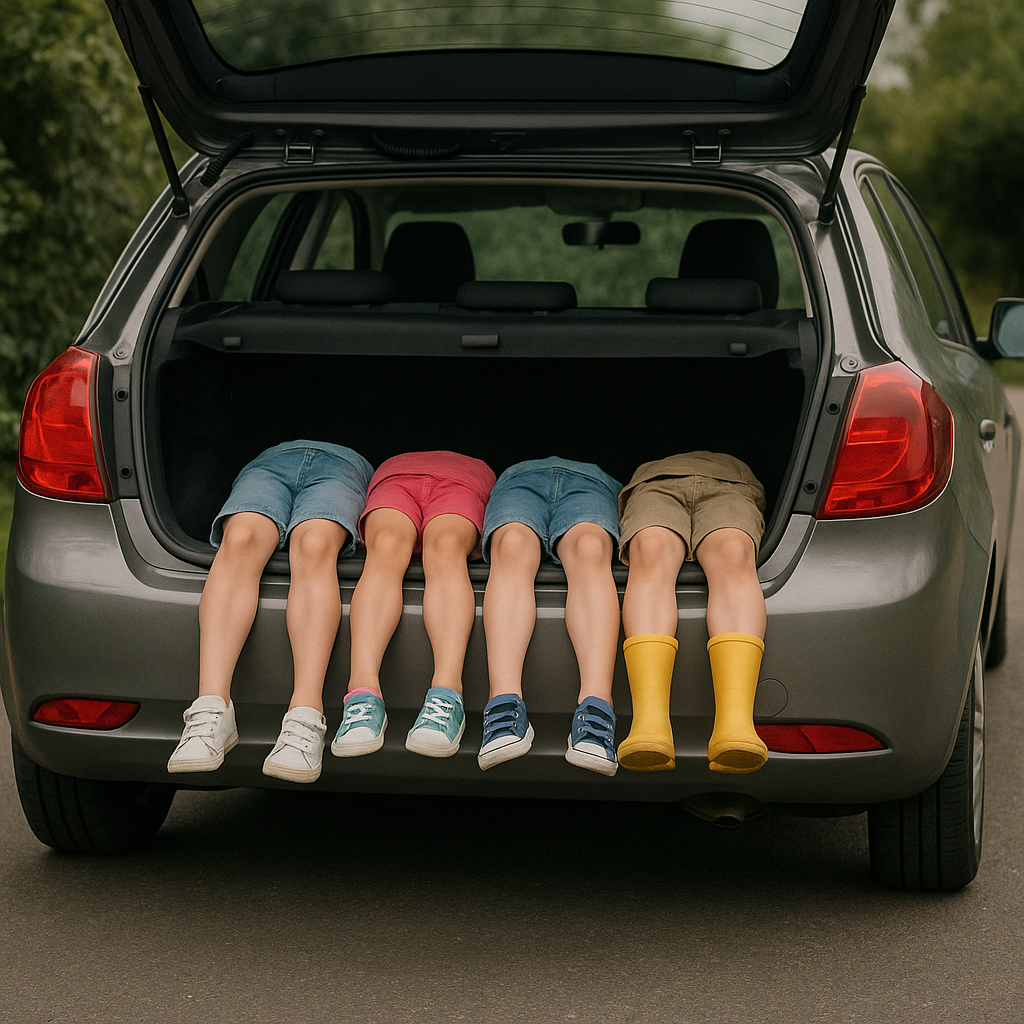
Cape Town's school-run crisis: Overloaded cars, regulatory gaps & dangerous child transport. What South Africa's child-transport problem reveals.
In Cape Town, children are often crammed into car boots and overloaded vehicles for school, turning every ride into a dangerous gamble. This happens because many families can't afford better transport and schools are far from home. Even with strict laws, the problem continues, as parents struggle to get their kids to school safely and on time. This chaos shows how broken promises and a tough economy force kids into risky situations every single day.
What are the dangers of children riding in car boots in South Africa?
Children riding in car boots in South Africa face extreme danger, as the boot's crumple zone offers minimal protection. At 50 km/h, an unrestrained 20 kg child becomes a one-tonne projectile, risking severe injury or fatality due to the lack of proper restraints and the boot's structural vulnerability, often driven by economic necessity.
Get Cape Town news in your inbox
Stay updated with the latest stories from the Mother City.
1. The Snapshot That Flung Open the Boot
By 15:03 on an ordinary April afternoon in Bellville, a grey 2007 Opel Corsa Lite idled in the crawl-and-polish queue outside Eversdal Primary. A dash-cam clipped to another parent’s windscreen recorded what happened next: four blazer-clad pupils, blazers still morning-crisp, wriggled into the car’s boot while their backpacks became makeshift cushions. The driver attempted twice to slam the hatch; the latch clicked, then popped free, as though the vehicle itself rejected the arithmetic. Within two hours the clip ricocheted across WhatsApp, TikTok and a dozen traffic-complaint groups on Telegram, each share garnished with the usual emojis of outrage. Yet behind the finger-wagging lay a tougher riddle: why does a supposedly middle-class suburb treat a car boot as extra seating for kids?
The scenes in the queue were mundane. Engines hiccupped at idle, drivers scrolled phones or craned to locate offspring. The grey Opel, now infamous, simply confirmed what every afternoon parent knows: seats and time budgets rarely match pupil headcounts. Twenty-four hours later the video was evidence in ward-councillor inboxes and Facebook comment sections, yet the Corsa was back at the curb the next afternoon - this time with a slightly different passenger stack - because the structural problem had not been towed away with yesterday’s outrage.
2. Laws on Paper, Kids in the Air
South Africa’s rulebook sounds strict on first reading. National Road Traffic Regulation 213 insists every child under three rides in an EU-approved safety seat, while everyone under fourteen must be “appropriately restrained.” Western Cape by-laws tighten the screw further: passenger numbers cannot outstrip the number of factory-fitted seat belts - no lap-sharing, no belt-splitting. Vehicles registered for paid scholar runs must display an operating permit that lists exact capacity; breach the limit and the minibus is impounded. Fines start at R750 per unrestrained child, but officers admit by the time they write the ticket the youngsters have vanished into driveways and side streets.
Those rules collide with arithmetic the moment the first bell rings. One parent marshal at Eversdal estimated that on any given afternoon at least four vehicles in the first twenty cars exceed belt counts - a stat traffic officers can neither confirm nor contest because their patrol shift ends at 2:30 p.m. The grey Opel saga simply turned anecdote into pixelated proof.
3. Seat-Belts versus Headcounts: The Brutal Maths
The viral hatchback officially offers five seating positions and three rear belts. Frame-by-frame analysis of the clip counted ten children: four in the boot, three on the bench, two crouched between legs, one up front. That is 100 % over factory capacity and 200 % over belt allowance. Safety engineers at the University of Cape Town’s Safety and Violence Initiative ran the numbers: at an inner-city impact speed of 50 km/h an unrestrained 20 kg child becomes a one-tonne projectile. The boot’s crumple zone offers barely 15 cm of give before metal meets spine.
Multiply that scenario by dozens of vehicles in each afternoon queue and the daily gamble becomes staggering. Analysts liken it to playing Russian roulette with half the chambers loaded - yet the game is politely called “the school run.”
4. Neighbourhood Patchworks
Outside Eversdal’s gate the next day, a mother - let’s call her Mrs. L. - recounted how the boot miracle unfolded: “The kombi we normally rent snapped a driveshaft. Parents started texting: ‘Please take ours, we’ll pay.’ She folded the rear seat to fit the last four. We were already late for after-care.” A Grade 5 learner added, “If I miss the ride, the gate guard locks up and load-shedding kills my Wi-Fi for homework.” Similar micro-dramas play out from Durbanville to Delft because after-care ends at 16:30 sharp and the N1 inbound routinely turns a 14 km hop into an hour-long crawl.
Three weeks earlier the script had been writ large on AZ Berman Drive, Mitchells Plain, where a Toyota Quantum carried 49 primary pupils - 3.2 kids per seat row. Officers found half the seat-belt buckles clipped behind cushions to speed loading. The Quantum’s permit allowed 22 passengers; the vehicle was impounded while barefoot parents arrived pleading for leniency. Ward councillor Abe Abrahams told reporters the community has grown to accept “a broken education timetable can only be solved by a broken transport timetable.”
5. Finance, Distance and the Seat-That-Isn’t
Post-apartheid city design entrenched the gap. Sixty per cent of learners in formerly “Model-C” schools live 15–30 km away in townships. The provincial scholar-transport scheme covers fewer than one in five eligible kids. Middle-class homes juggle dual incomes; poorer households depend on informal lift clubs charging R15 per child for a 10 km hop. A driver must haul fourteen to sixteen passengers morning and afternoon just to cover fuel and tyre wear. Every extra fare plugs the gap against a burst radiator or traffic fine, which makes the boot an involuntary seat and an economic necessity.
Cape Town’s spatial legacy compounds the burden. Learners rise before dawn in Langa to reach a “better” school in Rondebosch; parents calculate risk against opportunity and choose the overcrowded bakkie over the underperforming local option. Geography becomes destiny, and the boot becomes bargain seating.
6. Good Ideas That Stall at the Tollgate
In 2021 the Western Cape Department of Transport trialled “Smart Shuttle” minibuses routed by Uber-style algorithms that never exceeded twelve belted passengers. Pilots in Khayelitsha and Kraaifontein halved commute times and cut parental anxiety - until Treasury withdrew the subsidy after one budget cycle. The two prototype vehicles now sit tyre-flat at a Bellville depot, their telematics licences expired and windows slowly frosting with dust.
German agency GIZ, meanwhile, is piloting locally assembled electric nine-seaters fitted with ISOFIX rails and fire-suppression canisters for Langa’s Siyazakha Primary. Each van costs 40 % more up-front than a used Quantum, but lifetime emissions drop 66 % and downtime for brakes or oil changes falls even further. The hurdle remains the same: who pays the early adopter premium when the cheapest option is an overloaded 2003 Toyota?
7. Alarms, Loopholes and the Phantom Claim
Some drivers silence seat-belt warning chimes with R45 dummy plugs sold openly on Takealot; Brackenfell officers confiscated 37 during a 2022 roadblock, yet sellers simply tweak product tags. South Africa’s curious definition of “seating position” allows wooden benches to be riveted into luggage areas if they pass as “after-market seats,” a loophole born from 1990s hearse conversions and now weaponised for child transport.
Insurers have started rejecting claims when dash-cam footage shows unrestrained children. Discovery Insure reports a 22 % spike in repudiated payouts, but in informal lift schemes no insurer is ever informed. After crashes, provincial emergency departments absorb the cost; Groote Schuur surgeons see six child commuter injuries daily - half linked to scholar transport gone wrong.
8. WhatsApp Marshals, 15-Minute Cities, Electric Futures
Tired of waiting for state salvation, parent associations in Durbanville and Delft created encrypted WhatsApp groups where drivers must post daily seat-belt selfies. Administrators eject repeat slackers; Nuraan Samuels, who moderates the Durbanville loop, says compliance jumped from 35 % to 82 % in a single term. The model migrates north to Sandton’s traffic-clogged avenues where school-run speeds rarely exceed 25 km/h.
City planners sketch 2040 “school nests” within a 15-minute walk of every household, retrofitting shipping containers as satellite classrooms to slash commute demand. Whether the vision survives the next municipal budget cycle is anyone’s guess, but for now the grey Opel Corsa Lite still pulls up at 14:55 on Wednesdays. Today, a volunteer marshal peers inside: three kids belted on the rear bench, one booster seat in front, the boot mercifully empty. The driver flashes a thumbs-up; the marshal notices the fuel gauge flirting with empty. By nightfall another SOS will ping across the block chat: “Kombi still in shop. Anyone spare a 7-seater?” A chorus of offers and counter-offers ricochets across the darkened suburb, each message another fragile crossroads where safety, economics and exhaustion will recalculate before the next dawn bell.
What are the dangers of children riding in car boots in South Africa?
Children riding in car boots in South Africa face extreme danger. At an inner-city impact speed of 50 km/h, an unrestrained 20 kg child becomes a one-tonne projectile. The boot's crumple zone offers minimal protection, barely 15 cm of give, risking severe injury or fatality due to the lack of proper restraints and the boot's structural vulnerability.
Why are children often transported in car boots and overloaded vehicles in Cape Town?
Children are often transported in car boots and overloaded vehicles in Cape Town primarily due to economic necessity and insufficient infrastructure. Many families cannot afford better transport options, and schools are frequently located far from their homes. This forces parents to rely on informal lift clubs and drivers who, to make ends meet, overload vehicles and use car boots as extra seating positions, often despite strict laws.
What do South African transport laws say about child passenger safety?
South Africa has strict laws regarding child passenger safety. National Road Traffic Regulation 213 mandates that every child under three must ride in an EU-approved safety seat, and everyone under fourteen must be "appropriately restrained." Western Cape by-laws further state that passenger numbers cannot exceed the number of factory-fitted seat belts. Vehicles for paid scholar runs must have an operating permit listing exact capacity, and fines for unrestrained children start at R750. However, enforcement is often challenging.
How does the post-apartheid city design contribute to the problem?
Post-apartheid city design has significantly contributed to the problem by entrenching spatial inequality. Sixty percent of learners in formerly "Model-C" schools live 15–30 km away in townships. This long-distance commuting, combined with an inadequate provincial scholar-transport scheme covering fewer than one in five eligible kids, forces poorer households to rely on informal, often overcrowded, transport options. Parents choose these risky options, weighing the danger against the opportunity of a better education for their children.
What solutions have been attempted or proposed to address unsafe child transport?
Several solutions have been attempted or proposed. The Western Cape Department of Transport trialled "Smart Shuttle" minibuses, which were effective but lost funding. German agency GIZ is piloting locally assembled electric nine-seaters with advanced safety features, but their high upfront cost is a barrier. Community-led initiatives like WhatsApp groups where drivers post daily seat-belt selfies have shown success in increasing compliance. City planners are also envisioning 2040 "school nests" within a 15-minute walk of every household to reduce commute demand.
What are some of the loopholes and challenges in enforcing child transport safety?
Enforcement faces several challenges and loopholes. Drivers use R45 dummy plugs to silence seat-belt warning chimes. South Africa's definition of "seating position" allows wooden benches to be riveted into luggage areas if they pass as "after-market seats," a loophole exploited for child transport. Insurers are starting to reject claims when dash-cam footage shows unrestrained children, but informal lift schemes often operate outside of insurance oversight. Additionally, traffic officers often cannot confirm or contest rule breaches as their patrol shifts may end before peak school pick-up times.

Michael Jameson is a Cape Town-born journalist whose reporting on food culture traces the city’s flavours from Bo-Kaap kitchens to township braai spots. When he isn’t tracing spice routes for his weekly column, you’ll find him surfing the chilly Atlantic off Muizenberg with the same ease he navigates parliamentary press briefings.
View all articles →