
Watch: Cape Town’s brave loggerhead turtle fights back after life-saving amputation
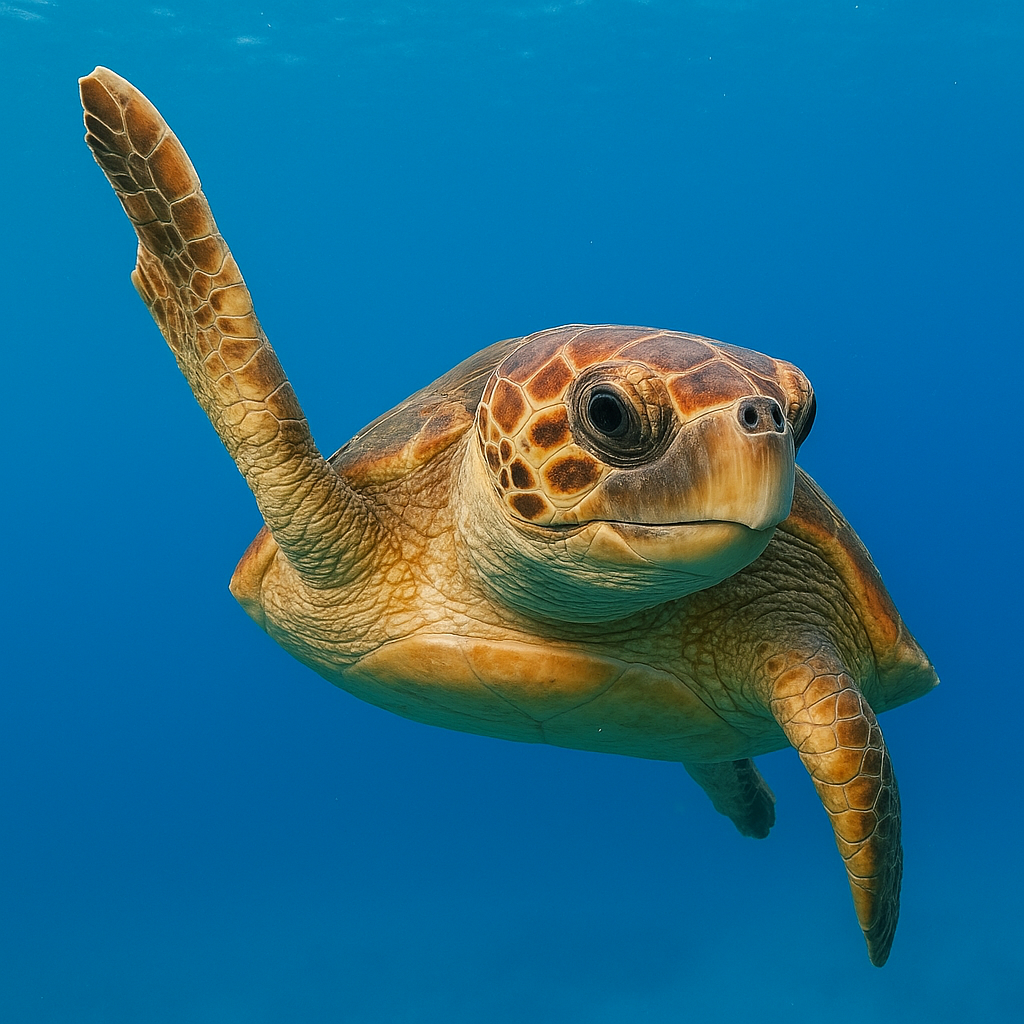
Habanero, a loggerhead turtle, fought for survival after a stranding. His story reveals insights into ocean health, parasitic threats, and pioneering veterinary surgery.
Poor Habanero, a giant turtle, was found covered in tiny, blood-sucking leeches that made him very sick. These nasty leeches brought bad diseases and showed he was already struggling due to things like ocean pollution and warmer waters. Even after losing a flipper to save his life, Habanero teaches us that what happens to one turtle shows big problems in our ocean that we all need to fix.
What is Ozobranchus margoi and how does it affect loggerhead turtles?
Ozobranchus margoi is a parasitic leech identified from the loggerhead turtle "Habanero." This parasite is known to be a vector for chelonian herpes-virus-5 and fibropapillomatosis agents, which can severely compromise a turtle's immunity and health. High infestations often indicate underlying issues like algal toxins, plastic gut scars, or rising sea-surface temperatures.
Get Cape Town news in your inbox
Stay updated with the latest stories from the Mother City.
I. Storm-Born Rescue on the Western Cape
A Grey Dawn and a Motionless Giant
Wednesday, 25 February 2025, unfolded in gun-metal gloom over Witsand, the tiny settlement where the Breede River kisses the Indian Ocean. At 08:12, fisheries monitor Mark Prinsloo spotted an odd bulge bobbing amid the kelp wrack. A mature male loggerhead turtle - shell span 117 cm - lay half buried, every breath shallow and laboured. Nictitating membranes had turned milky, and the neck and fore-flippers looked dusted with peppercorns. Under head-lamp glare the “peppercorns” resolved into thousands of thumbnail-sized parasitic leeches, massed at every soft-tissue gateway: armpits, groin folds, tail base, eyelids.
The Bleeding Trail
The rescuers christened the turtle “Habanero” for the fiery russet of his carapace. When lifted, crimson trickles from leech bite-marks painted the sand. The bleeding triggered an immediate radio call to the Southern Cape Marine Animal Stranding Network; within minutes the custom “turtle ambulance” - a Land Cruiser fitted with oxygen nebuliser and padded crate - began the high-speed dash north to Cape Town.
First Vital Signs
Arrival at the Cape Town Turtle Conservation Centre, adjacent to the Two Oceans Aquarium, came at 16:45. Initial readings were stark: packed-cell volume (PCV) 7 % (healthy adults 25–35 %), heart thumping at 34 beats per minute, cloacal temperature a chilled 17.7 °C, and body mass 91 kg - about 28 kg short for his length. Kidney chemistries screamed dehydration: uric acid 670 µmol/L, creatinine 279 µmol/L, classic signs of pre-renal azotaemia from sustained blood loss and fluid depletion.
II. Blood, Leeches, and Urgent Remedies
Baths, Tweezers, and Counting Parasites
Therapy began the moment Habanero exited the crate. Alternating baths - five degrees warmer than ambient seawater - coaxed leeches to release their grip. Saline rinses followed to prevent osmotic shock. Under 2× magnification the team spent four and a half hours pulling 2 416 leeches - an unusually high burden even in the nutrient-rich Benguela current. Voucher specimens were overnighted to the South African Institute for Aquatic Biodiversity; quick DNA scans identified the culprit as Ozobranchus margoi, a vector for chelonian herpes-virus-5 and fibropapillomatosis agents.
Fluids, Drugs, and a Gift from “Luna”
While de-parasitisation continued, clinicians delivered a 30 mL/kg bolus of lactated Ringer’s into the coelomic cavity and started ceftazidime (22 mg/kg every 72 h). A blood donor was prepped: “Luna”, a robust resident female, provided 200 mL of fresh plasma. Within twenty-four hours Habanero’s PCV doubled to 13 %, and his front flippers twitched in reflexive paddling - an early sign that life remained fierce inside the battered frame.
The Hidden Weak Links
Weeks later, ultrasound revealed ominous joint effusion in the left fore-flipper. CT scans showed lytic lesions gnawing the distal humerus and proximal radius/ulna - bacterial osteomyelitis or the rarer fungal variant caused by Fusarium. Joint taps yielded Vibrio alginolyticus, sensitive to enrofloxacin according to lab MIC tests, yet after two months the bone kept dissolving. Biopsy confirmed necrotic osteocytes and micro-fractures signalling imminent pathologic snap.
III. When Saving a Flipper Becomes a Risk to the Whole Turtle
The Summit Meeting
On 27 November the multidisciplinary panel assembled: Dr Bernice van Huyssteen (lead vet, CTTCC), Dr Ernest Jansen (orthopaedic surgeon, Stellenbosch University), Dr Jeanne Mouton (epidemiologist, DEFF), plus virtual inputs from Georgia Sea Turtle Center and NOAA Honolulu. The verdict: the infection had outrun antibiotics; sepsis loomed and the rot threatened chest-wall muscles critical for breathing. Surgical removal of the entire limb at the glenohumeral joint was the only path - a procedure almost never attempted on an adult loggerhead in South Africa.
A Calculated Gamble
Loggerheads generate up to 80 % of forward thrust from both fore-flippers. Yet research from Florida and Greece shows amputees maintain migratory speed within 0.3 m/s of intact turtles as long as the opposite flipper survives. In pools, three-flipper animals quickly adjust by widening the remaining stroke. The team resolved to proceed.
Surgery Away From Home
Cape Town Turtle Conservation Centre’s operating theatre was shuttered for skylight upgrades. Instead the team convoyed thirty kilometres north to Kraaifontein Veterinary Specialists. Sedation: 0.5 mg/kg medetomidine plus 5 mg/kg ketamine IM, then intubation with a size-10 cuffed endotracheal tube. A custom heated table kept core temperature at 24 °C, guarding against reptilian hypothermic bradycardia. In ninety minutes surgeons performed circumferential incision, double ligation of brachial vessels, oscillating-saw osteotomy at the proximal humerus, and layered closure. A negative-pressure bandage topped with biodegradable Manuka-honey alginate discouraged Pseudomonas and sped epithelialisation.
IV. Life After Loss – Relearning the Ocean
Float, Swim, Progress
Days 0–5 saw Habanero in a shallow 30 cm pool at 25 °C, a lightweight polyethylene vest preventing roll. Days 6–14 saw the vest removed twice daily for 60-minute supervised swims; water jets simulated currents to train the surviving right flipper. Mealtime came via a submersible tray of pilchard, vitamin gel, and astaxanthin-rich prawn heads - no chasing required.
Cameras, CT Scans, and Healing Numbers
By week three he cruised a 2 m-deep pool, GoPro cameras clocking stroke frequency at a normal 0.8 Hz with 15 % higher right-flipper amplitude. Granulation tissue sealed the wound by day 8; epithelium crossed the incision by day 18. CT scans showed no scapular erosion, and serum amyloid A - an inflammation marker - plummeted from 120 mg/L to 14 mg/L (reference <10).
Lessons Beyond One Shell
High Ozobranchus infestations often flag compromised immunity from algal toxins, plastic gut scars, or rising sea-surface temperatures. CTTCC data show Western Cape loggerhead strandings doubling from 19 in 2017 to 38 in 2024, tracking a 0.9 °C SST anomaly. Meanwhile, Habanero’s Vibrio isolate flashed intermediate resistance to ciprofloxacin - unreported in wild South African turtles before 2021 - mirroring Mediterranean trends and signalling the need for global antibiotic stewardship.
Release Blueprint
Freedom criteria: 20 minutes of steady, list-free swimming; 6 m dives lasting eight minutes; blood values stable for six straight weeks; snapping live blue crabs on demand. A 175 g SIRTRACK GPS/ARGOS tag will be epoxied to the rear scutes, promising 420 days of data across the Benguela-Angola migration loop. Each ping will test whether a three-flipper adult can still surf the great currents that sculpt our planet.
[{"question": "
Who is Habanero and what was his initial condition?
", "answer": "Habanero is a mature male loggerhead turtle found stranded on the Western Cape. He was in critical condition, covered in thousands of parasitic leeches (Ozobranchus margoi), severely dehydrated, and suffering from blood loss, indicated by a very low packed-cell volume (PCV) and chilled body temperature."}, {"question": "What is Ozobranchus margoi and how does it affect loggerhead turtles?
", "answer": "Ozobranchus margoi is a parasitic leech that infects loggerhead turtles. It is known to carry and transmit chelonian herpes-virus-5 and fibropapillomatosis agents, which can severely weaken a turtle's immune system and overall health. A high infestation, like Habanero's, often points to underlying health issues in the turtle, possibly exacerbated by environmental factors like pollution or warmer waters."}, {"question": "What were the initial treatments Habanero received?
", "answer": "Upon arrival at the Cape Town Turtle Conservation Centre, Habanero underwent immediate de-parasitization through alternating warm baths and manual removal of leeches. He received intravenous fluids (lactated Ringer's), antibiotics (ceftazidime), and a blood transfusion with plasma donated by another turtle named \"Luna.\""}, {"question": "Why did Habanero undergo flipper amputation?
", "answer": "Habanero developed severe bacterial osteomyelitis (bone infection) in his left fore-flipper, likely caused by Vibrio alginolyticus. Despite aggressive antibiotic treatment, the infection progressed, causing lytic lesions and threatening sepsis. To save his life, a multidisciplinary panel determined that surgical removal of the entire infected limb at the glenohumeral joint was the only viable option."}, {"question": "Can a loggerhead turtle survive and thrive with only three flippers?
", "answer": "Yes, research indicates that loggerhead turtles can adapt to life with three flippers. Studies from Florida and Greece show that amputees can maintain migratory speeds comparable to intact turtles. Habanero's rehabilitation involved specialized training in a pool to help him adjust his swimming technique, demonstrating his ability to adapt and suggesting a good prognosis for his future in the wild."}, {"question": "What broader environmental issues does Habanero's case highlight?
", "answer": "Habanero's severe leech infestation and compromised health are indicative of larger environmental problems. High Ozobranchus burdens often signal weakened immunity due to factors like algal toxins, plastic ingestion (leading to gut scars), or rising sea-surface temperatures. The increasing number of loggerhead strandings in the Western Cape, correlating with temperature anomalies, and the emergence of antibiotic-resistant bacteria in wild turtles, underscore the urgent need for addressing ocean pollution, climate change, and promoting global antibiotic stewardship."}]
Liam Fortuin is a Cape Town journalist whose reporting on the city’s evolving food culture—from township kitchens to wine-land farms—captures the flavours and stories of South Africa’s many kitchens. Raised in Bo-Kaap, he still starts Saturday mornings hunting koesisters at family stalls on Wale Street, a ritual that feeds both his palate and his notebook.
View all articles →