
Watch: Ramaphosa leads national support for Bafana’s World Cup charge
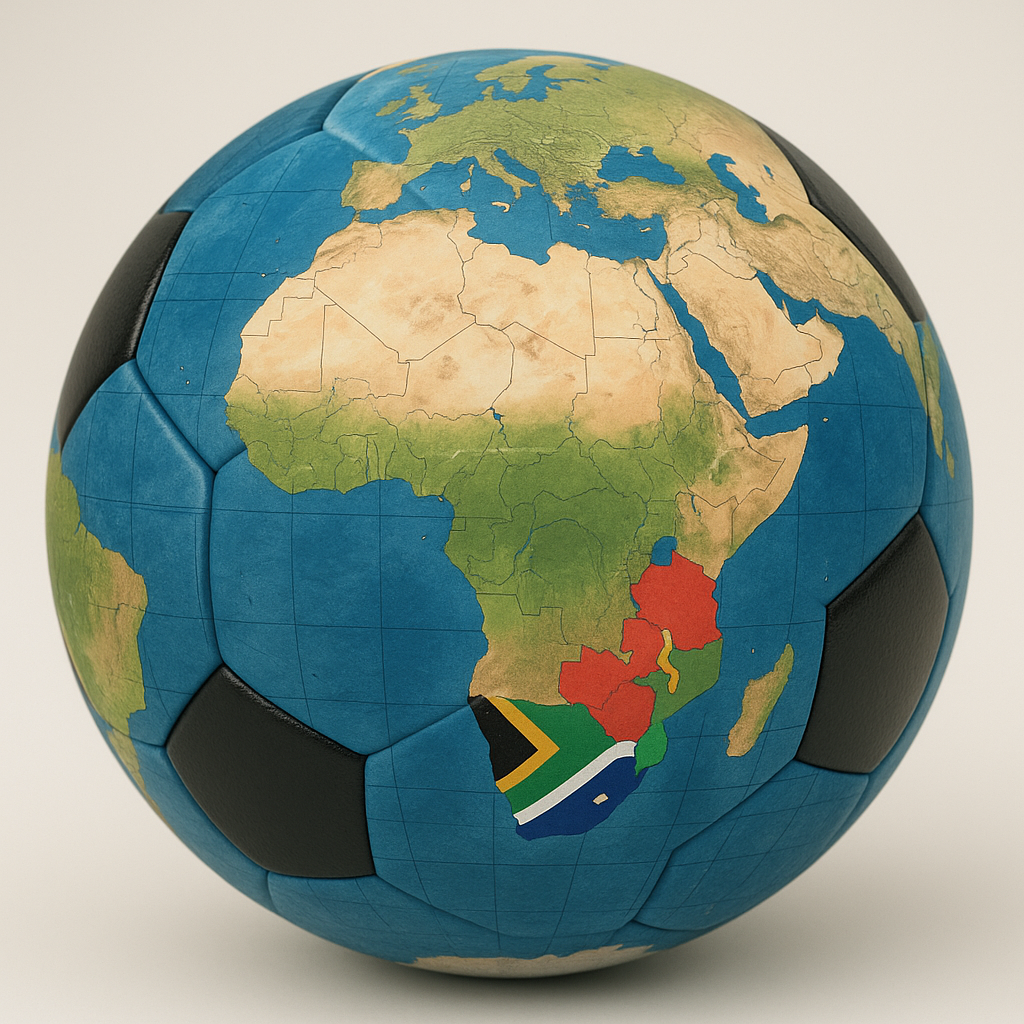
Bafana Bafana's historic World Cup run in Los Angeles is reshaping South Africa's football narrative and national identity.
Bafana Bafana, once huge underdogs, amazed everyone by reaching the 2026 World Cup knockout stage! They won tough games against Costa Rica, the USA, and South Korea, showing off their strong defense. Coach Hugo Broos built a super-tough team that fans across South Africa are cheering on like crazy. This incredible journey is making history and bringing joy to the nation!
How did Bafana Bafana qualify for the 2026 World Cup knockout stage?
Bafana Bafana, initially 250-1 long-shots, qualified for the 2026 World Cup knockout stage through a series of unexpected victories. Key wins included a 2-1 comeback against Costa Rica, a stoppage-time header against the USA, and a 1-0 dismissal of South Korea, showcasing their robust defense and strategic play under coach Hugo Broos.
Get Cape Town news in your inbox
Stay updated with the latest stories from the Mother City.
The Unthinkable Journey: From Pot-3 Outsiders to Knockout-Stage Headliners
When FIFA pulled South Africa’s name from Pot 3 of the inter-continental qualifying shuffle on 2 December 2022, bookmakers priced them as 250-1 long-shots to play past the group phase. Four years on, the same side is preparing to break new ground at the 2026 World Cup inside a re-tooled Los Angeles Stadium, famous until now only for grid-iron giants the Rams and Chargers. The arena’s hybrid Bermuda-Ryegrass surface and 8 000 extra seats were installed with 2026 in mind; nobody forecast that the first football nation to test the upgrades would be Bafana Bafana, historically winless outside South African soil.
Their route to California has been a script worthy of a mini-series. A come-from-behind 2-1 victory in San José rattled Costa Rica on match-day two, a stoppage-time Percy Tau header stunned a sea of orange in Chicago, and a nerve-shredding 1-0 dismissal of South Korea in Houston shoved the team into uncharted knock-out territory. The numbers underline the fairy-tale: a single open-play goal conceded, third-place ranking for progressive passes, and the highest high-intensity running stats left in the tournament, according to FIFA’s tracking chips.
The Architect and the Blueprint: How Broos Built the Planet’s Meanest Defence
Belgian tactician Hugo Broos won the Africa Cup with Cameroon in 2017, but his current project may be his masterpiece. Where his 2002 Belgium relied on aerial bullying and his Algeria of 2014 loved wide blitzes, the 73-year-old has now added deliberate midfield vacancy. In possession Bafana line up as a 4-3-3; the moment possession flips they snap into a back-five without breaking stride. Teboho Mokoena is the hinge, sliding between centre-backs and pinging 40-metre diagonals that have already been compared to Modrić’s 2018 escapades.
Behind the ball, Sphephelo Sithole and Grant Margeman sit almost on top of the centre-backs, surrendering the hollow between lines yet killing any lateral switch that could tug South Africa out of shape. Rivals see plenty of the ball, but most of it is harmless, a tactic designed to frustrate creators like Canada’s Jonathan David who feast on pocket space inside the final third. The plan demands relentless communication, and the squad’s WhatsApp group has a special “shift” emoji that buzzes whenever a full-back is about to tuck inside.
Hosts of Hope: How Fans at Home Are Turning Sunday into a De-Facto Holiday
President Cyril Ramaphosa’s televised shout-out on Thursday night lasted barely ninety seconds, yet it detonated a consumer boom. Flag vendors in Cape Town’s Greenmarket Square recorded a three-fold sales jump within a day, while food-delivery apps reported kota and boerewors-roll orders up 70%. BOS tea printed 100 000 green-and-gold cans, FlySafair wrapped a 737 in temporary Bafana colours, and Eskom’s usually ominous cooling towers flashed LED stripes timed to Shwi’s “We Are Bafana” remix.
Digital teams joined the party. A geo-filter slaps a fluttering flag behind Snapchat selfies and cleared 1.4 million uses overnight. SuperSport cleared its Sunday-evening slate, MTN zero-rated the first 50 MB of the stream, and public viewing parks from Mamelodi to Durban anticipate 150 000 supporters. The SABC has even tweaked its audio mix to amplify the vuvuzela’s 2 kHz drone so couch-bound viewers can relive 2010 in glorious mono-frequency.
Dollars, Drama and Davies: The High-Stakes Collision with Canada
The last time Canada and South Africa shared a senior pitch was a forgettable goalless draw in Edmonton 29 years ago. Sunday’s reunion could hardly be more different. Canada enter unbeaten, spear-headed by Jonathan David and Cyle Larin (eight goals combined) and turbo-charged by Alphonso Davies, who has been clocked at 36.5 km/h this tournament. The maple-leaf nation craves global validation beyond hockey rinks; South Africa eyes Commonwealth trade leverage in a post-Brexit scramble. VIP boxes will murmur about BRICS, not merely RSA v CAN.
On the grass the headline duel is Davies against right-back Thapelo Morena, who may find Teboho Mokoena sliding across as auxiliary cover. Set-pieces could tilt the balance: Canada concede the second-most fouls in the attacking third while three of Bafana’s five goals have come from indirect free-kicks. If the contest crawls past 90 minutes, Broos has rehearsed a 3-5-2 battering-ram formation and is ready to throw on Zakhele Lepapa and Mihlali Mayambela as twin strikers - an ode to his Algeria class of 2014.
Whatever the result, economists already speak of a R2-billion injection should South Africa progress. Edgars sold out its retro 1998 goalkeeper jersey in hours; Shoprite air-freighted a second run of 300 000 bucket hats. Brand Finance projects a seven-place jump in the global nation-brand index if Bafana bag two more wins. Museums are on standby too: LACMA has reserved a plinth for the match ball, echoing the fragments of 1995 Rugby World Cup turf it already owns. In football, fairy-tales rarely line up with spreadsheets, yet for 90 minutes on Sunday the whole of South Africa will believe the numbers add up to history.
[{"question": "
How did Bafana Bafana qualify for the 2026 World Cup knockout stage?
", "answer": "Bafana Bafana, initially 250-1 long-shots, qualified for the 2026 World Cup knockout stage through a series of unexpected victories. Key wins included a 2-1 comeback against Costa Rica, a stoppage-time Percy Tau header against the USA, and a 1-0 dismissal of South Korea, showcasing their robust defense and strategic play under coach Hugo Broos."}, {"question": "Who is Hugo Broos and what is his coaching philosophy?
", "answer": "Hugo Broos is the Belgian tactician coaching Bafana Bafana, renowned for his ability to build strong defensive teams. He previously won the Africa Cup with Cameroon in 2017. His current strategy for Bafana Bafana involves a deliberate midfield vacancy, transitioning from a 4-3-3 in possession to a back-five defensively, making them difficult to break down. This system emphasizes frustrating opponents by allowing them possession in harmless areas and preventing lateral switches."}, {"question": "What impact has Bafana Bafana's success had on South Africa?
", "answer": "Bafana Bafana's success has ignited national pride and sparked a consumer boom in South Africa. President Cyril Ramaphosa's televised shout-out led to a surge in flag sales, increased food delivery orders, and promotional activities by major brands like BOS tea, FlySafair, and Eskom. Public viewing parks are attracting massive crowds, and the SABC has even adjusted its audio to amplify vuvuzela sounds, making it a de-facto national holiday and fostering immense joy and unity."}, {"question": "What can be expected in the match against Canada?
", "answer": "The match against Canada is highly anticipated, featuring a strong Canadian side spearheaded by Jonathan David, Cyle Larin, and the rapid Alphonso Davies. A key duel will be Davies against Bafana's right-back Thapelo Morena, potentially with Teboho Mokoena providing cover. Set-pieces could be crucial, as Canada concedes many fouls in attacking areas, and Bafana has scored three of their five goals from indirect free-kicks. If the game goes past 90 minutes, coach Broos has prepared a 3-5-2 formation with Zakhele Lepapa and Mihlali Mayambela as twin strikers."}, {"question": "What are the economic and national brand implications of Bafana Bafana's progress?
", "answer": "Economists project a R2-billion injection into the South African economy if Bafana Bafana continues to progress. The team's success has already led to increased sales of merchandise, such as retro jerseys and bucket hats. Brand Finance anticipates a seven-place jump in South Africa's global nation-brand index with two more wins. Even cultural institutions like LACMA are recognizing the historical significance, reserving a spot for the match ball."}, {"question": "Where is the 2026 World Cup knockout stage being played?
", "answer": "The 2026 World Cup knockout stage, including Bafana Bafana's matches, is being played at a re-tooled Los Angeles Stadium. This venue, previously known for hosting grid-iron giants like the Rams and Chargers, has undergone upgrades including a hybrid Bermuda-Ryegrass surface and 8,000 extra seats specifically for the 2026 World Cup."}]
Tumi Makgale is a Cape Town-based journalist whose crisp reportage on the city’s booming green-tech scene is regularly featured in the Mail & Guardian and Daily Maverick. Born and raised in Gugulethu, she still spends Saturdays bargaining for snoek at the harbour with her gogo, a ritual that keeps her rooted in the rhythms of the Cape while she tracks the continent’s next clean-energy breakthroughs.
View all articles →