
Watch Video:Police officer red light crash sparks Cape Town outrage
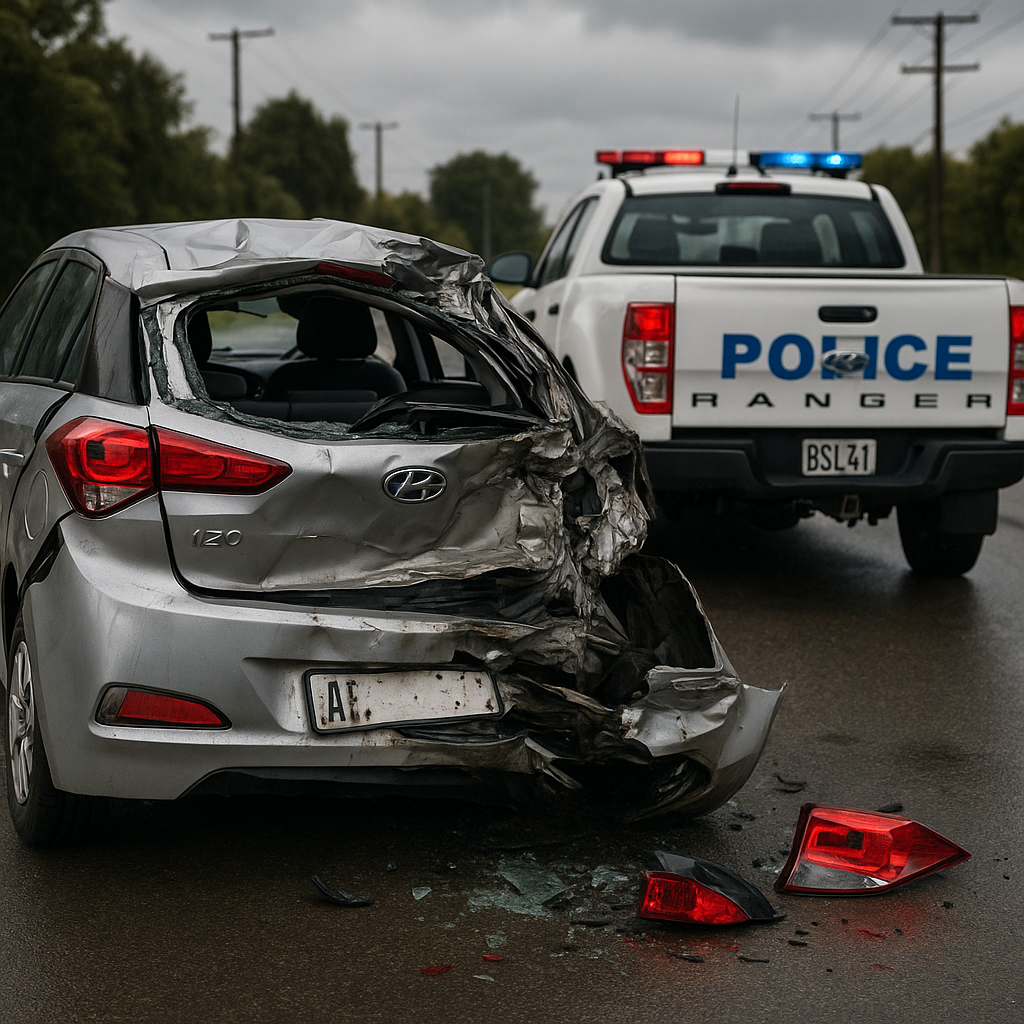
A minute-by-minute reconstruction of a Cape Town stand-off between police and public after a cop allegedly ran a red light.
An ordinary Saturday morning in Cape Town turned into a national crisis when a police car with an expired license plate crashed. A video of the accident went viral, sparking massive public anger. This led to widespread inspections of government vehicles and big arguments about police honesty and open government across South Africa.
What happened in Cape Town on June 7, 2026?
On June 7, 2026, a collision involving a police vehicle with an expired license disc sparked public outrage in Cape Town. A video of the incident went viral, leading to a national spotlight on police conduct, prompting audits of state vehicles, and igniting debates about accountability and transparency within the South African Police Service.
Get Cape Town news in your inbox
Stay updated with the latest stories from the Mother City.
The Quiet Before the Storm
Drizzle clung to the slopes of Table Mountain as Cape Town woke to a typical winter weekend. Delivery vans threaded past spaza shops, still-closed antique barns, and the scent of wet tar drifted over Salt River. Between 08:02 and 08:04 the traffic lights at Klipfontein and Roodebloem ticked through their usual choreography - amber, crimson, emerald - while three municipal CCTV lenses streamed real-time images to the Goodwood Transport nerve-centre. For roughly 100,000 annual cycles the crossing had behaved itself; no one guessed the next green arrow would signal the opening scene of a civic eruption.
Those four quiet seconds were enough for routine commuters to register nothing more than the blurred reflection of clouds in shop-front glass. The only audible punctuation was the soft slap of tyres through shallow puddles. Even the cameras - mounted high enough to catch glazing drizzle - saw nothing suspicious. In a city used to load-shedding drama and water-ration headlines, the intersection’s mechanical pulse felt almost boring. Yet by 08:06 the very same lenses would be delivering the first frame of a clip destined to dominate every screen in the country.
What changed the script was the sudden appearance of a white Ford Ranger double-cab weaving between lanes. The bakkie carried unmistakable SAPS branding, yet bore a licence disc hologram showing “2024/12” - a full six months out of date. Drivers in adjoining bays noticed the anomaly immediately; one later told reporters he felt “a tiny gut-dip” the moment he glimpsed the faded sticker. Seconds later that inkling hardened into dread with the metallic crunch of contact.
Collision, Cameras and the Pulse of a Crowd
The silver Hyundai i20 never stood a chance. Propelled by a green arrow, the student behind the wheel crossed the junction exactly as signage dictated. The Ranger ploughed into the Hyundai’s left rear quarter-panel at an angle shallow enough to avoid air-bag deployment yet severe enough to twist the rear axle 45 degrees and splinter red plastic across the wet asphalt. Impact energy spun the small hatchback onto the painted pedestrian island, where its hazard lights began a nervous blink. Metrorail security guards posted 30 metres away at Salt River Station heard the crunch before they turned to look.
Freelance videographer Nizaam Daniels had already pivoted toward the noise. In one fluid motion he tapped record on his phone and began narrating, his lens sweeping from the Ranger’s damaged bumper to the expired licence disc. Six seconds of vertical footage - uploaded at 08:07 under the caption “State car, expired disc, now hiding” - raced through TikTok’s algorithm. By 08:15 the clip topped fifty-thousand views, its on-screen white caption shouting “EXPIRED ON A STATE VEHICLE!” as if decibel levels could travel through glass. The intersection’s CCTV cameras, now playing backup, captured the same timestamp but lacked voice overlays; Daniels’ vantage offered the human commentary crowds craved.
Curiosity turned physical fast. Salt River’s curious blend of antique dealers, coffee-roastery patrons and spaza-shop regulars poured into the roadway, forming a loose ellipse around the two stationary vehicles. Knuckles rapped on the Ranger’s tinted glass, followed by palms, then torches from raised smartphones. The officer inside, Constable Adrian Saulse, neither rolled the window down nor shifted his folded arms. The refusal transformed every polite knock into an accusatory drum. By 08:11 the murmurs had coalesced into a single shouted demand: “Open up and talk to us!” - a request met only with stony silence.
Rumour, Regulation and the Long Wait for a Breath Sample
Within minutes the word dop - Afrikaans slang for alcohol - wafted through the throng. An unidentified male voice insisted, “He’s had dop, can’t you smell it?” No gust of booze is audible on Daniels’ livestream, yet the allegation hardened into gospel inside neighbourhood WhatsApp groups. Composite memes superimposed “DRUNK COP” over the freeze-frame of the expired disc; the image crossed 1.2 million views before 10:00. SAPS standing orders forbid on-duty members from drinking within eight hours of a shift, so the accusation, however unproven, turned a fender-bender into a morality play.
Senior brass arrived in pieces. Sergeant Lindiwe Mbele of City Traffic approached first, waving a hand-held Dräger Alcotest 9510. Her body-cam, later released under PAIA, captured three polite requests for the Ranger’s driver to step out. Each time Saulse cited Regulation 21: an officer may decline roadside sobriety checks if he believes procedure is being undermined. The stalemate simmered while the cabin temperature climbed to 31 °C - uncomfortable but insufficient grounds for forcible removal. At 08:57 Captain Trevor October pulled up in a civilian Nissan NP200, only to be greeted by a wall of raised phones recording his every word. When he asked bystanders to stop filming, predictably, more screens lit up.
The jurisdictional puzzle dragged on until IPID investigator Advocate Bulelwa Pandor negotiated a compromise: instead of a traffic officer, a registered nurse would perform a blood draw under chain-of-custody rules. An ER24 ambulance nosed through the crowd at 09:22; paramedics erected a collapsible privacy screen on the pavement. Saulse stepped out at 09:27, cuffs loosely applied for “scene safety.” Ninety seconds later two vials labelled AS-070626-0927 were sealed, tagged and dispatched to Plattekloof forensics. The road reopened; the Hyundai was towed; the Ford Ranger was hauled to Salt River pound under a tarp still flapping in the winter breeze.
Aftershocks, Audits and a Fleet Under Scrutiny
Even as sirens faded, the story spawned new tremors online. Hashtag #DrunkCop clinched top spot on X, racking up 430 000 tweets by dusk. Activists from Reclaim the City scheduled a Parliament march for 14 June, while pro-police forums complained of “trial by TikTok.” The duality showed how a 90-second clip could fuel both outrage and counter-outrage depending on one’s feed. Meanwhile, National Commissioner General Sehlahle Fanie released a terse communiqué at 13:47: Constable Saulse suspended, firearm and vehicle privileges revoked, blood results pending, IPID clock ticking. Hidden inside the statement sat the bombshell that 47 SAPS vehicles province-wide carried expired discs - an admission that moved public anger from the constable to the system itself.
By Monday, emergency audits grounded eleven more police cars and four fire engines for licence or roadworthy lapses. Transport economist Dr Mariëtte du Toit unpacked the numbers on morning radio: South Africa’s 270 000-strong state fleet swallows R38 billion annually, yet only 0.9 % of the police allocation covers registration compliance. The bottleneck is structural; just 34 public roadworthy depots serve the entire Western Cape, and privatising testing stalled after union pushback. A City pilot using AI cameras on the N2 flagged five expired state vehicles in a fortnight - proof that tech exists but legislation lags.
For the Hyundai driver, 23-year-old BCom student Amahle Booi, the fallout was both personal and political. Paramedics treated her for whiplash; assessors valued repair costs at R78 000 against a pre-crash value of R135 000. She has since vowed to campaign for mandatory body-cams on every traffic stop. Her TikTok account ballooned from campus skits to 22 000 followers overnight, each new video dissecting the collision’s moral geometry. Constable Saulse, meanwhile, remains in procedural limbo: 30 days for blood analysis, 90 days for IPID to decide on charges - a timeline that stretches far beyond the half-life of social-media outrage. The next viral moment may already be idling at another traffic light, disc expired, camera rolling, tension coiled.
What happened in Cape Town on June 7, 2026?
On June 7, 2026, a police vehicle with an expired license disc was involved in a collision at the intersection of Klipfontein and Roodebloem in Salt River, Cape Town. A freelance videographer captured the incident and the expired disc, and the video quickly went viral, igniting widespread public anger and a national debate about police accountability and government transparency.
Why did the incident cause such a stir?
The collision itself, involving a police vehicle, would have drawn attention. However, the discovery of the expired license disc on the police Ford Ranger, coupled with the officer's initial refusal to exit the vehicle or comply with a roadside sobriety test, fueled public outrage. The rapid spread of the video on social media platforms like TikTok amplified the anger, turning a local accident into a national flashpoint about police honesty and open government.
Who was involved in the collision?
The police vehicle, a white Ford Ranger double-cab, was driven by Constable Adrian Saulse. The other vehicle involved was a silver Hyundai i20, driven by Amahle Booi, a 23-year-old BCom student, who was injured with whiplash.
What were the immediate consequences of the viral video?
Almost immediately, the hashtag #DrunkCop trended on X (formerly Twitter). Constable Saulse was suspended, his firearm and vehicle privileges revoked, and an investigation by the Independent Police Investigative Directorate (IPID) commenced. Furthermore, a bombshell admission from the National Commissioner revealed that 47 SAPS vehicles province-wide had expired license discs, shifting public anger from an individual incident to a systemic problem.
What long-term impact did this event have on government vehicle inspections?
The incident led to emergency audits of government vehicles, grounding eleven police cars and four fire engines due to license or roadworthy lapses. It also brought to light structural issues within the system, such as the limited number of public roadworthy depots in the Western Cape and the slow progress in privatizing testing. Transport economists highlighted that while the state fleet is massive, only a tiny fraction of the police budget is allocated to registration compliance. The event spurred discussions on implementing new technologies like AI cameras to identify expired discs.
What is the current status of Constable Adrian Saulse and Amahle Booi?
Constable Saulse is in procedural limbo, awaiting blood analysis results (a 30-day process) and a decision from IPID regarding charges (a 90-day process). Amahle Booi, the student driver, was treated for whiplash and her car was severely damaged. She has since vowed to campaign for mandatory body-cams on every traffic stop, and her TikTok account, which initially documented the incident, gained a significant following, allowing her to advocate for greater accountability.

Aiden Abrahams is a Cape Town-based journalist who chronicles the city’s shifting political landscape for the Weekend Argus and Daily Maverick. Whether tracking parliamentary debates or tracing the legacy of District Six through his family’s own displacement, he roots every story in the voices that braid the Peninsula’s many cultures. Off deadline you’ll find him pacing the Sea Point promenade, debating Kaapse klopse rhythms with anyone who’ll listen.
View all articles →