
WHAT DOES AARTO CHANGE?
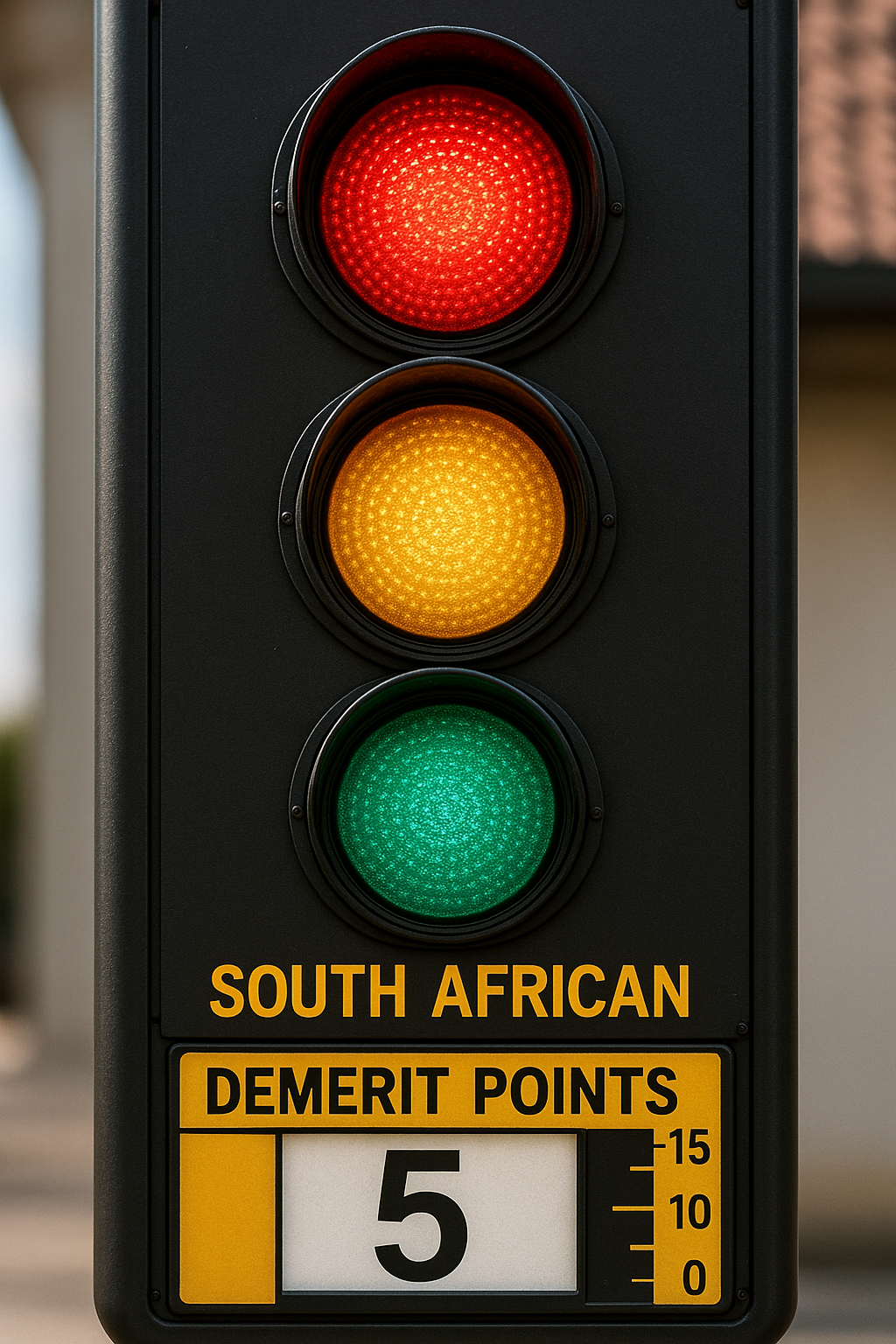
AARTO 2026: South Africa's new traffic law. Demerits, fines, and how it impacts motorists, fleets, and insurance.
South Africa's AARTO system, starting July 2026, is a big change for drivers. You get points for breaking traffic rules, and if you get 15 points, your license gets taken away. Notices will come by email or SMS, so keep your details fresh! Pay fines fast because points count from the day you broke the rule, not when you pay. This new system wants to make roads safer, so everyone needs to learn the new rules now.
What is South Africa's new AARTO traffic law system?
South Africa's AARTO traffic law system, effective July 2026, introduces a demerit point system for drivers and fleet operators. It assigns points for infringements and offenses, with 15 points leading to licence suspension or cancellation. The system also features electronic notice delivery and preset fines, aiming to enhance road safety and compliance.
Get Cape Town news in your inbox
Stay updated with the latest stories from the Mother City.
I. Blueprint of the New Regime – Demerits, Deadlines & Digital Paper Trails
South Africa’s 2026 traffic-law overhaul rests on four steel beams: demerit points, preset fines, electronic service and the unforgiving calendar that governs both. Each alleged transgression is slotted into one of two baskets: “infringement” (minor) or “offence” (criminal). Both carry a fixed cash value and a precise point weight. The instant a speed camera or officer records your number plate, NaTIS spawns a unique infringement notice.
That notice sets three stop-watches running in parallel. Stop-watch one gives you 32 days to choose among three lanes: admit guilt and pay, nominate the real driver, or demand a court hearing. Stop-watch two allows 64 days to file written representations arguing why the fine should be scrapped. Stop-watch three reaches its beep on day 100, the moment an enforcement order freezes you out of licence or disc renewals and piles a 50 % surcharge on top.
The surcharge and any reinstatement fee must all clear before the slate is clean. Crucially, demerit points are glued to the offence date, not the settlement date. A company that pays on day 31 remains within the early-payment window, yet the points still count from the day the camera flashed. Miss that nuance and fleet dashboards can lurch from green to red overnight.
II. How Points Stack and Vanish – The Ledger Explained
Every licence card and every fleet operator certificate starts life at zero. Points attach only to the human who was driving, never to the metal. Values range from a single point for an inconsequential rolling stop to half-a-dozen for rocketing more than 40 km/h above the posted limit, or for refusing to identify the driver.
Once accumulated, the only escape path is silence: stay infringement-free for three straight months and you earn a rebate of three points. Rack up 15 points and the system fires a warning shot labelled “intention to suspend.” The actual ban lasts three months for every point that pushes you beyond 12, so 15 points equals nine months on the bench. A second journey past 15 ends in licence annihilation; the driver must re-sit both the learner’s and the driving tests.
Corporate fleets tread the same tightrope. Any business operating more than ten vehicles must nominate an official “AARTO operator.” Miss the 32-day nomination deadline and the points and fine hop onto the operator’s own card. The same 15-point ceiling applies, and suspension freezes every vehicle on the certificate. Insurers have noticed: a growing list offers rebates for fleets that can produce three consecutive months with zero new entries on their infringement logs.
III. Digital Delivery & Calendar Traps – From Inbox to Courtroom
Late in 2024 the Electronic Service Regulations quietly entered the statute book. From that moment, e-mail or SMS became valid delivery channels. Once the packet leaves the RTIA mail-server, the law counts it as “received,” read or unread. Updating your contact details and whitelisting rtia.co.za is no longer optional; it is survival.
Holidays offer no mercy. If your 32nd day lands on Christmas, you must act on Christmas. RTIA servers tick to South African Standard Time and the cut-off is 23:59:59 sharp. Payments must arrive as “cleared value” on RTIA’s bank statement; a PDF proof-of-payment alone will not stop an enforcement order. Several banks now label same-day RTIA EFT codes to help motorists sprint to the finish line.
Rural motorists still served by face-to-face or postal channels face a thinner margin. RTIA’s roaming service van visits OR Tambo, uMkhanyakude and similar districts once a month. Officers also carry paper notices, yet the post can chew up fourteen days of your 32-day runway. Pre-registering for electronic service effectively buys rural drivers two extra weeks.
IV. Money, Myths & Future Tech – Costs, Court Challenges and What Comes Next
Fines, Fees and the Cottage Industry of Compliance
National tariffs adjust every July by CPI plus three percentage points. Today you will part with R250 for drifting 1–10 km/h over a 60 km/h limit, rising to R1 250 for more than 40 km/h on a freeway. Ancillary levies pile on: R100 for a duplicate infringement notice, R250 to appeal an enforcement order, R300 to lift a suspension and R75 for the “certificate of clearance” that is issued electronically but still carries a printing fee. Start-ups now sell subscription dashboards that query the NaTIS API every 24 hours and ping WhatsApp when a new notice drops; expect hundreds of such services by the end of 2025.
Appeals, Constitutional Storm Clouds and Global Lessons
An independent online tribunal hears appeals within 30 days. Appellants upload documents up to 10 MB. During the Gauteng pilot, 63 % of appeals succeeded, mostly due to blurred number plates or missing calibration certificates. The Constitutional Court is expected to test whether routing traffic matters away from criminal courts violates section 35(3) of the Constitution; rural internet access and the 32-day window are central gripes.
Queensland, Ontario and Milano offer blueprints. Queensland lets motorists erase three points after completing a four-hour virtual course. Ontario confiscates the car on the spot at nine points. Milano tacks a €10 surcharge onto congestion tolls for every point on the clock. South Africa is studying a hybrid: multilingual online behaviour classes, plus-secure ignition locks once point thresholds breach safe limits, and possible vehicle-immobiliser integration through eNaTIS 2.0.
Checklists & Urban Myth-Busting
Private motorist
- Open the infringement notice immediately; do not park it for a quiet Sunday.
- Verify reg number, date, time and offence code.
- If you were not driving, complete the RTI4 nomination form the same day.
- If you dispute the fine, tick “not guilty,” lodge written representations within 30 days and diarise Day 30 for payment clearance.
- After settlement, archive the confirmation PDF and upload it to your insurer to reset any premium loading.
Fleet operator
- Capture and verify every driver’s licence in the management system.
- Nominate one staff member as RTIA contact and keep that detail on the operator certificate.
- Schedule a weekly NaTIS API poll; auto-assign infringement tickets to drivers.
- Insert contract clauses: seven-day nomination deadline or disciplinary action.
- Log representation outcomes; clusters at one camera may point to faulty signage.
Rental company
- Photograph the renter’s licence at hand-over and return; time-stamp and GPS-tag the shots.
- Auto-debit fines plus an admin fee of R150.
- Offer a prepaid “AARTO handler” at R99 per booking; nominate an internal liability-driver.
- Send monthly compliance certificates to corporate clients - some now demand under-five-point fleet averages.
Urban legends in the graveyard
- “Late payment within the 32-day grace period avoids points.” False - points date back to the offence.
- “Learner drivers dodge demerits.” Wrong - 15 points and the learner returns to square one.
- “Points die with the driver.” Not so - enforcement orders still block vehicle-licence renewals.
Mark the key milestones: draft Electronic Service Regulations close 1 March 2025; fines rise with CPI-plus-3 on 1 June; eNaTIS 2.0 goes live in the Northern Cape on 1 October; fleets must register their AARTO operator by 1 March 2026; and on 1 July 2026 the new universe clicks into full force.
What is the AARTO system and when does it start?
South Africa's AARTO (Administrative Adjudication of Road Traffic Offences) system is a new traffic law framework set to begin in July 2026. It introduces a demerit point system for all drivers and fleet operators, aiming to improve road safety.
How do demerit points work and what happens if I accumulate too many?
Every driver's license starts with zero points. Points are accumulated for traffic infringements and offenses, with the number of points varying based on the severity of the transgression. If you reach 15 demerit points, your license will be suspended. The suspension period is three months for every point exceeding 12. Accumulating 15 points a second time results in license cancellation, requiring you to re-sit both learner's and driving tests. Points are linked to the offense date, not the payment date.
How will I receive notices about infringements and fines?
Notices will primarily be delivered electronically via email or SMS. It is crucial to keep your contact details updated with the authorities (NaTIS) and to whitelist rtia.co.za to ensure you receive these notifications. Physical notices may still be used in rural areas, but electronic registration is highly recommended to avoid delays.
What are the deadlines for dealing with an infringement notice?
Upon receiving an infringement notice, several deadlines begin: you have 32 days to admit guilt and pay, nominate the actual driver, or request a court hearing. You also have 64 days to file written representations to dispute the fine. If no action is taken by day 100, an enforcement order will be issued, blocking license and disc renewals, and adding a 50% surcharge to the fine.
Can demerit points be reduced or removed?
Yes, demerit points can be reduced. If you remain infringement-free for three consecutive months, you will receive a rebate of three points. This is currently the only way to reduce accumulated points.
How does AARTO impact fleet operators and businesses?
Businesses operating more than ten vehicles must nominate an official "AARTO operator." If the 32-day nomination deadline is missed, points and fines will be assigned to the operator's own license. The same 15-point ceiling applies, and a suspension can freeze all vehicles on the fleet's certificate. Insurers are also beginning to offer rebates for fleets with consistent zero-infringement logs. Rental companies will need robust systems to identify and manage driver liabilities.

Thabo Sebata is a Cape Town-based journalist who covers the intersection of politics and daily life in South Africa's legislative capital, bringing grassroots perspectives to parliamentary reporting from his upbringing in Gugulethu. When not tracking policy shifts or community responses, he finds inspiration hiking Table Mountain's trails and documenting the city's evolving food scene in Khayelitsha and Bo-Kaap. His work has appeared in leading South African publications, where his distinctive voice captures the complexities of a nation rebuilding itself.
View all articles →