
WHAT HAPPENED IN FISH RIVER CANYON HIKING RESCUE
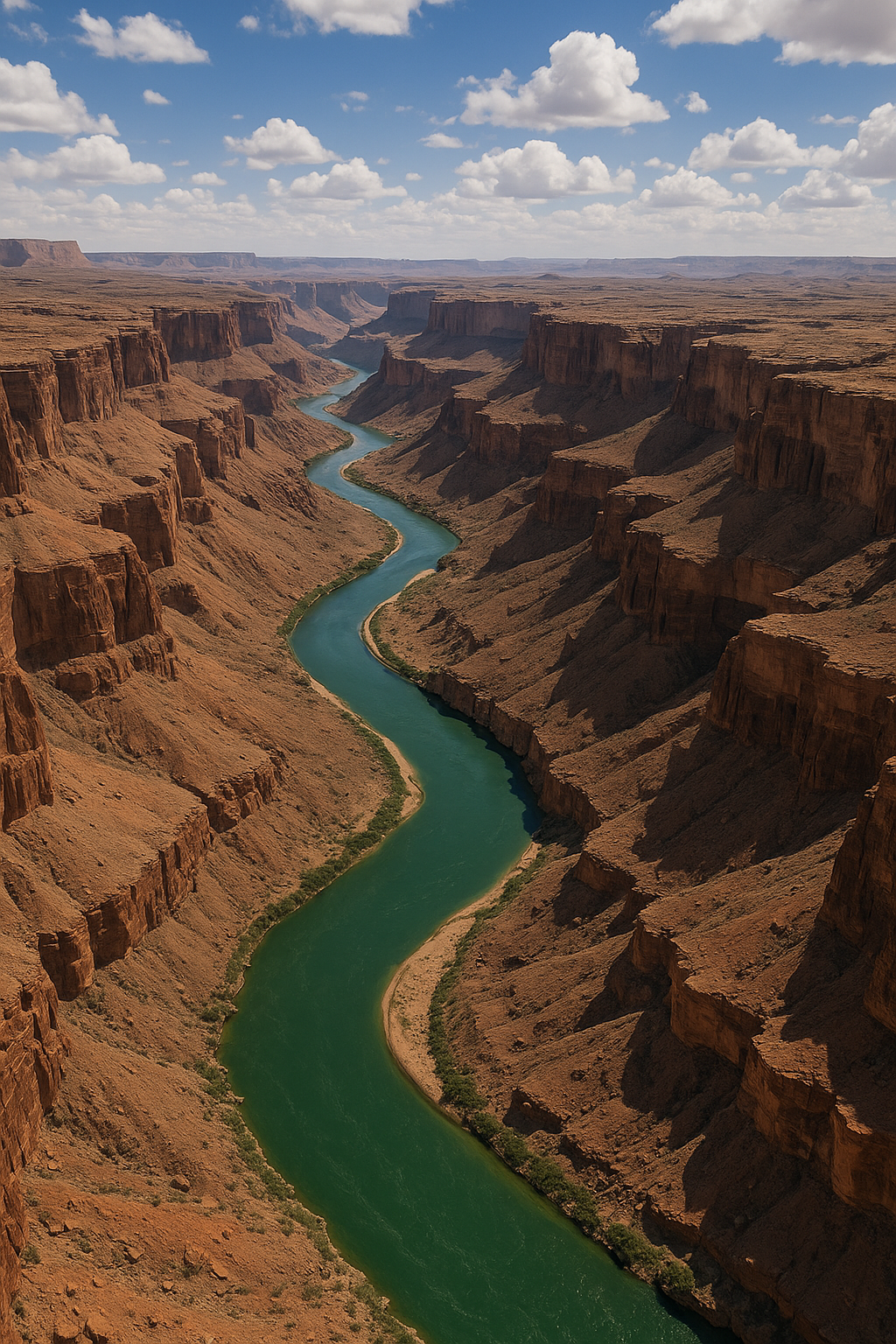
Explore the Fish River Canyon trail: its geology, sudden floods, and the human magnetism drawing South Africans back for adventure.
Imagine a super tough hike in Africa's Fish River Canyon, where it's like a lottery just to get in! This place is so wild, it can suddenly get huge floods, making it super dangerous. But South Africans love it, even though they have to carry everything and there's no phone signal. It's truly an epic adventure under a sky full of stars.
What makes the Fish River Canyon hike so challenging and unique?
The Fish River Canyon hike offers a unique challenge due to its unsupported, week-long traverse carrying all supplies, strict permit lottery system, and the ever-present risk of flash floods. Trekkers navigate a remote wilderness without cell service or way-markers, facing extreme conditions and the need for meticulous preparation.
Get Cape Town news in your inbox
Stay updated with the latest stories from the Mother City.
1. The Lottery of Entry: Where 4 000 Golden Tickets Vanish Overnight
From 35 000 ft the canyon looks like a pale scar scratched across southern Namibia’s iron-red hide. Pilots announce it on the PA; passengers crane necks to glimpse the slash that glows even at noon. Every season - 1 May to 15 September - Namibian Wildlife Resorts releases exactly 4 000 permits for the 80 km north-to-south traverse. Half those permits are snapped up inside South Africa within a week, processed by three outdoor shops that double as unofficial consulates: one in Stellenbosch, one on Cape Town’s Long Street, one in Randburg’s Cresta Mall.
The paperwork feels more like signing a mortgage than booking a walk. Height above sea level at Hobas lip is 1 615 m; the drop starts two strides beyond the parking bollards. A steel stairway - 114 steps, every returning trekker counts - delivers you through two billion-year-old gneiss into a world without cell reception, without way-markers, without mercy. Black 50-litre drums bolted to boulders appear every 8 km: trash bins and sanity savers in one. Miss a drum and you have overshot the only exit ramp for the night.
Permit rules read like a legal thriller: thirty hikers max per day, odd-numbered calendar days only, thirty-litre pack-weight ceiling at the weighbridge. Miss the slot and you enter a WhatsApp secondary market that trades “canyon slots” - digital vouchers worth a cold beer at Ai-Ais - like World Cup tickets. Scalpers flip cancellations within minutes; entire friendship groups rearrange leave days around a single forfeited place.
2. When the Desert Unleashes a Fire-Hose: Flash-Flood Physics in a Stone Nozzle
Fish River’s catchment is a miserly 150 mm a year, yet runoff efficiency tops 80 %. Convectional storms can hurl 40 mm in an hour onto calcrete pavements that refuse to absorb a drop. Hydrologists call the canyon a “natural Venturi tube”: water racing down a narrowing throat has nowhere to go but up. Between 2000 and 2023 the gorge logged 17 rapid-rise events; mean climb 3.8 m, record 7.2 m set during the April 2019 rescue that pulled 83 hikers off sandbars by helicopter.
On 8 April 2024 a distant tropical depression slipped 34 mm on Brukkaros Mountain while Hardap Dam sat at 102 %. Spillway gates opened at 22:00, releasing 240 m³/s. Inside the chasm the river slept at knee depth at 23:40; by 02:15 it had risen to the waist and resembled stirred cappuccino. A Pretoria engineer’s inReach chirped the official flood warning at 02:17. By 02:25 entire tamarisk trunks shot past headlamps like battering rams.
Evacuation choreography is ruthlessly graded. Red tags - sleeping on exposed sandbars - fly first. Amber tags - higher boulder benches - follow. Green tags - still able to retreat upstream - wait for daylight. That April morning a Bell 407 and a chartered H125 hoisted 96 trekkers to a plateau staging area; the last rotor-wash lifted off at 10:15. Hypothermia count: two mild cases, zero fractures. Every extracted hiker still swears the coffee-brown torrent sounded “like a 747 taking off inside a cathedral.”
3. Why South Africans Keep Crawling Back to a Place That Tries to Drown Them
South Africa’s marquee trails - the Otter, the Amatola, the Whale - demand nightly huts or gated exits. None stretch beyond four days. Fish River remains the last sub-Saharan stage where unsupported still means you carry life on your back for a week. Water: five litres per person per day. Food: six-day buffer. Waste: everything rolls out in a biodegradable bag - burying faeces risks a court citation. Firearms stay home, yet a half-kilogram sand wedge golf club slips through the loophole; seasoned trekkers wield it to shoo honey-badger-grade baboons that unzip packs stitching.
Scarcity drives obsession. A single calendar carries only 4 000 starts - fewer beds than Skukuza’s rest camp hosts on one Saturday night. Operators run burner-phones that vibrate the instant a permit frees up; places change hands for cost price plus a case of beer. Canyon slots - R50 digital tokens accepted at Ai-Ais bar - turn refunds into post-hike currency, ensuring even a last-minute cancellation salvages bragging rights.
Geology doubles as narcotic. The route cruises 700-million-year-old banded ironstone, fossilised stromatolites polished by desert wind. Rust-red walls are fossilised algal mats; hematite stripes photograph like Martian slopes. Guides quietly confess the landscape gives “Martian-envy” to anyone who grew up on Star Trek reruns. Remove a thumbnail specimen and Namibia’s heritage act slaps you with a criminal record - yet every season someone sneaks a Dremel in hopes of a desktop conversation piece.
4. Feet, Food and Starlight: The Micro-Science That Makes or Breaks the Trek
Desert quartz grains - 0.5 mm daggers - sandpaper skin into grated cheese by day two. Podiatrists market “canyon socks”: double-layer merino with bonded silicone heel cups. Failure rate still 15 %. Ai-Ais clinic keeps silver sulfadiazine and repurposed ski-pole crutches on permanent standby; finish-line staff recognise the hobble before they see the face.
Calorie density rules the pack: 3 800 kcal must squeeze under 650 g. Breakfast and dinner bow to freeze-dried monarchs; lunch culture turns tribal. Cape factions swear by biltong and cheddar rolls; Durbanites pack vacuum-sealed bunny-chow; Gauteng ultra-runners slurp whey-oats-olive-oil slurry from corner-torn ziplocks. A single GU electrolyte sachet buys two nights of stove-sharing; flavours become canyon cryptocurrency.
Night rituals bow to the galaxy. Canyon walls block 40 % of the sky, but the slice overhead scores a Bortle Class 1 - pristine dark. Magellanic Clouds hover like steam plumes; the Southern Cross cartwheels overnight. Astrophotographers plant tripods in sand-pools, capturing the galactic core reflected in mirror-calm claypans. Thirty-second exposures end up as limited-edition canvases auctioned to fund trail-maintenance kitty.
Communication etiquette is binary. One green ping at 19:00 tells rangers “all good”; yellow reports “walking wounded”; red opens a R80 000 helicopter door. Since 2018 the one-button honour code has sliced unnecessary evac call-outs by a third. The creed: if you can stand, you thumb yellow; if you can’t, you hit red and wait for rotor-wash to echo off 200-million-year-old stone.
What is the Fish River Canyon hike and what makes it so challenging?
The Fish River Canyon hike is an incredibly tough, unsupported, multi-day trek through Africa's second-largest canyon, located in southern Namibia. It's renowned for its extreme wilderness, lack of amenities like cell service or way-markers, and the requirement for hikers to carry all their supplies for the entire journey. The challenge is amplified by a strict permit lottery system, the constant threat of sudden flash floods, and navigating a remote environment where meticulous preparation is paramount.
How difficult is it to get a permit for the Fish River Canyon hike?
Obtaining a permit for the Fish River Canyon hike is highly competitive, often described as a 'lottery.' Only 4,000 permits are released annually for the season (May 1st to September 15th), and a significant portion of these are snapped up within a week, particularly by South African trekkers. The booking process is rigorous, and there are strict rules regarding daily hiker limits, specific entry days, and even pack weight. Due to high demand, a secondary market for 'canyon slots' often emerges for last-minute cancellations.
What are the risks of flash floods in the Fish River Canyon and how are they managed?
Despite the arid climate, the Fish River Canyon is prone to sudden and dangerous flash floods due to its unique geological structure, which acts like a 'natural Venturi tube' channeling rapid runoff. Convectional storms can cause the river level to rise by several meters in just a few hours. To manage this risk, a strict evacuation protocol is in place, using a color-coded tag system (Red, Amber, Green) to prioritize rescue efforts by helicopter. Hikers are equipped with satellite communication devices (like inReach) to send distress signals and receive official flood warnings.
Why is the Fish River Canyon hike particularly popular among South African trekkers?
The Fish River Canyon holds a 'cult-like pull' for South African trekkers because it represents one of the last true unsupported wilderness challenges in Southern Africa. Unlike many other popular trails that offer nightly huts or easy exits, the Fish River Canyon demands complete self-sufficiency for a week. This scarcity of such epic, raw adventures, combined with the stunning 700-million-year-old geology and pristine dark skies, fosters a deep obsession and sense of accomplishment among those who complete it.
What essential preparations are crucial for a successful Fish River Canyon hike?
Successful completion of the Fish River Canyon hike relies on meticulous preparation. This includes carrying all necessary supplies for up to six days (e.g., five liters of water per person per day, high-calorie, low-weight food), proper footwear to combat the abrasive desert quartz, and a robust waste management plan (all waste, including human, must be carried out). Communication devices like satellite messengers are vital for safety, and understanding the evacuation protocols is paramount. Seasoned trekkers also often carry unconventional items like a sand wedge golf club to deter baboons.
What unique experiences can hikers expect during their journey through the canyon?
Hikers can expect an unparalleled immersion in ancient wilderness. The deep canyon walls offer a unique perspective, revealing 700-million-year-old banded ironstone and fossilized stromatolites. Nights are a highlight, with the canyon providing a Bortle Class 1 dark sky, ideal for stargazing and astrophotography, where the Milky Way and Magellanic Clouds are vividly visible. Despite the challenges, the trek offers a profound sense of solitude and connection with nature, culminating in the satisfaction of navigating one of Africa's most formidable landscapes.

Lerato Mokena is a Cape Town-based journalist who covers the city’s vibrant arts and culture scene with a focus on emerging voices from Khayelitsha to the Bo-Kaap. Born and raised at the foot of Table Mountain, she brings an insider’s eye to how creativity shapes—and is shaped by—South Africa’s complex social landscape. When she’s not chasing stories, Lerato can be found surfing Muizenberg’s gentle waves or debating politics over rooibos in her grandmother’s Gugulethu kitchen.
View all articles →