
WHAT SENTENCE DID DAWIE GROENEWALD RECEIVE?
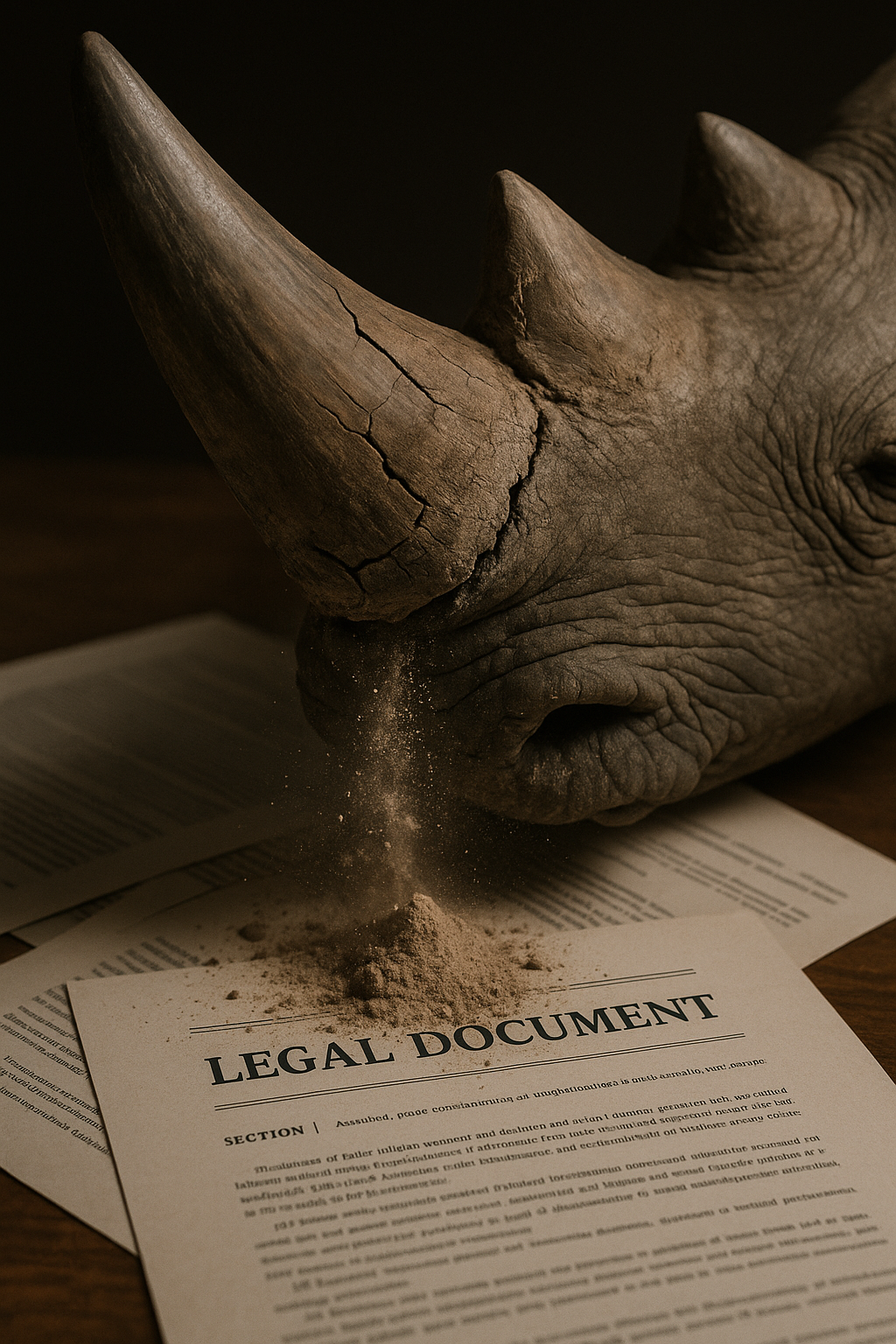
Dawie Groenewald's rhino horn trafficking plea deal closes a chapter but reveals systemic issues in SA's wildlife crime fight and conservation.
A powerful rhino poacher in South Africa, Dawie Groenewald, made a deal with the law. He admitted to running a huge illegal horn business. This deal shows how his group caught rhinos, took their horns, and sold them for big money. It also highlights the challenges in stopping this cruel trade and helping rhinos survive.
What is the featured snippet about?
The featured snippet details the plea deal of Dawie Groenewald, a central figure in South Africa's rhino poaching underworld. It covers how his syndicate operated, the terms of his plea agreement, the financial aspects of the illicit horn trade, and the broader implications for conservation efforts and legal frameworks in South Africa.
Get Cape Town news in your inbox
Stay updated with the latest stories from the Mother City.
1. The Midnight Ballet: Birth of a Syndicate
September 2007. A neighbouring farmer in Limpopo phones the Endangered Species desk with a blunt gripe: a Robinson R44 keeps touching down on the private reserve next door, always under new-moon skies. SAPS parks a surveillance van on the Groblersdal road. Over four months officers log 47 nocturnal sorties; the chopper lifts off from Dawie Groenewald’s game farm Prachtig, vanishes over the Soutpansberg, and glides back before first light. No shots, no carrion birds - perfect choreography.
Inside the reserves the crime scene was clinical. Veterinary-grade narcotics dropped the animals in minutes. Horns came off with a Bose heat-blade; the stubs were sealed with surgical epoxy, ear-notched to mimic legal hunts, and the dazed rhinos were trucked to new farms before the sedation wore off. Because microchips were either swapped for blanks or never inserted, the same animal could be “hunted” again three provinces away. SAPS dubbed the pattern “recycling by rotor”.
On 4 January 2008 the Makhado docket opened as case 83/09. The original 32-page affidavit snow-balled, annex by annex, until it hit 1 126 pages in 2014. Warrants yielded 15 frozen bank accounts, an airstrip’s worth of aircraft, a refrigerated container still etched with blood grooves, and finally a charge sheet carrying 1 737 counts - racketeering, wire fraud, malicious damage to biodiversity, and more - against eleven accused.
2. A Bargain in Courtroom 4B: Anatomy of the Plea
The Deal
Seventeen June 2024, 09:12. Groenewald stepped into the Polokwane High Court dock and initialed every page of a section 105A plea. The NPA rolled a decade of evidence into one crisp admission: he ran a venture whose sole purpose was capturing and exporting rhino horn for profit. In return the State kept its powder dry.
The Four Pillars
- Wallet or Cage: R2 million fine or four years behind bars - his choice.
- The Long Leash: Ten years in prison, suspended for five, expire only if he obeys every clause of NEMBA, TOPS and provincial permit law.
- Dirty-Money Repatriation: R8.4 million tagged to money-laundering counts, payable in quarterly tranches.
- The Phantom 26: A further 26 years on peripheral charges, also suspended, spring-loaded if he slips up.
Why the NPA Folded
Lead prosecutor Ivy Thenga did not mince words: eighteen vital witnesses had died since 2010 - some of old age, two in hunting mishaps, one in an unsolved farm ambush. Flight logs and veterinary registers vanished during two separate docket leaks. “A 2025 trial,” she warned, “risked collapsing before opening arguments.” The plea became the State’s insurance policy.
3. Counting the Cash: Who Paid, Who Profited
The Liquidity Trap
South Africa’s private rhino owners guard roughly 35 % of the national herd yet bleed cash for security, feed and vet bills. Groenewald exploited this drought. Ranchers received R38 000 per kilo for horns still warm. By the time those horns landed in Saigon - mis-declared as hydraulic parts - the price had ballooned to US $65 000. Mark-up: 2 400 %.
The Laundering Laundromat
Nonexistent safaris generated trophy export permits; a Pretoria car-wash whose bays were always empty rinsed the proceeds. Bank statements show cash couriers flying economy class with envelopes taped to their torsos. SAPS traced crypto wallets opened in 2013; one still holds 11.7 bitcoin untouched since 2016 - frozen under preservation order.
The Windfall: From Villain to Vault
Prachtig (2 300 ha), Alldays Reserve (1 800 ha) and three smaller camps - valued together at R56 million - will slip into SANParks’ custodianship under NEMBA section 38. Removing cattle and internal fences will cost R2.8 million, but the agency will save R3.2 million a year in lease fees it now pays private landowners. Those savings will pay for drone batteries and satellite collars.
4. Courthouse Echoes: Regional Yard-Sticks and Loopholes
Sentences Elsewhere
• Yang Fenglan, the so-called Ivory Queen, drew 15 years direct imprisonment in Tanzania plus asset forfeiture.
• Ndlovu rhino gang members are serving 22-24 years in Mozambique with no fine option.
• Chumlong Lemtongthai started with 40 years in South Africa, trimmed to 30 on appeal, for phantom lion and rhino trophies.
Each trial ran in specialised courts with mandatory minimums. South Africa still parcels wildlife cases among regional magistrates who juggle dockets for shop-lifting and assault. The result: fines cheaper than a single night-vision mission.
The Missing Environmental Bench
Parliament’s Environmental Affairs portfolio committee is accelerating the Draft Wildlife Crime Bill, tabled in October 2024. The draft pushes a ten-year floor sentence for offences topping R5 million. Hearings will dissect Groenewald’s plea from both sides - proof that bargaining can convict, or proof that bargaining is too soft.
5. After the Verdict: Horns, Hackers, and Hard Bargains
The Pipeline rolls on
Forensic DNA confirms 92 % of seized horn slices carry the Kruger-Limpopo haplotype; the identical pattern resurfaced in Mong Cai in 2015. Interpol’s “Hai Ninh” broker last moved 4.6 kg through Guangxi in December 2023 - four months after Groenewald started plea negotiations. The supply chain is now hydra-headed.
Market Morphing
TRAFFIC records show “trophy” exports peaked at 384 whole horns in 2012 and fell to under 12 per year after the 2018 moratorium. Vacuum filled: bogus permits, pseudo-hunters, and a list of 96 Vietnamese passport holders who booked multiple licences yet never cleared passport control.
Tech Counter-punch
CSIR engineers have laced rhino horns with invisible rare-earth mesh; under 365-nanometre UV light they fluoresce like a nightclub wristband - undeniable, non-copyable. SARS will deploy handheld scanners at OR Tambo and Cape Town airports by January 2025. One five-second scan could torpedo an entire Groenewald-style shipment.
Insurance & Industry Self-Policing
PHASA shredded Groenewald’s membership card and is pushing DFFE for biometric hunting permits tied to fingerprints. Hollard Specialist Risk will decline future cover unless outfitters mount motion-sensor cameras on every helipad. Conservation forensics is now a board-room metric, not an academic hobby.
6. The Last Dominoes: Science, Land and Justice Delayed
Hidden on the Gene Map
Blood drawn from 140 rhinos seized in 2010 became the genetic Rosetta Stone for Malaysian customs, nailing two court cases in 2021–22. Labs also revealed that vets could implant chips without uploading data; since 2021, on-site verification and cloud upload within two hours is mandatory. Compliance jumped from 11 % to 87 %.
Community Claims to the Carcass
The Mutele Traditional Council has lodged a restitution bid for subsistence hunting rights on Prachtig, arguing their 1964 forced removals void SANParks custodianship. A Makuleke-style joint-management deal - 50 % tourism revenue, zero hunting concession - is on the table. The Land Claims Commission may set the template for every future confiscated wildlife estate.
The Unfinished Trio
Karel and Marisa Toet, plus professional hunter Koos Pronk, still face 460 money-laundering counts. Trial date: 20 August 2026. Forensic audits - some dating back to 2009 leather-bound ledgers - continue to sprawl. Prosecutors hint that if the numbers stay foggy, plea deals may beckon.
As Groenewald counts his days of probation, South Africa’s rhino economy finds itself rewired: farms seized, UV scanners inbound, community land claims circling. Yet Asia’s appetite for horn has not shrunk; it has simply sharpened its tools.
[{"question": "
Who is Dawie Groenewald and what was his plea deal about?
\nDawie Groenewald was a powerful rhino poacher in South Africa who ran a massive illegal horn business. His plea deal, formalized on June 17, 2024, involved admitting to operating a syndicate focused on capturing and exporting rhino horn for profit. In return, he faced a R2 million fine (or four years in jail), a ten-year suspended prison sentence conditional on obeying environmental laws, repayment of R8.4 million related to money laundering, and an additional 26-year suspended sentence for peripheral charges. The National Prosecuting Authority pursued the plea due to the loss of vital witnesses and evidence over a decade, fearing a full trial might collapse.
\n","answer": null},{"question": "How did Groenewald's rhino poaching syndicate operate?
\nGroenewald's syndicate operated with sophisticated methods, dubbed \"recycling by rotor.\" They used a Robinson R44 helicopter for nocturnal flights to private reserves in Limpopo, landing under new-moon skies. Rhinos were sedated with veterinary-grade narcotics, their horns were removed with heat-blades, and the stubs sealed with surgical epoxy. To evade detection, microchips were often swapped or never inserted, allowing the same rhinos to be \"hunted\" multiple times across different provinces. The syndicate also used nonexistent safaris to generate trophy export permits and a car-wash business to launder proceeds, transporting cash via couriers and utilizing crypto wallets.
\n","answer": null},{"question": "What were the financial aspects of Groenewald's illegal horn trade?
\nThe illegal horn trade was highly lucrative. Private rhino owners, struggling with conservation costs, were paid approximately R38,000 per kilogram for freshly removed horns. By the time these horns were illegally exported and reached markets like Saigon, often mis-declared as hydraulic parts, their price dramatically inflated to around US $65,000 per kilogram, representing a 2,400% mark-up. Groenewald's assets, including three game farms valued at R56 million, will now be transferred to SANParks' custodianship under NEMBA section 38, saving the agency significant lease fees and funding conservation efforts.
\n","answer": null},{"question": "How does Groenewald's sentence compare to other rhino poachers, and what are the implications for South African law?
\nGroenewald's plea-bargained sentence, involving fines and suspended sentences, is notably softer than those received by other high-profile wildlife criminals internationally. For example, Yang Fenglan, the \"Ivory Queen,\" received 15 years direct imprisonment in Tanzania, while members of the Ndlovu rhino gang got 22-24 years in Mozambique with no fine option. Chumlong Lemtongthai received 30 years for phantom lion and rhino trophies in South Africa. This disparity highlights a perceived weakness in South Africa's judicial system, which often parcels wildlife cases among regional magistrates. In response, Parliament's Environmental Affairs committee is accelerating the Draft Wildlife Crime Bill, aiming to introduce a ten-year minimum sentence for offenses exceeding R5 million.
\n","answer": null},{"question": "What technological and industry changes are being implemented to combat rhino poaching?
\nSeveral advancements are countering poaching. CSIR engineers have developed a method to lace rhino horns with invisible rare-earth mesh that fluoresces under UV light, making illegal horns undeniable and non-copyable. SARS will deploy handheld scanners at major airports by January 2025 to detect these, potentially disrupting shipments. The hunting industry is also self-policing; the Professional Hunters' Association of South Africa (PHASA) revoked Groenewald's membership and is pushing for biometric hunting permits. Additionally, Hollard Specialist Risk will require outfitters to install motion-sensor cameras on helipads for insurance coverage, integrating conservation forensics into business metrics.
\n","answer": null},{"question": "What are the broader impacts of Groenewald's case on conservation, land claims, and ongoing legal battles?
\nThe Groenewald case has far-reaching implications. Genetic analysis of seized rhino blood has become a \"Rosetta Stone\" for prosecuting cases globally and enforcing stricter microchip compliance in South Africa. Furthermore, the Mutele Traditional Council has filed a restitution bid for subsistence hunting rights on Groenewald's confiscated farm, Prachtig, potentially leading to a Makuleke-style joint-management deal with SANParks and setting a precedent for future confiscated wildlife estates. The legal saga continues for Groenewald's alleged accomplices, Karel and Marisa Toet and Koos Pronk, who face money-laundering charges, with their trial set for August 2026, suggesting further plea deals might be on the horizon if forensic audits remain inconclusive.
\n","answer": null}]
Lerato Mokena is a Cape Town-based journalist who covers the city’s vibrant arts and culture scene with a focus on emerging voices from Khayelitsha to the Bo-Kaap. Born and raised at the foot of Table Mountain, she brings an insider’s eye to how creativity shapes—and is shaped by—South Africa’s complex social landscape. When she’s not chasing stories, Lerato can be found surfing Muizenberg’s gentle waves or debating politics over rooibos in her grandmother’s Gugulethu kitchen.
View all articles →