
WHAT WILL THE SMOKING AND VAPING LAWS CHANGE?
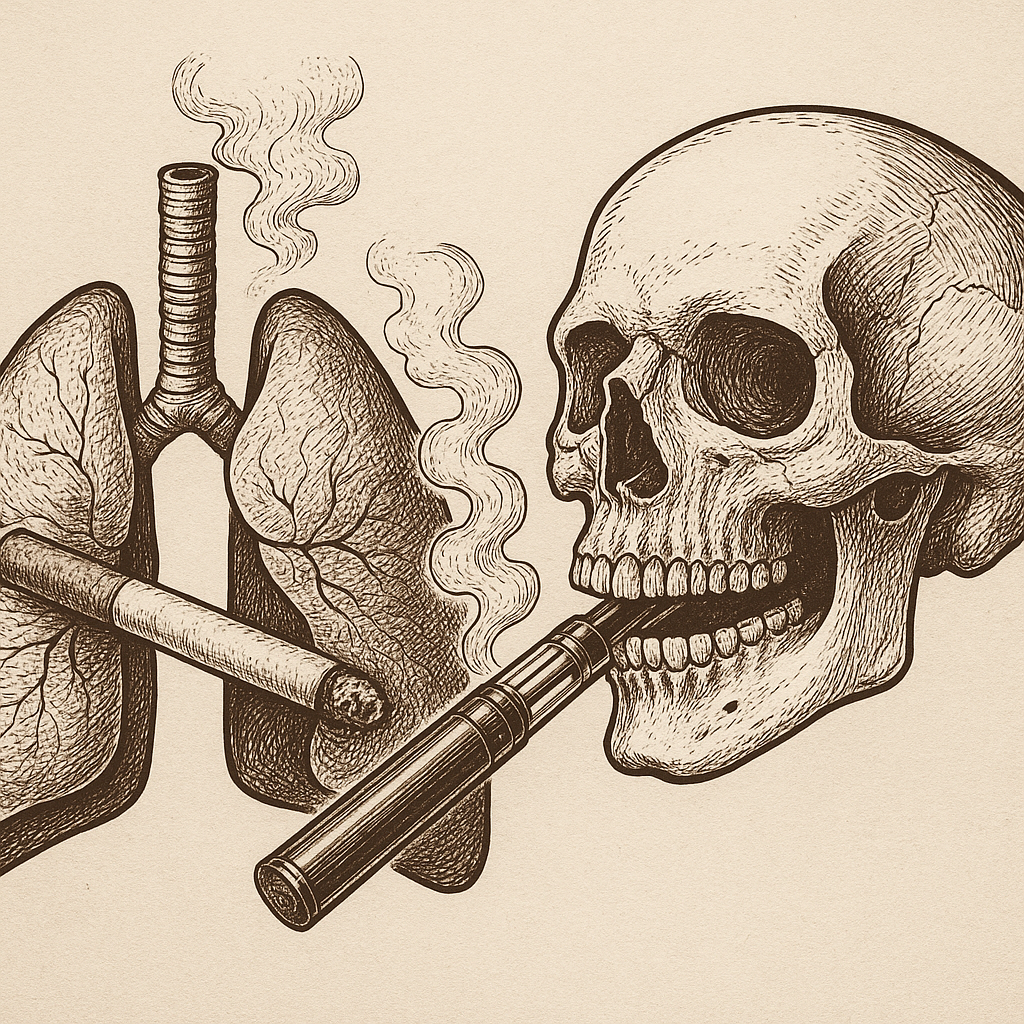
South Africa's new tobacco & vaping bill advances, proposing strict bans on public use, display, and advertising. Debates continue on vaping product differentiation.
South Africa is getting tough on smoking and vaping with a new law. Soon, you won't be able to puff indoors anywhere public, and all tobacco and vape products will be hidden in stores with ugly health warnings. This big change has been talked about a lot by everyone, from regular people to big bosses, and it's all about making South Africans healthier, even if it means some shops and jobs might change in the short term. Get ready for a smoke-free future!
What is the new Tobacco Products and Electronic Delivery Systems Control Bill in South Africa?
The new Tobacco Products and Electronic Delivery Systems Control Bill in South Africa aims to implement stricter regulations on tobacco and vaping products. If passed, it will prohibit smoking and vaping in all indoor public spaces, mandate plain packaging with graphic health warnings, and require retailers to keep products out of sight.
Get Cape Town news in your inbox
Stay updated with the latest stories from the Mother City.
From Draft to Decision: How the Bill Cleared Its First Hurdle
South Africa is edging toward the toughest anti-smoking and anti-vaping regime since the end of apartheid. On 5 March 2024 the National Assembly’s Portfolio Committee on Health voted to forward the Tobacco Products and Electronic Delivery Systems Control Bill to the next legislative phase, setting the stage for clause-by-clause debate and possible amendments before the National Council of Provinces and, ultimately, the President’s desk. The vote was not merely procedural; it signalled that the political appetite for tighter control now outweighs the long-standing influence of the tobacco lobby.
The path to this moment has been unusually consultative. Starting in late 2018, the Department of Health criss-crossed the country, staging public hearings in 27 district and metropolitan municipalities across all nine provinces. More than 7 800 residents attended these sessions, while another 40 700 individuals and organisations filed written comments - numbers that dwarf most previous health-policy campaigns. The result is a proposed law that has been stress-tested in taxi ranks, church halls and university auditoriums before it has even reached Parliament’s formal amendment process.
Critics who dismiss the Bill as a top-down bureaucratic push ignore this grassroots footprint. Rural traditional leaders, township tavern owners, medical-school students, and multinational tobacco executives all had equal standing at the microphones. The committee’s 107-page report summarising the hearings lists every concern, from “my lounge-bar patrons will leave” to “vaping helped me quit a 30-year smoking habit.” Such granular feedback will inform the next round of deliberations, where wording on issues such as designated smoking rooms, nicotine concentration limits and police enforcement powers is still expected to shift.
Inside the Clampdown: What Everyday Life Will Look Like
If the draft becomes law in its current shape, lighting up or puffing on a vape will be illegal in any indoor place the public can enter - malls, restaurants, taxis, office lobbies, sports stadium concourses and, for the first time, inside shebeens and casinos. The definition of “indoor” is deliberately sweeping: any space enclosed by a roof and at least three walls, however makeshift, counts. Patrons will still be able to smoke or vape on open-air sidewalks, but balconies attached to restaurants will be classified as indoor areas, a nuance that has already triggered push-back from the hospitality sector.
Retailers will feel the change just as sharply. Cigarettes, rolling tobacco, cigars, snuff pouches and every form of vaping device must be kept out of sight - either in opaque cupboards behind the counter or in age-restricted rooms that minors cannot enter. Point-of-sale advertising, including the glowing LED posters common in fuel stations, will disappear. Shop owners in Cape Town’s townships warn that impulse sales contribute up to 18 % of their daily turnover; they predict a short-term revenue dip that could force smaller convenience stores to diversify into street-food or mobile-money services.
Packaging will lose its glamour. Brand colours, embossing and metallic foils will be replaced by a drab brown-green template dominated by graphic warnings: blackened lungs, ulcerated gums, stillborn babies and, for the first time in Africa, images of gangrene toes linked to vaping-related vascular damage. The health department calculates that the visual shock factor alone could deter 200 000 teenagers from experimenting with nicotine products in the first five years. Tobacco companies will still be allowed to print the brand name in a mandated font size no larger than 14 point Helvetica, a concession that keeps the legislation within World Trade Organisation intellectual-property rules.
Science at a Crossroads: Are Cigarettes and Vapes Really the Same?
The Bill’s most contentious clause treats combustible and electronic products as mirror images, banning both in identical language. This zero-differentiation stance infuriates harm-reduction advocates who cite Public Health England’s oft-quoted estimate that vaping is “at least 95 % less harmful” than smoking. They argue that forcing ex-smokers who vape back into designated outdoor smoking zones undermines the very public-health goals the Bill claims to champion. Heated-tobacco lobbyists add that products such as IQOS, which heat rather than burn tobacco, emit dramatically lower levels of tar and carbon monoxide, and therefore deserve lighter touch regulation.
Yet the committee heard equally forceful counter-evidence. Researchers from the South African Medical Research Council presented data showing that local e-liquids often contain up to 72 mg/ml of nicotine - three times the legal ceiling in the EU - while flavouring chemicals such as diacetyl and cinnamaldehyde were detected at levels associated with bronchiolitis obliterans, the so-called “popcorn lung.” Youth uptake is accelerating: among Grade 8–11 learners, ever-use of e-cigarettes rose from 3.7 % in 2018 to 10.2 % in 2022, overtaking traditional cigarette experimentation in several provinces for the first time.
The WHO’s position, repeatedly quoted by health officials, is that reduced-risk claims are premature while long-term epidemiological data are still thin. With South Africa already shouldering a R59-billion annual tobacco-related healthcare bill - more than triple the R16-billion collected in excise duties - policy makers say they cannot afford to wait for 30-year cohort studies before acting. The compromise likely to emerge in the next parliamentary cycle is a two-tier system: combustibles remain heavily restricted, while non-combustible products are relegated to a “regulated but not equivalent” track, possibly involving nicotine-content caps, flavour bans and medical-licensing pathways for cessation devices.
Counting the Cost: Jobs, Illicit Trade and the Budget
South Africa’s 8 000 legal tobacco retailers employ roughly 89 000 people directly and another 30 000 in logistics and warehousing, according to the Tobacco, Alcohol and Food Alliance. An Oxford Economics study commissioned by the industry claims the new rules could eliminate 22 000 jobs within three years, particularly in rural provinces where spaza shops rely on cigarette margins to keep bread prices low for poor households. Economists sympathetic to the Bill counter that historical data from Australia, France and Uruguay show employment losses are transient; former tobacco sales staff migrate to fast-moving consumer goods within 12–18 months, while hospitality hiring rebounds as more non-smokers patronise restaurants.
Illicit trade is the elephant in the room. The South African Revenue Service already loses an estimated R8-billion a year to cigarette smuggling; independent researchers put the illicit share at 38–42 % of the total market, with some brands selling for less than half the taxed price in border towns. Stricter regulations, without simultaneous border-capacity investment, risk expanding the black hole. Treasury has quietly allocated an extra R1.2-billion over the medium-term expenditure framework to SARS’ Customs and Excise division for container-scanning technology and mobile strike teams, a detail that will accompany the Bill when it goes to the finance committee.
On the flip side, healthcare savings are projected to dwarf enforcement costs. Modelling by the University of Cape Town’s Research Unit on the Economics of Excisable Products shows that every 10 % drop in smoking prevalence yields a R4.3-billion reduction in cardiovascular and cancer treatment expenses within five years. The Bill’s target of cutting adult smoking from 16 % to 10 % by 2035 would therefore save around R25-billion in real terms - money that could fund 40 000 additional community-health-worker posts or quadruple the annual HPV-vaccine budget.
What Happens Next: Timetable, Tactics and the Lobby War
The Bill now enters the “B version” phase: parliamentary legal drafters will incorporate the Health Committee’s proposed changes - among them, a clearer distinction between heated-tobacco and vaping devices, a phased-in six-month retail-display grace period, and heavier penalties for selling to minors. The revised text is expected to reach the National Assembly by August 2024. If passed without referral back to committee, it will travel to the NCOP for provincial concurrence, a process that must wrap up before Parliament rises for the 2024 Christmas recess. Should the President sign before year-end, most retail-facing provisions will take effect on 1 March 2025, coinciding with the new fiscal-year excise schedule.
Expect intense trench warfare. Multinationals have already retained senior counsel to challenge plain-packaging rules on intellectual-property and expropriation grounds, mirroring the unsuccessful but costly bid by tobacco giant Philip Morris against Uruguay’s graphic warnings. Local vaping associations are mobilising 200 000 consumers via WhatsApp to flood MPs with pro-choice messages, while medical NGOs counter with testimonial campaigns from lung-cancer patients. The decisive bloc will be the 44 swing-vote MPs from rural provinces where tobacco farming provides 3 500 seasonal jobs; they will demand concrete offset programmes such as high-yield macadamia or avocado transitions funded by Treasury’s green-economy fund.
For ordinary citizens, the writing is on the wall. Whether you smoke, vape, sell or simply share airspace, the era of laissez-faire nicotine access is ending. The only questions left are how fast, how far and with what safeguards for the millions of South Africans whose livelihoods and habits now sit on Parliament’s agenda.
What is the new Tobacco Products and Electronic Delivery Systems Control Bill?
The new Tobacco Products and Electronic Delivery Systems Control Bill in South Africa is a proposed law aiming to significantly tighten regulations on both traditional tobacco products and electronic vaping devices. If passed, it will lead to comprehensive changes in how these products are sold, advertised, and consumed.
What are the key restrictions proposed by the Bill?
The Bill proposes several major restrictions. Firstly, it will prohibit smoking and vaping in all indoor public spaces, including restaurants, malls, offices, and even previously tolerant venues like shebeens and casinos. Secondly, all tobacco and vape products will need to be hidden from public view in stores, requiring retailers to keep them in opaque cupboards or age-restricted rooms. Thirdly, packaging will become standardized with plain designs and prominent graphic health warnings, replacing brand colors and advertising.
How will the Bill affect retailers and the tobacco industry?
Retailers will be significantly impacted as point-of-sale advertising will be banned and products must be kept out of sight, potentially affecting impulse sales. The tobacco industry will face restrictions on branding and packaging, with plain packaging and graphic warnings becoming mandatory. There are concerns about potential job losses in the short term, though proponents argue historical data suggests such losses are often transient.
What is the Bill's stance on vaping compared to traditional tobacco?
The Bill currently treats combustible tobacco products and electronic vaping devices largely the same, applying identical restrictions to both. This "zero-differentiation" approach is contentious, as harm-reduction advocates argue that vaping is significantly less harmful than smoking and should be regulated differently. However, health officials cite concerns about the high nicotine content in some local e-liquids and the increasing youth uptake of vaping.
What is the timeline for the Bill's implementation?
The Bill is currently in the "B version" phase, where parliamentary legal drafters are incorporating proposed changes. The revised text is expected to reach the National Assembly by August 2024. If passed there and by the National Council of Provinces, and then signed by the President before year-end, most retail-facing provisions could take effect by March 1, 2025, coinciding with the new fiscal-year excise schedule.
What are the potential economic impacts of the Bill?
Economically, the Bill is projected to have mixed impacts. Critics, including industry-commissioned studies, warn of potential job losses among tobacco retailers and supply chain workers. However, healthcare savings from reduced smoking prevalence are projected to be substantial, potentially freeing up billions of Rands that could be reinvested in other public health initiatives. There are also concerns about a potential increase in illicit trade if enforcement isn't adequately strengthened.

A Russian-Spanish journalist and Cape Town native, channels his lifelong passion for South Africa into captivating stories for his local blog. With a diverse background and 50 years of rich experiences, Serjio's unique voice resonates with readers seeking to explore Cape Town's vibrant culture. His love for the city shines through in every piece, making Serjio the go-to source for the latest in South African adventures.
View all articles →