
WHEN A LION CUB FOUND UNLIKELY GUARDIANS
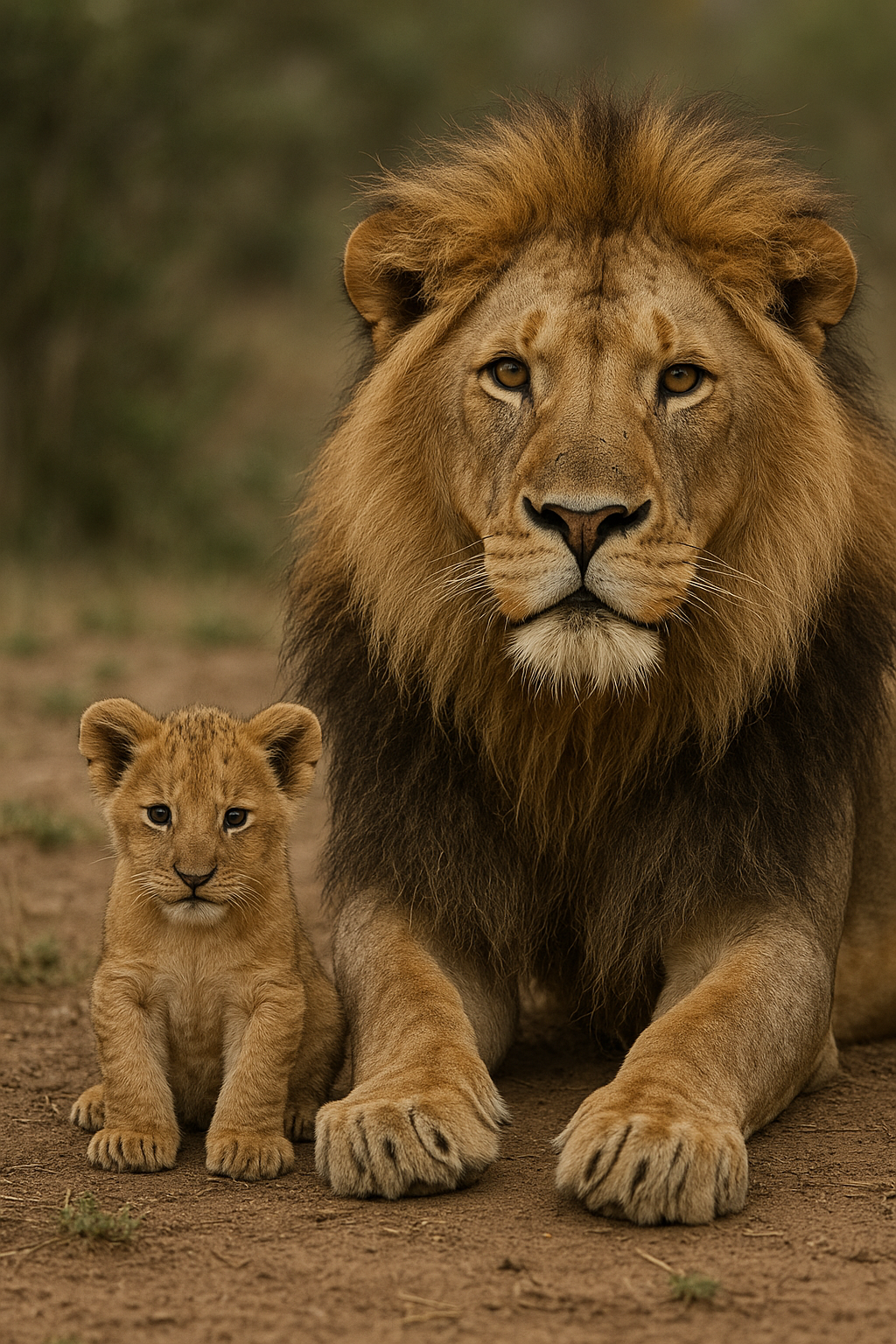
A tiny lion cub's improbable survival, adopted by male lions, made into a documentary, and sparked conservation efforts.
This is the amazing story of Bucket, a tiny lion cub who got lost from her mom. Three big male lions, called the Shango coalition, did something super rare and protected her instead of hurting her. People rescued Bucket in a plastic pail and brought her back to her mom. Her incredible survival became a symbol of hope and helped teach everyone about helping wildlife.
What is the story of "Bucket" the lion cub?
"Bucket" is the nickname given to a lion cub who was separated from her mother, Hahani, and unexpectedly cared for by the Shango coalition, three male lions. After a daring rescue involving a plastic pail, she was reunited with her mother and survived, becoming a symbol of remarkable animal behavior and conservation efforts.
Get Cape Town news in your inbox
Stay updated with the latest stories from the Mother City.
1. Sunrise Over Rietspruit: When a Tiny Pawprint Made Waves
A slender column of dust spiralled above sun-bleached turf as first light spilled down the Drakensberg cliffs. On Rietspruit Game Reserve, safari trucks still idled beside canvas tents, yet no tourists loaded up that late-July morning in 2019. Every gaze, human or otherwise, shifted toward a lion cub no heavier than a bag of sugar. Her folded baby ears and cicada-soft mew announced she had tumbled through a loophole in the food chain - and the tremor she set off would travel far beyond the thorn fences.
Hahani, an experienced radio-collared mother, had wedged her three-day-old litter deep inside a dry drainage line thick with tamboti saplings while she slaked her thirst. She returned to find two infants pressed against the roots; the third had toddled downhill, perhaps lured by a dragonfly’s metallic flicker or the piping call of a francolin. That misstep dumped her straight into the patrol path of the celebrated Shango coalition - three coal-black-maned brothers already adored on Instagram. A fortnight of roaring and fence-line scent-marking had warned every rival that this turf was spoken for. A two-week-old cub could not have picked a poorer direction.
Then the first improbable gift arrived. The eldest male sniffed the milk-scented newcomer, gave a single sneeze, and collapsed like an oversized house cat. Brother Two batted the cub with velvet restraint; Brother Three stretched, ignored the drama, and began polishing the dust from his forelegs. Seconds stretched into minutes, then into hours. By twilight the infant was kneading the senior male’s belly, trying - comically - to suckle from his elbow.
2. Textbook-Defying Babysitters
Field manuals insist that strange males treat unfamiliar cubs as disposable DNA. Yet the Shango brothers rewrote that clause in real time. Conservation scientists tag such tolerance “male buffering,” but it almost never extends to week-old milk breath. Brent Leo-Smith, a ranger turned cinematographer who had tracked the trio for three seasons, rolled film from a hide two football fields away. “I kept the shutter half-pressed for the killing bite,” he later told university students. “Instead I captured a chapter no textbook owns.”
For nearly two weeks the coalition played improvised guardians. They supplied no groceries - lions lack the regurgitating talent of wild dogs - but they shielded the infant from whooping hyenas and a prowling leopard that fancied the drainage line. Days ended with the cub wedged between tawny fore-paws; dusk saw her flopping after grasshoppers in sideways crab-hops. Every belly-flop drew a tolerant grunt. Still, without mother’s milk the cub’s ribs soon stood out like ladder rungs.
Reserve ecologist Mpho Ledwaba faced the classic modern-conservation riddle: where does hands-off end and stewardship begin? Rietspruit’s fences, artificial water pans, and annual game counts make it managed land, not raw wilderness. After a tense Zoom session with provincial officials, the team approved one minimalist rescue: reunite cub and mother once, no humans habituated. They borrowed tricks from crocodile capture - distract, bait, and erase scent.
3. Operation Bucket: One Carcass, One Toolbox, Plenty of Chaos
Staff strung a fresh impala carcass in the open vlei where Hahani’s collar last pinged. A slit belly let sour-sweet gut scent drift downwind. The plan called for the males to glut themselves while a single Land Cruiser eased the cub close to Hahani’s new den, human odor masked by a zebra-dung towel. On paper it read like poetry.
Poetry rarely survives lions. The Shango brothers arrived early, Hahani crept in downwind, and the largest male cuffed her away from supper. In the ruckus the toolbox - still cradling the cub - toppled from the reversing vehicle and slid into sickle-bush thick enough to stymie a genet. The second rescue hinged on an arcane Kruger study: cubs younger than four weeks respond to the soft grunt-chuff mothers use when shifting dens. Brent knelt, cupped his hands, and exhaled gentle staccato puffs. A squeak, half tree-frog, half kitten, answered. On hands and knees he retrieved the cub, tucked her into the nearest handy container - a white plastic pail labeled “Snake Capture” - and the nickname Bucket stuck like thorns.
Precision choreography preceded the final reunion. A northern-bound ranger revved his engine, luring the bloated males toward a drink. Wrapped in the zebra-scented towel, Bucket went beside a termite mound twenty metres from Hahani’s freshly scraped burrow. Engines faded, dusk thickened, a bateleur eagle circled above like a referee. Forty breathless minutes later, Hahani slipped through the grass, belly drum-tight with milk. Nose to nose she inspected the wobbling infant, licked the top of her head, and - because milk is the only currency that matters - allowed the cub to attach and drink. From the hide, camera crews exhaled fog onto their lenses.
4. From Viral Film to Living Legacy
Painteddog.tv spent two seasons stitching sightings, scat data, and camera-trap snippets into a 28-minute documentary narrated by Brenda Ngxoli in English, isiZulu, and Afrikaans. Premiered on World Lion Day 2022, the short circled streaming services faster than a gossip on village radio. Credits revealed that Hahani has since raised a second litter, the Shango males still swagger along fence lines, and the cracked bucket - sun-bleached, legend-stamped - rests on a ranger shelf labeled “Please return if found.”
Behind the feel-good reel nestle smaller, sharper truths. The cub’s mishap coincided with a regional drought that delayed impala births; in a wetter year the males might have chased territorial borders instead of babysitting. DNA later confirmed the coalition fathered Hahani’s cubs - an evolutionary receipt for their tenderness. Collar data proved Hahani dragged her remaining cubs to a new den every four nights, cutting predation risk but raising odds of accidental separation.
Neonatal physiology supplied another marvel: cubs shed roughly seven percent of body weight daily once temperatures top 35 °C. Bucket lasted twelve days, meaning she pushed three days past survival thresholds, likely licking dew from dawn blades. At recovery she weighed 1.9 kg - bottom five percentile - yet kidney values stayed normal, hinting micro-hydration tricks remain under-researched.
Tourism took note. Shoulder-season bed-nights leapt 38 percent within six months. Guides now run the “Bucket Trail,” a dawn drive from reunion mound to the dam where the brothers nap after kills. Guests clutch stainless-steel bottles etched with a cartoon lion popping out of a bucket; profits bankroll predator-proof bomas that have slashed cattle-lion conflict along the western fence to negligible levels.
Education rippled outward. A Gauteng primary school turned the saga into a Grade-5 math lesson: students calculate impala-equivalent prey eaten by a pride annually, using Rietspruit census numbers. The finale? A cardboard bucket big enough for one child, a sensory reminder of scale. Teachers report retention of ratios and percentages jumps when story, not curriculum, frames the numbers.
Back in the wild, the three-year-old lioness Bucket - now sporting a faint warthog-tussle scar on her left shoulder - was last spotted in March 2023 cruising the riparian forest of the Rietspruit River with two younger companions. The collar’s battery will expire soon, dissolving her coordinates into the continent’s vast maybe, that twilight zone where folklore and field notes mingle.
When the dust settles, the bush keeps its secrets. Between fading pawprints and busy dung beetles, a cracked white pail leans against a tin office wall, the word “Snake” almost rubbed away, a quiet monument to the cub who turned the African savannah into a classroom, a cinema, and a promise.
[{"question": "What is the story of 'Bucket' the lion cub?", "answer": "'Bucket' is the nickname given to a lion cub who was separated from her mother, Hahani, and unexpectedly cared for by the Shango coalition, three male lions. After a daring rescue involving a plastic pail, she was reunited with her mother and survived, becoming a symbol of remarkable animal behavior and conservation efforts."},{"question": "When and where did Bucket's story begin?", "answer": "Bucket's story began in late July 2019 on the Rietspruit Game Reserve. As a three-day-old cub, she became separated from her mother, Hahani, and wandered into the territory of the Shango coalition of male lions, setting off a chain of extraordinary events."},{"question": "How did the Shango coalition react to the lost cub?", "answer": "Defying typical lion behavior, the three male lions of the Shango coalition, known for their territorial dominance, did not harm the lost cub. Instead, they showed unusual tolerance and acted as her temporary guardians for nearly two weeks, protecting her from other predators like hyenas and leopards."},{"question": "Why was the cub named 'Bucket'?", "answer": "During the rescue operation to reunite Bucket with her mother, the cub was accidentally dislodged from a vehicle's toolbox. A ranger quickly placed her into the nearest available container, which happened to be a white plastic pail labeled 'Snake Capture.' From that moment, the nickname 'Bucket' stuck."},{"question": "What challenges did Bucket face during her separation?", "answer": "Without her mother's milk, Bucket's health rapidly deteriorated, and her ribs became prominent. Lions cannot regurgitate food for their young, so despite the males' protection, she was starving. Additionally, the high temperatures of over 35 °C meant she was losing significant body weight daily, pushing her survival beyond typical thresholds."},{"question": "What impact has Bucket's story had?", "answer": "Bucket's story has had a significant impact. It was documented in a 28-minute film, raising awareness globally. It boosted tourism to Rietspruit, with a 'Bucket Trail' now offered to guests. Profits from merchandise have funded predator-proof bomas, reducing human-wildlife conflict. The story is also used in educational programs, teaching math concepts and conservation, making her a living legacy for wildlife education and conservation efforts."}]

Sarah Kendricks is a Cape Town journalist who covers the city’s vibrant food scene, from township kitchens reinventing heritage dishes to sustainable fine-dining at the foot of Table Mountain. Raised between Bo-Kaap spice stalls and her grandmother’s kitchen in Khayelitsha, she brings a lived intimacy to every story, tracing how a plate of food carries the politics, migrations and memories of the Cape.
View all articles →