
WHERE IS EBOLA NOW?
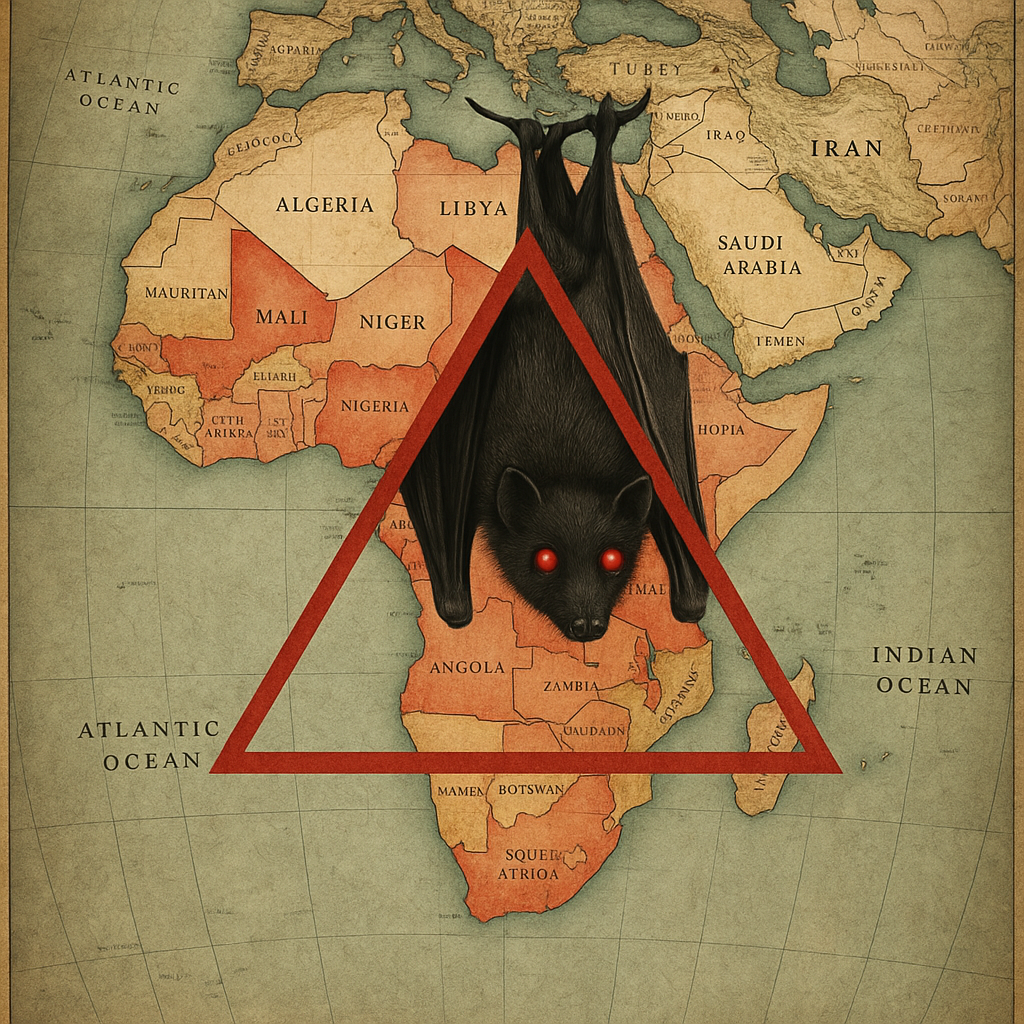
Ebola returns to DRC-Uganda. Learn about the Bundibugyo strain, South Africa's defense, and global efforts against this new threat.
The Bundibugyo Ebola virus, a less deadly but still dangerous strain, has reappeared in Uganda and Congo, sparking global concern. This strain is not stopped by current vaccines, making it a serious threat. South Africa, with its busy travel hubs, is preparing its defenses. They are using advanced labs, strict laws, and quick testing to stop the virus from spreading and keep their people safe.
How does the Bundibugyo Ebola virus affect humans?
The Bundibugyo ebolavirus targets endothelial cells, liver macrophages, and dendritic cells, causing a "cytokine storm" that compromises blood vessel integrity. Symptoms include sudden fever, headache, muscle pain, diarrhea, and vomiting. While less fatal than the Zaire strain, it still presents significant challenges to health systems.
Get Cape Town news in your inbox
Stay updated with the latest stories from the Mother City.
A Global Alarm Rings Again
April’s case curve had flattened after exhaustive contact tracing, yet the calm shattered in early June when two mass-gathering events – a funeral in North Kivu and an all-night prayer meeting in the Ugandan district of Bundibugyo – reignited transmission. Sequences released on 2 June confirm the culprit is Bundibugyo ebolavirus, a strain unseen since 2019 when four Ugandan patients died. Genetically far-removed from the Zaire variant that devastated West Africa in 2014–16, Bundibugyo is untouched by any of the three existing Ebola vaccines, and laboratory data show only weak cross-neutralisation from prior Zaire-strain shots.
For South Africans watching from 3 000 kilometres away, the question is no longer academic. Johannesburg’s status as the continent’s busiest air hub, the constant flow of cobalt ore down the Great Lakes to Durban, and the steady arrival of migrants from the Great Rift all stitch the southern tip of Africa into the same epidemiological fabric as the outbreak zone.
Inside the Virus: How Bundibugyo Kills
Virologists grade Ebola species on a sliding scale of ferocity. Bundibugyo sits in the middle: historic outbreaks have killed roughly a quarter to a third of confirmed patients – milder than the 60–90 % toll exacted by the Zaire strain, yet still more than enough to buckle fragile rural health systems. The microbe homes in on endothelial cells, liver macrophages and dendritic cells, detonating a cytokine storm that strips blood vessels of their integrity.
Doctors managing the present outbreak say the illness still follows the classic script: a sudden fever around day three or four, a vise-like frontal headache, muscle pain, and a torrent of diarrhoea and vomiting that can drain an adult of electrolytes within two days. Visible bleeding – bleeding gums, pin-prick rashes, dark tarry stools – occurs in about one in three patients, fewer than during the West African crisis but sufficient to keep community panic alive. Blood tests reveal an early plunge in platelets and rising liver enzymes; children under five may skip the textbook signs and instead arrive with febrile convulsions and rapid dehydration.
Mortality, however, is not destiny. Survivors in past Bundibugyo outbreaks have mounted robust neutralising-antibody responses, and prompt supportive care – intravenous fluids, electrolyte monitoring, pain control – slashes the death rate. The challenge is delivering that care when clinics are short-staffed, roads are insecure and frightened families sometimes hide relatives at home.
Mapping the Hot Zone: Where the Next Sparks May Fly
Draw a line between Bunia in Ituri Province, Beni in North Kivu, and Bundibugyo town in western Uganda and you enclose a triangle roughly the size of Ireland that shelters 12 million people. Overlay displacement camps, informal mines and four official border posts recording 60 000 weekly crossings, and the picture of risk sharpens. Health teams worry most about four nodes: Kasindi border market, where smoked bush-meat and fish change hands; overnight fishing boats on Lake Albert that quietly ferry people – and occasionally cadavers – between the two countries; Goma’s departure lounge, the busiest airport in eastern Congo and the gateway to Nairobi, Addis Ababa and Johannesburg; and Kampala’s chaotic Owino clothing market, where shared latrines could amplify any imported viral haemorrhagic fever.
South Africa’s connection is aerial rather than terrestrial. No direct flights link Johannesburg to the outbreak provinces, yet 36 daily services arrive from East and Central Africa, each aircraft carrying about 250 passengers whose overlapping social networks can knit a virus into a new city within hours. The National Institute for Communicable Diseases (NICD) has quantified the hazard: a pilot project using anonymised Bluetooth beacons found that 92 % of travellers from countries within a thousand kilometres spent fewer than fifteen minutes within two metres of any one co-passenger – below the recognised exposure threshold for Ebola. Still, low risk is not zero risk.
Durban’s sea lanes matter too. Roughly 240 t of cobalt ore from the eastern DRC pass through the port every week, feeding South Africa’s battery plants. Ebola is not transmitted by dry cargo, but insurers are already twitchy. One Lloyd’s syndicate now levies an extra 0.3 % premium on consignments originating within 400 km of the outbreak zone – pocket change for mining conglomerates, yet a potential shock for artisanal diggers paid by the kilogram.
South Africa’s Shield: Labs, Laws and Everyday Actions
Africa’s only Biosafety Level 4 laboratory, run by the NICD on the third floor of an unremarkable office block in Sandringham, Johannesburg, is the country’s last scientific line of defence. Air pressure cascades downward from −50 Pa in the change rooms to −250 Pa in the virus suite; scientists handle live Ebola in Class III cabinets attached to double-stage HEPA filters. The unit can process 120 blood specimens per 12-hour shift with a multiplex RT-PCR panel that tells Bundibugyo from Zaire, Sudan, Taï Forest or Marburg in 4.2 hours. During a May tabletop drill, courier drones trimmed sample transport time from OR Tambo airport to the lab by 19 minutes, and 96 % of mock-positive travellers had their results inside six hours.
Entry-point defence rests on a two-tier alert system resurrected from COVID-19 days. Thermal scanners flag anyone above 38 °C; those passengers are escorted to isolation booths, interviewed in French, Swahili or Lingala, swabbed for rapid antigen tests and, if still suspect, bled for PCR analysis while spending the night in a 24-bed ward at Charlotte Maxeke Hospital. The legal muscle comes from the 2017 International Health Regulations Act, which lets port-health officers detain and treat visitors without a warrant if they pose a public-health threat. To date 3 106 travellers from the outbreak zone have passed through the gantlet; none has tested positive.
No vaccine exists for Bundibugyo. The three licensed Ebola shots all target Zaire-strain glycoproteins; lab studies show only 12 % cross-neutralisation, far below the threshold needed for confidence. CEPI is pushing a chimp-adenovirus candidate, CHAD3-BDBV-GP, into Phase I trials in Uganda and Kenya, with plans to ring-vaccinate health staff by September if safety data hold. Therapeutics are similarly strain-specific: the antibody cocktails approved for Zaire Ebola do not recognise Bundibugyo glycoproteins, so clinicians must fall back on broad-spectrum small-molecule antivirals such as remdesivir or favipiravir, which have shown a hundred-fold viral-load drop in cell assays.
Ordinary citizens can shrink the danger, not with heroic gestures but with mundane habits. Bookmark the NICD’s Ebola dashboard for verified updates. Keep routine vaccines current; a clinic free of flu and measles cases has more bandwidth for a filovirus. Anyone returning from Ituri, North Kivu or Bundibugyo should log twice-daily temperatures for 21 days and know the NICD myth-buster WhatsApp line (060 012 3456) which answers in four languages within half a minute. During the 1996 importation – South Africa’s only brush so far – delayed lab confirmation, a shortage of impermeable gowns and untrained staff allowed a nurse to contract the virus. Today turnaround sits below six hours, the national stockpile holds 12 000 Tyvek suits, and every intern faces a mandatory filovirus drill before touching a patient.
Genomic surveillance, once the domain of COVID-19 trackers, has pivoted to Ebola. Portable nanopore sequencers in Goma and Kasese now upload data to a global repository within 48 hours, allowing Cape Town bioinformaticians to flag a new receptor-binding mutation in the Bundibugyo glycoprotein. Whether that tweak alters viral load or disease severity is unclear, but the early-warning net is cast. Ebola may have returned, yet South Africa’s laboratory fortress, legal scaffold and everyday toolkits are already ahead of the curve.
What is the Bundibugyo Ebola virus and why is it a concern?
The Bundibugyo Ebola virus is a strain of Ebola that has reappeared in Uganda and Congo. While generally less fatal than the Zaire strain, it is still dangerous and poses a significant threat because current vaccines are ineffective against it. This makes it a serious public health concern, especially given its potential to spread through busy travel hubs.
How does the Bundibugyo Ebola virus affect the human body?
The Bundibugyo ebolavirus primarily targets endothelial cells, liver macrophages, and dendritic cells. This leads to a severe immune response known as a "cytokine storm," which compromises the integrity of blood vessels. Symptoms typically include a sudden fever, severe headache, muscle pain, and rapid onset of diarrhea and vomiting. In some cases, visible bleeding can occur.
Why are mass gatherings a risk factor for the spread of Bundibugyo Ebola?
Mass gatherings, such as funerals and large prayer meetings, have been identified as events that can reignite and accelerate the transmission of the Bundibugyo Ebola virus. These gatherings bring together many people in close proximity, increasing the likelihood of person-to-person spread, especially if individuals are unknowingly infected or have come into contact with the virus.
What makes South Africa particularly vulnerable to the Bundibugyo Ebola virus despite its distance from the outbreak zones?
South Africa is considered vulnerable due to its status as a major travel hub in Africa, particularly Johannesburg's busy airport. The constant flow of people, including migrants and travelers from East and Central Africa, creates a pathway for the virus to potentially enter the country. While direct flights from outbreak zones are limited, indirect connections and overlapping social networks of travelers can facilitate transmission. Additionally, cargo routes, such as cobalt ore shipments from the DRC to Durban, although not a direct transmission risk for the virus itself, highlight the interconnectedness of the region.
What measures is South Africa taking to prevent and manage a potential Bundibugyo Ebola outbreak?
South Africa has implemented a multi-faceted defense strategy. This includes utilizing Africa's only Biosafety Level 4 laboratory at the National Institute for Communicable Diseases (NICD) for rapid and accurate testing. At entry points, a two-tier alert system with thermal scanners and isolation booths is in place, backed by the 2017 International Health Regulations Act, which allows for the detention and treatment of public health threats. Furthermore, ongoing genomic surveillance and mandatory filovirus drills for medical staff are part of their preparedness.
Are there any effective treatments or vaccines for the Bundibugyo Ebola virus?
Currently, there is no licensed vaccine specifically for the Bundibugyo strain of Ebola. The three existing Ebola vaccines target the Zaire strain and show only weak cross-neutralization against Bundibugyo. Similarly, antibody cocktails effective against Zaire Ebola are not effective against Bundibugyo. Treatment relies on supportive care, such as intravenous fluids and electrolyte monitoring, and broad-spectrum small-molecule antivirals like remdesivir or favipiravir, which have shown some promise in laboratory settings. Research is ongoing, with a chimp-adenovirus candidate, CHAD3-BDBV-GP, entering Phase I trials.

Amanda Wilson is a Cape Town-born journalist who covers the city’s evolving food scene for national and international outlets, tracing stories from Bo-Kaap spice shops to Khayelitsha micro-breweries. Raised on her grandmother’s Karoo lamb potjie and weekend hikes up Lion’s Head, she brings equal parts palate and pride to every assignment. Colleagues know her for the quiet warmth that turns interviews into friendships and fact-checks into shared laughter.
View all articles →