
WHY AN INTEREST RATE HIKE NOW LOOKS LIKELY
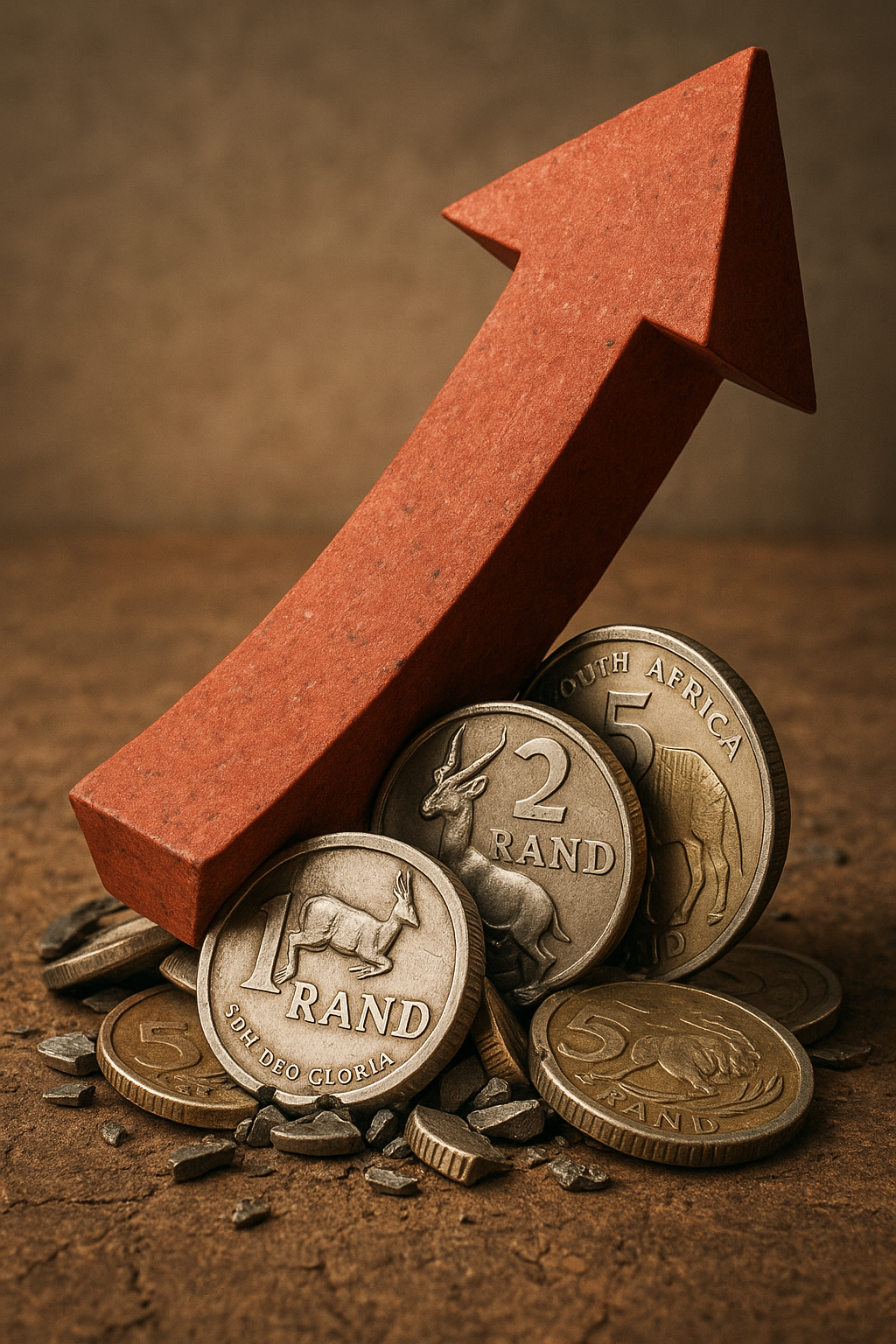
SA faces another rate hike, potentially biting harder due to high household debt, rising inflation, & global pressures.
South African families are facing tough times. Rising interest rates mean bigger payments for homes and cars. Everything is getting more expensive, like petrol and electricity. People's pay isn't keeping up, so they have less money to spend. This makes it hard to pay bills and save, pushing many into more debt.
What are the main financial challenges South African households face due to rising interest rates and inflation?
South African households face significant financial challenges including increased debt-to-income ratios, higher bond and car repayments, and rising fuel and electricity costs. Stagnant wages and increased core inflation further strain budgets, leading to a 4% decrease in real disposable income over four years.
Get Cape Town news in your inbox
Stay updated with the latest stories from the Mother City.
The Shock Returns to the Dinner Table
Twenty-five points may sound academic, yet its arithmetic slams straight into household budgets. The repo rate would climb to 7 %, nudging prime to 10,5 %. For a newly granted bond of R1,37 million, the repayment jumps by roughly R390 each month. Buyers who financed cars on the familiar “municipal rate plus 2 %” formula will pay an extra R170. Pair that with the anticipated 95-cent petrol increase scheduled for June and the ordinary suburban family must find about R1 000 more by the time the winter school break arrives.
The raw numbers understate the strain because balance sheets are far more fragile now than during the last hiking cycle. South Africa’s household-debt-to-income ratio slid from 87 % in 2008 to 62 % on the eve of Covid, but has since rebounded to 73 %. Credit cards and personal loans have filled the void left by stagnant wages, rising taxi fares and the 18 % electricity tariff that kicked in on 1 April. “Disposable income in real terms is already 4 % lower than four years ago,” cautions Thando Makhubu, senior economist at the Bureau for Economic Research at Stellenbosch. “A 25-basis-point adjustment will feel like 50 on the street.”
Why the Reserve Bank Sees Few Options
SARB’s legal task is blunt: keep headline inflation between 3 % and 6 %. April’s figure landed right at 4 %, but the trajectory disturbs policy makers. Crude oil has risen 18 % since February, while maize meal - still the primary calorie source for two-thirds of households - has leapt 22 % after dry spells in the western maize triangle. Core inflation, which filters out food and fuel, has crept to 4,3 %, its loftiest print since August 2020. Adding pressure, wage settlements recorded by the Labour Department averaged 6,1 % in the first quarter, the kind of second-round impulse the Bank abhors.
Global forces compound the squeeze. The U.S. Federal Reserve has embraced a “higher for longer” stance, pushing the interest-rate gap between Washington and Pretoria out to 250 basis points - the widest since 2007. The SARB now confronts an old headache: sacrifice domestic demand or let the rand slide and import still more inflation. A softer currency would also muddy Friday’s scheduled review of South Africa’s weight in the FTSE World Government Bond Index. Foreigners already own 30 % of local bonds, and a cut in the country’s investability score could spark forced sales worth around R35 billion.
Property: Ambition Meets Tighter Purse Strings
Mortgage aggregator BetterBond says April home-loan applications jumped 6,2 % year on year, yet approval rates have fallen for three straight months as banks demand larger deposits and tighten affordability filters. First-time purchasers now stump up an average deposit of 14 %, against 9 % twelve months earlier. In Cape Town’s northern corridor - Bellville, Durbanville, Brackenfell - where entry-level new builds begin at R1,8 million, a buyer must have R252 000 in cash, no small feat when seven out of ten millennials carry either student debt or garnishee orders.
Enter “rentvesting”. Workers rent a compact apartment near the Sandton office for R9 500 a month, then buy a R650 000 two-bedroom flat in Witbank or Port Shepstone and rent it out for R5 800. The rental yield covers around 90 % of the instalment, and the modest purchase price still allows for a manageable deposit. Private Property data reveal that 38 % of all new mortgages below the R1 million mark in April funded properties more than 100 km from the buyer’s primary residence, up from 19 % two years earlier. FNB now markets a “Rentvestor Package” that wraps management, insurance and tax services into a 0,7 % origination fee.
Yet even this crafty route is not immune to rising rates. Banks price buy-to-let loans between prime plus 0,5 % and plus 1 %, and many teaser fixed periods granted last year are maturing. A 25-basis-point repo lift can therefore filter through as 50 basis points on the investor’s pocket, erasing the slim surplus that justified the purchase in the first place. John Loos, property economist at FNB Commercial, notes that distressed listings in the lower buy-to-let segment have already climbed 12 %. “Should the SARB add another 50 points later this year, that figure could double,” he he warns.
Corporate Capex and Labour Under Pressure
Boardrooms had pencilled in a mild rebound for 2024: Eskom trimmed its diesel bill, Transnet’s port recovery plan won Treasury backing and the Mining Charter was finally gazetted. The prospect of a fifth consecutive hike has forced chief financial officers back to their spreadsheets. The Bureau for Economic Research’s latest manufacturing poll shows 61 % of respondents plan to delay or shrink capital spending, up from 41 % in January. Construction - already toiling at 67 % of 2015 output - now risks a second lost year.
Small and mid-sized firms are especially exposed. Banks quote overdrafts at prime plus 3 % to 6 %, and many facilities reprice every 30 days. A 25-basis-point repo adjustment therefore ripples through within weeks, not the multi-quarter lag common in home loans. Natascha Viljoen, CFO of a 220-employee packaging plant in Durban, puts it bluntly: “We modelled peak prime at 10,25 %. Each extra 25 points slices R400 000 off our interest-cover ratio. That is ten machine operators we cannot hire.”
Trade unions grasp the implications. NUMSA demands a six-month moratorium on rate increases “until industry regains momentum”, and COSATU urges Treasury to reopen the Covid-era loan-guarantee scheme. The finance ministry, already fending off criticism for breaching its spending ceiling, shows little appetite. Deputy Governor Rashad Cassim doubled down last week: “Monetary policy must remain on track; fiscal dominance is the single sure way to sink the rand.”
Savers, Retirees and the Carry-Trade Revival
Not every balance sheet is bleeding. Roughly 5,6 million pensioners hold an estimated R1,4 trillion in interest-bearing products ranging from fixed deposits to money-market funds. Banks reprice retail deposits within seven to fourteen days of a policy move, and this cycle has been unusually generous: the average twelve-month fixed deposit already yields 8,8 %, the best rate since 2009. For a seventy-year-old living on R2 million of savings, the extra 25 basis points translate into R5 000 more each year - enough to cover municipal rates, medical-aid shortfalls or a grandchild’s registration fees.
The carry trade has resurfaced as well. Foreign funds have bought R42 billion of rand-denominated bonds since January, lured by a real yield of 4,5 % - the fattest among twenty major emerging markets. Another 25 basis points could nudge the ten-year government bond to 12,5 %, a level last touched during the 2020 Nhlanhla Nene saga. Every full percentage point rise in nominal yields attracts roughly R15 billion of offshore cash, estimates Future Forex’s Scherzer, helping to fund the current-account deficit that widened to 2,5 % of GDP in the first quarter. “If the SARB hikes while the Fed pivots in September, the rand could revisit R17,50 to the dollar,” he adds. “That would knock 40 cents off the petrol price and partially recycle relief to consumers.”
Three Moves the Average Household Can Make Today
Financial advisers are resurrecting crisis-era tactics. Step one: attack unsecured debt. The average credit-card rate sits at 20,75 % and personal loans at 24,5 %. Because both are priced as “prime plus”, a 25-basis-point repo move drags card rates up by roughly 35 basis points once bank margins are included. Clearing a R50 000 credit-card balance saves R9 000 a year - the equivalent of a 14 % after-tax investment return with zero risk.
Step two: blend and fix. Banks currently quote 24-month fixed mortgages at 11,5 %, only 100 basis points above today’s prime. Fixing 60 % of the loan while leaving 40 % variable creates a natural hedge: if the repo peaks at 7 %, the weighted cost is 10,9 %; if the cycle ends at 8 %, the fixed leg limits the damage. SA Home Loans says 28 % of new home loans in April locked in fixed rates, double the share a year earlier.
Step three: polish the credit score. A modest 0,5 % upgrade in pricing bands trims 30–40 basis points from a mortgage. That is attainable by pushing revolving utilisation below 30 % and wiping small clothing-account balances that trigger bureau downgrades. On a R1,5 million bond the saving equals R300 a month - enough to swallow the looming 25-basis-point hike without a net dent to cash flow.
Elections, Mandates and the Week Ahead
National and provincial elections fall on 29 May, twenty-four hours after the MPC decision. The timing is accidental yet fraught. Opposition parties cast any hike as “an ANC tax on the poor”; the MK Party pledges to widen the Reserve Bank’s mandate to “employment and industrialisation”. Governor Kganyago - whose second five-year term ends in November - has declined to join pre-election panels, stressing the MPC is “apolitical and data-driven”. Investors recall December 2015, when the sudden removal of Finance Minister Nene triggered a 2 % rand collapse and a 200-basis-point spike in bond yields. A sliver of political-risk premium therefore lingers in long-dated bonds, further muddying SARB calculations.
Inside the committee itself, factions have emerged. Hawks led by Kganyago, Deputy Governors Kuben Naidoo and Rashad Cassim fear maize and wage pressures will entrench 5 % inflation in 2025. Doves Ntombi Matyumza and David Muir highlight slack in both product and labour markets; unemployment sits at 32,9 % and factory utilisation at only 80 %. March minutes revealed a 3–2 split in favour of pausing; markets will therefore parse the May statement for any hint that the pause camp has gained converts.
At 15:00 on 28 May Governor Kganyago will deliver a 1 200-word statement. Currency desks will focus on three cues: the vote tally, the inflation trajectory and the growth outlook. A 3–2 or 4–1 hike margin keeps credibility intact yet implies the tightening cycle is close to the end. A unanimous vote suggests unanimity on further increases, clearing the path to 8 % repo before year-end. The 2025 inflation forecast will also matter: nudge it above 5 % and interest-rate swaps price in another 40 basis points; a downward revision flattens the entire curve.
For the average household the bottom line is stark: yet another squeeze. Since January the combined debt-service bill has climbed around R1 500 a month, before electricity and fuel are added. The savings rate is already negative and sliding. Yet, for the first time since 2017, retirees will open their statements and see nominal income rising faster than the cost of living. In a nation of 62 million the seesaw never balances evenly; on 28 May it tilts once more.
What are the main financial challenges South African households facing due to rising interest rates and inflation?
South African households are grappling with increased debt, higher repayments on home loans and car financing, and escalating costs for essentials like petrol and electricity. Wages are not keeping pace with these rising expenses, leading to a decrease in real disposable income and pushing many into further debt.
How much more will typical South African households have to pay due to recent economic shifts?
For a newly granted R1.37 million home loan, repayments will increase by approximately R390 monthly. Car financing based on the "municipal rate plus 2%" formula will see an extra R170. Coupled with an anticipated 95-cent petrol increase, the average suburban family will need to find about R1,000 more per month by the winter school break.
Why is the South African Reserve Bank (SARB) increasing interest rates despite the strain on households?
SARB's primary mandate is to keep headline inflation between 3% and 6%. Despite current inflation at 4%, the trajectory is concerning due to rising crude oil and maize prices, and core inflation creeping up to 4.3%. Global factors, like the U.S. Federal Reserve's "higher for longer" stance, also pressure SARB to maintain attractive interest rates to prevent capital flight and a weakening Rand, which would import more inflation.
How are rising interest rates affecting the property market, particularly for first-time buyers and 'rentvestors'?
While home loan applications have increased, approval rates are falling as banks demand larger deposits and tighten affordability criteria. First-time buyers now need an average 14% deposit, up from 9% a year ago. Even 'rentvesting' (buying a property to rent out while renting closer to work) is impacted, as banks price buy-to-let loans higher, and maturing fixed periods can lead to increased repayments, potentially erasing profitability.
What impact are these economic conditions having on businesses and employment?
Businesses, especially small and mid-sized firms, are under pressure. Many are delaying or shrinking capital spending plans, impacting growth. High interest rates on overdrafts, which reprice frequently, directly affect operational costs. This can lead to job losses, as companies like a Durban packaging plant estimate a 25-basis-point increase in interest rates could prevent them from hiring ten machine operators.
What three practical steps can households take to mitigate the impact of rising interest rates?
Financial advisors suggest three main steps: 1) Attack unsecured debt: Prioritize paying off high-interest credit card and personal loan balances, as these rates rise significantly with repo rate increases. 2) Blend and fix mortgage rates: Consider fixing a portion of your home loan rate, while leaving the rest variable, to create a hedge against further rate hikes. 3) Improve your credit score: By reducing revolving credit utilization and clearing small balances, you can qualify for better pricing bands on loans, leading to significant monthly savings.

Sarah Kendricks is a Cape Town journalist who covers the city’s vibrant food scene, from township kitchens reinventing heritage dishes to sustainable fine-dining at the foot of Table Mountain. Raised between Bo-Kaap spice stalls and her grandmother’s kitchen in Khayelitsha, she brings a lived intimacy to every story, tracing how a plate of food carries the politics, migrations and memories of the Cape.
View all articles →