
WHY DO BIG BABIES CAPTURE US?
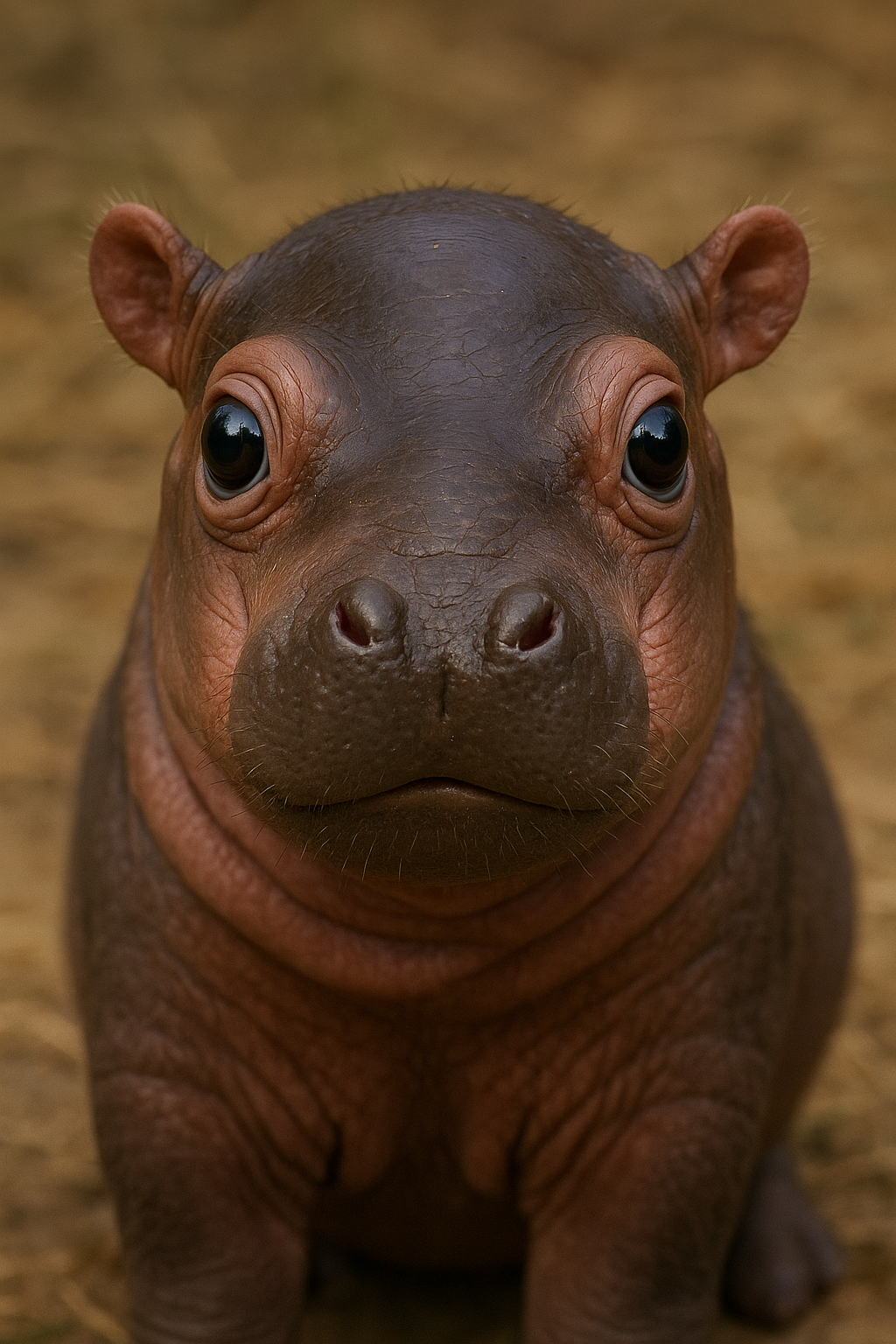
Experience the global spectacle of baby elephants, hippos, & rhinos in Africa. Discover how viral videos fuel conservation efforts.
African wildlife conservation uses technology like live-streaming baby animals on social media (TikTok, Instagram, X) to raise money and awareness. These adorable videos, creating millions of views, convert emotional engagement into donations for things like milk and keeper salaries. This new method, called the "Bumpy Effect," is a successful way to get ongoing funding.
How do African wildlife conservation efforts leverage technology and social media for fundraising and awareness?
African wildlife conservation utilizes technology and social media by live-streaming baby animals, generating digital impressions, and converting emotional engagement into donations. Platforms like TikTok, Instagram, and X drive micro-donations for essentials like milk and keeper salaries, with analytics revealing broad donor demographics. This approach, dubbed the "Bumpy Effect," creates a repeatable blueprint for sustainable funding.
Get Cape Town news in your inbox
Stay updated with the latest stories from the Mother City.
Dawn Auditions on the Savanna
A blush-orange sunrise ignites the acacia skyline and, somewhere south of the equator, a week-old elephant steadies itself on legs still upholstered in baby creases. It weighs exactly 113 kilograms already – heavier than a grown cheetah – and it does not know that two ranger drones are already clattering overhead, live-streaming its first hesitant mock-charge to 2.3 million breakfast-time viewers.
This, in miniature, is the new Southern and East African morning: a living theatre where scale, story and signal intertwine. The savanna supplies the megafauna. Mobile towers supply the megabytes. Between the two sits a tightly-choreographed network of keepers, vets, influencers and philanthropists who have turned the struggle of simply getting bigger into a planet-wide subscription. During the past year, posts tagged with baby elephants, hippos, rhinos and giraffes racked up more than 800 million digital impressions on TikTok, Instagram and X.
No zoo glass or moat separates the audience from the action. Instead there are retention ponds, solar boreholes, diesel generators and 4G plans. A newborn’s first week is now a three-part story arc: biological miracle, conservation fundraiser and global pop-culture cameo, all compressed into the time it takes to top up a mobile-money wallet.
Physiology of Wonder: Why 100 Kilograms Is Still Cute
Born Big, Grow Faster
The numbers sound like typos: elephant calves can add half a kilogram every day, white rhino infants can reach a tonne before their awkward teenage years, and a hippo that begins life at 40 kg often doubles inside ten weeks. The fuel is milk so rich that it rivals double cream – up to 14 % fat for hippos – and the result is a collision between science and sentiment.
Max Planck’s baby-schema researchers explain that large eyes compared to head size trigger human nurturing circuits. Scale that formula to a head already the circumference of a beach ball and you get the emotional equivalent of a double espresso.
From Metrics to Memes
These stats do not stay in field notebooks. They leap onto pastel infographics, super-slow-motion reels and “Did-you-know?” captions that circulate faster than the calves themselves can run. Each figure – 110 kg at birth, 14 % fat, 1 000 kg before adolescence – becomes a shareable nugget, a reason to linger on the feed and, eventually, to reach for a credit card.
Scroll to Survival: How Likes Become Litres of Milk
The Funnel
A thirty-second Instagram clip of Bumpy, the orphaned hippo, drops at 07:03 East Africa Time. Viewers exhale at his yawn, click the bio-link, and slide down a well-oiled funnel: Sheldrick Wildlife Trust page → adopt-a-hippo packages → secure payments in dollars, euros or Kenyan shillings. Four days later the ledger shows USD 73 000 in micro-donations, enough for six weeks of formula and salaries for round-the-clock keepers.
New Blood, New Money
Analytics reveal that 62 % of the donors had never before given to conservation, and 38 % lived outside the traditional donor belt of North America and Europe. Conservation economists now speak of the “Bumpy Effect,” a repeatable blueprint for turning emotional spikes into steady revenue. Copy-and-paste campaigns are already incubating for a giraffe in Namibia and a black rhino in Zimbabwe.
Behind the Reels: Blankets, Blockchain and Break-Even Points
The Invisible Shift Roster
Neonatal care runs on twelve-hour human rotations, colour-coded blankets warmed to precise body temperature, and whiteboards synced to cloud dashboards. Hippo calves must never imprint on a single person; therefore every keeper arrives and leaves in pairs. Elephants consume 15 litres of formula daily – a custom mix of powdered skim milk, coconut oil, probiotics and human-grade multivitamins – and each sip is logged in an app that Nairobi vets can watch in real time.
Carbon Footprint of Cuteness
Each high-definition clip chews up around 0.2 kWh per 1 000 views. At 2.3 million hits, a single viral reel burns electricity equivalent to a 1 100 km sedan road-trip. Some lodges now purchase Renewable Energy Certificates to neutralise these emissions, adding a line item of roughly USD 0.003 per view to their marketing budgets. Blockchain tokens let donors watch the credit chain from server farm to ranger salaries, turning digital guilt into a new revenue column.
Supply-Chain Drama
A 2023 coconut-oil shipment sat at the Namanga border for forty-eight hours during Kenya’s fuel-subsidy protests. Keepers frantically substituted olive oil, bumped fat content from 14 % to 18 %, and nursed a hippo through a week of loose bowels. The near-disaster birthed dual-supplier contracts and QR-coded drums that trace every litre from Kilifi coast to Kaluku nursery.
Insurance, NFTs and VR Rangers
Prudential Kenya’s “Jumbo Shield” underwrites individual elephants for up to USD 150 000 against poaching or lightning. Meanwhile, Kenyan ranger academies train new recruits inside VR environments built from LiDAR scans of Amboseli; graduates handle calf emergencies 45 % faster when they meet the real thing. The learning module is open-source, already downloaded by a Sumatran elephant project 8 000 kilometres away.
End Credits: A Twelve-Year, Thousand-Kilo Journey
From Orphan to Mother
Satara, a white rhino rescued in 2014, walked out of her 200-hectare “bush school” in 2018 and mated inside a 7 000-hectare refuge watched by drones. Her first calf, born in 2024, stood within 45 minutes and nursed within an hour – textbook vigour for a calf whose genome now lives on the White Rhino Studbook. That single birth rewrote the sanctuary’s balance sheet: every tourist wanting to witness a second-generation orphan turned the calf into a USD 2 600-a-night attraction.
Naming Rights in the Cloud
When a new elephant entered the world in April, 42 000 viewers across 67 countries voted in real time to call her “Amali” – Arabic for hope. The live-streamed ceremony raised USD 180 000, enough for an entire year of formula. For eight seconds on Earth Day, a 12-metre hologram of Amali towered over Times Square, tethering Times Square neon to Tsavo dust.
Tomorrow’s Heavier Horizons
Biotech labs are fermenting casein identical to elephant milk, reducing reliance on bovine powder by late 2025. Mycelium drones that biodegrade in three months if lost will replace aluminium quadcopters. Calves will wear recycled-ocean-plastic collars lighter than yesterday’s nylon straps. Every dawn, rangers place another sturdy calf on the solar-powered scale and celebrate a 3 kg overnight gain – a number tweeted within minutes to a planet still half asleep, still scrolling, still willing to pay for the privilege of watching something enormous learn how to be.
How do African wildlife conservation efforts leverage technology and social media for fundraising and awareness?
African wildlife conservation utilizes technology and social media by live-streaming baby animals on platforms like TikTok, Instagram, and X. These adorable videos generate millions of views, creating emotional engagement that converts into donations for essential needs such as milk and keeper salaries. This approach, known as the "Bumpy Effect," provides a successful and ongoing funding stream.
What is the "Bumpy Effect" and how does it contribute to conservation?
The "Bumpy Effect" is a new and highly effective method used in African wildlife conservation to secure ongoing funding. It involves live-streaming baby animals on social media platforms, which generates significant emotional engagement from viewers. This engagement is then converted into micro-donations, funding critical operations like providing milk for orphaned animals and paying the salaries of their keepers. It creates a repeatable blueprint for sustainable conservation finance.
How are the physical characteristics of these large baby animals used to encourage donations?
The impressive physical characteristics of these 'giant' baby animals are strategically used to encourage donations. Their rapid growth rates (e.g., elephant calves gaining half a kilogram daily, hippo calves doubling their weight in ten weeks) and their sheer size, even at birth, are highlighted in engaging content. Max Planck's baby-schema research explains that large eyes relative to head size trigger human nurturing instincts, and scaling this to already large baby animals amplifies this emotional response, encouraging viewers to donate.
What kind of financial impact has the "Bumpy Effect" had on conservation?
The "Bumpy Effect" has demonstrated significant financial impact. For example, a single Instagram clip of an orphaned hippo named Bumpy generated USD 73,000 in micro-donations within four days, enough to cover six weeks of formula and keeper salaries. Analytics show that 62% of these donors were new to conservation funding, and 38% came from outside traditional donor regions, indicating a broadening of the donor base and a substantial increase in revenue.
What advanced technologies and operational details are involved in caring for these baby animals and managing the Bumpy Effect?
Advanced technologies and meticulous operational details are crucial. Neonatal care involves twelve-hour human rotations, precise temperature-controlled blankets, and cloud-synced whiteboards. Elephants consume a custom 15-liter daily formula, with each sip logged in an app accessible to vets in real-time. Drones are used for live-streaming and monitoring, and there's an increasing focus on the carbon footprint of these high-definition streams, with some lodges purchasing Renewable Energy Certificates. Supply chains for vital supplies are also meticulously managed, with dual-supplier contracts and QR-coded tracking. Other technologies include blockchain for donor transparency, VR training for rangers, and even specialized insurance policies for individual elephants.
How does the long-term success of these rescued animals contribute to further conservation efforts and fundraising?
The long-term success of rescued animals like Satara, a white rhino who was an orphan and later gave birth, significantly contributes to further conservation and fundraising. Satara's calf became a USD 2,600-a-night attraction for tourists, rewriting the sanctuary's balance sheet. Similarly, naming rights for new elephant calves, voted on by thousands of viewers globally, can raise substantial funds, such as the USD 180,000 for 'Amali' which covered a full year's formula. These success stories and the connection with individual animals foster continued support and engagement, ensuring the sustainability of conservation projects.

Sizwe Dlamini is a Cape Town-based journalist who chronicles the city’s evolving food scene, from boeka picnics in the Bo-Kaap to seafood braais in Khayelitsha. Raised on the slopes of Table Mountain, he still starts every morning with a walk to the kramat in Constantia before heading out to discover whose grandmother is dishing up the best smoorsnoek that day.
View all articles →