
WHY DOES WORK ABROAD ATTRACT SO MANY SOUTH AFRICANS?
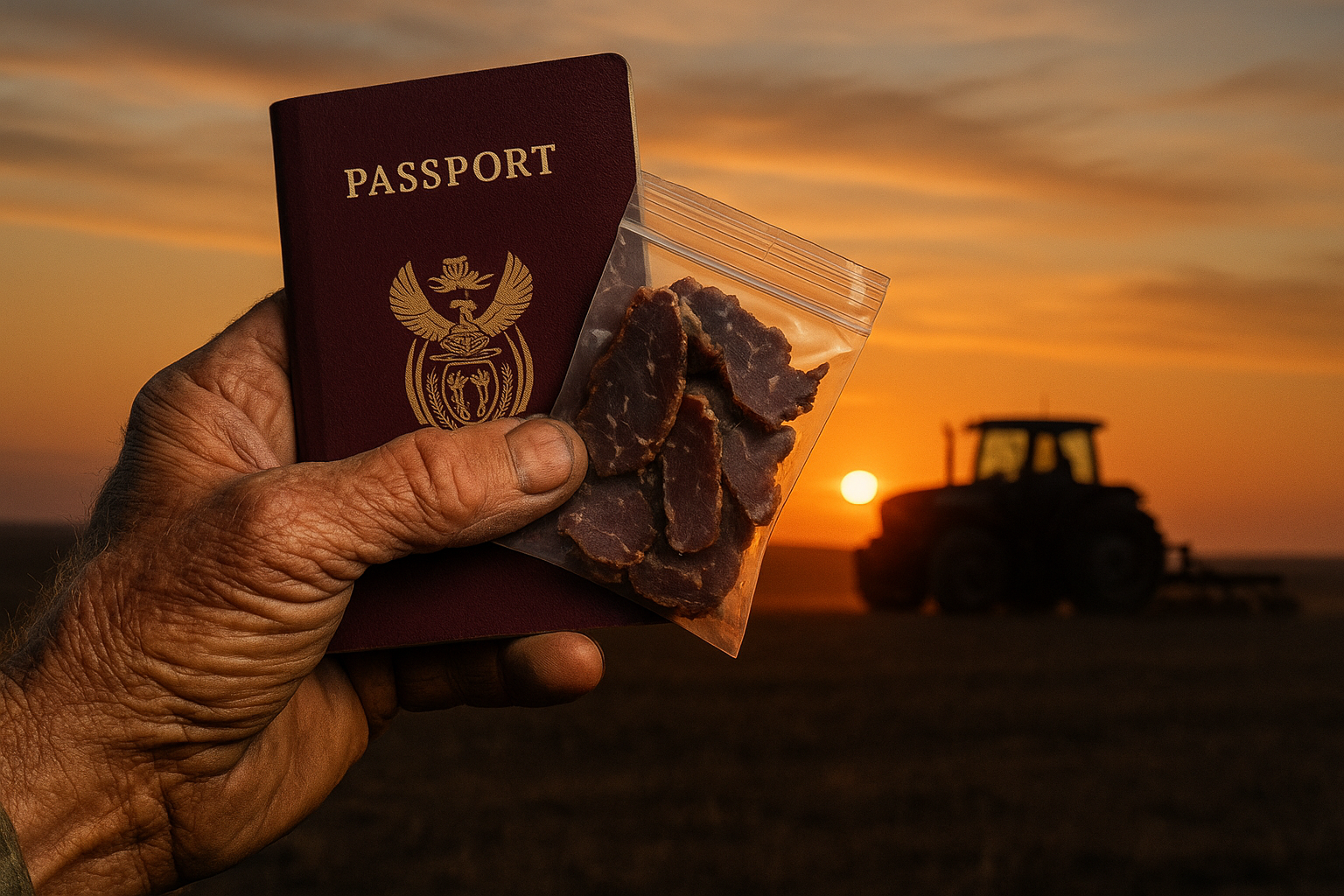
Young South Africans are transforming global seasonal farm work, bringing skills to continents, earning dollars, and rewriting agricultural rules.
South African farm workers are super popular around the world because they're really good at their jobs. They know how to use big machines, fix things, and even speak a few languages. This makes them perfect for farm work in places like the US, Australia, and the UK. They work hard, don't mind long hours, and are helping to change how people see global farm workers. This is helping them earn more money and bring new skills back home.
Why are South African farm workers in high demand globally?
South African farm workers are highly sought after worldwide due to their exceptional practical skills, honed by operating sophisticated machinery and improvising solutions in challenging local conditions. Their trilingual fluency, tolerance for long hours, and strong mechanical aptitude make them invaluable, especially when compared to their international counterparts. This unique blend of resilience and expertise fills critical labor gaps in countries like the US, Australia, and the UK.
Get Cape Town news in your inbox
Stay updated with the latest stories from the Mother City.
1. Dawn over the Dakotas – A New Typology of Migrant
At 04:17 South African time, a text pings across the De Klerk family chat: “Sky on fire, two-thousand mouths to feed, -12 °C. Love you guys.” The attached selfie shows 23-year-old Ruan behind the wheel of a brand-new 8-series John Deere, poplars etched like charcoal against a rose-gold horizon, a beanie his ouma knitted pulled low over his ears. Within minutes his father warns, “Don’t red-line that turbo like last time,” an aunt vows to courier biltong, and a cousin asks if American “walking sprinklers” are real.
Multiply that vignette and you get a silent, sprawling network: South African diesel aces, animal-science nerds and fifth-generation cattle kids who swapped acacia silhouettes for Kansas wheat oceans, Columbia Basin irrigation rings, Queensland cattle empires and Cambridgeshire fens. Some leave behind drought, a bleeding rand, small-town tedium or a heartbreak; the majority stay overseas because their hands-on swagger suddenly pays where local crews shrank or never learned to weld in a dust storm.
The exodus turned serious in 2008 when eight rand bought a dollar and US growers, starved of reliable harvest bodies, discovered that conscription-era South Africans were undaunted by 40-ton combines in the dark. Agri Wes-Kaap, one of Africa’s oldest unions, fielded a midnight plea from an Oklahoma wheat pool begging for forty “no-drama” operators. A makeshift job fair in Vredenburg lured twelve hundred hopefuls; the chosen few flew out on a charter from Cape Town and returned with dollars, tall tales and a new Afrikaans word: “oorwerk” – overtime.
Word tore across canola stubble faster than veld fire. By 2011 Washington issued 416 H-2A visas to South Africans; by 2024 the tally hit 5 842. Similar hockey-stick curves show up in Australia’s Seasonal Worker Programme and the UK’s Scale-up visas. Recruiters distilled selection to two questions: “Can you rebuild a Cummins QSX15 before lunch?” and “Do you have a clean police clearance?” One yes plus another yes usually earns a boarding pass.
2. Why the World Buys What the Platteland Sells
Walk into any farm-supply shop in Bloemfontein and you will still hear, “’n Boer maak ’n plan.” That improvisational DNA travels well. A nineteen-year-old often drives a three-million-rand tractor because the foreman is two districts away fixing a pivot. By twenty-one he’s pulled an engine, reprogrammed ECUs on a fertiliser bag and argued injector tolerances with a Polokwane mechanic. Stack that against a Kansas teenager whose only header experience is an Xbox avatar and the gap is canyon-wide.
Add trilingual ease - English plus Afrikaans, Zulu or Sotho - and a tolerance for eighteen-hour days forged by chasing storm fronts, and South Africans morph into Swiss-army knives for hire. Mississippi Delta rice barons prize them for laser-leveled topography maps; East Anglia veg growers like the way they hand-pick twenty kilos of brassicas an hour while citing post-Brexit phytosanitary rules; Aussie cattle kings love that they muster on quarter-horses and preg-test five hundred cows before lunch.
Recruiters long ago ditched Sunday papers. A Stellenbosch data shop named AgriGlobe scrapes social media for hashtags like CaseIH or pivottech , then drops matches into a lightweight CRM that lines candidates up with contracts. Applicants upload a two-minute clip: show your weld, reverse a super-B, explain hydraulic flow. The algorithm scores mechanical aptitude and spoken English; the top ten percent get an SMS: “Interview slot in Idaho Friday, bring the real passport.”
Women now claim eighteen percent of placements - double the 2016 figure. Anrike van der Merwe, 26, left the family Protea farm outside Piketberg to become agronomy manager on a six-thousand-hectare potato spread in Saskatchewan. Her employer bankrolled a precision-ag diploma; she now trains local teenagers - many of them First Nations - to fly NDVI drones.
3. Dollars, Debates and the Ghost of the Delta
A nine-month H-2A stint at US$17.50 an hour, free bunkhouse and subsidised canteen can yield US$28 000 after tax if you never leave the cab. Convert that at R19 to the dollar, subtract shared-trailer living costs, and the net is roughly ten times what a comparable hand saves at home. Remittances fly home via Hello Paisa; savvier migrants buy US-denominated ETFs through EasyEquities, flipping the rand’s slide into personal arbitrage. Returnees in the Free State build north-facing houses with double-glazing and solar boreholes that hum beside Eskom lines. New stickers on Hilux tailgates read “TOUSA – Taking Our USD Home.”
But not every field ends in triumph. In October 2023 five African-American labourers filed a federal class-action against Mississippi grower Gregory Carr, alleging his South African crew - explicitly “white Afrikaans males” - earned twenty-five percent more plus bonuses and housing perks denied to locals. Plaintiffs argue the South Africans were labelled “skilled equipment operators,” exempt from certain overtime rules, while they were classed as general labourers or independent contractors, cutting them out of workers’ comp. Carr’s lawyers retort the visa crew brought niche talents - stripper-header rice experience, John Deere StarFire mastery - justifying the gap. Discovery is set for September 2024; a ruling could reshape how “skill” is measured across the H-2A scheme.
Henry Taylor, 58, lifetime Delta cotton hand and chair of the Black Farmers and Landowners Association, frames it bluntly: “First enslaved folk drained the swamps, then sharecroppers, then prison crews. Now it’s visa workers from eight thousand miles away.” His group wants future H-2A petitions to prove growers advertised jobs locally for at least three weeks at the adverse-effect wage. Taylor insists the South Africans are “not the enemy - just pawns in a bigger labour chess match.”
Jaco van Staden, 29, from Bothaville, worked Carr’s 2023 harvest. Over crackling WhatsApp audio, he admits he never knew locals earned less until Saturday-night braai talk revealed pay slips. “Contract says don’t discuss wages - what could I do, quit and fly home?” Jaco fears the case will spook other growers and slam the gate on the rand-exit ladder for thousands.
4. Reverse Gear – Skills, Shock and the Road Ahead
Even where courts stay silent, foreign farm life is a crash course in micro-culture. South Africans arrive fluent in “baas” hierarchies and leave mastering flat U.S. crews where the boss’s son drives the grain cart. They train themselves to thank mechanics, ban the word “boy,” drink coffee from paper cups and never praise red iron within earshot of a green loyalist. Come home for Christmas and they find load-shedding, a neighbour paying R150 a day and a cousin convinced Beyoncé bags groceries in Walmart. Psychologists at Stellenbosch run debrief sessions called Kryptonite van die Platteland, teaching returnees to handle savings, expectation and survivor guilt.
The swap is not one-way brain loss. After two North Dakota seasons Ruan flew home with a second-hand iPad loaded with Climate FieldView. He now negotiates R8-per-hectare NDVI deals with North West maize growers - mini-consults impossible without the overseas exposure. Aussie station managers copied the Kalahari “tail-chain” cattle-muster method; East Anglian salad growers adopted Cape stack-and-crate lines, cutting plastic thirty percent.
Headhunters already scan Scandinavia: relaxed immigration, sky-high wages and aging rural towns. Imagine a twenty-two-year-old from Mpumalanga AI-sorting strawberries inside a 24-hour Nordic greenhouse at NOK 210 per hour. Language hurdles are real - fluent English plus 200 words of Norwegian - but Nordic inspectors fiercely police equal pay, possibly short-circuiting Mississippi-style showdowns.
Some migrants now moonlight as carbon auditors. An Alberta feedlot pays an extra C$3 an hour to H-2A staff who collect soil-carbon cores with a handheld probe; the farm flips offsets on the Alberta market and workers pocket a royalty. Treasury officials back home are watching, keen to graft the model onto South Africa’s embryonic carbon-tax credit system. Returnees could bankroll regenerative cover-cropping or rotational grazing learned abroad, flipping a new revenue switch.
At Tuesday-night braais a fresh slang blooms: “stacking hours,” “hitting a 1.7,” “locking the bonus acre,” “double-ups on Christmas.” Each phrase is a ledger entry: 1.7 is the exchange-rate buffer they budget, bonus acre is the final hectare before overtime, double-ups is holiday pay at 2×. The dialect drifts home faster than any extension leaflet because it rides on voice notes and TikTok reels hashtagged #boereoversee.
Yet politics could slam the brakes. Washington floats trimming the H-2A ceiling or pegging wage floors to inflation. Canberra faces calls to prioritise Pacific Islanders under the PALM scheme. London’s Migration Advisory Committee wants sharper salary thresholds. Farmers from Texas to Tasmania retort that no locals will sweat seventy hours in 40 °C heat. The contradiction is stark: the richer North trumpets local food romanticism while quietly importing its harvest labour from the South.
The quiet repercussion is consolidation back home. When three brothers each land seasonal U.S. stints, they pool greenbacks, buy the bankrupt neighbour’s block, appoint a caretaker and scale up. A new breed of absentee yet cash-rich farmers runs tractors by drone, satellite Wi-Fi and WhatsApp: “Dad, quick pivot check on field seven.” Critics sniff a Latin-style latifundia future; supporters argue capital injections drag ageing infrastructure into the twenty-first century and seed local work for mechanics, truckers and drone jockeys.
Policy thinkers muse over a blockchain “skills passport.” Finish an accredited module - say, CAN-bus diagnostics for Claas combines - and earn a tamper-proof badge recognised from Saskatchewan to Schleswig-Holstein. The passport could convert to visa points, anchoring labour flows to certified competence instead of recruiter roulette. Seed money would be modest; cloud records already sit inside private ag-tech servers. Upside: fewer CV fairy tales, lower exploitation, a two-way escalator for learning.
Long-range climate models suggest South Africa’s grain belt may slide toward the coast while the U.S. Midwest battles spring floods and late-summer droughts. If so, the migration loop could flip: American and Australian youngsters might one day head south for winter drought-proofing courses. The same WhatsApp groups heralding Texas feed-lot shifts could someday hype Western Cape vineyard gigs during the boreal summer - skilled, circular, no longer extractive.
Until then Tuesday flights lift off from OR Tambo: three hundred-odd sleepy twenty-somethings clutching vacuum-sealed biltong, power-banks and passport pouches. They touch down in Dallas, London, Dubai, Calgary, Sydney. They trade kikuyu scent for alfalfa, the hadeda’s raucous call for the magpie’s nasal screech, the clatter of a diesel Land Cruiser for the turbo whistle of a Challenger MT700. They graft, learn, wire money, share sunrise photos, fall in love, skip Christmas, and - if they return - speak a tongue that is part Afrikaans, part Kansas twang, wholly forged on the road. Between the Karoo and Kansas they are busy rewriting what it means to be young, skilled and mobile on a planet that still needs its food planted, watered, reaped and freighted, whatever the rand, the courts, or the algorithms decree.
Why are South African farm workers in high demand globally?
South African farm workers are highly sought after worldwide due to their exceptional practical skills, honed by operating sophisticated machinery and improvising solutions in challenging local conditions. Their trilingual fluency (English, Afrikaans, Zulu/Sotho), tolerance for long hours, and strong mechanical aptitude make them invaluable, especially when compared to their international counterparts. This unique blend of resilience and expertise fills critical labor gaps in countries like the US, Australia, and the UK.
What specific skills do South African farm workers possess that make them so valuable?
South African farm workers often have extensive experience with advanced agricultural machinery like 40-ton combines and John Deere 8-series tractors. They are skilled in mechanical repair, often capable of pulling an engine or reprogramming ECUs. Beyond technical skills, they are known for their improvisational problem-solving ('n Boer maak 'n plan), their ability to work long hours (up to 18 hours), and their multilingual capabilities, which facilitate communication in diverse work environments.
How did the migration of South African farm workers to global harvest gigs begin and evolve?
The exodus gained significant momentum around 2008 when economic factors in South Africa (a favorable exchange rate of R8 to the dollar) coincided with a demand for reliable harvest labor in the US. Organizations like Agri Wes-Kaap facilitated early placements, with a makeshift job fair attracting thousands of hopefuls. This initial success led to a rapid increase in H-2A visas for South Africans in the US, and similar programs in Australia and the UK, with numbers soaring from hundreds to thousands annually.
What financial benefits do South African farm workers gain from working abroad?
A nine-month H-2A stint in the US, for example, can yield around US$28,000 after tax if workers dedicate themselves to long hours. When converted to South African Rand (R19 to the dollar), this can be ten times what a comparable worker might save at home. Many send remittances home via services like Hello Paisa, while savvier individuals invest in US-denominated ETFs through platforms like EasyEquities, leveraging the exchange rate to their advantage. This financial influx often translates into improved living conditions and investments back home.
Are there any challenges or controversies associated with the global employment of South African farm workers?
Yes, there have been controversies. A federal class-action lawsuit in October 2023 alleged that a Mississippi grower paid his South African crew (explicitly

Aiden Abrahams is a Cape Town-based journalist who chronicles the city’s shifting political landscape for the Weekend Argus and Daily Maverick. Whether tracking parliamentary debates or tracing the legacy of District Six through his family’s own displacement, he roots every story in the voices that braid the Peninsula’s many cultures. Off deadline you’ll find him pacing the Sea Point promenade, debating Kaapse klopse rhythms with anyone who’ll listen.
View all articles →