
WHY IS DRIVER’S LICENCE VALIDITY CHANGING?
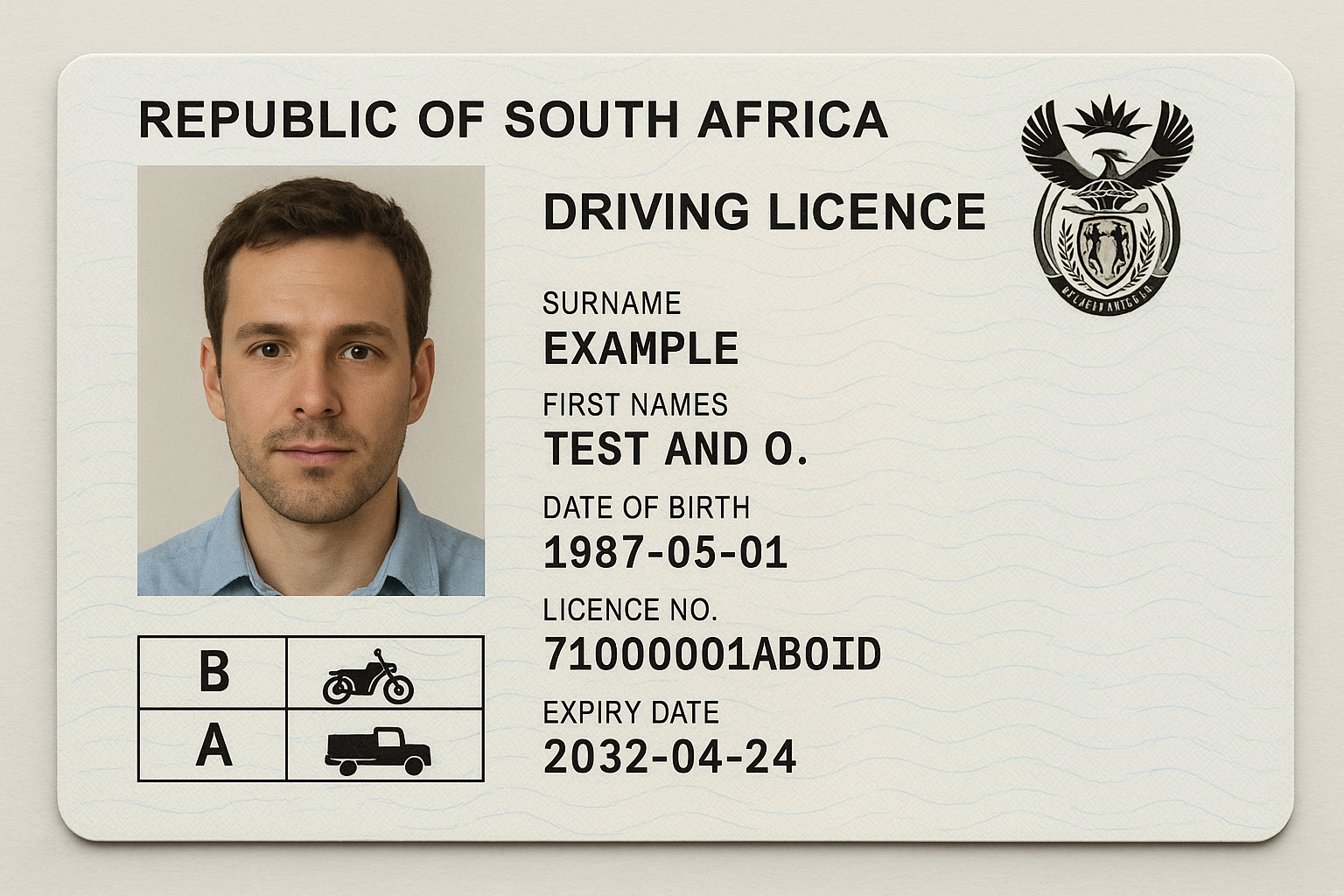
SA proposes 8-year driver's licence renewals, ending 5-year fatigue. Learn about the policy, fiscal impacts, and operational changes.
South Africa wants to make driver's licenses good for eight years instead of five. This big change will help fewer people wait in long lines and make it easier for women in the countryside to get their licenses. It will also be better for the planet by using less plastic. So, fewer headaches, easier access, and a greener world are the goals!
What is South Africa's new plan for driver's license validity?
South Africa plans to extend driver's license validity from five to eight years. This change aims to reduce renewal volumes by 32% by 2033, shorten queues, and improve accessibility, especially for women in rural areas. The move also offers environmental benefits by reducing polycarbonate waste.
Get Cape Town news in your inbox
Stay updated with the latest stories from the Mother City.
1. From Five-Year Sprints to an Eight-Year Marathon
For generations, South Africans have danced the same five-year shuffle: wake before sunrise, line outside a licencing centre, hop between eye-test booths, fingerprint scanners and cashier windows, then pocket a fresh card that already flashes its next expiry date. Thirteen million active drivers repeat this ritual sixty months at a time; traffic-radio hosts now give “renewal alerts” next to accident warnings.
In other words, the nation is preparing to trade sixty months for ninety-six, stretching the breathing space between bureaucratic marathons by more than half a decade.
2. Tracing the Draft: How Ten Years Shrunk to Eight
From White Paper to Feasibility Study
Back in 2012 an internal RTMC briefing floated a ten-year validity, pointing to Europe’s decade-long licences and the improved durability of polycarbonate cards paired with facial-recognition archives. The file gathered dust. Renewed momentum came in 2022 when then-Minister Fikile Mbalula commissioned a full feasibility probe. The 168-page report surfaced quietly in October 2024 and found a ten-year cycle “technically feasible” yet fiscally jarring. Instead, it counselled a phased jump to eight years, softening the blow to the Driving Licence Card Account (DLCA) – the entity that funds itself almost exclusively from the R140 card fee.
Counting the Rands
Each year the DLCA banks roughly R2.3 billion on renewals. Trim the frequency by two-fifths and annual income falls by an estimated R900 million from 2032 onward, money that today bankrolls system upgrades and subsidises rural licencing hubs. Policymakers privately admit that the retreat from ten to eight years was largely number-crunching: eight still narrows the hole yet leaves Treasury room to plan alternative revenue, perhaps via vehicle-registration surcharges.
The compromise preserves cash-flow realism while edging the country closer to global norms.
3. Rolling Out the New Cycle: Cards, Chips and Queues
Card Stock and Security Chips
Should Parliament amend the National Road Traffic Act, the extended validity will not rewind current licences. Cards printed before commencement day keep their original expiry, so South Africa will live in a hybrid zone for at least five years. Idemia Southern Africa, the DLCA’s production partner, says its Silverton plant already churns out polycarbonate stock rated for ten-year wear, so no retooling is necessary. More delicate is the 64-kilobyte contactless chip that stores fingerprints and facial templates. Firmware tweaks to stretch cryptographic key rotation have passed stress tests, and a rollout is pencilled for the second quarter of 2026 – a technical refresh independent of the validity debate yet perfectly timed to support it.
Shorter Queues, Sharper Maths
Council for Scientific and Industrial Research (CSIR) modelling forecasts a 32 % plunge in renewal volume by 2033 – that is 2.7 million fewer centre visits a year. Gauteng, handling 29 % of renewals, could trim traffic by roughly 230 000 appointments annually in hotspots like Randburg and Centurion, while quiet rural offices in the Eastern Cape may shed only 15 %. To stop bottlenecks from migrating to vehicle-disc renewals or learner-licence tests, the DLCA will redeploy staff through smarter allocation algorithms and dispatch mobile “pop-up” units to deep-rural districts.
The goal is a shorter queue, not a shifted one.
4. Safety, Scandals, Savings and the Global View
Eye Tests, Glaucoma and Safeguards
Critics warn that eight years without forced vision screening could overlook creeping glaucoma in drivers over fifty. The 2024 RTMC study counters that most age-related vision loss is gradual and self-reported as drivers update spectacle prescriptions. Accident regression analysis by the Road Accident Fund found no meaningful crash uptick among long-validity drivers once mileage and age are controlled. To calm nerves, the department plans two layers of insurance: optometrists will e-submit vision results to the same gateway used for professional driving permits (PrDPs), and any licence holder can pop in for a voluntary R50 rapid eye test whose proceeds fund rural vision projects.
Winners and Losers on the Ledger
Treasury gains breathing room by delaying an R800 million card-press expansion once scheduled for 2029. Provincial offices, however, stand to forfeit about R600 million a year in service fees by 2033; municipalities such as eThekwini and Cape Town argue fewer renewals free staff for lucrative roadworthy inspections and want a compensatory formula. Motorists with two driving spouses will pocket roughly R560 in fees each cycle plus another R1 000 in opportunity costs, but sceptics warn that vehicle-registration tariffs – explicitly left open in the draft – could eat those savings.
Where South Africa Fits the World Map
Globally, licences last anywhere from three to fifteen years, with middle-income economies clustering between eight and ten. Brazil and Turkey adopted eight-year validity in 2016; Chile jumped from five to eight in 2022; Mexico City now issues ten-year cards to drivers under sixty. Germany and the United Kingdom range between ten and fifteen, though commercial drivers must file medical self-declarations more often. South Africa’s eight-year target lands in the emerging-market sweet spot while keeping tighter medical oversight than many U.S. states.
Behavioural incentives could yet feature: a leaked RTMC brief floats a “merit-extension” pilot that tacks one extra year onto the validity for every five demerit-free years, a nod to Chile’s clean-record bonus.
5. Hidden Dividends: Women, Rural Roads, Digital Apps and Carbon
Gender and Accessibility Gains
National travel surveys show women shoulder sixty percent of household paperwork yet have the least flexible work hours. CSIR modelling calculates that lengthening the renewal window removes 0.6 trips per woman per decade. Mobile units that once visited remote districts once every four weeks can realign timetables, sparing women in deep villages journeys of up to 180 km. Meanwhile, the department’s Universal Design pilot – tactile paving, lower counters, sign-language-ready staff – gains runway; fewer renewals mean retrofits can be thorough, not frantic.
Digital Sidekick and Greener Footprints
Parallel to the physical card, a digital companion app (“mDL-SA”) will store a dynamic QR code synced to the e-Natis backend. An eight-year physical cycle dovetails with typical smartphone lifespans, cutting mismatches where the card has lapsed but the phone still flashes green. Counterfeiters may be tempted by longer physical lifespans, so Idemia will embed optically-variable ink that changes hue under UV every three years – a cheap visual check that postpones wholesale replacement.
Cutting three renewal cycles within a 24-year horizon saves about 1 800 tonnes of polycarbonate – the weight of 22 million shopping bags – and 24 million sheets of paper. Stellenbosch University analysts tally carbon savings at 14 500 tCO₂e by 2036, equal to a 15 MW coal peaker.
Sixth Sense: Pitfalls, Politics and Pending Law
Sentiment and Stakeholder Flashpoints
An Ipsos poll in February 2025 found 71 % public support for the shift, jumping to 79 % among city drivers. Resistance is strongest among driving schools and taxi associations whose business models lean on frequent professional-permit renewals; the South African National Taxi Council has already warned it will seek parity. Environmental NGOs mock the plastic compromise, staging a mock funeral for the polycarbonate card outside Parliament and demanding full digital migration – a stance the department rebuffs citing rural smartphone penetration still under 65 %.
Transitional Quirks and Global Loans
Policy veterans fear a “double-expiry cliff” in 2033 when legacy five-year and new eight-year cards might expire within a few months. The DLCA will stagger first-time eight-year issues by birth-month clusters, flattening the curve. A dedicated web portal went live in April 2025, promising real-time dashboards to keep messages consistent where past campaigns faltered.
To bridge the looming R900 million revenue gap, Treasury is courting a World Bank concessional loan under the “Digital Governance for Service Delivery” window, while arranging peer exchanges with Chile on fraud-proof features and Kenya on rural pop-ups.
Yet, for all the momentum, the proposal is still paper, not statute. It must still brave Cabinet, public comment, Nedlac negotiations and possible court challenges. If history is a guide – remember the 2016 Road Accident Benefit Scheme Amendment Bill still adrift – the road could lengthen. What is new, however, is the calendar stamped in the 2026/27 Annual Performance Plan, turning aspiration into scheduled milestones.
What is South Africa's new plan for driver's license validity?
South Africa plans to extend the validity period of driver's licenses from five to eight years. This initiative aims to significantly reduce the frequency of renewals, thereby shortening queues at licensing centers and improving accessibility, particularly for women in rural areas who often face longer travel distances and time constraints. The change is also expected to have environmental benefits by decreasing the amount of polycarbonate plastic used for license cards.
Why did the proposed validity period change from ten years to eight?
Initially, a ten-year validity period was considered, drawing inspiration from European practices and the durability of modern polycarbonate cards. However, a feasibility study conducted in 2024 revealed that a ten-year cycle would be fiscally challenging for the Driving Licence Card Account (DLCA), which relies heavily on renewal fees. Extending to eight years was chosen as a compromise to soften the blow to the DLCA's annual income, preserving financial realism while still aligning South Africa closer to global norms for license validity.
When will the new eight-year validity period come into effect?
The exact commencement date is contingent on Parliament amending the National Road Traffic Act. Once implemented, cards printed before this

Sarah Kendricks is a Cape Town journalist who covers the city’s vibrant food scene, from township kitchens reinventing heritage dishes to sustainable fine-dining at the foot of Table Mountain. Raised between Bo-Kaap spice stalls and her grandmother’s kitchen in Khayelitsha, she brings a lived intimacy to every story, tracing how a plate of food carries the politics, migrations and memories of the Cape.
View all articles →