
WHY IS THE GREEN ID BOOK BEING PHASED OUT?
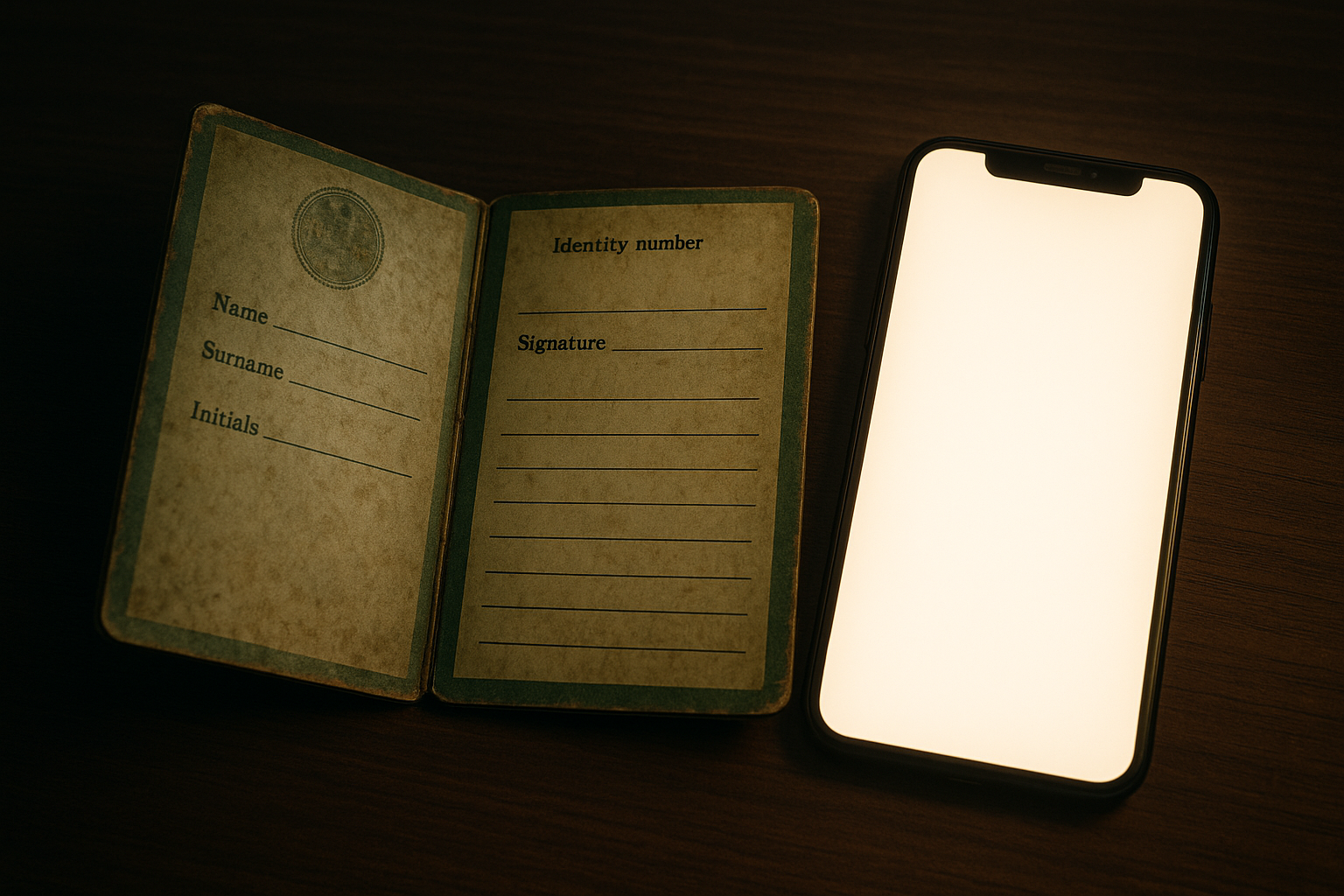
South Africa's identity revolution: from green ID books to digital Smart IDs. Explore the tech, fraud, and societal shifts in this epic transition.
South Africa is ditching its old green ID booklets for shiny new Smart ID cards and a super-modern phone-based Digital ID. Soon, your face and fingerprints will be your key to everything! This big change makes things safer, stops fakes, and helps everyone get their important stuff done easily. By 2030, those green books will be gone, making way for a super cool, digital future.
What is the future of South Africa's identity system?
South Africa is transitioning from the green ID booklet to a Digital ID system. This evolution involves Smart ID cards with advanced security features and a future phone-based Digital ID using selfies and fingerprints. The green books will be phased out by 2030, with a focus on enhanced security, fraud prevention, and accessibility for all citizens.
Get Cape Town news in your inbox
Stay updated with the latest stories from the Mother City.
1. Farewell, Pantone 347 U
In 1980 a Pretoria printer found itself drowning in green revenue-stamp dye. Rather than waste the pigment, officials slathered it on the first run of bar-coded ID booklets and an icon was born. The thumb-print box meant for rural fingerprinting later embarrassed post-1994 clerks, but the dye choice was pure thrift, not politics. The laminate ghost portrait of 2000 bought ten extra years of credibility after syndicates in Johannesburg’s inner city learned to swap mug shots with surgical blades. Yet even that patch was no more than a speed bump on the road to obsolescence.
2. Fraudsters turned collectors
Between 2008 and 2015 banks still smiled at photocopies, so crooks brewed yellow toner cocktails and spawned thousands of ghost clients. When scanners hit 4 800 dpi resolution, rural magistrates watched doppelgängers argue over one ID number on the same morning roll call. VerifyNow’s 2026 audit of fourteen million online checks showed impersonation climbing four-fold in twelve months; Minister Schreiber called the paper relic “finally indefensible.” The book’s final chapter was less identity document than collector’s item, fodder for nostalgia and crime alike.
3. Polycarbonate rescue squad
The Smart ID card that began rolling out in 2013 carries a laser-engraved portrait, 2048-bit RSA keys and three X.509 certificates stuffed into a contactless chip. Post Offices in shipping-container offices issue roughly twenty-four million cards to date, leaving sixteen million citizens still clutching the green booklet. Banks harvest the foot traffic: Standard Bank alone processes thirty-five thousand applications a month at pop-up counters next to supermarket tills. The card is transitional tech, a bridge between paper past and phone-based future.
4. Wallet on the phone
The next stage, baptised simply Digital ID, lives inside the National Identity Gateway hosted by SITA on Amazon’s Cape Town region. A single selfie with passive-liveness detection plus two fingerprints produces a signed JSON Web Token cached for seventy-two hours offline. A Cape Town bartender can confirm you are over eighteen without ever learning your exact date of birth, thanks to zero-knowledge proofs. Only two active duplicates of the 2-MB bundle are allowed at any moment, anchoring the credential to the handset, not the SIM.
5. Rural safety nets
With thirty per cent of adults still on feature phones, MTN and Vodacom zero-rated 134 082# , returning a ten-digit token merchants can type into a dashboard for a green tick. Where signal dies, solar kiosks cache the last five thousand IDs and broadcast credentials over Bluetooth LE. Transgender users wait months to change names because every tweak currently demands a road trip to a regional office; draft twenty-nine rules promise an in-app affidavit witnessed by a video commissioner.
6. Deep-fake whack-a-mole
Fraud analysts expect spliced face meshes pasted onto 3-D masks; counter-spec now layers near-infrared and ultraviolet flash to scramble skin reflectance. SIM-swap attacks shift to wallet-swap dreams, yet the private key stays trapped in the original handset’s hardware keystore. Inside SITA auditors found dormant admin accounts protected by birthdays; the new baseline demands FIDO2 tokens, quarterly key ceremonies inside a Midrand vault and tamper-evident audit logs streamed to the Financial Intelligence Centre.
7. Sector dominoes
Absa will drop card-and-PIN proof for account opening in 2028, replacing it with an instant facial match against the wallet, saving the bank four-hundred-and-fifty million rand in courier and branch hours. The National Health Insurance Bill embeds an e-Health ID mapped one-to-one to the national credential; rural clinics will scan a patient’s QR and download chronic-script data to a rugged tablet. During a July 2027 by-election in uMhlathuze, IEC cut check-in time from three minutes forty-eight seconds to forty-six seconds; the commission now wants satellite backhaul at every station before 2029 polls.
8. Afterlife of an icon
Collectors on Bidorbuy now pay up to fourteen-hundred rand for mint first-series books without barcode stickers; a Johannesburg shop sells sleeves labelled “Last of the Green” beside vinyl crates. Community museums in Soweto and Langa archive expired books, planning to link each barcode to the new digital record once privacy waivers arrive, stitching physical and virtual selves together. At the Zeitz MOCAA, Athi-Patra Ruga’s “Barcode of the Beloved Country” stitches forty-six green books - one for each year of circulation - into beads suspended in the atrium; scan the codes and an AR layer confronts 1980s racial labels with 2027 selfies.
9. Deadline drumbeat
Green books cease printing on 31 December 2027; from 1 July 2028 new applicants must choose Smart ID or digital-only, and from 1 March 2029 no state grant, driver’s licence or property transfer will honour the paper relic. At midnight on 30 June 2030 the book formally expires, allowing police and banks to seize defunct copies as fraud exhibits. Parliament’s B34-2027 Digital Identity Bill, a R2.1-billion kiosk roll-out and a media blitz under the line “Your face is now your key” will escort South Africa into the era where the portrait, not the booklet, is the state.
[{"question": "What is South Africa's new identity system?", "answer": "South Africa is transitioning from the traditional green ID booklets to a modern Digital ID system. This includes Smart ID cards, which were introduced in 2013 and feature advanced security like laser-engraved portraits and contactless chips with 2048-bit RSA keys. The ultimate goal is a phone-based Digital ID, where your face and fingerprints will serve as your primary identification."}, {"question": "What are the key features of the Smart ID card?", "answer": "The Smart ID card is a polycarbonate card with a laser-engraved portrait, 2048-bit RSA keys, and three X.509 certificates embedded in a contactless chip. It represents a significant security upgrade from the old green booklets, designed to combat fraud and provide a more secure form of identification. Millions have already been issued, with banks even facilitating applications at pop-up counters."}, {"question": "How will the phone-based Digital ID work?", "answer": "The phone-based Digital ID, referred to as 'Digital ID', will reside on your smartphone within the National Identity Gateway. It uses a single selfie with passive-liveness detection and two fingerprints to generate a signed JSON Web Token, valid offline for 72 hours. This system allows for secure verification, like confirming age without revealing exact birthdates through zero-knowledge proofs, and is anchored to the handset, not the SIM card, with only two active duplicates allowed at any moment."}, {"question": "When will the green ID booklets be phased out?", "answer": "The green ID booklets will cease printing on December 31, 2027. From July 1, 2028, new applicants must choose either the Smart ID or a digital-only option. By March 1, 2029, the green booklet will no longer be honored for state grants, driver's licenses, or property transfers. The formal expiry date for the green books is midnight on June 30, 2030, after which they can be seized as fraud exhibits."}, {"question": "How will the new system benefit citizens and combat fraud?", "answer": "The new system aims to significantly enhance security and combat fraud. The Smart ID card's advanced features make it much harder to forge than the old booklets. The Digital ID, with its biometric authentication (face and fingerprints), zero-knowledge proofs, and secure hardware anchoring, drastically reduces impersonation and other identity-related crimes. It also promises to streamline processes like opening bank accounts and checking in at voting stations, making services more efficient and accessible."}, {"question": "What provisions are being made for rural areas and those with feature phones?", "answer": "To ensure inclusivity, even for those with feature phones, MTN and Vodacom have zero-rated the 134082# service, which returns a ten-digit token for merchants to verify identities. In areas without signal, solar-powered kiosks will cache up to five thousand IDs and broadcast credentials via Bluetooth LE. Furthermore, the new system aims to simplify administrative processes for all, including transgender users, by allowing for in-app affidavits witnessed by video commissioners, eliminating the need for long trips to regional offices for changes.", "additional_info": "The transition is backed by Parliament's B34-2027 Digital Identity Bill, a R2.1-billion kiosk roll-out, and a media blitz under the slogan 'Your face is now your key'."}]

Zola Naidoo is a Cape Town journalist who chronicles the city’s shifting politics and the lived realities behind the headlines. A weekend trail-runner on Table Mountain’s lower contour paths, she still swops stories in her grandmother’s District Six kitchen every Sunday, grounding her reporting in the cadences of the Cape.
View all articles →