
WHY JAN-HENDRIK WANTS TO COME HOME
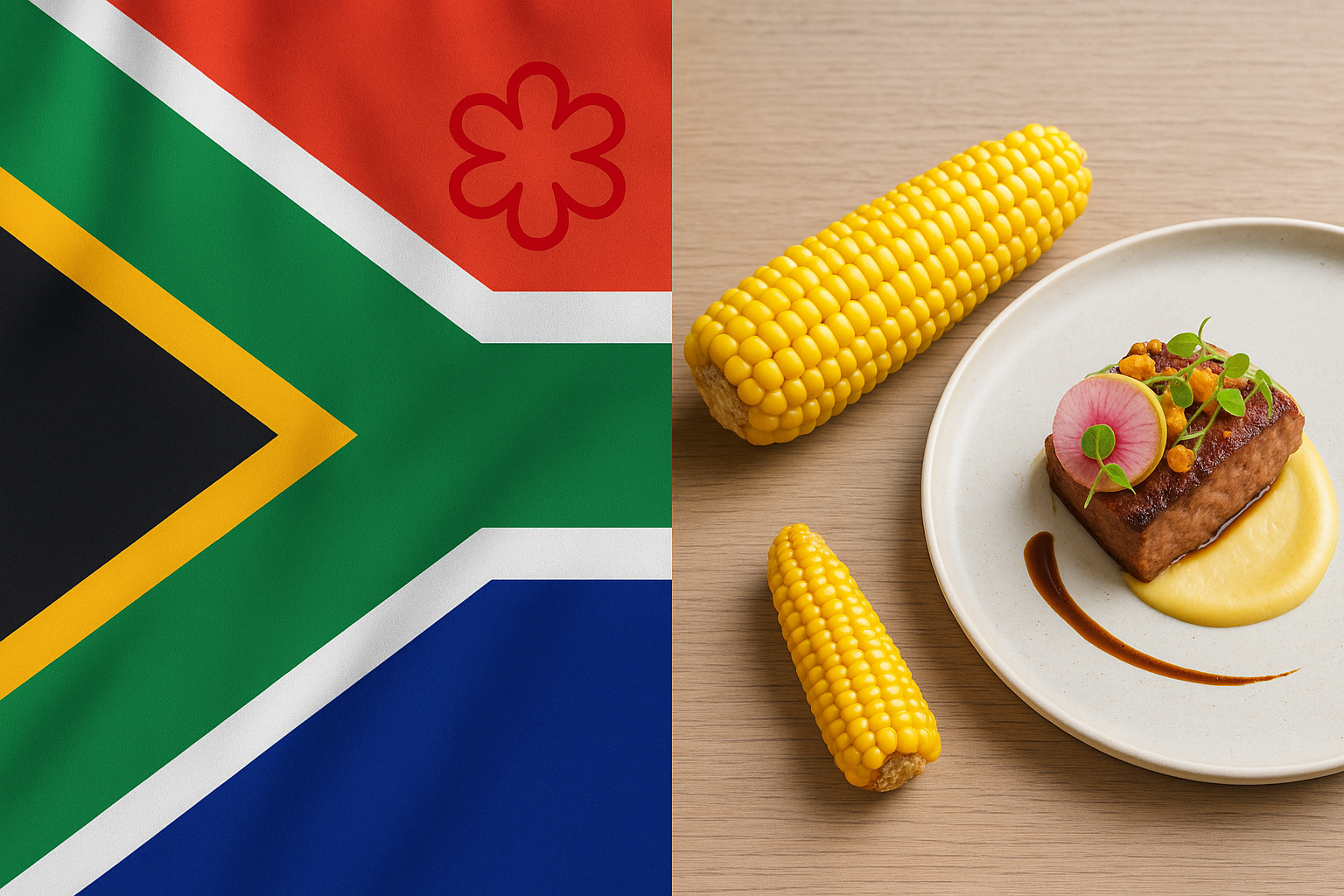
Michelin-starred chef Jan-Hendrik van der Westhuizen blends South African roots with French culinary art. Discover his unique journey.
Jan-Hendrik van der Westhuizen is a culinary wizard from South Africa who won a fancy Michelin star in France! He's famous for mixing old South African tastes with new cooking tricks. He runs two amazing restaurants: one in classy Nice, France, and another, called Klein JAN, nestled in the wild Kalahari desert. He uses ingredients from his homeland to tell delicious stories with every dish, bringing his roots to the gourmet world.
Who is Jan-Hendrik van der Westhuizen?
Jan-Hendrik van der Westhuizen is the first South African chef to earn a Michelin star in France. He is known for his innovative approach to South African cuisine, blending traditional flavors with modern techniques. He operates the Michelin-starred restaurant JAN in Nice, France, and Klein JAN in the Kalahari, South Africa.
Get Cape Town news in your inbox
Stay updated with the latest stories from the Mother City.
A Postcard that Bites Back
At dusk on a hushed lane in Nice, a folded meringue shaped like vintage stationery lands on white linen. Snap it open and the aroma of coriander-seared beef and distant thunderstorms floats out. Diners pause mid-conversation; for a moment the Riviera is replaced by Karoo sunshine. The chef behind the sleight of hand is Jan-Hendrik van der Westhuizen – the first South African ever to bag, and keep, a Michelin star in France. Yet the postcard is addressed to Middelburg, not Monaco.
Inspectors rarely wax lyrical about homesickness, but their report lauds “documented brilliance” and “a fierce mapping of terroir”. What they omit is the mileage baked into every plate: 8 500 kilometres, two hemispheres and three generations of family memory. During a late-night chat on kykNET he admitted he is re-designing the brutal 90-hour work rhythm Michelin stardom exacts. “I can sprint faster,” he shrugged in Afrikaans-tinged French, “but not from my roots.”
Laboratory under the Lion-Coloured Sky
A table in the dunes
Klein JAN, opened in 2021 on the Tswalu Kalahari Reserve, is reachable only by bush-plane or four sweaty hours on dirt tracks. Vegetables are flown in from the Cape, venison dry-aged inside a cellar chiselled straight into red dunes, yet weekend slots sell out half a year ahead. Rather than a lavish pop-up, the site serves as van der Westhuizen’s living lab, a place where South African ingredients are pushed to their climatic edge.
Eight courses commence at 4 p.m. sharp – Kalahari sunsets wait for no maître d’. One course steams inside replica San clay pots; another folds detoxified gifbol sap into a neon lime gel. Between bites, van der Westhuizen switches seamlessly from Afrikaans to English to Setswana, offering foraging anecdotes as seasoning. By the time the final rooibos-smoked truffle ganache arrives, the Milky Way has stretched itself into a luminous spill of salt above the canvas roof.
Science with soul
Termites roasted into sorghum tuiles, sap from lethal bulbs coaxed into dessert, bread leavened by ant-hill heat – each experiment is rooted in respect rather than gimmickry. The chef labels the approach “sun-science”, a fusion of hard technique and desert lore. Guests leave with sand still in their shoes and a new dictionary of tastes: tsamma melon, wild rosemary, guinea-fowl crackling.
Dinner as time travel
Every plate is freighted with biography. A single bite of smoked snoek transports a Capetonian back to childhood road trips; a French food writer is startled to find tears forming over a cube of sweet-potato ash. Van der Westhuizen calls it culinary sonar – using flavour to ping memory and measure how far people have drifted from home.
From Mielie Stand to Michelin Star
Early hustle
Outside Middelburg, on a cattle farm ringed by acacia thorns, the boy nicknamed ‘Hendrik’ sold sweet-corn from the back of a bakkie at age eleven. He stacked the cobs into golden ziggurats, added free salt sachets and invented a sales line that doubled as prophecy: “From my mother’s hem to your palm.” It was pocket money, but also first contact with the adrenaline of service.
Detour through the lens
University in Stellenbosch meant photography lectures skipped in favour of feeding dorm mates. A slow-roasted Karoo leg injected with apricot jam reduced a friend to tears of nostalgia – the moment he realised food could be a sharper camera than any Leica. He abandoned the darkroom for Manhattan’s French Culinary Institute, trading shutter speed for julienne.
19-hour semesters
Ducasse’s Louis XV in Monaco demanded dawn-to-dawn stamina, sustained on Gruyère rinds and bravado. When JAN finally opened its doors in 2013, doubters laughed at bobotie served on French soil. Van der Westhuizen answered with translucent savoury macarons and Snoek pâté that hummed with West Coast ocean. Michelin arrived within two seasons; laughter stopped.
The Oak Embassy
Portable heirloom
Grandmother Hessie’s oak table, scarred by decades of bread dough, travelled from Middelburg kitchen to Riviera plating bench. Every evening biltong strips rest on its grain to warm and “wake the ghosts”. When MARIA bistro opened across the alley, the table shifted once more – this time as a reservation desk bearing her baptismal name.
First flight at 92
Ouma Maria Elizabeth flew business class to the opening – maiden passport, maiden Champagne. Above the till hangs her portrait – hands folded, eyes smiling approval that transcends language. Diners unconsciously lower their voices; some reach out to touch the frame as if greeting an elder.
Hospitality in reverse
Van der Westhuizen refuses to label the effect sentimentality. For him it is simply ancestral courtesy: “When you know the story of a dish, you taste time.” Staff are drilled not only in knife torque but in narrative cadence, so every plate arrives with context rather than comment cards.
Trading Millimetres for Gasps
The nightly audit
The freedom of cracks
A guest’s tear-streaked confession – that dessert evoked her mother’s melktert “without the funeral” – cracked his pursuit of perfection open. He began designing for wonder instead of points. Sleep returned, menus grew conversational. Fans still gasp at a kudu-biltong windmill rotating above a candle to waft aroma, or a rooibos teacup that dissolves into buchu blossoms on the tongue.
The Elastic Meaning of “My People”
Ancestral GPS
When the Afrikaans phrase “Ek wil net meer tyd by my mense spandeer” dropped during an interview, listeners heard simplicity. In reality “my people” sprawls from Zulu foragers to Cape Malay aunties, from San trackers texting melon coordinates to the Senegalese commis who wept over sorghum ice. The chef plans a tidal calendar – six months steering JAN and MARIA, six months on home soil hosting township pop-ups, rural fermentation clinics and farm-kid mentorships. Tuition: one ingredient plus one story.
Recipe in reverse
The October homecoming dinner will rewind his life plate by plate. First snack: vetkoek sphere oozing chicken-liver parfait – a nod to church fêtes dodged beneath church-organ lofts. Midway: a lone mielie kernel freeze-dried to caramel crunch atop smoked butter – the parking-lot hustle in miniature. Final savoury: whole Karoo saddle carved table-side while Psalm 23 rolls in Afrikaans, its jus clarified via Japanese consommé craft – the quiet confession that leaving taught him how to see home.
Soft Power in a Steaming Basket
Unofficial embassy
JAN and Klein JAN have become diplomatic outposts. French senators nibble bobotie macarons; Chinese tourists film biltong pinwheels; Malian musicians drum on seed pods in the Kalahari. After a trade row over tariffs, the chef seated both ambassadors at a six-hands dinner. One Constantia-topped oyster later, the French envoy admitted its Sauternes-like charm. Newspapers headlined the surrender next morning.
Living dictionary
Partnering with the Department of Arts & Culture, van der Westhuizen stamps endangered food words onto staff uniforms: inqina, umqombothi, mabele. QR codes link to native pronunciations and demonstration clips. The mission: rescue vocabulary so flavour does not vanish with its syllables.
Duffel-bag Diplomacy
Luggage with a passport
Twelve colour-coded duffels rotate between continents – diplomatic pouches containing Kalahari truffle, Normandy 36-hour butter, gifbol sap, saffron. Customs officials greet the bags with conspiratorial sniffs and stamps that say, “Welcome back, chef.”
Domestic choreography
A partner-photographer from Marseilles will spend three months a year chronicling township markets and migrant kitchens, converting longing into reportage. In their Nice flat a magnetic map tracks two icons – a tiny Michelin star and a tiny mielie – sliding between hemispheres according to the season.
The Playlist of Return
The homecoming soundtrack begins with Ladysmith Black Mambazo and ends with a Nice street accordionist’s “Sarie Marais”. Sandwiched between is a field recording: wind combing through mielie stalks layered over a distant tractor rumble. It will play on repeat in the pass as the vetkoek starter is plated, proof that the same melodies that push you outward can also reel you home.
When people ask why swap Riviera glamour for Karoo grit, he recounts his last touchdown at O.R. Tambo. “I cracked the window at the Vaal River toll – diesel, dust, braai smoke. My heart did a hiccup you can’t fake.” Then the shrug, half-French, half-Middelburg: “Where else can a chef harvest terroir made of wind, memory and a mother’s hum?”
[{"question": "Who is Jan-Hendrik van der Westhuizen?", "answer": "Jan-Hendrik van der Westhuizen is a renowned South African chef, celebrated for being the first from his country to earn a Michelin star in France. He is known for his unique culinary approach, which beautifully merges traditional South African flavors with sophisticated modern cooking techniques. He operates two distinct restaurants: JAN, his Michelin-starred establishment in Nice, France, and Klein JAN, located in the remote Kalahari desert in South Africa."}, {"question": "What is unique about Jan-Hendrik van der Westhuizen's cooking style?", "answer": "Jan-Hendrik's cooking style is unique because it masterfully blends traditional South African ingredients and culinary heritage with modern, refined French techniques. He calls his approach 'sun-science,' where he uses local ingredients, often pushing them to their climatic edge, and incorporates desert lore and ancestral memories into his dishes. His creations are designed to evoke nostalgia and tell stories, effectively using food as a form of 'culinary sonar' to connect diners with their roots."}, {"question": "Where are Jan-Hendrik van der Westhuizen's restaurants located?", "answer": "Jan-Hendrik van der Westhuizen has two primary restaurants. His Michelin-starred restaurant, JAN, is situated in Nice, France, offering a taste of South Africa on the French Riviera. His second restaurant, Klein JAN, is nestled deep within the Tswalu Kalahari Reserve in South Africa, providing a unique dining experience that can only be reached by bush-plane or a long drive on dirt tracks."}, {"question": "What is 'Klein JAN' and what makes it special?", "answer": "Klein JAN, opened in 2021 on the Tswalu Kalahari Reserve, is more than just a restaurant; it serves as Jan-Hendrik's 'living lab.' It's a place where South African ingredients are explored and innovated upon, often incorporating traditional desert lore and 'sun-science' techniques. Guests experience an eight-course meal at 4 p.m. sharp, designed to coincide with the Kalahari sunset, featuring dishes that use local ingredients like venison dry-aged in a cellar carved into red dunes, and experimental elements like detoxified gifbol sap or ant-hill leavened bread. It's a culinary journey rooted in respect for the land and its history."}, {"question": "How did Jan-Hendrik van der Westhuizen start his culinary journey?", "answer": "Jan-Hendrik's culinary journey began early, selling sweet-corn from a bakkie (pickup truck) at age eleven in Middelburg, South Africa. Although he initially pursued photography at university, he soon realized his passion for food, often feeding his dorm mates. This led him to abandon photography for culinary arts, studying at Manhattan's French Culinary Institute and later working at prestigious establishments like Ducasse's Louis XV in Monaco. He eventually opened his own restaurant, JAN, in Nice in 2013, quickly earning a Michelin star."}, {"question": "What is the significance of 'Ouma Maria Elizabeth' and her oak table in Jan-Hendrik's work?", "answer": "Ouma Maria Elizabeth, Jan-Hendrik's grandmother, and her oak table hold profound significance in his culinary philosophy. The scarred oak table, a family heirloom, traveled from Middelburg to Nice and serves as a tangible link to his roots and family memories, even being used as a reservation desk at his bistro, MARIA. Ouma Maria herself, at 92, flew business class to the opening of MARIA, symbolizing the deep connection he maintains with his heritage. These elements represent his concept of 'ancestral courtesy,' where every dish is freighted with biography and story, inviting diners to taste time and memory."}]

Tumi Makgale is a Cape Town-based journalist whose crisp reportage on the city’s booming green-tech scene is regularly featured in the Mail & Guardian and Daily Maverick. Born and raised in Gugulethu, she still spends Saturdays bargaining for snoek at the harbour with her gogo, a ritual that keeps her rooted in the rhythms of the Cape while she tracks the continent’s next clean-energy breakthroughs.
View all articles →