
Why this Champions League final is a rematch with history
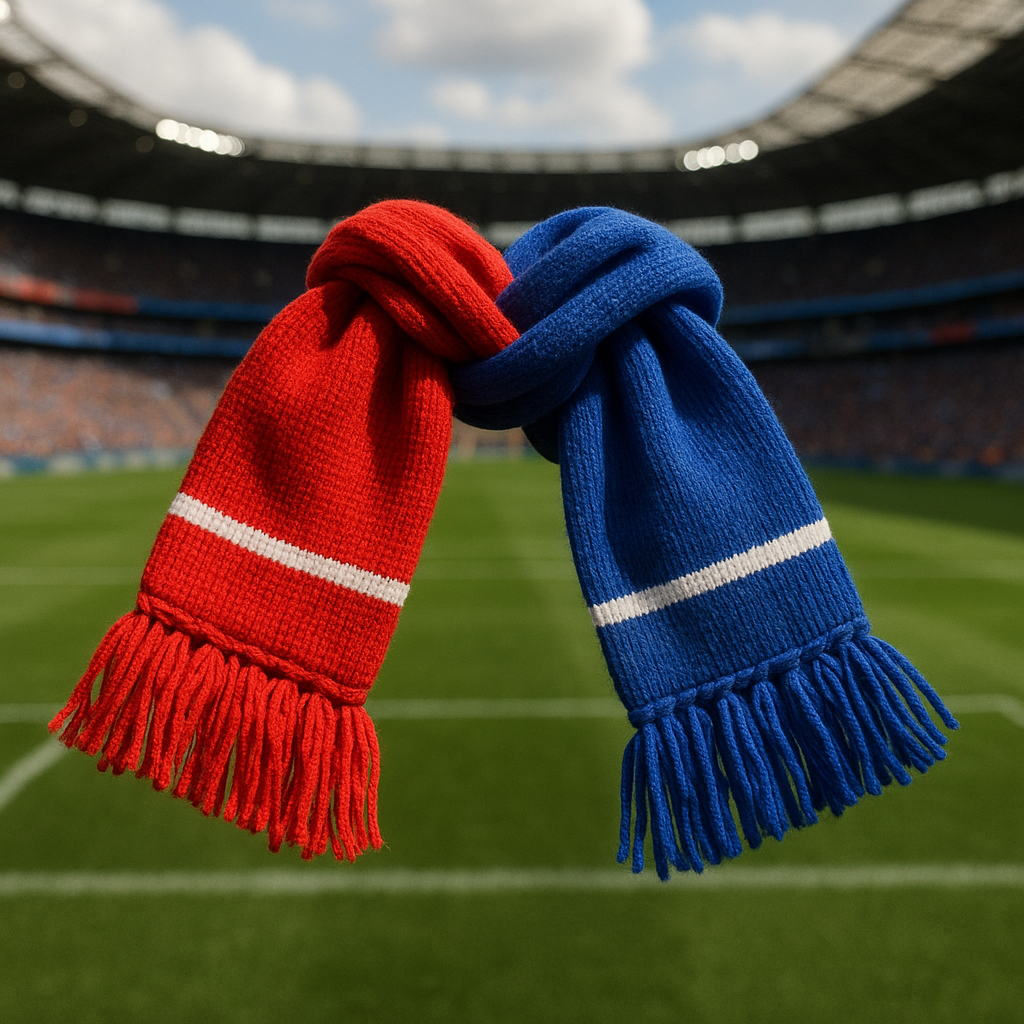
Arsenal and PSG face off in the 2026 Champions League final. Can Arsenal avenge their 2025 semi-final loss?
This article sets the stage for an epic Champions League final rematch between Arsenal and PSG in Budapest. A year after PSG defeated Arsenal, these two teams, with the same managers and core players, face each other again. Both clubs have transformed, with Arsenal, under Arteta, becoming an unbeaten domestic force known for creative set-pieces and tactical fluidity. PSG, led by Luis Enrique, has built a hardened, shape-shifting team around their star attackers. The final will hinge on key tactical battles, including Dembélé against Arsenal's defense, the midfield duel between Rice and Vitinha, and the impact of skillful substitutes, all playing out in a highly anticipated, emotionally charged atmosphere.
What are the key tactical matchups in the Arsenal vs PSG Champions League final?
The 2026 Champions League final between Arsenal and PSG will be decided by four key tactical battles: Dembélé against White & Timber, Rice versus Vitinha in midfield, Arsenal's set-piece artistry against PSG's defensive strength, and the impact of substitutes like Arsenal's Emile Smith Rowe and PSG's Gonçalo Ramos.
Get Cape Town news in your inbox
Stay updated with the latest stories from the Mother City.
1. A YEAR OF ECHOES ON THE DANUBE
A single defeat can echo for an eternity in football.
On 14 May 2025 Arsenal left the Emirates with a 2-1 loss to Paris Saint-Germain, then endured a silent 1-0 burial in the French capital two weeks later. Three-one on aggregate; the dream dissolved before the last London sunset. Sixty kilometres up the road, Luis Enrique’s squad eviscerated Inter in the final and strolled through the Arc de Triomphe celebrations.
Twelve months later the river has shifted east, from the Seine to the Danube, yet the cast remains unchanged. Puskás Aréna will host the 2026 Champions League final, and once again Arsenal and PSG stand as the last two left standing. Same managers, same DNA, different scars. The showdown is no longer just another final; it is a referendum on how two clubs spent one painful summer answering the same question: “How do we make sure the next 90 minutes end differently?”
2. ARSENAL’S METAMORPHOSIS - FROM UNBEATEN SEASON TO CHOREOGRAPHED MAYHEM
The Backbone of 38 Unconquered Games
Mikel Arteta’s domestic slate reads like fantasy: 38 Premier League fixtures, zero defeats, 27 victories, eleven draws. Yet the story hides inside the margins.
• William Saliba tore a hamstring in October; in his absence Gabriel Magalhães and Declan Rice learned to operate as a split-double-six during build-up. The tweak liberated Martin Ødegaard to finish as the league’s premier chance creator.
• Bukayo Saka spent eleven league starts as a false nine, sucking centre-backs into awkward channels and freeing Gabriel Martinelli and Leandro Trossard to raid the half-spaces.
Set-piece damage? Thirty-four goals – the most by any English side since Opta started counting in 1996-97 – and twenty-three of those came from second-phase scrambles rather than the first contact, proof that Arteta now scripts chaos instead of merely inviting it.
Timber’s Licence to Roam
Jurriën Timber nominally wears the left-back shirt, yet his heat-maps belong to an interior playmaker. Arteta drags him into midfield to form temporary overloads or sends him sprinting outside Martinelli, ensuring every third-man combination arrives with an extra body. By April Timber ranked second at the club for progressive passes, a statistic once reserved for creative midfielders.
The Set-Piece Laboratory
Arsenal’s analysts noticed opponents aggressively front-post defending. Their counter-move is the “ghost screen”: two attackers stand motionless in the goalkeeper’s eye-line without making contact, letting Gabriel sprint late to the far post unimpeded. The ploy produced nine goals between January and May.
3. PSG’S BLUEPRINT - GALÁCTICOS WITH A STEEL FRAME
From Fireworks to Factory Settings
Luis Enrique resisted the urge to rip up a side that conquered Europe. He kept the Dembélé-Kvaratskhelia-Barcola trident and hardened everything around it.
Shape-Shifting at the Back
In possession Marquinhos sinks between the centre-backs, flipping the back four into a three. That tiny slide transforms Nuno Mendes and Achraf Hakimi into touch-hugging tens, stretching the last line until Ousmane Dembélé can isolate any inside-back brave enough to track him.
Vitinha’s Dual Identity
Portuguese midfielder Vitinha operates like a relay baton, morphing from single pivot to advanced shuttler within seconds. Bayern felt the sting in the quarter-finals: he ghosted beyond Jamal Musiala, accepted a reverse pass from Dembélé and threaded the equaliser before the Bavarians reset.
Transition in Six Seconds
On defensive corners PSG squeeze into a phone-booth shape. The first headed clearance becomes a launch pad: three passes later Kvaratskhelia or Barcola dashes down the vacant 40-metre lane left by the opposition’s attacking set-up. Eleven of their thirty-one open-play goals this season began within twenty seconds of defending a dead ball.
4. CRUNCH TACTICS - FOUR MICRO-BATTLES THAT MAY DECIDE THE CUP
Dembélé vs. White & Timber
The winger’s profile has changed: 41 % of his touches now arrive in the channel between right-back and centre-back, up from 23 % a year ago. Last May Ben White forced him wide and trusted Saliba to sweep; this year Arsenal drill a “double-lever” – White engages high, Timber hacks across the blind side. The trade-off is Hakimi unmarked on the overlap; that chess move fixes how aggressively Arsenal’s back line can breathe.
Rice vs. Vitinha - A Silent War of Tempo
Declan Rice has polished the passing range long thought beyond him: 6.3 final-third entries per ninety. Vitinha, meanwhile, craves clean, vertical triangles. The contest will not be decided by sliding tackles but by who chooses the metronome speed. Arsenal want 110-decibel chaos; PSG prefer the whispered 60.
Set-Piece Fireworks
Arsenal’s dead-ball artistry meets its polar opposite: PSG have conceded zero headed goals from corners in their last seventeen Champions League games. Something has to crack. Arsenal’s shadow screen versus PSG’s rehearsed counter-thrust could swing the mood in the space of two heartbeats.
Bench Thunder
Single-match finals turn substitutes into assassins.
• Arsenal: Emile Smith Rowe remodelled himself as a late-box-crasher – five goals since March, all after the 75th minute. Oleksandr Zinchenko flips the shape from back four to 3-2-5 without a stoppage.
• PSG: Gonçalo Ramos’ diagonal run forced the Gabriel own goal that ended last year’s semi. Fabián Ruiz is now the lock-picker against deep blocks; he arcs cross-field passes onto Hakimi’s chest before opponents reset.
5. CONTEXT, CLOCKS, AND THE CANVAS
Ghosts in the Directors’ Box
Arsène Wenger will watch from the VIP seats twenty-three years after his own Paris heartbreak. Luis Enrique, who once knocked Arsenal out with Barcelona in 2016, now chases consecutive European Cups – a feat only Sacchi’s Milan and Zidane’s Madrid have achieved in the Champions League era.
Travelling Voices
Three coaches leave Johannesburg for OR Tambo on Friday night, carrying the Arsenal Supporters’ Club southern Africa branch; they raised R1.2 million last winter to refurbish pitches in Soweto. PSG’s Casablanca alumni sold out a Hyatt viewing party in forty-two minutes.
Climate & Acoustics
Kickoff forecast: 22 °C, 54 % humidity, a gentle north-westerly. The Puskás Aréna’s first fifteen rows sit below pitch level, creating a cauldron that amplifies every blade of grass. Arsenal trained with 110-decibel white-noise machines; PSG rehearsed corner calls in Catalan and Portuguese to cut through English chants.
Global Countdown
Budapest: 19:45 CEST London: 17:45 BST Johannesburg: 19:45 SAST New York: 13:45 EDT Sydney (Sunday): 03:45 AEST
In every time zone the ritual repeats: scarves on office chairs, phones buzzing with conspiracy theories, and the same breathless certainty that the next ninety minutes will sit in memory for the rest of life.
[{"question": "What is the historical context of this Champions League final rematch between Arsenal and PSG?", "answer": "This final is a rematch of the previous year's Champions League final where PSG defeated Arsenal with a 3-1 aggregate score (2-1 in London, 1-0 in Paris). It's a chance for Arsenal to exact revenge, and for PSG to prove their continued dominance. Both teams feature the same managers and core players, highlighting a continuous rivalry."}, {"question": "How has Arsenal transformed under Mikel Arteta in the past year?", "answer": "Under Mikel Arteta, Arsenal has undergone a significant transformation, achieving an unbeaten domestic season with 38 Premier League games without defeat (27 wins, 11 draws). Key changes include William Saliba's injury leading to a Gabriel Magalhães and Declan Rice 'split-double-six' midfield, liberating Martin Ødegaard. Bukayo Saka has excelled as a false nine, and Jurriën Timber has evolved into an interior playmaker from left-back. They are also known for their creative set-pieces, scoring 34 goals from them, with 23 from second-phase scrambles."}, {"question": "What are the key tactical strengths of PSG under Luis Enrique?", "answer": "Luis Enrique has maintained PSG's star attacking trident of Dembélé, Kvaratskhelia, and Barcola, while hardening the team around them. Tactically, Marquinhos drops between center-backs in possession to form a back three, allowing Nuno Mendes and Achraf Hakimi to push high. Vitinha acts as a versatile central midfielder, shifting from pivot to advanced shuttler. PSG also boasts rapid transitions, with 11 of their 31 open-play goals this season originating within 20 seconds of defending a dead ball, often after a defensive corner."}, {"question": "What are the crucial individual tactical battles expected in the final?", "answer": "Four micro-battles are expected to be decisive: \n1. Ousmane Dembélé (PSG) against Arsenal's Ben White and Jurriën Timber, with Dembélé now operating more in the channel between right-back and center-back. \n2. The midfield duel between Arsenal's Declan Rice and PSG's Vitinha, focusing on who controls the tempo of the game. \n3. Arsenal's innovative set-piece routines, particularly their 'ghost screen' tactic, against PSG's strong aerial defense, who have conceded zero headed goals from corners in their last 17 Champions League games. \n4. The impact of substitutes, such as Arsenal's Emile Smith Rowe (late box-crasher) and Oleksandr Zinchenko (tactical flexibility), and PSG's Gonçalo Ramos (diagonal runs) and Fabián Ruiz (lock-picker against deep blocks)."}, {"question": "Where is the Champions League final being held and what are some unique aspects of the venue and atmosphere?", "answer": "The 2026 Champions League final will be held at Puskás Aréna in Budapest, Hungary. The stadium's design, with its first fifteen rows below pitch level, is known for creating an intense and amplified atmosphere. Arsenal has even trained with 110-decibel white-noise machines to prepare for the noise, while PSG has rehearsed corner calls in Catalan and Portuguese to cut through the expected English chants. The forecast for kickoff is 22 °C with 54 % humidity."}, {"question": "Are there any notable figures or historical connections to this final?", "answer": "Yes, Arsène Wenger, who experienced his own Champions League heartbreak in Paris, will be watching from the VIP seats. Luis Enrique, who previously knocked Arsenal out of the Champions League with Barcelona in 2016, is now aiming for consecutive European Cups, a feat only achieved by Sacchi's Milan and Zidane's Real Madrid in the Champions League era. Fan groups from around the globe, such as the Arsenal Supporters’ Club southern Africa branch and PSG’s Casablanca alumni, are also highlighted, showcasing the global reach and passion for both clubs."}]

Michael Jameson is a Cape Town-born journalist whose reporting on food culture traces the city’s flavours from Bo-Kaap kitchens to township braai spots. When he isn’t tracing spice routes for his weekly column, you’ll find him surfing the chilly Atlantic off Muizenberg with the same ease he navigates parliamentary press briefings.
View all articles →