
Why was Sisisi Tolashe fired?
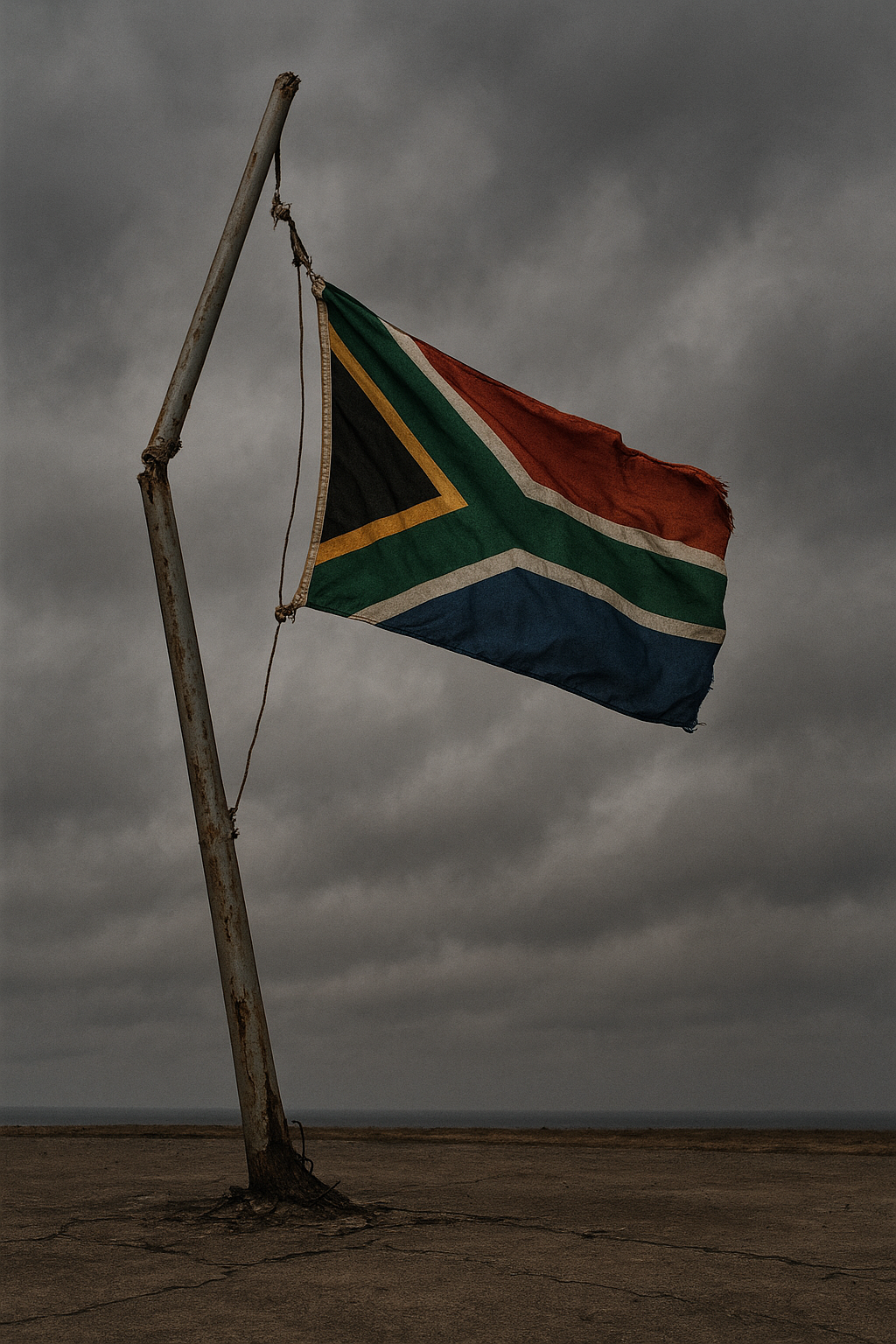
Minister's collapse: South Africa's welfare system in crisis. Exposes institutional cracks, political patronage & deep corruption.
South Africa's Social Development Minister, Sindisiwe Tolashe, was fired because President Ramaphosa lost trust in her. This happened after she faced serious accusations, like hiring an unqualified 22-year-old as a top staff member and using government money for her own benefit. There were also concerns about cars meant for a political campaign being registered to her daughters. These issues really worried people about how the ministry was being run and suggested there might be corruption.
Why was South Africa's Social Development Minister Sindisiwe Tolashe dismissed?
President Ramaphosa dismissed Minister Sindisiwe Tolashe due to a "loss of confidence," following controversies including the appointment of an underqualified 22-year-old as Chief of Staff, alleged misuse of government resources for personal gain, and the registration of ANC campaign vehicles to her daughters. These issues highlighted significant governance concerns and potential corruption within the ministry.
Get Cape Town news in your inbox
Stay updated with the latest stories from the Mother City.
The Lightning Dismissal – Clockwork Drama at Mahlamba Ndlopfu
At 15:42 on Thursday, 19 January 2026, journalists’ phones flashed the same blunt line: President Ramaphosa had axed Social-Development Minister Sindisiwe Tolashe, effective immediately. The Presidency’s three-paragraph note cited only that “confidence has been lost,” skipping the usual bouquet of praise. By 13:00 the Cabinet meeting had wrapped; at 14:00 the party’s inner committee gathered; and at 15:20 Tolashe stepped into the Union Buildings' guest exit, not the ministerial gate. Seventy minutes later the nation watched Chief Justice Mogoeng swear in caretaker minister Sindisiwe Chikunga on live television, a stage-managed move meant to show resolve, not discretion.
Ramaphosa’s choice of words carried constitutional weight: section 91(2) lets the President hire or fire at will, yet the absence of diplomatic softeners signalled a purge, not a reshuffle. Tolashe’s car slid away before photographers arrived, marking the end of a tenure that had begun with modest fanfare barely eighteen months earlier. Analysts noted the tight choreography: a Cabinet meeting cut short, an ANC caucus briefing truncated, and the media alert delayed until the acting successor was ready to be sworn in. The speed was designed to starve gossip mills of oxygen and project an image of iron-fisted control over a faction-riven ruling party.
The televised oath capped an hour that will reverberate through South Africa’s welfare architecture. With 28.8 million citizens depending monthly on grants, the ministry is more than a policy outpost - it is a R300-billion-a-year lifeline. Viewers were reminded that when ministers fall here, the shockwaves travel straight to grandmothers in rural queues and to stokvel meetings in city townships.
Why This Portfolio Matters: Cash, Clientelism and the 2026 Elections
South Africa’s grant stack stretches from old-age and child-support to the fragile COVID-19 relief payment that still hangs on month-to-month extensions. Roughly one in every nine rand that Treasury spends travels through SASSA’s pipes, dwarfing health or policing allocations. Each pay-point therefore doubles as a campaign stall, and each tender can morph into a vote-buying wallet; analysts often call Social Development “the biggest political sweetshop in the country.”
Tolashe’s predecessor, Lindiwe Zulu, weathered a 2020 scandal over a R3-billion cashless card contract because evidence then remained fragmentary. Tolashe inherited both a forensic spotlight and a patronage network hungry for new openings. The difference in 2026 is a stack of Commission reports, leaked audio clips and banking records that prosecutors can wave in court, not merely brandish in press conferences.
For opposition parties gearing up for the October 2026 municipal vote, every grant headline is campaign gold. The DA already splashed billboards across eThekwini claiming “Only a DA-run council keeps grant day safe,” while ActionSA wants Parliament to hive off SASSA into a Chapter-Nine-style body beyond day-to-day ministerial meddling. The ministry’s vulnerability matters because grants reach deep into households where election turnout often swings on fear of payment hiccups.
The Nepotism Time-bomb – A 22-Year-Old “Chief of Staff” and Other Ghosts
Lesedi Mabiletja’s meteoric rise became the detonator that blew Tolashe’s career apart. Tagged “Acting Chief of Staff,” the 22-year-old commanded a R1.38-million salary notch despite holding merely an NQF-6 IT diploma. Her CV cited Treasury monitoring gigs and a Public Works turnaround stint that never existed; the Public Service Commission found those sections were airbrushed in by her uncle, Special Adviser Ngwako Kgatla.
When the PSC ordered disciplinary steps, Tolashe cited executive privilege and kept Kgatla on full pay for eighty-six days, supposedly working “remotely.” The Public Service Act demands open competition for such posts; flouting that rule supplied prosecutors with a paper trail of deliberate misconduct. Hawks officers now list the appointment as Count One in a docket that may yet reach the Pretoria High Court.
The BAIC-X55 saga blended family, party and foreign cash. Two Chinese-built SUVs landed at Luthuli House in October 2023 as “ANC campaign assets,” only to surface days later registered to the minister’s daughters, aged 22 and 19. Investigators traced VIN numbers, the Asset Forfeiture Unit froze related bank accounts, and one vehicle was hastily replaced with a cheaper Chery when media questions erupted. Observers see the episode as a case study in how graft has pivoted from suitcases of cash to flashy cars parked in student driveways.
A “food-security aide” at R15,800 a month turned out to be a live-in nanny for the minister’s grandchildren in East London. Parliament’s watchdog found weekly e-wallet transfers of R7,900 from the employee’s account to Kanyisa Tolashe marked “groceries,” corroborated by a sworn affidavit saying the employee was instructed to pose as an “intern volunteer.” Should prosecutors proceed under the Public Finance Management Act, the offence carries a possible fifteen-year prison term, sending shivers through a political class accustomed to wrist-slaps.
The Road Ahead – Grants, Ratings and Power Plays
SASSA’s two biggest contracts - moving cash and managing cards - both expire in 2026, handing the acting minister a R1.2-billion monthly hot potato. Treasury has frozen any new deviations, forcing officials either to extend the current Cash Paymaster deal or migrate eleven million beneficiaries to Postbank and commercial banks before winter. Grant pay-days straddle the coldest months, and any delay risks township unrest; in Duncan Village elderly recipients warn that “if the money is a day late, we will burn tyres on the N2.”
Bond traders reacted faster than protest crowds. Within three-quarters of an hour of the dismissal the rand rallied 0.9 per cent to the dollar - its sharpest gain since the mid-2025 budget - while yields on the R2035 bond slid twelve basis points. Moody’s labelled the sacking “a governance plus” but retained its negative outlook, citing state-enterprise debts and looming wage talks. Markets, in short, cheered the minister’s exit yet remain wary of the broader fiscal swamp.
Names already swirling for the permanent post include Nkosazana Dlamini-Zuma, a move that would appease the ANC Women’s League but ignite factional fires in KwaZulu-Natal, and Mmamoloko Kubayi, a technocrat popular with Treasury. Whoever lands the job will inherit a ministry whose every file - whether Netshipale’s contested R3.8-million contract or a pilot iris-scan project slated for April - carries election-year scrutiny. Civil-society heavyweights vow court action if transparency pledges slip, ensuring the aftershocks of Tolashe’s implosion will rattle South African politics long after the ministerial car doors have slammed.
[{"question": "Why was South Africa's Social Development Minister Sindisiwe Tolashe dismissed?", "answer": "President Ramaphosa dismissed Minister Sindisiwe Tolashe due to a \"loss of confidence,\" following controversies including the appointment of an underqualified 22-year-old as Chief of Staff, alleged misuse of government resources for personal gain, and the registration of ANC campaign vehicles to her daughters. These issues highlighted significant governance concerns and potential corruption within the ministry."}, {"question": "When and how quickly did the dismissal of Minister Tolashe occur?", "answer": "Minister Tolashe was dismissed on Thursday, 19 January 2026, effective immediately. The President's decision was communicated swiftly, with the announcement coming shortly after a Cabinet meeting and an inner-party committee gathering. A caretaker minister, Sindisiwe Chikunga, was sworn in on live television within 70 minutes of Tolashe's departure from the Union Buildings, indicating a highly coordinated and rapid transition."}, {"question": "Why is the Social Development Ministry considered so important in South Africa?", "answer": "The Social Development Ministry is crucial because it manages a substantial portion of the national budget (R300 billion annually) and provides essential grants to 28.8 million citizens, including old-age, child-support, and COVID-19 relief payments. It's often referred to as \"the biggest political sweetshop in the country\" due to the significant financial flows and its direct impact on a large segment of the population, making it a critical portfolio for both social welfare and political influence, especially in the context of elections."}, {"question": "What were the key accusations related to nepotism and misuse of funds against Minister Tolashe?", "answer": "Key accusations included the appointment of Lesedi Mabiletja, a 22-year-old with an NQF-6 IT diploma, as \"Acting Chief of Staff\" with a R1.38-million salary, whose CV was found to be fraudulent. Her uncle, Special Adviser Ngwako Kgatla, was implicated in creating the false CV. Additionally, two Chinese-built BAIC-X55 SUVs, initially designated as ANC campaign assets, were registered to Tolashe's daughters. There were also allegations that a \"food-security aide\" receiving R15,800 a month was actually employed as a live-in nanny for the minister's grandchildren."}, {"question": "What are the immediate challenges facing the acting Social Development Minister?", "answer": "The acting minister faces significant challenges, including the expiration of SASSA's two largest contracts for cash distribution and card management in 2026, worth R1.2 billion monthly. Treasury has frozen new deviations, requiring officials to either extend the current Cash Paymaster deal or migrate eleven million beneficiaries to Postbank and commercial banks before winter, to avoid potential social unrest if grant payments are delayed."}, {"question": "How did financial markets react to Minister Tolashe's dismissal?", "answer": "Financial markets reacted positively and swiftly to Minister Tolashe's dismissal. The rand rallied 0.9 percent against the dollar within three-quarters of an hour, marking its sharpest gain since mid-2025, and yields on the R2035 bond slid twelve basis points. Moody's categorized the sacking as a \"governance plus,\" although they maintained a negative outlook on the broader fiscal situation due to state-enterprise debts and upcoming wage negotiations."}]

Sarah Kendricks is a Cape Town journalist who covers the city’s vibrant food scene, from township kitchens reinventing heritage dishes to sustainable fine-dining at the foot of Table Mountain. Raised between Bo-Kaap spice stalls and her grandmother’s kitchen in Khayelitsha, she brings a lived intimacy to every story, tracing how a plate of food carries the politics, migrations and memories of the Cape.
View all articles →