
Wine and dine crayfish bust linked to West Coast poaching
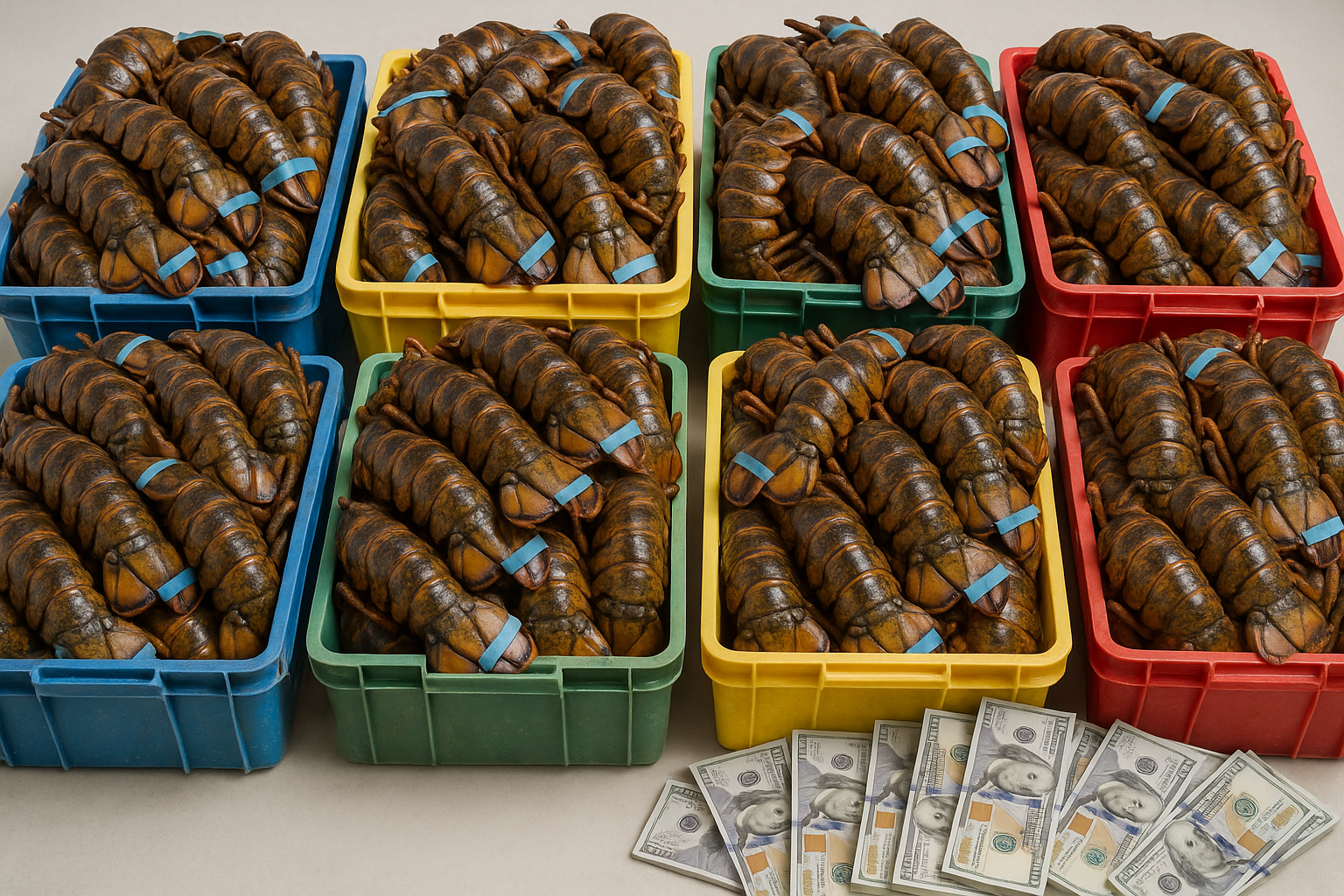
Cape Town's frontlines: 406 arrests, 1,848 crayfish tails, and hidden networks revealed through routine patrols & intelligence.
Cape Town police had a busy week, arresting 406 people for various crimes. They seized a huge haul of 1,848 illegal lobster tails, worth a lot of money, catching smugglers in a hospital parking lot. Officers also found hidden guns, including one used in a recent shooting, and recovered stolen generators. This shows the constant fight against crime, from small offenses to big smuggling operations, keeping the city's police on high alert.
What were the key arrests and significant seizures in Cape Town during the week of June 1-7?
During June 1-7, Cape Town authorities made 406 arrests, including 166 by Metro Police, 41 by Traffic officers, and 199 by Law Enforcement. Significant seizures included 1,848 illegal West Coast rock lobster tails valued at R550,000, firearms (a Z88 9mm pistol and a Norinco SKS), and stolen generators.
Get Cape Town news in your inbox
Stay updated with the latest stories from the Mother City.
1. One Parking Lot, One Morning, One Million-Rand Bust
At 09:42 last Sunday, Constable Anika Sauls and Warrant Officer Nizaam Davids of the City’s Marine Unit rolled slowly through Wynberg’s Victoria Hospital parking lot. Three men perched on the tailgate of a white Mitsubishi Colt were nursing a 750 ml cane-spirit bottle. The officers chose conversation over the R500 spot fine for public drinking. When the bottle hit the tar, Sauls caught the sharp reek of brine and ammonia drifting from the canopy.
She asked for the key. Inside, eight rectangular “fish coffin” crates - normally packed with crushed ice - were instead stacked two-deep with West Coast rock lobster tails, still vivid orange-red, the colour of fresh shell. Each crate carried a laminated Excel sheet: “Frankie 213”, “Mamba 190”. Beside the crates, a cooler-bag held R17 600 in neatly banded notes.
The driver, 69-year-old Hout Bay resident Johannes “Hans” Gertse, said he had bought the load from local boats and was on route to a Johannesburg daughter’s braai. None of the tails bore the bright commercial tags legally required; the tally climbed to 1 848 tails - roughly 308 whole animals - well beyond any recreational quota. Gertse and his two passengers, already on a 2022 Marine Living Resources Act docket, were cuffed at 10:06. After a night in Wynberg SAPS cells, Gertse walked out on a court warning; forensic scientists will try to match mitochondrial DNA from the meat to harvesting sites between Doring Bay and Cape Point when the matter resumes on 28 July.
2. The City Count: 406 People, 2 455 Square Kilometres, Seven Days
From 1 to 7 June, every enforcement branch chipped in:
- Metro Police logged 166 arrests and 5 845 notices - knives, illegal power taps and dime-bag dealers topping the list.
- Traffic officers jailed 41 drivers; 34 were over the limit. A Kuils River man blew 1.54 mg/1 000 ml, treble the legal threshold and the worst reading of 2025 so far.
- Law Enforcement rang up 199 collars - from copper thieves nabbed on the N2 to midnight drifters racing the Liesbeek Parkway.
- The Marine Unit made only four arrests, yet their single haul of crayfish carried an estimated black-market value of R550 000.
3. Guns in the Spare-Wheel Well and Cable Beneath the Freeway
Wednesday night, 21:11 on Main Road, Diep River. Metro officers halted a silver Hyundai lacking a rear plate. The air inside smelled of fresh gun oil. In the spare-wheel well lay a Z88 9 mm pistol with serial number scratched away, three magazines and 57 rounds. The 27-year-old driver claimed he “found it on the train”. A follow-up search of his Bishop Lavis flat produced a Norinco SKS wrapped in a baby blanket and 5.56 casings that matched a Mowbray shooting two nights earlier. Ballistic tests are under way; bail has been refused.
On Friday at 03:10, beneath the N2 near Borcherds Quarry, Law Enforcement found three 50 kVA generators still warm on a hand-drawn trailer. The serial plates had been ground off. Investigators say the machines powered angle-grinders that severed signalling cable worth R3 900 - yet repairs will cost PRASA R2 million. The northern rail line lost service for 28 hours; 17 000 commuters were delayed. The hire company in Epping traced the machines through an engine casing number; the hirer had used forged ID documents.
4. Decoding the Hidden Lobster Pipeline and Policing Tomorrow
Cape crayfish has slid from seafood staple to high-value contraband. Legal catches have fallen 60 % since 2005; a kilogram of illicit tails now wholesales at R2 200 in Gauteng. Gertse’s spreadsheet points to a ledger run from a Telegram group called “Rooi Gom 5” in which crates are pre-sold before leaving the harbour. Voice notes in Afrikaans and isiXhosa speak of at least four skippers who synchronise divers through encrypted handsets. Marine investigators are now eyeing three Hout Bay ski-boats that drew unusually large diesel volumes during the week preceding the bust - fuel budgets that match multiple night launches under the new moon.
Across the 2 455 km² metro, 6 300 officers divide the labour:
- 3 100 Metro Police carry SAPS powers inside city borders.
- 1 500 Law Enforcement officers concentrate on bylaws and minor crimes, armed only with pepper spray and batons.
- 1 200 Traffic officers police roads and licences.
- 500 specialists - Marine, K9, Ghost Squad, Tactical - float where risk is highest.
Two analytic tools drive the rosters: a Weekend Threat Matrix that blends ShotSpotter pings and CCTV heat-maps, and a Marine Poaching Risk Index that layers moon phase, wind speed and vessel AIS gaps. Over the next seven nights, planners have flagged 12-14 June as high-risk - spring low tides, dark moon, calm seas. Two patrol boats will sail from 19:00, drones will hunt the Atlantic seaboard between Hout Bay and Sea Point, and an LPR checkpoint will close the M65 just south of Scarborough.
On the ganglands side, Metro Police’s Stabilisation Unit will saturate Lavender Hill after two retaliatory shootings last week. A new order says every firearm seized must trigger an instant Crime Scene Management visit with ballistic swabs taken within 60 minutes.
Coffee at Wynberg Court starts brewing at 04:30. On Monday 8 June, 68 fresh arrests hit the roll: Gertse’s lobster bust, eight ATM bombers, a former warder who allegedly smuggled 27 phones into Pollsmoor and a 14-year-old diverted for possessing a flare gun. Espresso shots circulate like currency; two sips buy a neat docket cover.
Small footnotes keep surfacing: the Mitsubishi Colt was to be de-registered next month for unpaid licence fees; one of the Diep River pistols still had its safety engaged; “smoke from late-night braais” is now an internal signal for illegal shebeens. A single illegal crayfish tail sells for R35 at a township spaza - compare R120 at the V&A Waterfront. Every statistic, every tail, every call to the Public Emergency Communication Centre forms a moving map of Cape Town’s daily duel between law, risk and reward.
1. What were the key arrests and significant seizures in Cape Town during the week of June 1-7?
Cape Town police had a very active week, making 406 arrests. Notable seizures included 1,848 illegal West Coast rock lobster tails, valued at R550,000, which were intercepted in a hospital parking lot. They also recovered a Z88 9mm pistol with a scratched serial number, a Norinco SKS wrapped in a baby blanket, and several stolen 50 kVA generators.
2. How was the significant haul of illegal lobster tails discovered?
On Sunday morning, Constable Anika Sauls and Warrant Officer Nizaam Davids of the City’s Marine Unit encountered three men in Wynberg’s Victoria Hospital parking lot. After noticing a strong smell of brine and ammonia coming from a white Mitsubishi Colt, they inspected the vehicle and found eight crates filled with 1,848 illegal West Coast rock lobster tails. The driver and two passengers were arrested.
3. What is the estimated black-market value of the seized lobster tails and what does this indicate about the trade?
The 1,848 seized West Coast rock lobster tails have an estimated black-market value of R550,000. This high value highlights that Cape crayfish has become a lucrative contraband item, with a kilogram of illicit tails wholesaling at R2,200 in Gauteng. The trade is sophisticated, often involving pre-sales through encrypted groups and synchronized diving operations.
4. What types of firearms were seized and what were their implications?
Authorities seized a Z88 9mm pistol with a defaced serial number, found in a vehicle in Diep River. A follow-up search led to the discovery of a Norinco SKS wrapped in a baby blanket, and 5.56 casings that matched a recent shooting in Mowbray. This indicates a strong link to ongoing criminal activities and potentially violent crimes.
5. What impact did the recovery of stolen generators have?
Three stolen 50 kVA generators were recovered under the N2 near Borcherds Quarry. These generators were used to power angle-grinders to sever signalling cables, causing R3,900 in cable damage and leading to R2 million in repair costs for PRASA. This disruption resulted in a 28-hour service loss on the northern rail line, affecting 17,000 commuters.
6. How does Cape Town's law enforcement structure and strategy address these crimes?
Cape Town's law enforcement comprises 6,300 officers, including Metro Police, Law Enforcement, Traffic officers, and specialists like the Marine Unit. They utilize analytical tools such as a Weekend Threat Matrix (ShotSpotter pings, CCTV heat-maps) and a Marine Poaching Risk Index (moon phase, wind speed, vessel AIS gaps) to strategically deploy resources. The Marine Unit, despite making only four arrests during the week, made a single haul of crayfish with a black-market value of R550,000, demonstrating the impact of specialized units.

Chloe de Kock is a Cape Town-born journalist who chronicles the city’s evolving food culture, from township braai joints to Constantia vineyards, for the Mail & Guardian and Eat Out. When she’s not interviewing grandmothers about secret bobotie recipes or tracking the impact of drought on winemakers, you’ll find her surfing the mellow breaks at Muizenberg—wetsuit zipped, notebook tucked into her backpack in case the next story floats by.
View all articles →