
WSAR tests HyperShell exoskeleton for mountain rescues
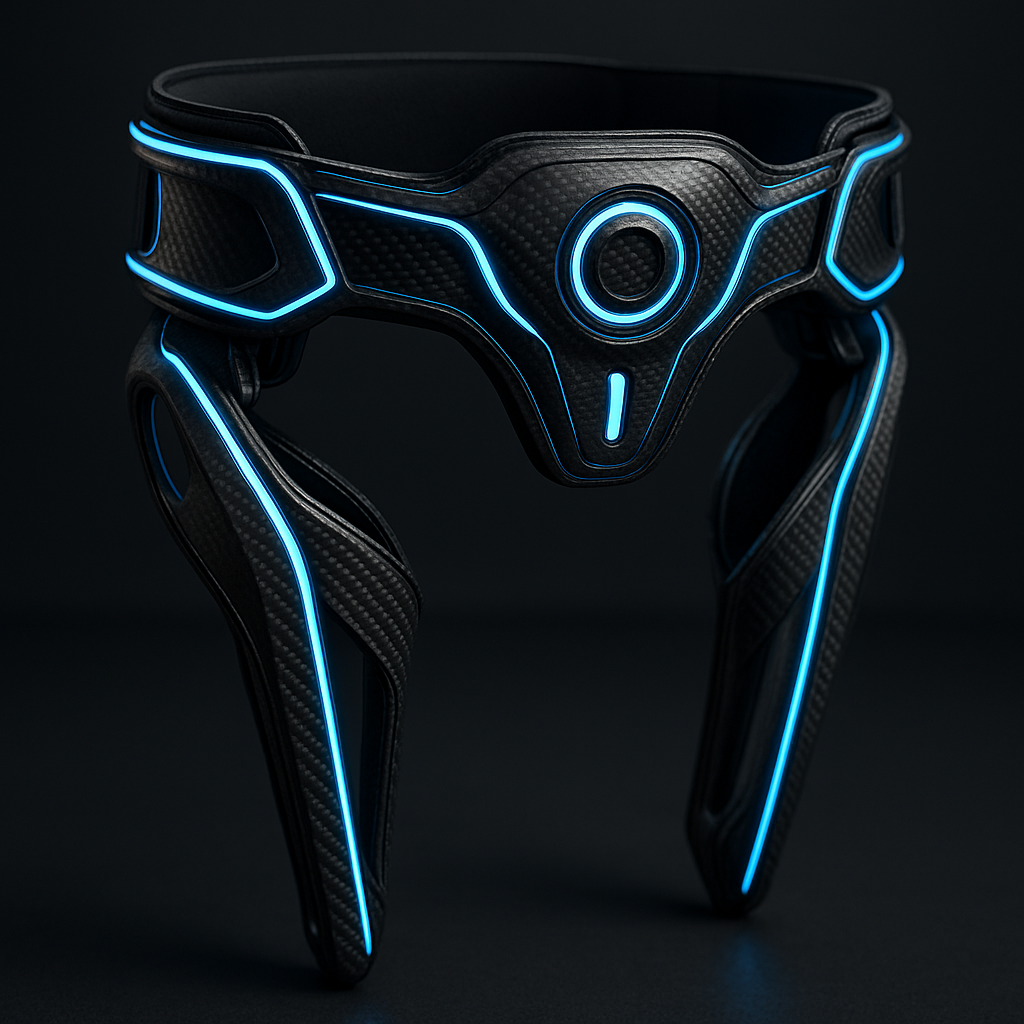
Discover HyperShell, a carbon-fiber "second spine" revolutionizing mountain rescue in the Western Cape by reducing rescuer fatigue and injury.
Imagine mountain rescuers feeling 6 kg lighter! That's what HyperShell, a carbon-fiber hip-belt with tiny motors, does. It helps them carry heavy gear longer and avoids injuries. This amazing tech is being tested in the tough Western Cape mountains, showing how it makes rescues faster and safer. HyperShell is a game-changer, helping heroes save lives while protecting their own bodies.
What is HyperShell and how does it assist mountain rescue?
HyperShell is a 2.4 kg carbon-fiber hip-belt with two 300W brushless motors that off-load up to 30% of knee-extension moment and 40% of spinal erector activation. It makes the wearer feel 6 kg lighter, helping mountain rescuers carry heavy loads for longer periods and reducing injuries.
Get Cape Town news in your inbox
Stay updated with the latest stories from the Mother City.
1. Anatomy of a Call-Out
A WSAR volunteer’s alarm typically rings at 03:42 a.m. By 04:15 , the first rope bag lands in a Renault K9, and by 05:00 , a six-member crew is already marching up a jeep track on the Apostles or along the Cederberg’s dusty spine. Each rescuer hauls 18–22 kg: trauma kit, Stokes litter, 60 m of semi-static rope, two radios, two litres of water, spare soft-shell, chocolate, and a laminated field guide of 112 raptor species. Step after 12 000-step day, the load carves micro-traumas into ankles, knees, sacro-iliac joints, and lower backs. These injuries drive 28 % of long-term volunteer attrition in WSAR.
The trek is rarely smooth. Table Mountain sandstone offers convex ramps that plunge 600 m in 0.8 km, gradients that kiss 38°* * and alternate between wet moss and kitty-litter grit. Add 65 km/h maritime fronts and katabatic downdrafts, and the mercury can drop 14 °C in forty minutes**. For the team lugging two dozen kilos, every metre is a negotiation between gravity, fatigue, and the clock ticking for a casualty somewhere above.
Yet the call-out rhythm is relentless. From Silver Mine spruit fires to stuck-climber extractions on the Eastern Buttress, rescuers know that hesitation is measured in lost daylight and compressible spines. The question animating WSAR engineers and medics alike is simple: how do you keep human flesh competitive against stone, wind, and wilderness time?
2. The HyperShell Blueprint
Enter HyperShell : not the clang-and-whirr exosuits of comic books, but a 2.4 kg carbon-fiber hip-belt married to two 300 W brushless motors no bigger than coffee mugs. Power is stored in twin 6-cell 21700 Li-ion packs that nestle inside a slim lumbar holster. Algorithms sample hip-flexion 400 times per second; when the thigh angle crests 12° , motors feed torque through Dyneema tendons anchored to a patellar pad. The result? Up to 30 % of knee-extension moment and 40 % of spinal erector activation are off-loaded. Practically, the wearer feels 6 kg vanish from the pack and reports quadriceps staying “fresh” 4 h longer.
Unlike lab demos where treadmills hum under fluorescent light, HyperShell prototypes have already endured Cape storms. Engineers crash-tested the belt: a 1.5 m sideways tumble onto sandstone delaminated the shell 3 mm, yet kept critical fibres intact. Motors yawed 4°* * but magnetic poles self-centred, while IP54 * sealing laughed at 45 min* of horizontal rain. The only field casualty: a twisted micro-USB port on Batch-2 - fixed on Batch-3 with a magnetic connector. Every component is designed for a user who might swap batteries at midnight, sleet slashing sideways, headlamp reflecting off ironstone.
Battery anxiety dissolves under the numbers. A standard “crag-to-car” (4 h) mission sips just 18 % of the 96 Wh twin-pack. Spare cartridges (160 g each) live in the top-lid of a Deuter Guide 35; hot-swap takes 38 s with gloves. A 50 W USB-C solar tarp can trickle 4 % per 30 min of sunshine - useful, but not mission-critical. Energy density clocks 260 Wh kg⁻¹, roughly half a smartphone, proving that the real advances come from mechanical leverage, not brute watt-hours.
3. Why the Western Cape is the World’s Toughest Wearable Lab
No robotics lab in Boston, Seoul, or Zurich replicates the Cape’s stochastic cocktail. WSAR therefore inked a Memorandum of Understanding: every shout doubles as a live A/B test. One pair climbs with the frame; the control pair goes without. Data - GPS track, heart-rate, VO₂, lactate, subjective Rate-of-Perceived-Exertion - uploads to the cloud within 90 min of mission-end, anonymised and GPL-licensed. Over the first forty-two days:
• February : Silver Mine spruit fire, 14 h shift, 1 120 m cumulative ascent. Motors retained 30 % charge; micro-abrasions appeared where grit slipped under the cam-lock buckle.
• March : Jukskei gorge body-pack, 02:30 moonlight carry-out. Exo-clad crew descended 400 m in 38 min versus 58 min for controls; no slips on dew-slicked ironstone.
• April : Stuck-climber extrication on the Eastern Buttress, 1 °C sleet, 65 km/h wind. A self-heating algorithm kept cells above the 5 °C cut-off, sacrificing only 6 % capacity.
• May : K100 spinal-casualty carry-out with a 250 kg dummy. Two HyperShell wearers plus rigid litter covered 3.2 km in 86 min, zero lower-back pain; controls logged three-day DOMS.
Incident-commanders notice rope-ups happening 20 % faster because the second reaches the belay stance earlier, anchors pre-rigged while still breathing easy. First-time users, however, initially over-stride, expecting the rig to “pull” them uphill; a three-minute cadence tutorial in the field eliminates that drift.
4. Human, Social, and Environmental Returns
-
Cognitive Drift and Team Flow
Wearers describe a subtle “ghost-walker” sensation: hamstrings feel uncoupled from payload, freeing eyes and fore-brain for step placement, route-finding, and casualty vitals. EEG data from Stellenbosch Sports Science Institute shows that after six weeks of exo-assisted rescues, proprioceptive alpha-wave coherence strengthens 11 %* even when walking unaided - a kind of phantom exoskeleton encoded in the brain. WSAR merely logs fewer ankle sprains on Tuesday-night trail runs. -
Gender-Specific Ergonomics*
-
Cost and Regulation
Unit price: ZAR 38 000 (≈ USD 2 000). WSAR leases eight frames in a rotating pool; insurers cut premiums 8 % for wearers thanks to lower knee-injury claims. Break-even surfaces in 14 months at 18 outings per frame yearly. National roll-out to 160 Wilderness First Responder teams would cost ZAR 6.1 million - merely 0.4 % of the Western Cape EMS trauma-avoidance budget. The South African Civil Aviation Authority already allows 250 W motors for paraglider launch-assist; HyperShell’s 260 W sits 40 W below that ceiling. A passive RFID beacon* lets Metro SAR helicopters ping ground teams through smoke or cloud. -
Green Accounting
Manufacture of carbon-fibre prepreg demands 46 MJ kg⁻¹; battery chemistry adds 88 MJ. Over 500 call-outs, each frame averts 0.8 t CO₂e by trimming helicopter minutes and ground-vehicle evacuations. Net footprint: –0.6 t CO₂e, thanks to 1.4 t of aviation fuel avoided. Creative Commons BY-SA 4.0 CAD drawings already allow the Nepal Himalayan Rescue Association to laser-scan cuffs for 5th-percentile Sherpa morphology, while Andalucían fire crews queue for 500 units rated for 43 °C sierra evacuations. A 1 %* royalty feeds WSAR trainee bursaries - transforming mountain misery into next-generation tuition.
What is HyperShell and how does it assist mountain rescue?
HyperShell is a 2.4 kg carbon-fiber hip-belt equipped with two 300W brushless motors. It significantly aids mountain rescuers by off-loading up to 30% of knee-extension moment and 40% of spinal erector activation, making the wearer feel 6 kg lighter. This allows them to carry heavy gear for longer durations, reduces fatigue, and minimizes the risk of injuries like ankle sprains, knee issues, and lower back pain, which are common causes of volunteer attrition.
How much does HyperShell weigh and what are its power specifications?
HyperShell itself weighs 2.4 kg. It is powered by two 300W brushless motors and stores energy in twin 6-cell 21700 Li-ion battery packs. These battery packs have a total capacity of 96 Wh, providing an energy density of 260 Wh kg⁻¹. A typical 4-hour mission only consumes about 18% of the battery charge, and spare cartridges weighing 160g each can be hot-swapped in just 38 seconds.
What kind of challenging environments has HyperShell been tested in?
HyperShell prototypes have been rigorously tested in the harsh and unpredictable conditions of the Western Cape mountains. This includes enduring Cape storms, sideways tumbles onto sandstone, 45 minutes of horizontal rain, and extreme temperature drops. Specific incidents include a 14-hour shift during a spruit fire with 1,120m cumulative ascent, a 02:30 moonlight body-pack carry-out in Jukskei gorge, and a stuck-climber extrication in 1°C sleet and 65 km/h winds on the Eastern Buttress. These tests ensure its durability and functionality in real-world rescue scenarios.
How does HyperShell benefit mountain rescue operations and rescuer well-being?
Beyond making rescuers feel 6 kg lighter, HyperShell significantly improves operational efficiency and rescuer health. It reduces the physical strain on rescuers, allowing them to remain fresh for up to 4 hours longer. This leads to faster rope-ups (20% quicker), reduced lower-back pain, and fewer injuries, addressing the 28% volunteer attrition rate due to micro-traumas. Wearers also report a "ghost-walker" sensation, freeing cognitive resources for critical tasks like route-finding and casualty care. Physiologically, it even strengthens proprioceptive alpha-wave coherence, benefiting rescuers even when not wearing the device.
What is the cost of HyperShell and its economic and environmental impact?
The unit price for HyperShell is ZAR 38,000 (approximately USD 2,000). For WSAR, leasing eight frames breaks even in 14 months due to an 8% reduction in insurance premiums for wearers, thanks to fewer knee-injury claims. A national rollout to 160 Wilderness First Responder teams would cost ZAR 6.1 million, which is only 0.4% of the Western Cape EMS trauma-avoidance budget. Environmentally, each frame averts 0.8 tons of CO₂e over 500 call-outs by reducing helicopter minutes and ground-vehicle evacuations, resulting in a net positive impact of -0.6 tons of CO₂e.
How is HyperShell being adopted and what does the future hold?
HyperShell is already being adopted by other organizations. Creative Commons BY-SA 4.0 CAD drawings allow groups like the Nepal Himalayan Rescue Association to customize cuffs for local morphologies, such as 5th-percentile Sherpa. Andalucían fire crews are also in line for 500 units designed for 43°C sierra evacuations. A 1% royalty from HyperShell sales goes towards WSAR trainee bursaries, transforming the innovation into funding for future rescuers. This global interest highlights its potential to revolutionize rescue operations worldwide.

Tumi Makgale is a Cape Town-based journalist whose crisp reportage on the city’s booming green-tech scene is regularly featured in the Mail & Guardian and Daily Maverick. Born and raised in Gugulethu, she still spends Saturdays bargaining for snoek at the harbour with her gogo, a ritual that keeps her rooted in the rhythms of the Cape while she tracks the continent’s next clean-energy breakthroughs.
View all articles →