
Zeekoevlei dredging project enters next phase in Cape Town
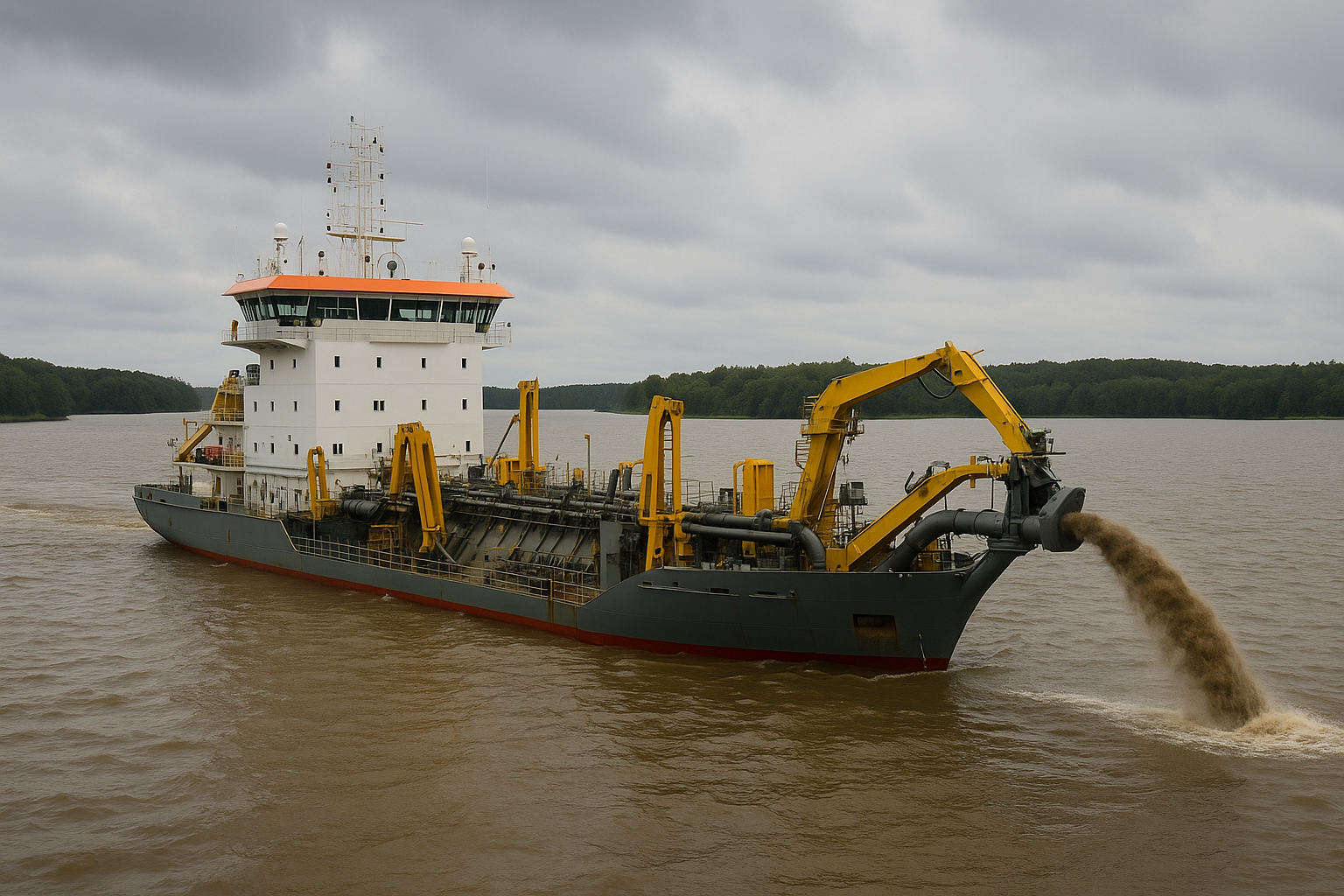
Cape Town's $200M Zeekoevlei restoration uses a massive dredger to clear 40 years of silt, aiming to revive the urban wetland.
Cape Town is spending a huge $200 million to fix Zeekoevlei, a wetland that's been dirty for 40 years. Big machines are sucking up thick, yucky mud to make the water clear again. They hope to clean it all up by 2028, making it safe for fish, birds, and even people to swim in. This project is a massive effort to bring this important natural spot back to life.
What is the Zeekoevlei restoration project?
The Zeekoevlei restoration project is a $200-million initiative in Cape Town to revitalize the Zeekoevlei wetland, which has suffered from forty years of neglect and pollution. It involves dredging accumulated sediment, removing nutrient-rich sludge, and implementing ecological interventions to restore the vlei to a clear-water state by 2028.
Get Cape Town news in your inbox
Stay updated with the latest stories from the Mother City.
Dawn of the Dredger
On 1 June 2025, a steel-hulled beast sliced through silver dawn haze on Zeekoevlei, its diesels throbbing like a long-overdue heartbeat. Old-timers who once hoisted yellowfish over the gunwales, kayak racers who had watched reeds steal the open lanes, and botanists mourning lost Cape Flats fynbos all heard the same message: the City is finally keeping its word. The 35 m, 400-tonne floating dredger that crept from Storm Bay to Home Bay is the star of the biggest wetland rescue ever attempted inside Cape Town’s limits, and it is already rewriting South Africa’s playbook for rescuing urban waters starved of care for forty straight years.
The machine’s arrival is only the second scene in a three-act drama that began with cores, pumps and permits and will end - if limnologists are right - with a lake clear enough for a school regatta by 2028. For the moment, every clank of the cutter head is history being made: never before has so much money, expertise and political will been thrown at one urban wetland. Residents hear a low mechanical growl; ecologists hear an apology four decades late.
How a Dune Pond Became a Sewer
Long before the first bluegill lunged at a bread crust, prevailing winds and winter storms piled sand into a natural bowl south of the railway line. Post-Ice-Age rebound turned that bowl into Zeekoevlei, a 256-ha sump fed by Schaapkraal and Lotus canals and drained eastward through Sandvlei into False Bay. Sixties planners loved the site: yacht races on weekends, irrigation runoff hidden on weekdays. Canal outfalls carried fertiliser-caked water off Philippi’s farms; backyard drains from tin-roof homes trickled straight into reed beds. By the mid-eighties the vlei flipped hypertrophic: pea-green scum, botulism carcasses, a stinking sludge blanket up to 140 cm thick in the old borrow pits.
Sapropels - black jelly-like ooze - lock away shocking volumes of nutrients. Geotechnicians who probed the lakebed in 2022 mapped three hot-spots: Storm Bay hides 207 000 m³; Home Bay stores 157 000 m³; the central navigation trench adds 45 000 m³ (that last slice waits for 2027/28 funding). Altogether the goo contains roughly 1 300 t of phosphorus and 3 800 t of nitrogen - enough plant food to fill forty-eight railway wagons. Strip only the top forty centimetres and internal recycling drops 38 %, the magic point where water blossoms may tip back to clear-water plants.
The Ship That Eats Mud
The City never bought such a dredger; it leased a 2022-built Damen CSD500 through ING’s green-finance arm. Locals dub it “the pond vacuum” and the name fits. A 1.2-m tungsten-studded head chews sediment at 900 m³/h while a centrifugal pump hoovers the 90 % water, 10 % solids slurry through a 500-mm floating line. Twin 1 340 kW MTU engines give the 55-tonne ladder freedom to swing 90° without mooring winches. RTK-GPS keeps the craft inside a 20-cm corridor - crucial in water littered with dumped outboards and forgotten cast nets.
From deck to dump site the slurry travels 6.3 km of rubber-lined steel pipe - 1 100 segments, each 6 m long, Kevlar-flanged and rated for 4.2 bar. A 1 MW booster station shoves the mix 14 m up over the dune saddle by the railway reserve. Surge pots every 400 m blunt hydraulic hammers; an embedded fibre-optic strand relays density and pressure to the master’s tablet. If solids climb above 1.18 kg/litre, the captain throttles back; viscosity would otherwise spike and fuel burn double.
Drying Fields in the Path of the South-Easter
At the yacht-club parking lot the pipeline disgorges into six geotextile cells - each 150 × 50 m and 2 m deep, ring-fenced by 1.5-m earthen walls. Polyacrylamide flocculent makes fine silt clump; clear water decants back to the lake via a 2.3-km return line. The remaining cake, 55 % solids at first, is too sloppy for trucks, so engineers bet on Cape Town’s notorious south-easter. Wind meters record 38 km/h summer averages and evaporation rates of 11 mm/day, meaning every bay sheds 32 000 l of moisture daily. Ninety days later the mud hits 75 % solids; loaders hack it into chunks and tip it into 20-m³ walking-floor rigs bound for Bellville South landfill, where the dried fines will cap long-closed rubble cells.
To keep dust off nearby washing lines the crew sprays treated effluent from Cape Flats works twice a day, holding surface moisture above 15 % and particulate emissions down 70 %. Even so, residents hear 58 dB(A) at 200 m - dishwasher territory - yet still find grey silt on their stoepes. Local enterprise turns nuisance into cash: a Strandfontein kitchen supplies 1 200 lunches weekly; a Grassy Park welder built 120 custom tool racks; the yacht club now sells weekend “mud-watch” boat rides for R60 a head.
Wildlife Between Turbidity and Turmoil
Dredging rips open hydrogen-sulphide pockets lethal to fry. Elana Van Staden’s team from SAIAB set fyke nets every 200 m and log species twice a week. Early figures show a 28 % dip in fish within a 50-m halo, but numbers recover within three days once silt settles. The tiny, endangered Cape galaxias keeps its cool spring refuges courtesy of a mandatory 30-m no-go buffer, marked by yellow buoys and watched by a conservation ranger in a 4-m duck. A floating geotextile skirt keeps turbidity below 25 NTU - the ceiling for healthy macrophyte photosynthesis.
Bird fortunes split. Purple gallinules hate the open edges and 18 have been trucked to Rondevlei. Great crested grebes, however, now anchor record numbers of floating nests to residual reeds after dredgers chewed back the wall of vegetation. African ospreys cash in on panic-stricken fingerlings: 42 successful dives logged last October, nearly triple the ten-year average. Every breeding pair of grebes and every relocated swamphen counts because the entire wetland falls under Ramsar rules that demand disturbance be offset.
Carbon Bill and Digital Future
Diesel burn runs 34 000 l a month, coughing out 89 t of CO₂. The City balances part of the ledger by swapping used cooking oil from the V&A Waterfront into biodiesel for the next campaign and by felling 12 ha of eucalypts at Zandvlei for verified carbon credits. Planners also eye the 3.5 MWp solar array destined for the adjacent waste-water works to power the booster station by 2026.
Nothing escapes the data dragnet. A robotic catamaran armed with LiDAR and a 600 kHz multibeam sweeps the basin every two weeks, dumping 18 million soundings into a live Bentley digital twin. Machine-learning brains, schooled on a decade of YSI sonde records, predict that once 63 % of the phosphorus stock is gone, chlorophyll-a should slide below 30 µg/l - safe skin-contact levels. If the algorithm proves right, the City quietly pencils in a “swim-the-vlei” festival for February 2028.
When the dredger finally lifts anchor, managers still must hold the line. A 12-cm summer level rise will dilute farm nutrients; 2 000 m² of floating sedge island will filter Lotus canal inflow; mussel lines seeded by Stellenbosch University will strip algae and end up as chicken feed. Until then, the game is simple: keep the pipeline full, the community calm and the galaxias swimming.
[{"question": "
What is the Zeekoevlei restoration project?
", "answer": "The Zeekoevlei restoration project is a massive $200-million initiative by the City of Cape Town to revive the Zeekoevlei wetland, which has been severely polluted for four decades. The project involves using a large dredger to remove approximately 400,000 cubic meters of nutrient-rich mud and sludge from the vlei. The goal is to restore the wetland to a clear-water state by 2028, making it safe for aquatic life, birds, and recreational activities like swimming."}, {"question": "When did the dredging operations begin and what is the expected completion date?
", "answer": "The dredging operations commenced on June 1, 2025, with the arrival of a 35-meter, 400-tonne floating dredger. The project aims to achieve a clear-water lake by 2028, signaling the successful completion of the restoration efforts. This timeline reflects a significant commitment to reversing the environmental degradation of the past forty years."}, {"question": "What caused Zeekoevlei to become so polluted?
", "answer": "Zeekoevlei, originally a natural dune pond, became a sewer due to decades of neglect and improper waste management. In the 1960s, while popular for yachting, it also received agricultural runoff laden with fertilizers from Philippi's farms and untreated wastewater from nearby informal settlements. This continuous influx of nutrients led to the vlei becoming 'hypertrophic' by the mid-1980s, characterized by pea-green scum, botulism outbreaks, and a thick layer of sludge up to 140 cm deep, rich in phosphorus and nitrogen."}, {"question": "How does the dredging process work?
", "answer": "The project utilizes a leased Damen CSD500 dredger, nicknamed 'the pond vacuum.' This machine uses a 1.2-meter tungsten-studded cutter head to chew through sediment at a rate of 900 cubic meters per hour. A powerful centrifugal pump then vacuums the resulting slurry (90% water, 10% solids) through a 500-mm floating pipeline. This slurry travels 6.3 km through steel pipes, aided by a 1 MW booster station, to geotextile dewatering cells. Here, flocculants help separate the solids, and clear water is returned to the lake, while the dried mud is transported to a landfill."}, {"question": "How is the project mitigating environmental impact and supporting local communities?
", "answer": "The project employs several strategies to mitigate environmental impact. To protect aquatic life, a 30-meter buffer zone is maintained around endangered Cape galaxias habitats, and a floating geotextile skirt keeps turbidity below critical levels. While some fish may experience temporary displacement, numbers typically recover quickly. Bird species like purple gallinules are relocated, while great crested grebes are thriving with new nesting opportunities. To manage dust from the drying fields, treated effluent is sprayed, reducing particulate emissions. Furthermore, the project supports local enterprise by sourcing meals and custom welding work from nearby communities, and even offers 'mud-watch' boat rides for tourists."}, {"question": "What are the long-term goals and sustainability measures for Zeekoevlei?
", "answer": "The long-term goal is to restore Zeekoevlei to a state where chlorophyll-a levels are below 30 µg/l, making it safe for swimming, potentially celebrated with a 'swim-the-vlei' festival in February 2028. To ensure sustainability after dredging, future plans include a summer level rise to dilute nutrients, the installation of 2,000 m² of floating sedge islands to filter inflow from the Lotus canal, and the introduction of mussel lines to strip algae. The project also addresses its carbon footprint by using biodiesel and exploring solar power for operations, aiming for a holistic and lasting rehabilitation of the wetland."} ]
Amanda Wilson is a Cape Town-born journalist who covers the city’s evolving food scene for national and international outlets, tracing stories from Bo-Kaap spice shops to Khayelitsha micro-breweries. Raised on her grandmother’s Karoo lamb potjie and weekend hikes up Lion’s Head, she brings equal parts palate and pride to every assignment. Colleagues know her for the quiet warmth that turns interviews into friendships and fact-checks into shared laughter.
View all articles →