
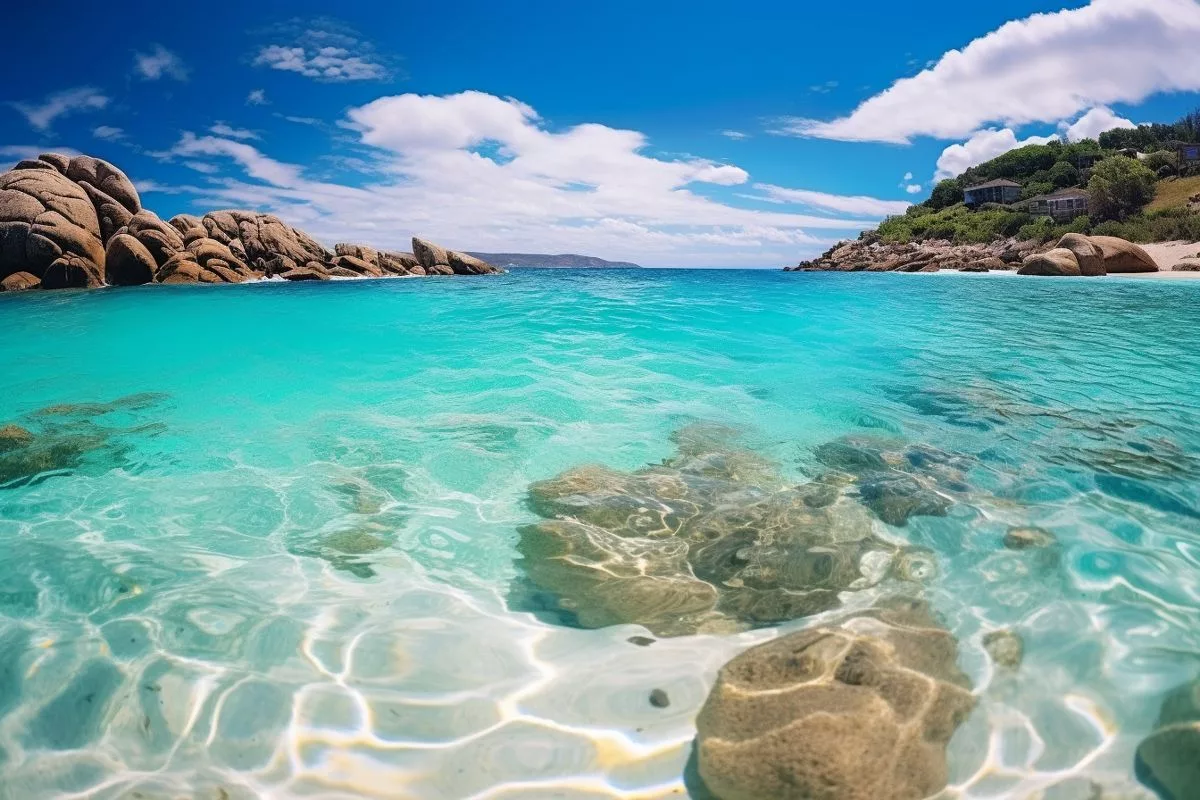
Cape Town is ready to welcome tourists to its eight Blue Flag beaches this summer, thanks to a recent water quality analysis showing superior standards. The city’s Coastal Management branch conducts continuous monitoring and weekly sampling along Blue Flag beaches, with strict procedures in place to manage and rectify any pollution incidents. The Blue Flag status is awarded based on stringent benchmarks for water quality, environmental management, safety services, and education and awareness, with 33 criteria in total. Despite environmental challenges faced by coastal cities globally, Cape Town remains committed to maintaining world-class water quality standards.
Cape Town’s Blue Flag beaches boast superior water quality, making them a prime attraction for tourists and locals alike. The water samples collected across seven weeks showed impressive results, with enterococci counts well below the single-sample standard. The City’s Coastal Management branch carries out continuous monitoring, with weekly sampling along Blue Flag beach stretches, and has procedures in place to swiftly manage and rectify any pollution incidents. Cape Town is committed to maintaining superior water quality and remains a flourishing and inviting destination for both locals and tourists.
Preparing for Summer
As summer approaches in the southern hemisphere, Cape Town, a renowned tourist hotspot, is all geared up to enthrall visitors with its collection of eight Blue Flag beaches. On the heels of fresh data analysis, the City of Cape Town proudly claims that its most frequently visited beaches boast superior water quality, a clear reflection of the city’s sturdy environmental management.
The conclusion draws from an autonomous examination of water samples collected over a span of seven weeks, culminating on 15 November 2023. The findings augur well for the impending tourist season in Cape Town, likely to be one of the most bustling ones in the city’s history. The immaculate beaches, marked by their superior water quality, promise to be a prime attraction for tourists and locals alike.
Blue Flag Recognition
The Wildlife and Environment Society of South Africa (WESSA) has awarded Blue Flag status to eight of Cape Town’s beaches. This prestigious acknowledgment is accorded based on stringent standards, one of the key ones being superior water quality. The South African Bureau for Standards (SABS) laboratory conducts an autonomous analysis of water samples gathered during the festive season, from 1 December to 31 January.
The Blue Flag recipients – Bikini Beach, Camps Bay, Clifton 4th Beach, Fish Hoek, Llandudno, Melkbosstrand, Muizenberg, and Silwerstroom – have satisfied all the 33 benchmarks set by WESSA, covering four categories: Water Quality, Environmental Management, Safety Services, and Education and Awareness. Moreover, Mnandi and Strandfontein have received pilot Blue Flag statuses, further enhancing the allure of Cape Town’s coastline.
Tourists to these beaches can rest assured that the Coastal Water Quality guidelines are strictly followed and frequently monitored. In the unlikely occurrence of any pollution incident, the city has laid down procedures to swiftly manage and rectify the situation. A temporary suspension of swimming may be put in place until the water quality is verified as safe again, with relevant signs displayed to keep the public updated.
Water Quality Monitoring
The City’s Coastal Management branch carries out continuous monitoring of 30 key beach locations throughout a rolling 12-month period, besides weekly sampling along Blue Flag beach stretches. These water samples are evaluated by the external, accredited SABS Lab, which screens for the number of enterococci per 100ml, the benchmark for water quality analysis.
An impressive 95% of the 147 water samples evaluated showed superior water quality, with enterococci counts well below the single-sample standard of 180 per 100ml. These findings not only affirm good but rather superior water quality according to global standards across Cape Town’s cherished beaches.
Cape Town’s Deputy Mayor and Mayoral Committee Member for Spatial Planning and Environment, Alderman Eddie Andrews, has urged the public to disregard unfounded rumors about the city’s coastal water quality. He underscored that any claims should be substantiated by scientific evidence, specifically enterococci data from multiple samples over a defined period at a given beach.
Still, Cape Town is not exempt from the environmental challenges faced by coastal cities worldwide. Some locations within the city do face land-based pollution affecting the shoreline, especially in areas near river mouths or large stormwater drains. These areas, including the Diep River estuary mouth and adjacent Lagoon Beach, Disa River Mouth in Hout Bay, Else River Mouth in Glencairn, Silvermine river mouth in Clovelly, and Gordon’s Bay River, show more variable results.
To tackle such challenges, Cape Town has rolled out a Mayoral Priority Programme. This initiative aims to upgrade inland water quality and has resulted in record infrastructure investments in Water and Sanitation services.
Being the world’s most biodiverse city, Cape Town takes great pride in its remarkable coastline. With robust monitoring systems in place and a resolute commitment to maintaining superior water quality, the city is all set to ensure that it remains a flourishing and inviting destination for both locals and tourists, this festive season and beyond.
1. What is the Blue Flag status awarded for?
The Blue Flag status is awarded based on stringent benchmarks for water quality, environmental management, safety services, and education and awareness, with 33 criteria in total.
2. Which beaches in Cape Town have been awarded the Blue Flag status?
The Wildlife and Environment Society of South Africa (WESSA) has awarded Blue Flag status to eight of Cape Town’s beaches: Bikini Beach, Camps Bay, Clifton 4th Beach, Fish Hoek, Llandudno, Melkbosstrand, Muizenberg, and Silwerstroom. Mnandi and Strandfontein have received pilot Blue Flag statuses.
3. How does Cape Town manage and rectify any pollution incidents on its Blue Flag beaches?
The city’s Coastal Management branch conducts continuous monitoring and weekly sampling along Blue Flag beaches, with strict procedures in place to manage and rectify any pollution incidents. In the unlikely occurrence of any pollution incident, the city has laid down procedures to swiftly manage and rectify the situation. A temporary suspension of swimming may be put in place until the water quality is verified as safe again, with relevant signs displayed to keep the public updated.
4. How frequently does Cape Town conduct water quality monitoring of its beaches?
The City’s Coastal Management branch carries out continuous monitoring of 30 key beach locations throughout a rolling 12-month period, besides weekly sampling along Blue Flag beach stretches.
5. What percentage of water samples evaluated showed superior water quality?
An impressive 95% of the 147 water samples evaluated showed superior water quality, with enterococci counts well below the single-sample standard of 180 per 100ml.
6. What environmental challenges does Cape Town face in maintaining its beaches and water quality?
Some locations within the city do face land-based pollution affecting the shoreline, especially in areas near river mouths or large stormwater drains. These areas, including the Diep River estuary mouth and adjacent Lagoon Beach, Disa River Mouth in Hout Bay, Else River Mouth in Glencairn, Silvermine river mouth in Clovelly, and Gordon’s Bay River, show more variable results. To tackle such challenges, Cape Town has rolled out a Mayoral Priority Programme. This initiative aims to upgrade inland water quality and has resulted in record infrastructure investments in Water and Sanitation services.