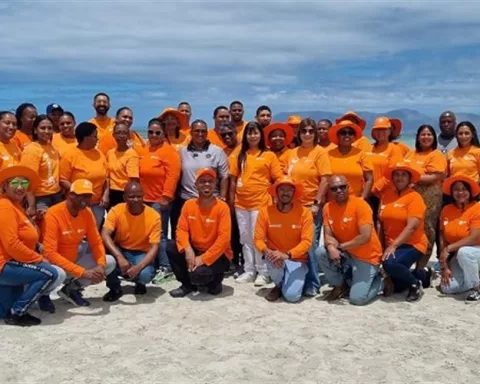

Identikidz is a child safety project implemented in Cape Town’s high footfall beaches, where parents and guardians can register their children at a dedicated station and receive a waterproof wristband carrying essential contact information. In the event of a child getting distanced from their family, this wristband becomes a valuable resource for rescuers to reunite them with their guardians. Over 90,000 children were tagged at participating beaches, and nearly 400 children were united with their guardians. The Identikidz initiative is a unified endeavor to ensure that the mirth of children continues to reverberate across Cape Town’s shimmering beaches.
What is the Identikidz Initiative in Cape Town?
Identikidz is a child safety project implemented in Cape Town’s high footfall beaches. It offers parents and guardians the option to register their children at a dedicated station and receive a waterproof wristband carrying essential contact information. In the event of a child getting distanced from their family, this wristband becomes a valuable resource for rescuers to reunite them with their guardians. The initiative saw over 90,000 children tagged at participating beaches, and nearly 400 children were united with their guardians.
In the bustling coastal hub of Cape Town, a novel project is gaining traction, altering our perception of child safety in populous locations. The undertaking, fondly referred to as Identikidz, has rapidly established itself as a dependable protective measure for parents and guardians, guaranteeing that their beach visits are brimming with happiness and free from unwarranted stress.
The Genesis and Implementation of Identikidz
Initiated in 2016, the Identikidz initiative was conceived in response to the urgent need for child safety at busy beachfronts. Cape Town’s Disaster Risk Management Centre (DRMC) pinpointed areas with high footfall where the initiative could have an immediate effect. Selected beaches like Big Bay, Camps Bay, Fish Hoek, and Muizenberg, to name a few, promptly experienced the introduction of a method that was as clever as it was straightforward.
Upon reaching the beach, guardians had the option to register their children at a dedicated station. Every registered child was then given a waterproof wristband carrying essential contact information. In the event of a child getting distanced from their family, this wristband became a valuable resource for rescuers to reunite them with their guardians.
The Workings and Impact of Identikidz
The modus operandi of Identikidz attests to the strength of community cooperation. The City’s Social Development & Early Childhood Development (SD&ECD) Department supervises the enrollment procedure while social workers from the Provincial Department of Social Development intervene if a child remains unclaimed by the end of the day. The effectiveness of this procedure is validated by the statistics: the previous year saw over 90,000 children tagged at participating beaches, and nearly 400 children were united with their guardians.
On pondering over the success of Identikidz, a crucial element is its uncomplicated yet sturdy operational structure. A registration station, run by the SD&ECD Department, is located at each beach’s main entrance. Staff members also patrol the area, encouraging parents to register their children if they haven’t already. Each registered child is given a waterproof wristband with a unique identification number. This number is then logged against the child’s details and contact information of their guardians. In the absence of phone contact with the caregivers, the beach’s public address system is employed to announce the child’s details.
The Significance and Future of Identikidz
The Identikidz initiative extends beyond being a mere child safety provision. It underscores Cape Town’s dedication to creating a secure, inclusive, and enjoyable atmosphere for its residents and visitors. It symbolizes a community that unites to safeguard its most defenseless members. The triumph of Identikidz is a beacon of optimism, a potent affirmation that inventive solutions can engender significant shifts at the community level.
The Identikidz endeavor is scheduled for rollout again in mid-December, encapsulating peak holiday seasons. It serves as a prompt for parents and guardians to take advantage of this supplementary security measure and relish the splendor of Cape Town’s beaches devoid of anxiety.
In its very essence, the Identikidz project is a unified endeavor to ensure that the mirth of children continues to reverberate across Cape Town’s shimmering beaches. In an era of technological progression, it stands as a revitalizing testament to the potency and allure of uncomplicated solutions. It delivers a compelling message: when it comes to guaranteeing the safety of our children, every little contribution counts. As Identikidz persists in its growth and evolution, it vows to maintain Cape Town’s beaches as not merely scenic spots, but also sanctuaries of safety and tranquility.
1. What is Identikidz and where is it implemented?
Identikidz is a child safety project implemented in Cape Town’s high footfall beaches.
2. How does Identikidz work?
Parents and guardians can register their children at a dedicated station and receive a waterproof wristband carrying essential contact information. In the event of a child getting distanced from their family, this wristband becomes a valuable resource for rescuers to reunite them with their guardians.
3. What is the impact of Identikidz?
Over 90,000 children were tagged at participating beaches, and nearly 400 children were united with their guardians.
4. Who is supervising the enrollment procedure for Identikidz?
The City’s Social Development & Early Childhood Development (SD&ECD) Department supervises the enrollment procedure.
5. When is Identikidz scheduled for rollout again?
The Identikidz endeavor is scheduled for rollout again in mid-December, encapsulating peak holiday seasons.
6. What is the significance of Identikidz and its future?
The Identikidz initiative underscores Cape Town’s dedication to creating a secure, inclusive, and enjoyable atmosphere for its residents and visitors. It plans to maintain Cape Town’s beaches as sanctuaries of safety and tranquility.