What happened to the Norfolk Island Pine in Arderne Gardens?
The Norfolk Island Pine in Arderne Gardens contracted a severe case of dieback disease, which unfortunately led to its removal. The declining health of the tree made it clear that it had to be taken down to ensure public safety. The process was executed with utmost care to avoid damage to the surrounding area, and replacement plans are already underway for a new sapling to take root in the garden.
The Majestic Norfolk Island Pine and Arderne Gardens
The renowned Norfolk Island Pine, which is scientifically known as Araucaria heterophylla, was a grand symbol of the beautiful Arderne Gardens in Claremont, Cape Town. This towering monolith had been vigilantly watching over the park, its presence more than just a beautiful aspect of the environment.
The Norfolk Island Pine was an essential component of Arderne Gardens’ rich heritage, boasting a storied history that could be traced back to its ancestor, the still thriving Champion Norfolk Pine in the garden. With its impressive height of 35 meters, it stood tall and proud since the early 1900s. Over the years, it has borne witness to the tumultuous flow of time, standing as an emblem of nature amid the encroaching urban landscape.
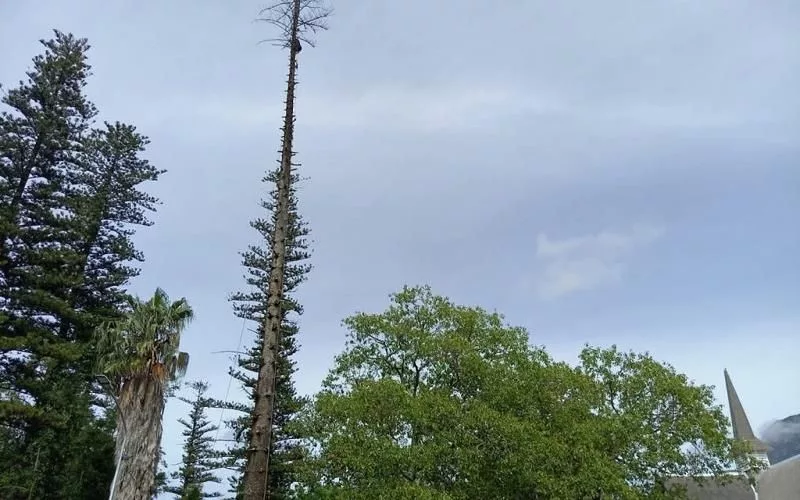
However, the beloved tree contracted a severe case of dieback disease, which led to the unfortunate but necessary decision of its removal. This was not a decision that the City of Cape Town’s Recreation and Parks Department took lightly. The tree’s worsening condition was monitored closely, with its symptoms becoming more evident, particularly at the tree’s pinnacle.
The Arduous Decision and the Removal Process
The declining health of the Norfolk Island Pine over the past year made it clear – to ensure public safety, the tree had to be taken down. It was an operation that required precision and was executed with utmost care to avoid damage to the surrounding area.
The intricate process spanned several days. The first two days were filled with the careful removal of the tree’s numerous lateral branches, which used to sway in the Claremont breeze. This was followed by a slow and methodical deconstruction of the tree. Each segment was meticulously cut, secured, and gently lowered to the ground, showcasing a profound respect for nature even when it’s on the decline.
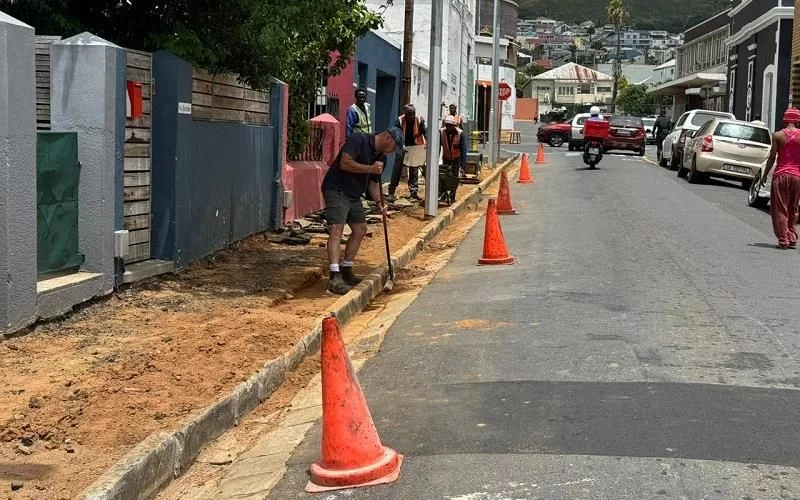
Despite the best efforts, there was an inevitable disruption to daily life. One lane leading into Town on Claremont Main Road was temporarily closed during the operation. However, the understanding and patience shown by pedestrians, motorists, and the broader community were both remarkable and essential to the operation’s success.
Echoing the sentiment, Councillor Patricia van der Ross, the City’s Mayoral Committee Member for Community Services and Health, expressed her gratitude, stating, “We are dedicated to causing the least disruption and ensuring everyone’s safety. We greatly appreciate the cooperation of the community during this crucial process.”
The Aftermath and Conservation Efforts
The loss of the iconic Norfolk Island Pine will undoubtedly leave a void in Arderne Gardens. However, there is comfort in knowing that replacement plans are already underway. The upcoming tree-planting season, set between May and July of the next year, promises to bring a new sapling that will take root in the garden, maintaining the park’s conservation efforts.
The narrative of the Norfolk Island Pine is a saga of natural splendour, an inevitable downturn in health, and the responsibility of humans to safeguard nature. Although its physical form is no longer a part of Arderne Gardens, the pine’s legacy remains. It stands as a testament to nature’s resilience and the constant cycle of change.
The new sapling will inherit this legacy. As it grows, it will provide shade and tranquillity to the bustling heart of Claremont, reminding visitors of the regal Norfolk Island Pine that once graced the garden.