A joyous Christmas Day at Kleinbrak Beach turned tragic when a man drowned despite heroic rescue efforts by his friend and the National Sea Rescue Institute (NSRI). The incident serves as a reminder of the dangers lurking beneath the surf, and the importance of respecting the power of nature. Emergency services, including the Western Cape Government Health Emergency Medical Services, Mossel Bay Fire and Rescue services, ER24 ambulance services, and the South African Police Services, were summoned to the scene, but were unable to revive the man.
A festive day turned tragic at Kleinbrak Beach when the NSRI responded to a fatal drowning incident. A man was heroically pulled from the water by his friend but despite extensive resuscitation efforts, he failed to revive and was declared deceased on the scene. This serves as a potent reminder of the lurking dangers beneath the surf and the importance of respecting nature’s force.
Section 1: A Christmas Day Turned Tragic
It was a normal, festive Christmas Day when Kleinbrak Beach in Mossel Bay became the backdrop for a sorrowful event, a stark reminder of nature’s unforgiving might. The National Sea Rescue Institute (NSRI), the beacon of security and safety along the coast, disclosed a fatal drowning incident.
The vast beachfront of Mossel Bay, typically an enclave of delight and relaxation, metamorphosed into the setting for an unfolding calamity. A team of vigilant NSRI lifeguards, who were keenly watching the water for rip currents and sandbanks, noticed a man in a state of agitation rushing towards the lifeguard tower. His frantic motions indicated an issue further down the beach. Without hesitation, the lifeguards sprang into action, using their expertise and training to respond to the situation.
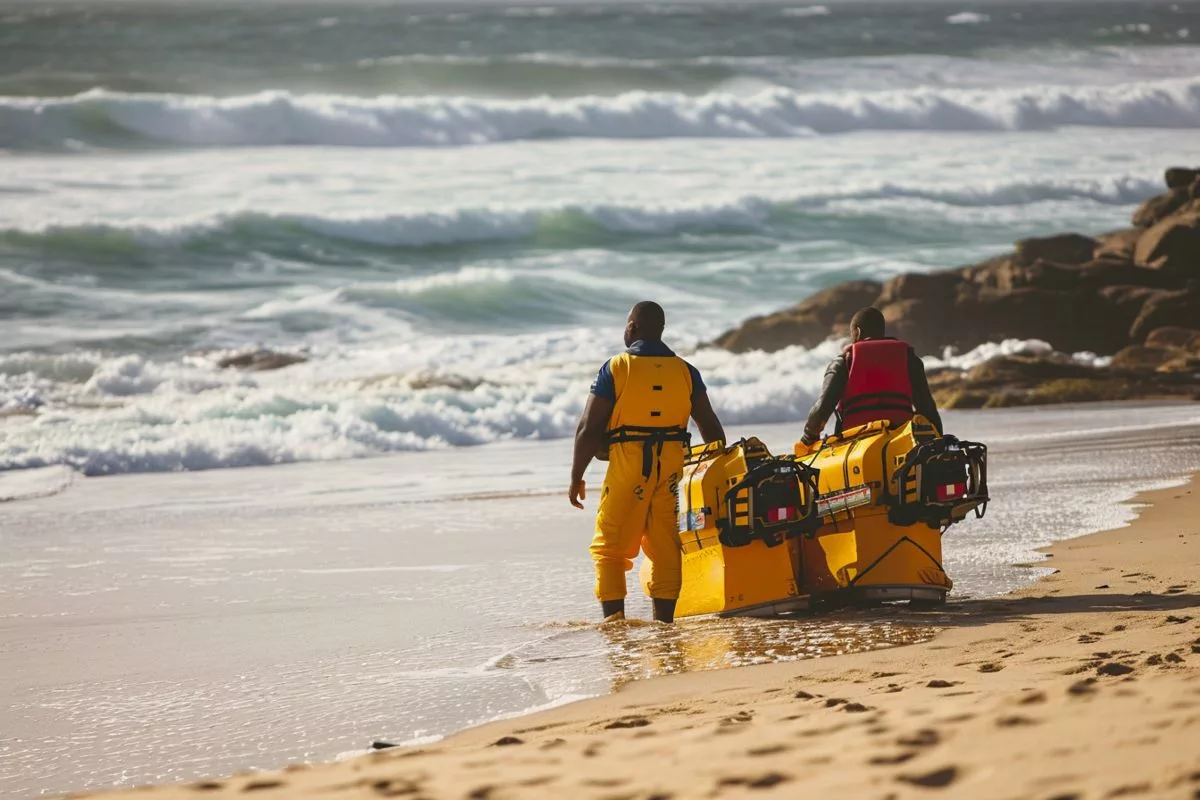
As they approached the man, their focus was shifted to a chaotic scene where several individuals were striving to pull a man from the turbulent surf. The alert was sounded, and within moments, NSRI lifeguards, furnished with Automated External Defibrillators (AED), oxygen, and medical kits, were dispatched to the crisis point. The typically placid ocean had morphed into a lethal force, ensnaring an unwary swimmer.
Section 2: Reaction To The Crisis
The NSRI’s Emergency Operations Centre (EOC) and duty crew from Mossel Bay were immediately alerted. Upon arriving at the scene, they discovered a local 66-year-old man in distress. The man had been heroically pulled from the water by his friend, a courageous local woman, who had managed to get him to shore despite his lifeless condition. The woman conveyed the terrifying experience to the NSRI team, her voice resonating eerily on the desolate beach.
A coalition of emergency services, including the Western Cape Government Health Emergency Medical Services (EMS), Mossel Bay Fire and Rescue services, ER24 ambulance services, and the South African Police Services (SAPS) were summoned. The location, once synonymous with holiday merriment, was now the stage for a rigorous and solemn endeavour to save a life.
Section 3: Unsuccessful Rescue Efforts
The NSRI lifeguards promptly initiated Cardiopulmonary Resuscitation (CPR) efforts. They were soon joined by EMS paramedics, their collective efforts painting a poignant picture of bravery and commitment. Despite the extensive resuscitation attempts, the man failed to revive and was declared deceased on the scene.
Following the tragic event, the man’s body was transferred to the care of government forensic pathology services. SAPS opened an inquest docket to examine the circumstances leading to the heartrending incident. Initial findings suggest that the man and his friend may have been caught in rip currents while swimming.
Section 4: Lessons Learnt From The Tragedy
This unfortunate event serves as a potent reminder of the lurking dangers beneath the surf. The NSRI issued a safety alert ahead of the spring tide peak on 27 December, advising the public to exercise caution when swimming in unfamiliar waters. The brave and immediate response from the lifeguards and emergency services personnel exemplifies their steadfast commitment to preserving lives.
This incident should prompt us all to respect nature’s force and to heed the counsel of safety professionals. As we bask in the splendour of our coastal areas, let us keep in mind the diligence and dedication of organizations like the NSRI and emergency services, whose vigilance maintains our safety.
1. What happened at Kleinbrak Beach on Christmas Day?
A man drowned despite heroic rescue efforts by his friend and the National Sea Rescue Institute (NSRI).
2. Who responded to the incident?
Emergency services, including the Western Cape Government Health Emergency Medical Services, Mossel Bay Fire and Rescue services, ER24 ambulance services, and the South African Police Services, were summoned to the scene.
3. Was the man revived?
Despite extensive resuscitation efforts, the man failed to revive and was declared deceased on the scene.
4. What caused the incident?
Initial findings suggest that the man and his friend may have been caught in rip currents while swimming.
5. What lessons can be learned from the tragedy?
This incident serves as a potent reminder of the lurking dangers beneath the surf. The NSRI issued a safety alert advising the public to exercise caution when swimming in unfamiliar waters.
6. How did emergency services respond to the crisis?
The brave and immediate response from the NSRI lifeguards and emergency services personnel exemplified their steadfast commitment to preserving lives.