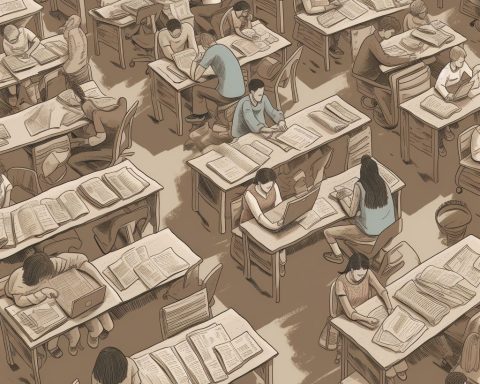

The 14th Policy Dialogue Forum on Teachers for Education 2030 in Johannesburg discussed the global issue of teacher shortages and strategies to address it, such as enhancing teachers’ salaries and working conditions, creating opportunities for career progression, and ensuring a fair distribution of teachers. The Global Report on teacher shortages was also launched at the forum. South Africa was honored to host the event, which aimed to elevate the teaching profession and provide solutions to the challenges highlighted in previous reports. The forum ended on a positive note, with hopes for more innovative and effective strategies toward achieving Sustainable Development Goal 4.
What was discussed at the 14th Policy Dialogue Forum on Teachers for Education 2030?
The 14th Policy Dialogue Forum on Teachers for Education 2030 in Johannesburg focused on addressing global teacher shortages. The forum discussed strategies like enhancing teachers’ salaries and working conditions, creating opportunities for career progression, and ensuring a fair distribution of teachers. The Global Report on teacher shortages was also launched at the forum.
In the energetic heartscape of Johannesburg, South Africa, a significant assembly of global education specialists convened at the 14th Policy Dialogue Forum, organized by the International Task Force on Teachers for Education 2030. Deputy President Shipokosa Paulus Mashatile, along with various international dignitaries, graced the event. This forum has played a key role in putting the urgent matter of worldwide teacher shortages under the international spotlight.
The Genesis of the Dialogue
A look into the past reveals that the South African Minister of Basic Education, Angie Motshekga, was enlisted to partake in an influential panel organized by the UN Secretary-General, Antonio Guterres, in September 2022. This panel was a direct product of recommendations from the International Teacher Task Force for Education 2030. As a strategic follow-up to the 2022 Transforming Education Summit’s outcomes, the UN Secretary-General established the High-Level Panel on the Teaching Profession (HLP) the subsequent year.
Two years later, in 2024, South Africa had the honour of hosting the 14th International Task Force on Teachers for Education 2030 Policy Dialogue Forum. This event was a milestone of acknowledgement and prestige for South Africa, reinforcing its critical influence on the pursuit of universal quality education by 2030.
This influential task force, co-led by South Africa and Germany, has been unyielding in its dedication to raising awareness, enhancing knowledge, and offering support on pivotal themes brought up in relation to the Sustainable Development Goal 4 (SDG4). The forum’s focal point was “Addressing global teacher shortages: dignifying, diversifying, and valorizing the profession,” a topic South Africa endorsed with eagerness, aiming to garner insights from shared best practices.
The Global Issue of Teacher Shortages
The reality the world is grappling with is a worrying deficit of skilled and driven teachers. This problem doesn’t just compromise the standard of education; it also impedes joint endeavours to accomplish SDG4’s target of inclusive and equitable quality education for everyone. Deputy President Mashatile insisted on the necessity to affirm the worth and importance of teachers, recognizing their critical role in moulding nations’ futures.
An array of measures have been adopted by education strategists in response to this issue. These include using the Education Management Information System (EMIS) to navigate supply and demand dynamics, crafting strategies to entice more individuals to the teaching profession, enhancing teachers’ salaries and working conditions, and employing contracted teachers to address immediate needs.
In South Africa, the Fundza-Lushaka Bursary Scheme is a bright spot, drawing youthful teachers to the profession based on needs determined by the EMIS system. The country has also enacted laws like the Labour Relations Act, which safeguards employees’ rights and privileges as stipulated in the constitution.
Striving Towards Teacher Professionalization
Committed to elevating the teaching profession, South Africa is expanding teacher development opportunities and promoting more cooperative methods. Empowering teachers, creating avenues for career progression, and ensuring a fair distribution of teachers are key factors in this professionalization process.
The forum also marked the launch of the Global Report on teacher shortages. This report, along with the High-Level Panel Report, was greeted with hope by South Africa, which looked forward to the Policy Dialogue Forum providing solutions to the issues highlighted in these reports.
As the forum wrapped up, Deputy President Mashatile expressed his gratitude to the International Task Force on Teachers for Education 2030 and UNESCO for co-hosting the 14th Policy Dialogue Forum. The conversations revolved around identifying shared challenges leading to teacher shortages, addressing these shortages with strategic policies related to recruitment, training, and retention, and contemplating future transformative strategies to validate and strengthen teaching as a profession.
The forum ended on a positive note, with hopes that it would result in the development of more innovative and effective methods and strategies. These outcomes would bring us a step closer to achieving Sustainable Development Goal 4, which aims to ensure inclusive and equitable quality education and promote lifelong learning opportunities for everyone.
What was the aim of the Global Education Forum in Johannesburg?
The aim of the Global Education Forum in Johannesburg was to address the global issue of teacher shortages and discuss strategies to address it, such as enhancing teachers’ salaries and working conditions, creating opportunities for career progression, and ensuring a fair distribution of teachers. The event also aimed to elevate the teaching profession and provide solutions to the challenges highlighted in previous reports.
What is the Global Report on teacher shortages?
The Global Report on teacher shortages is a report launched at the 14th Policy Dialogue Forum on Teachers for Education 2030 in Johannesburg. The report focuses on the global issue of teacher shortages and provides insights into the strategies that can be implemented to address the issue.
What are some of the measures that have been adopted to address the issue of teacher shortages?
Measures that have been adopted to address the issue of teacher shortages include using the Education Management Information System (EMIS) to navigate supply and demand dynamics, crafting strategies to entice more individuals to the teaching profession, enhancing teachers’ salaries and working conditions, and employing contracted teachers to address immediate needs.
How is South Africa addressing the issue of teacher shortages?
South Africa is addressing the issue of teacher shortages by expanding teacher development opportunities, promoting more cooperative methods, and ensuring a fair distribution of teachers. The country has also enacted laws like the Labour Relations Act, which safeguards employees’ rights and privileges as stipulated in the constitution. The Fundza-Lushaka Bursary Scheme is also drawing youthful teachers to the profession based on needs determined by the EMIS system.
What is the High-Level Panel on the Teaching Profession?
The High-Level Panel on the Teaching Profession (HLP) is a panel established by the UN Secretary-General in response to recommendations from the International Teacher Task Force for Education 2030. The panel focuses on the critical role of teachers in achieving Sustainable Development Goal 4 and provides insights into the strategies that can be implemented to address the issue of teacher shortages.
What is Sustainable Development Goal 4?
Sustainable Development Goal 4 (SDG4) is one of the 17 Sustainable Development Goals established by the United Nations in 2015. SDG4 aims to ensure inclusive and equitable quality education and promote lifelong learning opportunities for everyone. Achieving SDG4 is critical to achieving sustainable development and reducing global inequality.