Patricia De Lille, leader of the GOOD Party, has proposed increasing South Africa’s Basic Income Grant from R350 to roughly R1,000 to help those living in poverty. She also advocates for government reformation, professionalisation of the public service, eradication of corruption, and implementation of tax amendments. De Lille’s manifesto also emphasizes investment in public infrastructure and affordable, basic services, and financial support for small businesses. The proposal aims to rebalance society and provide a safety net for those struggling with poverty while revitalizing the South African economy.
Patricia De Lille, the leader of the GOOD Party, has proposed increasing South Africa’s Basic Income Grant from R350 to roughly R1,000 to mitigate economic hardship faced by the poverty-stricken populace. This proposition aims to provide a safety net for those grappling with poverty, enabling them to fulfil their fundamental human needs and seek employment. Appropriate measures include government reformation, professionalisation of the public service, eradication of corruption, and implementation of tax amendments. The proposal was made during the launch of the party’s election manifesto in Johannesburg.
The Proposed Increase in Basic Income Grant
Patricia De Lille, the leader of the GOOD Party, has unveiled a progressive suggestion to increase the Basic Income Grant (BIG) from its current R350 to roughly R1,000. This proposition is a strategic attempt to mitigate the economic hardship faced by the poverty-stricken populace. The underlying aim is to furnish a safety net for those grappling with poverty, thus enabling them to fulfil their fundamental human needs. Furthermore, the increased grant will provide them with an opportunity to seek employment and work towards a sustainable exit from destitution.
The announcement of this proposal was made during the launch of the party’s election manifesto in Johannesburg. De Lille expressed her conviction in South Africa’s capacity to financially support this increment. She argues that the proposal is not only feasible but also obligatory provided that appropriate measures are taken. These measures include government reformation, professionalisation of the public service, eradication of corruption, and the implementation of tax amendments.
This announcement followed a statement by Finance Minister Enoch Godongwana, who had earlier stated that the grant would see a slight increase to R370 in early April. However, the plan laid out by De Lille is far more ambitious and seeks to more than double that increase. This resonates with the intensity of the poverty epidemic within the nation.
Rebalancing Society and Government Restructuring
In addition to financial upliftment, the manifesto of the GOOD Party aspires to achieve a reorientation in society. De Lille contends that a considerable societal pivot is required. She perceives the promises made by political parties as hollow if the government structure continues to persist in its current form. She used the metaphor of rearranging deck chairs on the Titanic to illustrate the pointlessness of not addressing the larger issue at hand.
De Lille, who is also the former mayor of Cape Town, underscored the urgency to eliminate inadequacies and incompetence within the government machinery. She proposes to achieve this through the professionalisation of the administration, ensuring that the right skills and competencies are put to use. This recommendation suggests that political leaders should forego the recruitment of professional public services.
According to the party’s 10-point plan designed to alleviate suffering and rectify South Africa’s situation, unemployment is the most formidable barrier to poverty alleviation. The sluggish economic growth has forced millions to rely on social grants for survival.
Investment in Public Infrastructure and Support for Small Businesses
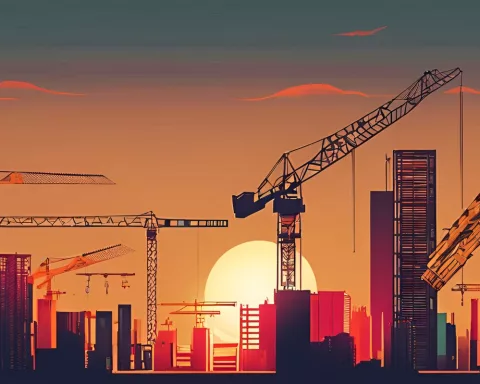
De Lille offers a solution in the form of investment in public infrastructure such as electricity, transport, water, housing, and digital communications. She also advocates for financial support to small businesses. These measures, she insists, are not only fundamental to fostering genuine economic growth but are also instrumental in job creation, reducing unemployment, and funding public employment programmes.
The manifesto lays emphasis on the importance of affordable, basic services, including electricity and water. It promotes the advancement of renewable energy generation to end load shedding. Arguing that an electrical connection is pointless if one can’t afford the units, the manifesto champions the cause of making electricity affordable.
In Summary
In essence, Patricia De Lille and the GOOD Party propose audacious and holistic measures to rebalance society and provide a safety net for those living in poverty. These measures encompass a significant increase in the BIG, an exhaustive overhaul of the government structure, and substantial investments in public infrastructure and essential services. It is a far-reaching vision that aims to revitalise the South African economy and provide a much-needed fillip to numerous citizens.
1. What is Patricia De Lille’s proposal for economic revival?
Patricia De Lille has proposed increasing South Africa’s Basic Income Grant from R350 to roughly R1,000 to help those living in poverty. She also advocates for government reformation, professionalisation of the public service, eradication of corruption, and implementation of tax amendments. Her manifesto also emphasizes investment in public infrastructure and affordable, basic services, and financial support for small businesses.
2. What is the Basic Income Grant (BIG)?
The Basic Income Grant is a social welfare program that provides periodic payments to eligible individuals to help alleviate poverty. It is currently set at R350 in South Africa.
3. How does the proposed increase in BIG aim to help those living in poverty?
The proposed increase in BIG from R350 to roughly R1,000 aims to provide a safety net for those struggling with poverty, enabling them to fulfil their fundamental human needs and seek employment. This will mitigate the economic hardship faced by the poverty-stricken populace and provide them with an opportunity to work towards a sustainable exit from destitution.
4. What other measures does the GOOD Party propose for economic revival?
The GOOD Party proposes government reformation, professionalisation of the public service, eradication of corruption, and implementation of tax amendments. They also emphasize investment in public infrastructure and affordable, basic services, and financial support for small businesses.
5. How does the GOOD Party plan to restructure the government?
The GOOD Party proposes to achieve government restructuring through the professionalisation of the administration, ensuring that the right skills and competencies are put to use. This recommendation suggests that political leaders should forego the recruitment of professional public services.
6. What other services does the manifesto emphasize the importance of?
The manifesto lays emphasis on the importance of affordable, basic services, including electricity and water. It promotes the advancement of renewable energy generation to end load shedding. Arguing that an electrical connection is pointless if one can’t afford the units, the manifesto champions the cause of making electricity affordable.