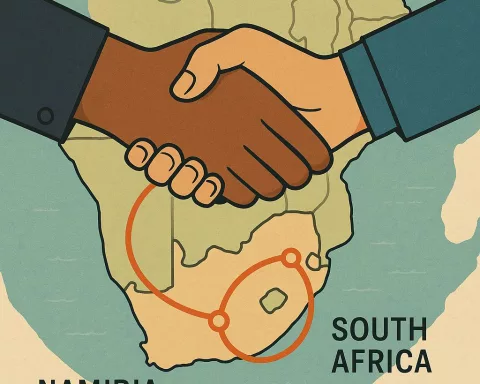
South Africa recently concluded its National and Provincial Elections with a handover ceremony of the final list of elected delegates, marking the end of several months of democratic discussions and practices. The event embodies the voice of the nation and pays tribute to the country’s resilient democratic procedure. The list comprises diverse representations of South Africa’s population, denoting the nation’s wide-ranging ambitions, and the electoral proceedings involve multiple parties working towards a fair and clear-cut election.
Embracing a Time-Honored Ritual
The handover ceremony of the final list of elected delegates for the National Assembly and the nine Provincial Legislatures in South Africa marks the climax of several months of intense democratic discussions and practices. It embodies the resonance of a combined voice; the voice of the nation, listened to and documented.
Democracy, both an age-old and a modern-day practice, stands as a crucial element of the South African society. An event of paramount importance, the conclusion of this democratic process, was recently viewed when Mosotho Moepya Moepya, the Chairperson, managed the handover ceremony of the final list of elected delegates for the National Assembly and the nine Provincial Legislatures. This function not only marked the end of the 2024 National and Provincial Elections but also encapsulated a tribute to South Africa’s resilient and crystal-clear democratic procedure.
Embracing a Time-Honored Ritual
The handover ceremony forms an integral part of the governance in South Africa. Upon the declaration of the election outcomes by the Electoral Commission, the list of members for Parliament and Provincial Legislatures is showcased to the Chief Justice. The Chief Justice then presents the lists to the Parliament’s Secretary.
This grand event marks the climax of several months, possibly years, of intense democratic discussions and practices. It embodies the resonance of a combined voice; the voice of the nation, listened to and documented.
Safeguarding Democratic Values
The Electoral Commission holds the duty of safeguarding the rights of South African voters to elect their leaders, a responsibility of utmost significance. This duty, as prescribed in the constitution, is executed without any favoritism, fear or bias. The presented list, therefore, mirrors the choices, dreams, and expectations of numerous South Africans who have exercised their democratic rights.
The Delegates: A Microcosm of South Africa
This time, the list of elected delegates comprises 174 women and 226 men, denoting a proportion of 43.5% female to 56.5% male delegates. In terms of age distribution, the elected delegates span from 20 to 79 years old. To scrutinize the statistics further:
- 12 elected candidates are within the age range of 20-29
- 67 representatives fall within the 30-39 age group
- The 40-49 and 50-59 age classes have 110 delegates each
- 90 delegates are between the ages of 60 and 69
- 11 delegates are 70 years and above
These figures are more than just ordinary numbers. They are representative of the democratic options of the South African populace, embodying the nation’s diversity and wide-ranging ambitions.
Acknowledging the Contributors: The Electoral Commission
The electoral proceedings, although led by the Electoral Commission, are not solely an endeavor of the Commission. There are multiple parties involved, such as independent candidates, election officials, party representatives, observers, the state, civil society organizations, faith-based organizations, the media, organized business, and organized labor.
The dedication of everyone involved in assuring a fair and clear-cut election is highly commendable and crucial for the successful execution of the process. The Electoral Commission conveyed its heartfelt gratitude to all these entities for their pivotal role in the electoral proceedings. Chairperson Moepya eloquently stated, “An election influences the lives of all individuals in a nation.”
Therefore, in the spirit of democracy and echoing the united voice of the nation, Chairperson Moepya presented the final roll of elected delegates for the National Assembly and the nine provincial legislatures. This remarkable event exemplified the power of South Africa’s democratic process, its unwavering commitment to transparency, and the potency of the people’s choice.
1. What is the handover ceremony of the final list of elected delegates in South Africa?
The handover ceremony of the final list of elected delegates is an event that marks the end of the National and Provincial Elections in South Africa, showcasing the list of members for Parliament and Provincial Legislatures to the Chief Justice.
2. What does the final list of elected delegates represent?
The final list of elected delegates represents the choices, dreams, and expectations of numerous South Africans who have exercised their democratic rights.
3. What is the age and gender distribution of the elected delegates?
The elected delegates comprise 174 women and 226 men, denoting a proportion of 43.5% female to 56.5% male delegates. The age range of the elected delegates span from 20 to 79 years old.
4. Who is involved in the electoral proceedings in South Africa?
Multiple parties are involved in the electoral proceedings in South Africa, such as independent candidates, election officials, party representatives, observers, the state, civil society organizations, faith-based organizations, the media, organized business, and organized labor.
5. What is the role of the Electoral Commission in South African elections?
The Electoral Commission holds the duty of safeguarding the rights of South African voters to elect their leaders, a responsibility of utmost significance. This duty is executed without any favoritism, fear, or bias.
6. What does the handover ceremony of the final list of elected delegates represent?
The handover ceremony of the final list of elected delegates represents the power of South Africa’s democratic process, its unwavering commitment to transparency, and the potency of the people’s choice.