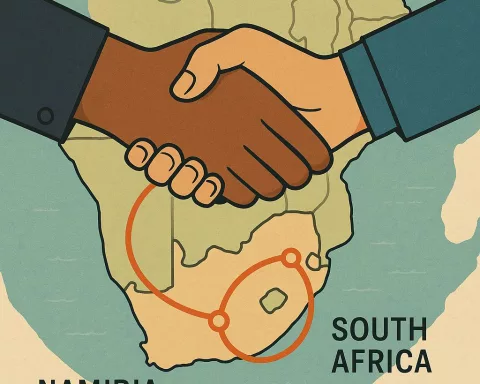
South Africa’s politics is changing as the ANC’s support declines and a Government of National Unity (GNU) is formed with the DA and other political groups. However, tension between the ANC and DA is growing, as the DA demands control over crucial government departments and the termination of contracts of director generals. This has led to criticism from the ANC and a potentially rocky road for political transition. The path forward requires tolerance, accommodation, and respect for the country’s Constitution to establish a truly inclusive, efficient, and representative GNU.
South Africa’s political scene has seen a significant decline in the ANC’s support base, leading to the formation of a Government of National Unity with the DA and other political entities. However, rising tensions between the ANC and DA point towards a potentially rocky road of political transition. The DA’s demands for ministerial control, including representation in crucial government departments and termination of contracts of director generals, have been strongly criticized by the ANC. The path forward requires tolerance, accommodation, and respect for the country’s Constitution to establish a truly inclusive, efficient, and representative GNU.
Evolution of Political Dynamics in South Africa
Reflecting the shifting political landscape in South Africa, the African National Congress’s (ANC) first deputy secretary-general, Nomvula Mokonyane, recently delivered a strong criticism of the Democratic Alliance’s (DA) requests for ministerial positions within the Government of National Unity (GNU). The DA’s demands, as outlined in a letter by their Federal Chairperson, Helen Zille, have been widely discussed on social media platforms.
To understand this development, we must delve into the turning tides of South Africa’s political scene. The ANC has been the dominant force since the dawn of democracy in 1994. However, the party’s support base has recently seen a significant decline, plummeting to a mere 40%. This marks the end of an era of ANC’s political dominance, where they consistently polled above 50%, facilitating seamless presidential and cabinet elections.
In the face of this new political reality, the ANC was forced to form a Government of National Unity with the DA and other political entities, including the Inkatha Freedom Party (IFP), the GOOD party, the Patriotic Alliance (PA), and six other groups. Despite the challenges, the ruling party is open to expanding the unity government by inviting additional political factions to join.
Turbulent Waters of Political Adjustment
While the formation of the GNU is a reflection of South Africa’s democratic resilience, the rising tensions between the ANC and DA point towards a potentially rocky road of political transition. Mokonyane’s criticism of the DA encapsulates these issues. Mokonyane accused the DA of prioritizing their interests over broader political unity, a claim the DA would likely reject.
According to Mokonyane, the DA’s demands indicate an attempt to dominate the GNU, rather than promoting a politically inclusive environment. She challenged the perception that the GNU is merely a coalition between the DA, ANC, and another party due to their early agreement.
Mokonyane emphasized that all parties, including the Patriotic Alliance, entered the GNU on an equitable basis, with no party having preferential status. She reiterated that inclusivity, as stated in rule 23 of the Statement of Intention, is the guiding principle of the GNU. She contends that this principle rules out giving in to DA’s demands.
The DA’s Far-Reaching Requests
The demands made by the DA, as detailed in Zille’s letter, are extensive. They desire representation in all crucial government departments. These include mineral resources and energy, transport, trade and industry, public works, higher education, public service and administration, home affairs, justice, international relations, communication and digital technologies. Moreover, the DA is calling for a review of all tenders awarded since the last elections in departments where they expect ministerial control.
In a move that may raise eyebrows, the DA is also insisting on terminating contracts of director generals within these departments. They plan to replace them with individuals endorsed by the DA. Zille argues that the current director generals, potentially influenced by the ANC’s cadre deployment policy, might resist directives from DA ministers.
The Path Forward: Tolerance, Accommodation, and Respect
As South Africa grapples with these political uncertainties, the emphasis must be on tolerance, accommodation, and respect for the country’s Constitution, as highlighted by Mokonyane. The objective is to ensure no party feels marginalized, creating a democratic environment where all voices are heard and interests are considered. Mokonyane’s sentiments summarize this ideal: “To bring everyone together, you need to be tolerant, you need to be accommodative and of importance, you need to respect the spirit of the country’s Constitution and the role of the President in terms of his/her prerogative.”
It remains to be seen whether South Africa’s political actors can successfully manage these complexities and establish a truly inclusive, efficient, and representative GNU. What is clear, however, is that the process will require substantial political will, compromises, and a collective commitment to the democratic foundations of the country.
1. What is the current state of South Africa’s political scene?
The African National Congress (ANC) has seen a significant decline in support base, leading to the formation of a Government of National Unity (GNU) with the Democratic Alliance (DA) and other political entities. However, rising tensions between the ANC and DA point towards a potentially rocky road of political transition.
2. What is the Government of National Unity (GNU)?
The GNU is a coalition between the ANC, DA, Inkatha Freedom Party (IFP), the GOOD party, the Patriotic Alliance (PA), and six other groups formed in response to the decline in the ANC’s support base.
3. What are the DA’s demands in the GNU?
The DA is demanding ministerial control over crucial government departments, including mineral resources and energy, transport, trade and industry, public works, higher education, public service and administration, home affairs, justice, international relations, communication and digital technologies. They are also calling for a review of all tenders awarded since the last elections in departments where they expect ministerial control and the termination of contracts of director generals within these departments.
4. What has been the response of the ANC to the DA’s demands?
The DA’s demands have been strongly criticized by the ANC, with Nomvula Mokonyane accusing the DA of prioritizing their interests over broader political unity. Mokonyane emphasized that inclusivity, as stated in rule 23 of the Statement of Intention, is the guiding principle of the GNU, ruling out giving in to DA’s demands.
5. What is required to establish a truly inclusive, efficient, and representative GNU?
According to Mokonyane, the path forward requires tolerance, accommodation, and respect for the country’s Constitution, ensuring no party feels marginalized and creating a democratic environment where all voices are heard and interests are considered.
6. What is the role of the President in the GNU?
The President has the prerogative to appoint ministers and director generals, and the process of establishing a truly inclusive, efficient, and representative GNU will require substantial political will, compromises, and a collective commitment to the democratic foundations of the country.