
Building Urban Resilience through BRICS Cooperation

1 min read
u r

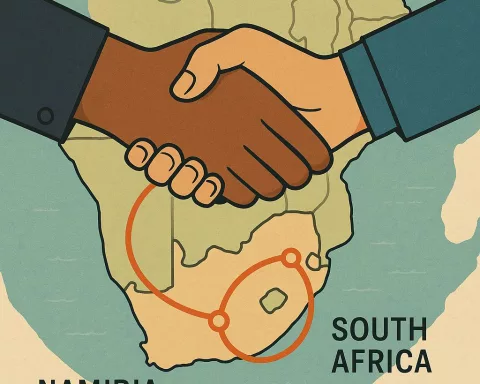
At the recent BRICS Urbanisation Forum in Durban, South Africa, Minister Thembi Nkadimeng discussed the importance of building urban resilience in BRICS cities. As urbanization continues to accelerate, cities face numerous challenges related to infrastructure, resources, and communities. To address these challenges, effective governance, policy frameworks, and collaborative efforts are essential.

Effective Governance and Policy Frameworks

To advance urban resilience, policymakers and leaders must create an enabling environment that fosters collaboration, coordination, and innovative solutions. The District Development Model (DDM) in South Africa exemplifies this approach, bringing together government and civil society to tackle daily challenges.

Newsletter

Stay Informed • Cape Town

Get breaking news, events, and local stories delivered to your inbox daily. All the news that matters in under 5 minutes.

Join 10,000+ readers
No spam, unsubscribe anytime

Resilient Infrastructure

Investing in resilient infrastructure is crucial to building urban resilience. Cities must be equipped with reliable and sustainable systems for water supply, sanitation, energy, transportation, and communication. Adopting innovative technologies and embracing nature-based solutions can enhance the adaptability of infrastructure, making it more resilient to climate change and other disruptive forces.

Localizing the Sustainable Development Goals

Each BRICS country has unique contexts, challenges, and opportunities, requiring tailored approaches to achieve the Sustainable Development Goals (SDGs). Localizing the SDGs aligns global aspirations with local realities, ensuring targeted and impactful efforts.

Innovative Approaches from BRICS Countries

BRICS countries have implemented innovative approaches to building urban resilience. China’s “sponge cities” integrate green infrastructure for stormwater management. Brazil’s favela upgrading programs improve infrastructure and social services in informal settlements. Russia’s green building practices and urban heat island mitigation measures enhance sustainability in cities. India’s climate-resilient housing and urban greening initiatives promote environmental sustainability. South Africa’s informal settlement upgrading and renewable energy integration in urban development plans enhance resilience.

Urban Data Intelligence

Urban data intelligence is an important component of building urban resilience. Data provides insights into the vulnerabilities and risks faced by cities, allowing for targeted investments in resilient infrastructure, early warning systems, and capacity-building programs. Embracing data-driven approaches, investing in data collection systems, and building analytical capacities can optimize resource allocation and monitor the effectiveness of resilience measures.

As representatives of the BRICS nations, leaders have a unique opportunity to inspire change and build a better future for cities and communities. The BRICS Urbanisation Forum serves as a platform for sharing best practices, developing robust strategies, and engaging in key debates that will move the international community towards creating resilient spaces in cities and towns.


A Russian-Spanish journalist and Cape Town native, channels his lifelong passion for South Africa into captivating stories for his local blog. With a diverse background and 50 years of rich experiences, Serjio's unique voice resonates with readers seeking to explore Cape Town's vibrant culture. His love for the city shines through in every piece, making Serjio the go-to source for the latest in South African adventures.

Leave a Reply

Your email address will not be published.

Previous Story

A New Era for Communal Farmers: MEC Pieters Hands Over Shearing and Dipping Structure

Next Story

Heartfelt Condolences and Resolute Inspections: A Glimpse into the City’s Struggle for Clean Water and Dignified Sanitation

Latest from Blog

Forging a Path to Enhanced Executive Oversight

South Africa is making big changes to keep a close eye on its top leaders! They made a new special committee in their parliament to watch the President. This committee will make sure the President and their office are doing things right and spending money wisely. They looked at how other countries do this to learn the best ways. This means more openness and trust, making sure everyone in power is held accountable to the people.

Cape Town’s Unmissable Weekend of Sporting Action

Cape Town is bursting with sports action from December 5th to 7th, 2025! You can cheer for the Proteas Women’s cricket team at Newlands against Ireland. Then, get ready for super exciting rugby sevens at DHL Stadium with the SVNS Cape Town tournament. And don’t miss Cape Town City FC playing football at Athlone Stadium. It’s a weekend full of thrills and fun for everyone!

South Africa Shines on the Global Cheese Stage

South African cheesemakers dazzled at the 2025 World Cheese Awards in Switzerland! They won many shiny medals, including two top Super Gold awards for Klein River Cheese’s Babylonstoren Parmesan and Dalewood Fromage’s Boland cheese. Nellie Fischer was even named the Best Female Cheesemaker. This big win makes South Africa super proud and shows their amazing cheese is now famous all over the world!

Renewing the Mozambique-South Africa Partnership: Highlights from the 4th Bi-National Commission

Mozambique and South Africa just held their 4th big meeting, the BiNational Commission, in Maputo. Their leaders, Presidents Ramaphosa and Chapo, met to make their countries even closer friends. They talked about important things like making their economies stronger, keeping everyone safe, and helping people thrive. This meeting helps them work together on many projects, from big gas plants to fighting sickness, making life better for everyone in both countries.

Deepening South Africa-Mozambique Ties: Progress and Prospects from the Fourth Bi-National Commission

South Africa and Mozambique are like old friends, working together to make things better. They talk a lot about how to help each other, especially with money, jobs, and safety. They remember their shared past of fighting for freedom, which makes their bond super strong. Now, they’re building roads, sharing power, and helping each other stay healthy and safe. This teamwork helps both countries grow and makes the whole neighborhood stronger.