
South Africa is facing a big debate about whether to tax the super-rich more to help fix deep economic gaps and raise money for public services. Some say a wealth tax would make things fairer, while others worry rich people might leave or hide their money, making the tax hard to collect. The government already taxes high earners heavily, but many believe this isn’t enough to close the gap between rich and poor. This debate is about more than money—it’s about building a fair society where everyone shares in the country’s success.
What is the debate over a wealth tax in South Africa?
South Africa’s wealth tax debate centers on addressing inequality and boosting government revenue. Supporters urge taxing the ultra-wealthy to fund public services, while opponents warn of capital flight and administrative challenges, emphasizing existing progressive taxes and the complexity of enforcing a new wealth tax.
The Tax Debate: Searching for Solutions in Troubled Times
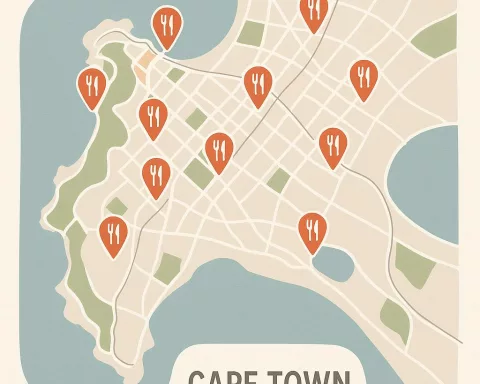
In the bright early light of Cape Town, Parliament buzzes with lively discussion and high stakes. South Africa faces persistent budget shortfalls and deepening social divides, forcing leaders and citizens alike to search for ways to close the fiscal gap. The question of a wealth tax takes center stage, with renewed urgency reflecting the country’s stubborn inequalities and the pressing need for additional government revenue.
Across the political spectrum, activists and analysts have championed the idea of a wealth tax for years. However, in 2024, the debate takes on a new intensity. The disparities between rich and poor have grown ever more visible, and many South Africans wonder whether the existing tax system delivers justice or simply preserves the status quo. These questions are not just economic—they cut to the heart of national identity and the social contract that binds the nation.
Finance Minister Enoch Godongwana stands at the epicenter of these debates. Known for his practical approach, Godongwana responds directly to calls for a new wealth tax. He argues that South Africa’s income tax system, with its highly progressive design, already serves as the primary tool for taxing the well-off. According to him, introducing a wealth tax would not significantly improve revenue collection or address inequality more effectively than current measures.
The Structure and Legacy of South Africa’s Tax Code
Godongwana’s stance relies on a close reading of the country’s tax landscape and international fiscal history. South Africa’s tax code taxes the highest earners at a 45% rate on personal income, alongside additional levies such as capital gains, estate duties, donations taxes, and property transfer duties. These combined measures form a patchwork that targets wealth accumulation in many forms. Even as total collections from these sources dipped to R21.3 billion in 2024/25, compared to R22.6 billion the previous year, they still represent about 1.15% of all tax collected—more than twice the 0.5% average among advanced OECD countries.
This tax framework didn’t emerge by accident. Decades of political struggle and social reform have shaped a system designed to promote equity, especially in the post-apartheid era. South Africa’s approach draws from a long tradition of debates on economic justice, influenced by both Enlightenment thinkers and modern philosophers like John Rawls. The result is a constantly evolving system, reflecting both the desire to correct past injustices and the lessons learned from other countries’ fiscal experiments.
Yet, numbers alone fail to capture the everyday experience of most citizens. For many South Africans, taxation is not an abstract policy but a monthly reality. Anele, a nurse from Durban, works extra shifts to make ends meet. Despite her efforts, she feels squeezed by high taxes and rising living costs. Her frustration mirrors that of countless working-class families. The promise of a wealth tax, for people like her, symbolizes not just a way to raise money, but a hope for a fairer society where the richest bear a greater share of the burden.
The Case For and Against a Wealth Tax
Supporters of a wealth tax draw on these stories to fuel their argument. They highlight glaring inequality—luxury vehicles weaving past informal settlements, manicured gardens a stone’s throw from shanty towns. They call for a focused tax on the ultra-wealthy, envisioning the proceeds funding essential services: schools, clinics, improved infrastructure. Many reference economists like Thomas Piketty, who in “Capital in the Twenty-First Century” advocates for direct net worth taxes as a remedy for runaway capital accumulation and entrenched privilege.
However, Godongwana and his allies caution against overestimating the benefits of a wealth tax in South Africa’s unique context. Only about 2,850 individuals hold net assets above R50 million. Their domestic wealth totals R245 billion, with another R150 billion sitting offshore. If even a small fraction of this elite group decided to emigrate, the country could lose not just R7 billion in annual income tax, but also job opportunities and investment that sustain local growth. The risk of capital flight is not merely theoretical; history offers sobering examples.
France’s attempt to tax the wealthy led to an exodus of billionaires and a shrinking pool of taxable assets, forcing the government to narrow the tax’s scope to real estate. Sweden and Denmark, known for their expansive social safety nets, also abandoned wealth taxes due to administrative headaches and underwhelming returns. Today, only four countries globally persist with true wealth taxes, and all face scrutiny over their effectiveness. The reality is that enforcing a wealth tax requires significant resources to track global assets—especially those hidden abroad—and may yield less than advocates hope.
The Evolving Search for Fiscal Justice
Despite these warnings, the debate remains unresolved. Critics of the current system insist that, for all its sophistication, it still allows massive fortunes to grow with little restraint. They call for bold experimentation—solidarity taxes, windfall levies on sectors that profited during global crises, even voluntary contributions from patriotic millionaires eager to give back. These proposals reflect a broader societal desire to see the benefits of economic growth shared more widely.
South Africa finds itself at a familiar crossroads. History is full of societies forced to reconsider how they distribute wealth. The United States, during its Gilded Age, wrangled over how best to rein in the excesses of its industrial elite. Britain’s postwar consensus led to high rates on the rich to fund the welfare state. In South Africa, with its legacy of division and transformation, the stakes feel even higher and the need for creative, effective solutions more pressing than ever.
Political realities shape the government’s cautious approach. An early proposal to raise VAT for the 2025 Budget quickly faltered in the face of public outcry. Leaders, mindful of potential unrest, have chosen to focus on closing loopholes and improving compliance within the existing tax framework, rather than introducing new or higher taxes. The National Treasury now aims to modernize its processes and bring more economic activity into the formal sector, searching for untapped revenue without destabilizing the broader economy.
The Cultural Dimension: Wealth, Fairness, and the National Imagination
Beyond economics and policy, the discussion over wealth taxes touches on deeper questions of justice and national purpose. South African art and literature have long explored these themes. In Irma Stern’s paintings, lavish interiors stand in stark contrast to scenes of poverty. Alan Paton’s “Cry, the Beloved Country” tells a story of yearning for fairness in a landscape marked by both abundance and deprivation. These cultural touchstones remind us that debates about taxation are never just technical—they are about the kind of society South Africans hope to build.
Civil society remains restless even as policymakers tread carefully. NGOs, trade unions, and grassroots organizations continue to push for more ambitious reforms. Meanwhile, some wealthy entrepreneurs, inspired by global philanthropy movements, voluntarily commit a portion of their fortunes to social causes, suggesting new models for civic responsibility. The story of taxation in South Africa is thus far from settled. It unfolds as an ongoing negotiation—between policy and principle, personal experience and public good, past injustice and future possibility.
As the government weighs its options, the pressure to create a fairer, more inclusive society grows. The wealth tax debate, with all its complexity and controversy, highlights the challenges and opportunities facing a nation determined to reconcile economic growth with social justice. South Africa’s journey, shaped by history and ambition, continues to evolve—one budget, one policy, and one act of civic engagement at a time.
What is the current debate about implementing a wealth tax in South Africa?
The debate revolves around whether South Africa should impose a wealth tax on the ultra-rich to reduce economic inequality and raise additional revenue for public services. Proponents argue it would promote fiscal fairness and fund essential infrastructure, while opponents caution it could lead to capital flight, administrative difficulties, and might not generate enough revenue given existing progressive taxes. The discussion reflects broader questions about social justice and the distribution of wealth in the country.
How does South Africa’s existing tax system address wealth and high incomes?
South Africa currently taxes high earners at a personal income rate of up to 45%, along with other taxes such as capital gains tax, estate duties, donations tax, and property transfer duties. These combined levies form a multi-faceted approach to taxing wealth accumulation. Despite these measures, critics argue the system still allows wealth concentration and does not sufficiently close the gap between rich and poor.
What are the main arguments in favor of introducing a wealth tax?
Supporters highlight the country’s stark inequality and the visible disparities between affluent and poor communities. They believe taxing the ultra-wealthy’s net worth could provide significant funds to improve education, healthcare, and infrastructure. Influential economists like Thomas Piketty advocate wealth taxes as a means to curb runaway capital accumulation and reduce entrenched privilege, aiming for a more equitable society.
What concerns exist about the potential negative impacts of a wealth tax in South Africa?
Opponents warn that only a small number of South Africans hold very large fortunes, many of which are offshore and difficult to track. Introducing a wealth tax might incentivize the rich to emigrate or hide assets, reducing tax revenue and harming jobs and investments. Historical examples from France, Sweden, and Denmark show that wealth taxes can be hard to enforce, costly to administer, and sometimes ineffective, leading some countries to repeal them.
How is South Africa’s government approaching tax reform amid these challenges?
The government, led by Finance Minister Enoch Godongwana, is cautious. Rather than introducing new taxes, it is focusing on closing loopholes, improving compliance, modernizing tax administration, and encouraging more economic activity to move into the formal economy. Proposals to raise VAT faced public backlash, so the current strategy balances fiscal needs with social stability.
Why is the debate over wealth tax also a cultural and societal discussion in South Africa?
Taxation debates tap into deep questions about fairness, justice, and national identity shaped by South Africa’s history of apartheid and inequality. Cultural works like Alan Paton’s Cry, the Beloved Country and Irma Stern’s paintings highlight the contrasts between wealth and poverty. Civil society groups push for reforms, while some wealthy individuals voluntarily contribute to social causes. The conversation about wealth tax reflects broader hopes for a society where prosperity is more fairly shared.