Pope Leo XIV, born Robert Francis Prevost in Chicago, is the first American pope, bringing fresh hope to the Catholic Church. His years of humble service in Peru and leadership in the Vatican show his deep care for the poor and a desire to renew the Church. Chosen during a historic moment in Rome, Leo XIV promises a future of unity, compassion, and courage as the Church faces many challenges. His unique journey from Chicago’s neighborhoods to the Andes and then to St. Peter’s Square inspires people around the world.
Who is Pope Leo XIV and why is his election significant?
Pope Leo XIV, born Robert Francis Prevost in Chicago, is the first American pope, symbolizing a new era for the Catholic Church. His decades of missionary work in Peru and leadership in the Vatican highlight his commitment to inclusivity, social justice, and Church reform amid global challenges.
The White Smoke Over Rome
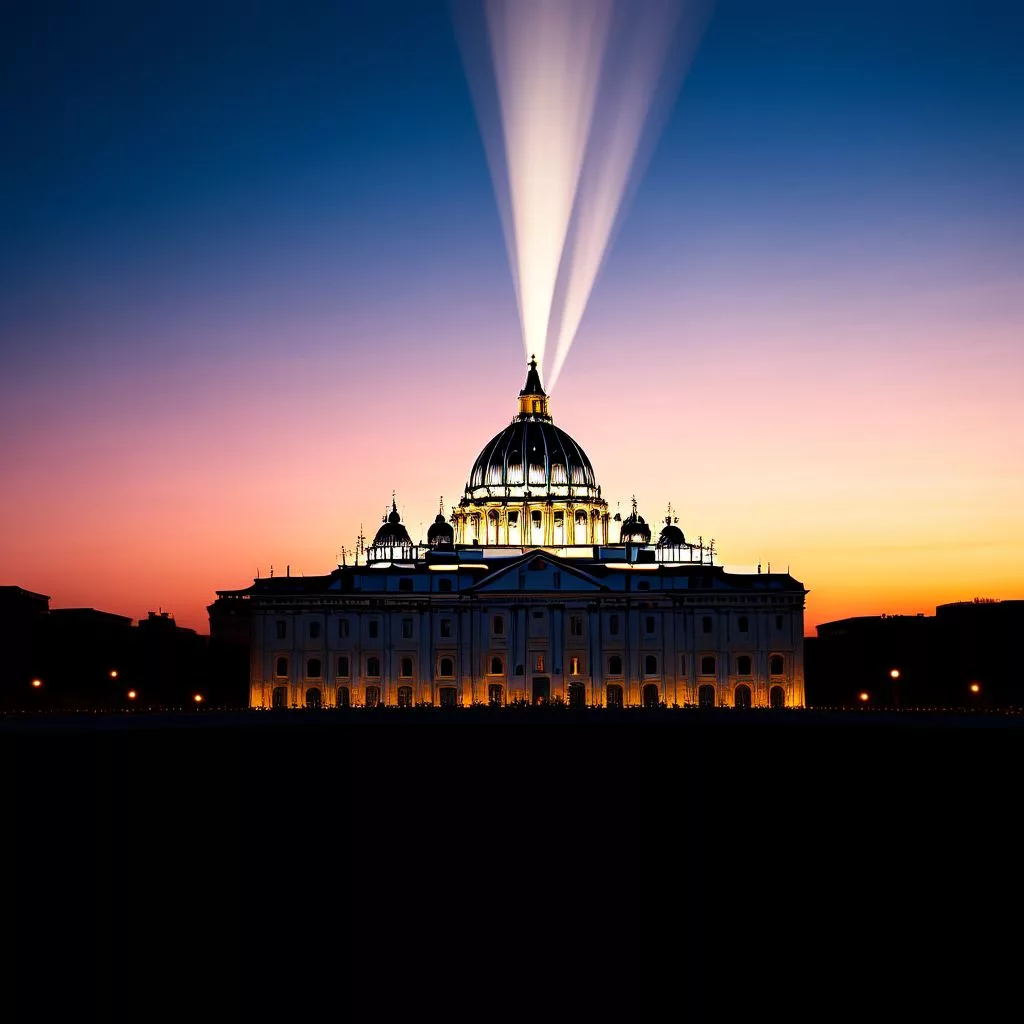
As the sun dipped below Rome’s ancient skyline, the chimes of St. Peter’s Basilica rang out, signaling a momentous occasion. The world watched in suspense as a thin wisp of white smoke drifted upward, marking the end of the papal conclave and the beginning of a new chapter in Church history. At precisely 6:07 p.m., the College of Cardinals confirmed the election of a new pope—a decision that instantly captured global attention. When Cardinal Dominique Mamberti stepped onto the central balcony to announce the words “Habemus Papam,” excitement and expectation surged throughout the throngs gathered in St. Peter’s Square.
For the first time in the Church’s two-thousand-year saga, the successor to St. Peter emerged not from the well-trodden streets of Rome nor the historic heartlands of Catholic Europe, but from the vibrant neighborhoods of Chicago in the American Midwest. The elevation of Robert Francis Prevost—now Pope Leo XIV—presented a striking symbol of Catholicism’s evolving identity. His journey to this moment combined both geographic and spiritual distance, shaped by decades of service and a profound sense of humility.
Prevost’s appearance on the balcony radiated calm and attentiveness. Born in 1955, he had grown up amid Chicago’s bustling communities, but his life story would take him far from the familiar rhythms of his hometown. The path that led him to the Vatican’s highest office wove together deep commitment, intellectual rigor, and an unflagging devotion to those at the Church’s margins.
Foundations in Chicago and Beyond
Prevost’s formative years unfolded against the backdrop of a rapidly changing America. The 1960s saw Chicago gripped by racial strife, urban renewal, and religious awakening—a crucible that helped shape both his worldview and his vocation. Amid this social upheaval, young Robert discerned a calling that transcended the boundaries of his local community. He joined the Augustinian Order, a spiritual community drawing its inspiration from St. Augustine, whose writings had left an indelible mark on Western Christianity. The Augustinians, known for blending contemplation with active service, offered Prevost a framework for integrating faith with action.
His decision to enter religious life marked only the first stage of his global journey. Leaving behind the familiar cityscape, Prevost ventured to Peru, a country rich in cultural diversity and burdened by economic and political challenges. There, he found himself in a church deeply influenced by indigenous traditions and the lingering effects of colonization. Peru in those years grappled with poverty, unrest, and the urgent call for social justice. Prevost dedicated decades to serving these communities, often working side by side with those society had overlooked.
Colleagues and parishioners in Peru recall his fluency in Spanish, approachable demeanor, and steady leadership. He embraced the Church’s “preferential option for the poor” not as a distant doctrine but as an everyday commitment, echoing the aspirations of Latin American liberation theologians. Through these experiences, Prevost developed a reputation for bridging divides and accompanying the vulnerable—qualities that would later define his papal ministry.
Leadership in the Vatican and Shifting Tides
Prevost’s contributions reached far beyond local communities. In 2023, Pope Francis appointed him prefect of the Dicastery for Bishops—a central office responsible for overseeing the selection and oversight of bishops around the world. This role, critical to shaping the Church’s leadership, demands not only administrative skill but also cultural sensitivity and moral clarity. Prevost managed this responsibility during a period of intense scrutiny, as the Church grappled with questions of governance, transparency, and its moral standing in a complex world.
After Pope Francis passed away in April 2025, Catholics worldwide turned their attention to the age-old rituals of the conclave. The Sistine Chapel, adorned with Michelangelo’s masterpieces, once again became the stage for an assembly of 133 cardinals representing the spiritual and cultural diversity of the modern Church. The fact that these leaders unified around an American bishop—deeply rooted in both North and South American experiences—spoke volumes about the Church’s shifting priorities and hopes for renewal.
Assuming the name Leo XIV, Prevost addressed the faithful gathered in St. Peter’s Square with a message of reassurance and unity: “Peace be with you all.” He paid tribute to his predecessor, Pope Francis, and encouraged the global community to meet the future with courage and solidarity. His emphasis on hope and togetherness resonated powerfully in a world often marked by division and uncertainty. The historic colonnades of the piazza, designed to envelop all humanity, seemed to reinforce his call for inclusivity and compassion.
Facing Challenges and Embracing Change
Pope Leo XIV steps into his new role at a time of both promise and profound challenge. The Church continues to reckon with the deep wounds caused by clerical abuse, while persistent calls for reform and transparency echo from many quarters. In many countries, rising nationalist and populist politics challenge the Catholic vision of universal community. The ongoing migration crisis tests the Church’s capacity for practical compassion, and within Catholic circles, debates about liturgy, authority, and the evolving role of women remain high on the agenda. The aftereffects of the COVID-19 pandemic linger, having disrupted communities and accelerated secular trends in numerous regions.
Yet, Leo XIV brings more than symbolic change. His years in Peru have equipped him with a deep sensitivity to marginalized voices. His leadership in the Dicastery for Bishops has given him an insider’s understanding of Vatican administration, balanced by a willingness to challenge the status quo. Many observers see his American background and Latin American experience as uniquely positioning him to bridge old divides and foster dialogue between diverse parts of the global Church.
His choice of the name “Leo” evokes memories of transformative popes in history. Leo XIII addressed the social upheavals of the industrial era, while Leo the Great forged unity amid turmoil in fifth-century Rome. By selecting this name, Prevost signals his intent to combine pastoral care with the courage needed to face contemporary upheavals. The Church, no longer anchored solely in European strongholds, increasingly finds its energy in emerging communities around the world—a reality that Leo XIV both embodies and celebrates.
Reactions and Hopes: From Chicago to the Andes
Rome’s streets buzzed with excitement on the evening of Leo XIV’s election. Pilgrims knelt in prayer while children waved papal flags and journalists hurried to broadcast the day’s historic news. Conversations along the city’s broad avenues reflected awe at the prospect of an American pope, as well as curiosity about the direction his leadership might take. Insiders noted subtle indications of change: a renewed emphasis on dialogue, encouragement for more inclusive decision-making, and a willingness to engage with contemporary concerns. Many drew comparisons to past visionary popes, while others wondered how Prevost’s American upbringing would shape his approach to diplomacy and reform.
Chicago, the city that nurtured Leo XIV, celebrated its new connection to the Vatican. Local churches rang their bells, and communities organized prayer services in honor of their native son. The diversity of Chicago—home to parishes worshipping in dozens of languages and cultures—now found its reflection at the heart of Catholicism. The American Church, often bustling with innovation and debate, became the focal point of global Catholic attention.
In Peru, old friends and parishioners reminisced about the years they spent with Prevost. Stories emerged of a leader who combined humility with real presence, whether sharing a meal in a humble home or presiding over a solemn liturgy. For them, Pope Leo XIV’s commitment to walking with the excluded is more than rhetoric—it is a lived reality that has shaped countless lives.
As Leo XIV dons the fisherman’s ring, the world watches with anticipation. The papacy, rooted in tradition yet always evolving, stands at the crossroads of history. The election of an American who carries the wisdom of missionary experience and the rigor of Vatican service marks a bold new chapter for the Church. In this moment of transition, there is a renewed sense of hope: that the Church, guided by a shepherd shaped by both the streets of Chicago and the highlands of Peru, can move forward with unity, purpose, and compassion for all.
Who is Pope Leo XIV and why is his election significant?
Pope Leo XIV, born Robert Francis Prevost in Chicago, is the first American pope in the Catholic Church’s two-thousand-year history. His election marks a historic shift, symbolizing the Church’s evolving identity and outreach beyond its traditional European roots. With decades of missionary work in Peru and leadership roles within the Vatican, he brings a deep commitment to social justice, inclusivity, and Church renewal amid contemporary global challenges.
What was Pope Leo XIV’s background before becoming pope?
Before his election, Robert Francis Prevost grew up during a turbulent era in Chicago marked by social and racial upheaval. He joined the Augustinian Order, inspired by St. Augustine’s teachings that blend contemplation with service. Prevost spent many years in Peru, working closely with impoverished and marginalized communities, embracing the Church’s preferential option for the poor. Later, he served as prefect of the Dicastery for Bishops in the Vatican, overseeing the appointment and oversight of bishops worldwide.
What does Pope Leo XIV’s papal name signify?
By choosing the name Leo XIV, Prevost aligns himself with a legacy of transformative popes named Leo. Pope Leo XIII was known for addressing social upheavals during the industrial age, while Leo the Great united Rome during times of crisis in the fifth century. This name signals Leo XIV’s intent to combine pastoral care with courageous leadership to navigate the modern Church through challenges like division, reform, and global change.
How did the world react to the election of Pope Leo XIV?
Leo XIV’s election sparked excitement and hope worldwide. In Rome, pilgrims and citizens gathered in St. Peter’s Square to witness the historic moment. Chicago celebrated its native son with prayer services and church bells ringing. In Peru, where Prevost served for decades, people remembered him as a humble and compassionate leader. Observers see his election as a sign of the Church’s commitment to inclusivity, dialogue, and reaching out to diverse communities around the globe.
What are the main challenges Pope Leo XIV faces as leader of the Catholic Church?
Pope Leo XIV takes leadership during a complex time for the Church. He must address the ongoing fallout from clerical abuse scandals, calls for greater transparency and reform, and rising nationalist and populist politics that threaten the Church’s universal mission. Additionally, the Church faces internal debates about liturgy, authority, and the role of women, as well as responding compassionately to global migration crises and the lasting impacts of the COVID-19 pandemic.
How does Pope Leo XIV’s experience prepare him to lead the Church forward?
Leo XIV’s unique journey—from Chicago’s diverse neighborhoods to decades of missionary work in Peru and high-level Vatican administration—equips him with a broad and empathetic perspective. His deep connection to marginalized communities and his administrative experience position him to bridge divides within the Church. His papacy emphasizes unity, hope, compassion, and courage, aiming to renew the Church while honoring its global diversity and rich traditions.