
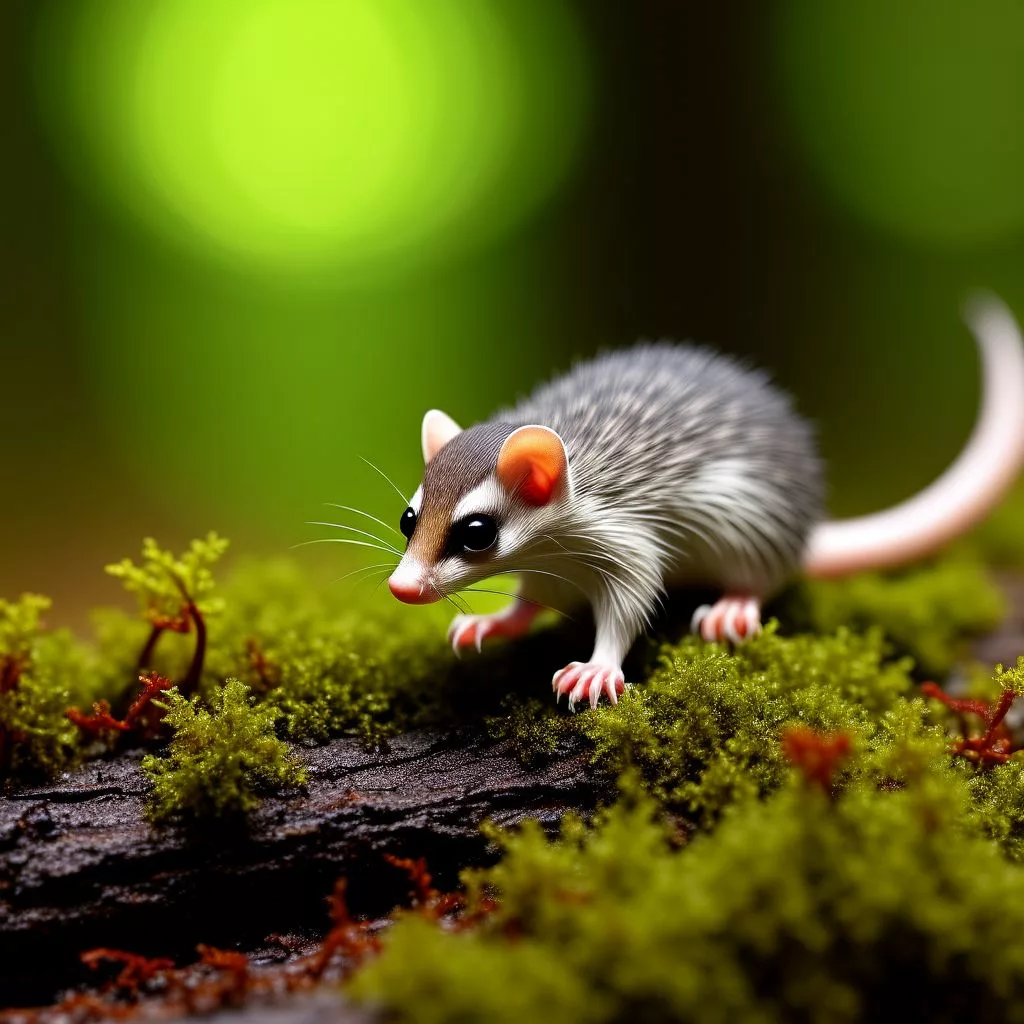
The Boosmansbos long-tailed forest shrew is a tiny, rare mammal living deep in South Africa’s Western Cape forests. Lost to science for nearly 50 years, its recent rediscovery brings hope and shows how nature can surprise us. This little shrew plays a big role in keeping the forest healthy by eating insects and living quietly among ancient trees. Protecting its home means protecting the whole forest, making this shy creature a symbol of the fight to save wild places. Its story reminds us how patience, teamwork, and care can help endangered animals survive.
What is the Boosmansbos long-tailed forest shrew and why is it important?
The Boosmansbos long-tailed forest shrew is a rare, critically endangered mammal native to the Western Cape’s Boosmansbos Wilderness. Its recent rediscovery highlights its ecological role in forest health and symbolizes ongoing conservation efforts to protect South Africa’s unique biodiversity.
Hidden Life in the Ancient Forests
The Western Cape of South Africa, shaped by dramatic cliffs, deep valleys, and thick stands of indigenous forest, has always been a haven for rare and secretive wildlife. One such animal, the Boosmansbos long-tailed forest shrew (Myosorex longicaudatus boosmani), has fascinated scientists and naturalists alike with its mysterious presence. For nearly fifty years, this small mammal vanished from field studies, sparking speculation and legend about its fate. The recent rediscovery of the shrew, nearly half a century after the last recorded encounter, has sent a wave of excitement through the conservation and scientific communities.
This region’s forests, especially the Boosmansbos Wilderness, hold extraordinary biodiversity. Among the ancient yellowwoods and ironwoods, many species have managed to persist against the odds. The Boosmansbos long-tailed forest shrew, however, stood out for its elusiveness. After its initial scientific documentation in the late 1970s, the animal faded from view, leaving only scattered notes and fading memories.
Interest in the shrew never completely dimmed. Researchers, rangers, and local guides continued to share stories of fleeting glimpses and signs, but proof remained elusive. The absence of recent sightings cast a shadow over its continued existence, and many feared it had quietly slipped into extinction.
The Shrew’s Discovery and the Geographic Puzzle
The story of the Boosmansbos long-tailed forest shrew begins in 1979, when zoologist Nico Dippenaar recognized it as a unique subspecies. Dippenaar’s research, part of a growing movement to document the rich fauna of southern Africa, involved painstaking fieldwork and a deep respect for the tapestry of life in the region. He observed that the shrew occupied a specific ecological pocket within the Boosmansbos Wilderness, isolated from other populations by the broad barrier of the Gouritz Valley.
This physical separation, a textbook example of allopatric speciation, fascinated evolutionary scientists. The geographical divide not only fostered genetic divergence but also allowed this group of shrews to adapt to the peculiar conditions of the Boosmansbos forest. The area, a mosaic of indigenous trees tucked among fynbos and weathered ridges, offered both sanctuary and challenge to its small mammal inhabitants.
Despite its scientific significance, the shrew’s population remained perilously small, hemmed in by increasing habitat pressure. Expanding agriculture, intensifying forestry, and the subtle but insidious effects of climate change combined to shrink the animal’s available home, raising alarms among those monitoring the region’s biodiversity.
Conservation Status and Emerging Threats
By 2016, concern for the Boosmansbos shrew’s survival reached a peak. The International Union for Conservation of Nature (IUCN) placed the animal on its Red List as Critically Endangered. This designation signaled more than the shrew’s scarcity; it highlighted the range of threats converging on its forest habitat. The shrinking patches of woodland, fragmented by human development and invasive species, became battlegrounds in the campaign to preserve the Western Cape’s unique flora and fauna.
Conservationists, aware of how vulnerable such small mammals are to habitat loss, began to treat the Boosmansbos shrew as a symbol of the broader struggle facing South Africa’s forests. Yet, for years, field surveys failed to turn up even a trace of the animal. Standard rodent traps, designed for larger and slower-moving species, proved ineffective for capturing this nimble insectivore. Each disappointment deepened concerns that the shrew might have disappeared forever.
Renewed Efforts and the Power of Collaboration
Planning the Comeback Search
In May of a recent year, determination and scientific curiosity inspired a new search for the missing shrew. Experts from CapeNature, Grootvadersbosch Conservancy, and the innovative Helihack team joined forces for an ambitious expedition. Drawing on the wisdom found in Nico Dippenaar’s original field notes, the group mapped out a strategy that blended past insights with modern technology.
The Boosmansbos Wilderness, even today, remains largely inaccessible by road. Dense forest, steep terrain, and lack of infrastructure discourage all but the most dedicated explorers. For this expedition, researchers relied on helicopters to quickly reach the most remote and promising sites. Helihack, known for using helicopters to combat invasive pine trees, lent their expertise to transport equipment and personnel, allowing the team to set up base deep inside the forest.
The fusion of old-school field biology and contemporary logistics gave the expedition a unique energy. As the team trekked through the cathedral-like forests, they encountered the same sensations described by early explorers—the earthy aroma of leaf litter, the hush broken only by birds and wind, and the sense of stepping into a world largely unchanged since the days of early naturalists.
Innovative Trapping and Fieldwork
Once on site, the team deployed 76 pitfall traps across a range of habitats. Carefully constructed for both scientific rigor and animal welfare, each trap included bedding, shelter, and sometimes a tempting earthworm to attract the shrew. This attention to detail reflects a new standard in fieldwork, where ethical considerations guide every step.
Initial days passed with little to show. The forest remained silent, and empty traps threatened to crush the group’s hopes. But patience paid off. On the second evening, just as the sun dipped behind the ridges, a trap revealed a tiny, long-tailed mammal unlike any other—just 13.7 grams in weight and sporting a tail nearly as long as its body. The moment electrified the team. Dr. Marienne de Villiers, a leading CapeNature ecologist, described the event as akin to “meeting a unicorn”—a creature of legend suddenly made real.
The find reignited hope not only for the shrew but for the entire ecosystem. Researchers carefully examined the animal, recorded its measurements, and collected a genetic sample that would later provide vital clues to its evolutionary history.
Understanding the Shrew’s Role
With the specimen in hand, scientists began to probe deeper questions. DNA analysis promises to reveal how closely this population relates to other forest shrews in the region, and whether the Gouritz Valley’s isolation has driven them along their own evolutionary track. Answers to these questions could inform broader conservation strategies for other isolated or endangered small mammals.
Ecologists also recognize the critical ecological role shrews play. By feeding on soil invertebrates, they help regulate populations of insects and other small organisms, shaping the forest’s food web from below. The health and presence of the Boosmansbos shrew can thus serve as a valuable indicator of forest ecosystem integrity—a concept that has become central to modern conservation biology.
Challenges and Hope for the Future
Human Dedication and Conservation Progress
The rediscovery of the Boosmansbos long-tailed forest shrew demonstrates the resilience not only of the animal, but also of the people committed to protecting South Africa’s biodiversity. Conservationists routinely face setbacks and doubts, yet they draw inspiration from moments of success like this. The sheer joy, relief, and even disbelief expressed by the team echo experiences shared by fieldworkers across the Cape, many of whom have spent years searching for “lost” species.
Local folklore and oral histories brim with tales of animals thought extinct, only to reappear unexpectedly. These stories fuel the resolve of today’s scientists and volunteers, who understand that persistence and open-mindedness remain essential tools in the ongoing fight to save threatened species.
The Road Ahead for Cape Forests
Securing the Boosmansbos shrew’s future ultimately depends on habitat protection. The forests of the Western Cape—shaped by ancient natural forces and now beset by climate change and invasive plants—require active stewardship. Conservation initiatives like Helihack, which merge technological solutions with ecological expertise, point the way forward. By ensuring access to remote areas and supporting rapid response to environmental threats, these collaborations increase the odds for both the shrew and its forest neighbors.
Ongoing genetic studies and ecological monitoring will provide more information about the shrew’s population dynamics, dispersal patterns, and breeding habits. Armed with this data, conservationists can design more effective management plans, focusing not just on the shrew but on the entire forest ecosystem.
The Shrew as a Conservation Icon
The Boosmansbos long-tailed forest shrew has emerged as a symbol of what is at stake in the struggle to protect the Western Cape’s unique landscapes. Its story captures the imagination and underscores the necessity of vigilance, adaptation, and partnership. As researchers refine their methods and deepen their understanding, they renew their commitment to safeguarding the region’s remaining wild places.
The ongoing survival of this rare shrew depends on continuous effort, innovative science, and a willingness to embrace both the challenges and the mysteries of nature. For now, the tiny Boosmansbos long-tailed forest shrew continues its life in the dappled light of one of Africa’s last great forests, reminding us all of the value of persistence and the enduring wonder of the natural world.
What is the Boosmansbos long-tailed forest shrew and why is it important?
The Boosmansbos long-tailed forest shrew (Myosorex longicaudatus boosmani) is a rare and critically endangered small mammal native to the indigenous forests of the Western Cape’s Boosmansbos Wilderness in South Africa. Its rediscovery after nearly 50 years highlights its crucial ecological role in maintaining forest health by controlling insect populations. Additionally, it serves as a symbol of conservation efforts to protect South Africa’s unique biodiversity and fragile forest ecosystems.
Why was the Boosmansbos long-tailed forest shrew lost to science for so long?
After its initial documentation in the late 1970s, the shrew became elusive due to its small size, secretive nature, and the challenges of accessing its dense forest habitat. Traditional trapping methods and limited infrastructure made it difficult for researchers to detect the species, leading to a nearly 50-year gap in confirmed sightings. This absence raised fears that the shrew might have gone extinct, until recent collaborative expeditions successfully rediscovered it.
What makes the Boosmansbos Wilderness a unique habitat for this shrew?
The Boosmansbos Wilderness is characterized by ancient indigenous forests featuring yellowwood and ironwood trees, tucked between fynbos vegetation and rugged terrain. The region’s isolation—especially separated by the Gouritz Valley—has allowed the shrew population to evolve distinctly through allopatric speciation. This mosaic of dense forest and natural barriers provides a specialized ecological niche that supports the shrew’s survival, but also makes it vulnerable to habitat loss and environmental changes.
How was the Boosmansbos long-tailed forest shrew rediscovered?
In a recent collaborative expedition involving CapeNature, Grootvadersbosch Conservancy, and the Helihack team, researchers combined historical knowledge from early studies with modern logistics such as helicopter access to reach remote forest sites. They deployed 76 ethically designed pitfall traps across the habitat. After several days of patient monitoring, the team successfully captured and identified the shrew, confirming its continued existence and enabling further scientific study.
What are the main threats facing the Boosmansbos long-tailed forest shrew today?
The primary threats include habitat loss and fragmentation caused by expanding agriculture, commercial forestry, invasive plant species, and climate change. These pressures reduce the available forest area and degrade the quality of the shrew’s habitat. Being a small mammal with limited range and population size, the shrew is especially vulnerable to these changes, which is why it is classified as Critically Endangered on the IUCN Red List.
What does the future hold for the conservation of the Boosmansbos long-tailed forest shrew?
The shrew’s survival depends on sustained habitat protection, ongoing ecological research, and active management of invasive species and environmental threats. Collaborative conservation initiatives like Helihack, which integrate technology with ecological expertise, are crucial in accessing remote areas and responding swiftly to habitat challenges. Genetic studies and population monitoring will inform targeted conservation strategies. Ultimately, the shrew embodies the broader struggle to preserve the Western Cape’s unique forests and serves as an inspiring symbol of hope, resilience, and the power of teamwork in wildlife conservation.