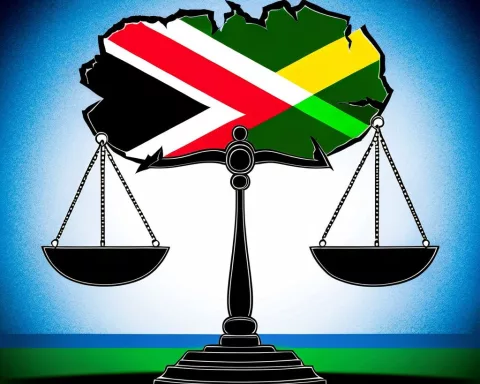
The JP Smith controversy in Cape Town began when police searched his office, sparking a heated debate about fairness and politics. Smith says he cooperated but the police kept his devices for too long and used misleading reasons to get their search warrant. Many believe the operation was more about hurting his reputation than justice. This case shines a bright light on how power, law, and public opinion clash in South Africa’s fight for true democracy. It reminds everyone that fairness and trust are vital to keep the country’s laws strong and fair.
What is the controversy surrounding the JP Smith search and seizure operation in Cape Town?
The JP Smith controversy involves a SAPS search and seizure operation criticized for alleged legal irregularities, prolonged device retention, and political motivations. It highlights tensions between law enforcement procedures, due process, and public perception in South Africa’s democracy.
Ripples in City Hall: The Morning That Changed Cape Town
A nippy autumn morning in Cape Town brought an extraordinary disruption to the city’s political landscape. The South African Police Service (SAPS) executed a high-profile search and seizure operation targeting JP Smith, the Mayoral Committee Member responsible for Safety and Security. The event splashed across news outlets, initially appearing as yet another determined push against corruption. However, as more details surfaced, it became clear that this episode was far more than a straightforward investigation—it carried complex undertones involving legal procedure, questions of legitimacy, and the intricate dance of politics and accountability.
JP Smith, a figure well-accustomed to the public spotlight, found himself at the heart of a controversy that would test not only the boundaries of law but also the trust the community places in its institutions. The legal challenge he mounted in response to the police action pushed the situation beyond a simple clash between law enforcement and a public official. Instead, it set the stage for a broader examination of how power, due process, and public perception interact in South Africa’s maturing democracy.
This saga recalls other pivotal moments in the country’s history, when the tension between state authority and personal rights reached a boiling point. Just as previous eras grappled with the proper limits of government power, today’s events continue to shape the trajectory of constitutional governance in South Africa.
JP Smith in the Spotlight: Cooperation and Delay
JP Smith has long enjoyed a reputation as a vigilant champion for urban safety, but the SAPS’s surprise raid placed his leadership under intense scrutiny. Smith describes his workplace not as a fortress, but as a center of open governance and planning. When confronted by law enforcement, he says he welcomed investigators, willingly handing over devices and sharing passwords. His actions, he claims, demonstrated a desire to collaborate rather than obstruct.
Despite these efforts to be transparent, Smith asserts that the police failed to acknowledge his cooperation. Instead, he says, the SAPS held onto his and his staff’s electronic devices far beyond the period agreed upon—what was supposed to be a brief two-week handover stretched to over three months. According to Smith, this protracted delay created unnecessary uncertainty for his office, impacting both his duties and those of his team.
The situation highlights a familiar dilemma for many public servants: balancing the imperative for accountability with the risk of falling victim to what can feel like selective or even punitive oversight. When lines blur between diligent investigation and administrative overreach, those in public office can find themselves vulnerable to both operational disruption and reputational harm.
Legal Hurdles and Alleged Misrepresentations
Smith’s appeal to the Western Cape High Court reads as a pointed indictment of the procedures followed by SAPS. He contends that the police secured their search warrants by presenting a distorted version of events. In their affidavits, Smith alleges, SAPS portrayed him as unhelpful, neglecting to mention his cooperative stance and earlier support for their inquiries.
More troubling, according to Smith, are the significant omissions in the police’s case. He claims that the magistrate who authorized the search was kept in the dark about a previous warrant application—one that had been turned down. Furthermore, police documents reportedly confused him with another individual referenced in their evidence, suggesting a case of mistaken identity that could have materially affected the magistrate’s decision.
Such procedural lapses raise important questions about adherence to the rule of law. For the South African legal system, rooted in post-apartheid values of fairness and transparency, the legitimacy of police operations depends not just on checking legal boxes, but on ensuring that those actions meet higher standards of justice and integrity. Smith’s accusations, if substantiated, could point to a disconnect between the form and substance of the country’s legal protections.
Political Undercurrents and the Battle for Reputation
It is impossible to separate Smith’s predicament from the broader political climate. South Africa’s turbulent past has often seen law enforcement and politics intertwine, with investigations sometimes doubling as power plays. Smith openly claims that the search and seizure operation was politically motivated, aimed at damaging his position in both the City of Cape Town and his political party, the Democratic Alliance.
He refers to secret recordings as evidence of a deliberate campaign against him, suggesting that his adversaries intended more than just a routine investigation. In an era where information spreads rapidly online, Smith found himself at the mercy of social media narratives and opinion pieces. Posts from a former ANC communications official, along with statements from opposing party members, fueled a public perception of guilt before any legal resolution had been reached.
This episode underlines how easily modern technology and the 24-hour news cycle can amplify or distort reality. Public figures must now fight not just legal battles, but wars of perception—a phenomenon that extends far beyond South African borders.
The Media Arena: Navigating Information and Influence
Smith’s ordeal unfolded simultaneously in the courts and the public sphere. Initially, he refrained from drawing attention to his legal struggle, hoping to prevent unnecessary speculation. But as rumors and misinformation multiplied, he stepped forward to set the record straight, attempting to reclaim control of his own narrative.
His experience mirrors a global trend: the increasing use of information as both weapon and shield. The strategic leaking of documents, viral posts, and “lawfare”—the manipulation of legal processes for political ends—now play prominent roles in public controversies everywhere. For Smith, the battle for public trust became as crucial as his court case.
The interplay between media coverage and real-world events complicates the pursuit of justice. While transparency is vital, the rush to judgment can undermine the presumption of innocence and damage reputations—sometimes irreparably.
Echoes of the Past: Lessons from History
To fully grasp the stakes of Smith’s case, one must consider South Africa’s history of state overreach. During apartheid, the government habitually deployed police as instruments of political control and repression. The present-day Constitution was crafted to break with that legacy, establishing a legal framework designed to check arbitrary use of power and protect individual rights.
Yet, the shadow of past abuses looms. Artistic and literary voices, from Nadine Gordimer to William Kentridge, have long explored the psychological and societal costs of unchecked authority. Smith’s account, with its allegations of intimidation and bureaucratic excess, evokes the persistent tension between legitimate enforcement and the risk of crossing into harassment.
Safeguarding democratic norms requires constant vigilance. South Africa’s legal institutions must not only enforce laws, but also ensure that those laws remain anchored in the principles of justice and due process.
Personal Cost and the Ethos of Public Service
Amid the legal and political storm, Smith emphasizes the emotional impact of his experience. He describes the trauma of prolonged uncertainty and disruption, but also his determination to remain steadfast in his responsibilities. Smith draws strength from the support of his peers and the broader community, invoking the spirit of resilience that has helped Cape Town weather many challenges.
His commitment to ethical leadership highlights a fundamental principle of South African public life: the need for both transparency and integrity. However, the volatility of public opinion means that even unfounded allegations can upend careers and tarnish reputations long before the truth emerges.
Broader Stakes: Governance and Accountability
The unfolding legal proceedings will scrutinize every detail of the SAPS operation, from affidavits to digital evidence. Yet the outcome will resonate far beyond the interests of one official. Smith’s case spotlights the delicate balance between enforcing the law and preserving civil liberties—a balance that sits at the heart of South Africa’s constitutional project.
Should Smith’s allegations prove accurate, they could spark a wider reckoning with the practices and culture of public institutions. The case may serve as a touchstone for broader reforms, reaffirming the judiciary’s role as a guardian against executive overreach.
The Ongoing Test of Democracy
As the courts weigh the facts, the JP Smith controversy serves as a vivid reminder of democracy’s complexity. The interplay of legal rights, political ambition, and the power of narrative ensures that disputes like this carry implications for the entire nation. In a city where the old and new stand side by side, Smith’s journey reflects the ongoing negotiation between South Africa’s past and its vision for the future.
Ultimately, this episode calls on both leaders and citizens to uphold the ideals of justice, transparency, and accountability. For South Africa, the process of building a resilient democracy is ongoing—a story written in the actions of its people, and in the public’s unwavering commitment to truth and fairness.
What triggered the JP Smith search and seizure controversy in Cape Town?
The controversy began when the South African Police Service (SAPS) conducted a high-profile search and seizure operation at JP Smith’s office. Although initially presented as an anti-corruption effort, questions quickly arose about the legality and motivation behind the search. JP Smith cooperated with investigators but alleged that police used misleading reasons to obtain their search warrant and kept his devices for over three months, far beyond the agreed two-week period. This sparked public debate about fairness, legality, and political interference.
How did JP Smith respond to the police operation and what issues did he raise?
JP Smith claims he was fully cooperative during the police operation, willingly handing over devices and sharing passwords. Despite this, he says the SAPS did not acknowledge his cooperation and instead delayed returning the seized items, disrupting his office’s work. Smith also challenged the legal process, arguing that police misrepresented facts to secure the search warrant, omitted key information, and confused him with someone else in their affidavits.
What legal concerns did JP Smith highlight regarding the search warrant?
Smith contends that SAPS presented a distorted version of events to the magistrate, omitting his cooperation and a previous rejected warrant application. Furthermore, police documents allegedly confused him with another individual, raising questions about mistaken identity. These procedural flaws, if proven, suggest possible violations of due process and undermine the legitimacy of the police operation, challenging South Africa’s constitutional commitment to justice and transparency.
Why do some believe the operation was politically motivated?
JP Smith, a prominent figure in Cape Town’s safety and security portfolio and a member of the Democratic Alliance, claims the search was part of a political campaign to damage his reputation and weaken his position. Secret recordings and social media posts from political opponents appeared to fuel negative perceptions before legal conclusions were reached. This situation reflects a broader pattern in South Africa where law enforcement actions can overlap with political maneuvering, raising concerns about misuse of power.
How did media coverage affect the controversy surrounding JP Smith?
The media played a critical role in shaping public opinion during the controversy. Early news coverage framed the search as a standard corruption probe, but social media and online narratives quickly escalated rumors and misinformation. Smith initially avoided public comment to prevent speculation but later engaged to clarify his position. The case illustrates how modern technology and “lawfare” tactics can amplify conflicts, often complicating the pursuit of justice and damaging reputations prematurely.
What broader lessons does the JP Smith case offer for South Africa’s democracy?
The incident highlights ongoing challenges in balancing law enforcement, political interests, and civil liberties in a maturing democracy. It recalls South Africa’s history of state overreach and the importance of safeguarding constitutional principles like fairness, transparency, and due process. The case underscores the need for vigilance against abuses of power and the crucial role of legal institutions in maintaining public trust and accountability. Ultimately, it serves as a reminder that democracy requires constant commitment from leaders and citizens alike.