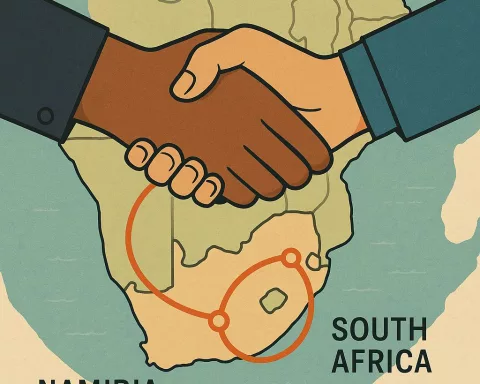
The Wildlife Forensic Academy in South Africa is a unique school where rangers and conservationists learn how to solve wildlife crimes using science and careful detective work. Instead of classrooms, students train outdoors in the wild, practicing on realistic animal crime scenes like a poached rhino or poisoned giraffe. Their hands-on lessons help protect all kinds of animals, big and small, by gathering strong evidence to catch poachers and wildlife traffickers. This academy is changing how Africa and the world fight wildlife crime, turning passion into powerful action.
What is the Wildlife Forensic Academy and how does it combat wildlife crime in Africa?
The Wildlife Forensic Academy (WFA) in South Africa trains rangers, conservationists, and law enforcement in forensic techniques to fight wildlife crime. It combines hands-on fieldwork, scientific methods, and legal frameworks to investigate poaching cases, protect diverse species, and strengthen prosecutions across Africa.
A New Kind of Classroom in the African Wild
In the heart of South Africa’s Buffelsfontein Game and Nature Reserve, the Wildlife Forensic Academy (WFA) has redefined what it means to fight wildlife crime. The reserve, long famous for its sweeping savannas and antelope grazing beneath twisted acacia trees, now shelters a very different herd: aspiring wildlife detectives, combing through simulated crime scenes in search of the smallest clue. Since its founding in 2022, the WFA has grown rapidly, emerging as a vital player in Africa’s—and the world’s—battle against the trafficking and slaughter of wild animals.
Buffelsfontein offers more than just a dramatic backdrop. The landscape itself shapes the learning experience, challenging students to adapt forensic techniques to the often harsh reality of the bush. Instead of sterile labs or urban classrooms, WFA students kneel in the dust, guided by the wind and sun, studying every trace that might unravel a poacher’s crime. Their task is urgent and deeply practical: each training day helps arm rangers, conservationists, and law enforcement with the skills needed to tip the scales against wildlife criminals.
Inside this unique academy, the presence of wildlife crime feels both real and immediate. Life-sized, painstakingly detailed taxidermy models dot the grounds—a rhino, felled by a poacher’s bullet; a giraffe, its demise dramatized by the whisper of poison; a lion, its strength undermined by human greed. Each figure anchors a carefully constructed crime scene, giving students the chance to practice the full spectrum of a forensic investigation in conditions that mirror the field’s unpredictability.
Building Skills Where They Matter Most
The academy’s curriculum reflects the complexity of wildlife crime. WFA stands apart as the world’s first institution dedicated exclusively to forensic training for wildlife protection, a direct response to increasing poaching incidents and the steady disappearance of species that rarely make global headlines. While the world mourns elephants and rhinos, many less prominent species quietly vanish, victims not only of poaching but also of indifference and inadequate legal protection.
WFA’s training blends forensic science, legal frameworks, and conservation ethics, forging a comprehensive approach rarely found elsewhere. Students learn to balance rigorous scientific protocols with the flexibility demanded by remote fieldwork. Unlike city-based forensic labs, the bush presents endless challenges: unreliable supplies, unpredictable weather, and the constant pressure of time. Here, patience and discipline become as vital as technical skill, and students quickly internalize that even a minor misstep—one careless movement or overlooked clue—can endanger a prosecution months later.
During a typical exercise, a team of trainees circles a downed rhino model. Under the watchful eyes of seasoned instructors—often local trackers with decades of bush experience—they carefully document bullet casings, collect bits of hair, and photograph every print and mark in the sand. Each action follows established evidence protocols, reinforcing the idea that justice for wildlife demands as much precision and thoroughness as any urban crime scene.
Hands-On Learning and Global Impact
Experience anchors the WFA’s philosophy. The academy insists that fieldwork provides irreplaceable learning opportunities, where students encounter the unpredictable realities of crime scene investigation—battling time, weather, and natural scavengers that can quickly erase evidence. Instructors stress the importance of method: always approach with care, meticulously record every detail, and avoid disturbing anything before it is fully documented.
WFA’s influence reaches far beyond the southern African veld. Attendees arrive from across the continent and beyond—each bringing stories of loss and determination. A conservationist from Nigeria described watching pangolins and parrots disappear from her local forests, not due to lack of will, but because courts could not convict traffickers without hard evidence. After her time at WFA, she returned home equipped to implement robust forensic procedures, convinced that combining scientific rigor with local resolve could help protect what remained.
The academy’s ethos extends to the full spectrum of biodiversity. Wendy Willson, a conservationist deeply familiar with Africa’s lesser-known species, highlights the inclusiveness of WFA’s mission. Instruction does not focus solely on iconic animals like elephants and rhinos; students receive training to investigate crimes against less celebrated creatures—pangolins, bushbabies, and birds—ensuring that all wildlife, regardless of fame, benefits from advanced protection techniques. This approach echoes the founding ideals of the conservation movement: every species deserves justice, whether or not it captures the world’s imagination.
Forging Networks and Setting New Standards
Beyond skills and knowledge, the WFA has become a hub for international collaboration. Students swap stories of both setbacks and breakthroughs, exchanging investigative techniques honed in Asia’s jungles, South America’s wetlands, or remote African reserves. These global connections foster a new breed of wildlife defender, united by a commitment to science-based justice rather than nationality or territory.
As word of WFA’s results spreads, governments, NGOs, and private donors take notice. The academy’s graduates now bring DNA analysis, ballistics, and digital mapping to bear on wildlife prosecutions—transforming cases that once relied on hearsay or circumstantial evidence into ones built on scientific certainty. Courts across Africa and beyond have started to accept evidence gathered by WFA-trained teams, setting legal precedents that strengthen the fight against poachers and traffickers.
The traditions of forensic science run deep, stretching from ancient techniques in China to the systematic analysis of the Enlightenment. WFA stands firmly within this lineage, but also expands it. Here, high-tech tools blend with the wisdom of local trackers, creating a curriculum that honors both Sherlock Holmes’ analytical prowess and the practical ingenuity of indigenous bushmen. This fusion not only produces better investigators but also connects students to the landscapes and traditions they seek to protect.
Inspiring Change, One Student at a Time
The academy’s spirit shines brightest in its daily work. In one memorable session, a group of mostly untrained rangers huddled around a model antelope caught in a snare. Their instructor pushed them to master both practical steps and to grapple with the emotional weight of their mission. Several admitted that the greatest challenge lay not in the technical details but in the irreversible loss each animal represented. Yet as they finished the exercise, a sense of pride emerged—they now possessed the skills to make a difference.
WFA has quickly become a model for wildlife protection worldwide. Its influence has sparked similar projects in other regions, with teams adapting its methods to safeguard diverse habitats and species. The academy’s leadership envisions a future where forensic training forms the backbone of wildlife law enforcement everywhere—a future where convictions rest on evidence, not rumor or chance.
As evening falls over Buffelsfontein’s golden grasslands, students gather for a final debrief, their evidence kits packed away for another day. The silence feels charged with purpose, the distant call of a nightjar the only reminder of the wild world they strive to defend. Here on these plains, the WFA continues to blend science, experience, and hope—building not just a new standard for wildlife justice, but a fragile, determined shield for the creatures who share our planet.
What is the Wildlife Forensic Academy and how does it combat wildlife crime in Africa?
The Wildlife Forensic Academy (WFA) in South Africa is the world’s first institution dedicated exclusively to training rangers, conservationists, and law enforcement officers in forensic techniques to fight wildlife crime. It combines hands-on fieldwork with scientific methods and legal protocols to investigate cases such as poaching and wildlife trafficking. By gathering strong, scientifically sound evidence in realistic outdoor settings, the Academy equips its students to protect a wide range of species and strengthen prosecutions across Africa.
How does the Wildlife Forensic Academy’s training differ from traditional forensic education?
Unlike typical forensic education that takes place in sterile labs or classrooms, the WFA trains students directly in the African bush at Buffelsfontein Game and Nature Reserve. Students work on simulated real-life crime scenes, such as poached rhinos or poisoned giraffes, learning to adapt forensic techniques to challenging field conditions — including variable weather, time constraints, and natural disturbances. This hands-on, outdoor approach develops practical skills essential for successful wildlife crime investigations in remote environments.
Which animals and wildlife crimes does the Academy focus on protecting?
While elephants and rhinos often dominate headlines, the WFA’s mission extends to protecting all wildlife affected by illegal activities. This includes less well-known species such as pangolins, bushbabies, and various birds. By training students to investigate crimes involving a broad spectrum of animals—big and small, famous and obscure—the Academy ensures that justice and protection extend beyond the iconic species to the entire biodiversity under threat.
What kinds of forensic skills and techniques are taught at the Wildlife Forensic Academy?
The curriculum blends forensic science, legal frameworks, and conservation ethics. Students learn to document crime scenes meticulously, collect and preserve physical evidence like hair, bullets, and tracks, and apply methods such as DNA analysis, ballistics, and digital mapping. Instructors include experienced local trackers and forensic experts who emphasize procedural rigor and adaptability in the field, ensuring that evidence collected can stand up in court to secure convictions against wildlife criminals.
How does the Wildlife Forensic Academy contribute to global wildlife crime prevention?
The Academy serves as a hub for international collaboration, attracting students from across Africa and other continents. Trainees share investigative techniques and conservation experiences from diverse ecosystems worldwide. Graduates return to their home countries empowered to implement robust forensic practices, transforming wildlife crime investigations with scientific precision. This global network fosters stronger enforcement, sets new legal precedents, and inspires similar forensic training initiatives beyond Africa.
What is the broader impact and future vision of the Wildlife Forensic Academy?
Since its founding in 2022, the WFA has rapidly become a model for wildlife crime combat worldwide. It is not only improving frontline enforcement but also raising awareness that wildlife protection requires scientific rigor and dedicated training. The Academy envisions a future where forensic investigation is standard practice in wildlife law enforcement everywhere, ensuring that convictions are based on solid evidence rather than guesswork. Ultimately, it strives to build a lasting shield for all species threatened by illegal activities, turning passion into powerful action.