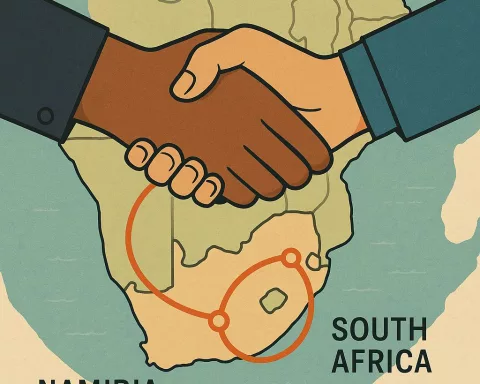
South Africa’s new two-pot retirement system splits your savings into two parts: one-third can be accessed early for emergencies, while two-thirds stay locked for retirement. This helps people handle urgent money problems without losing all their future savings. But many are withdrawing too often, risking their long-term security. Stories like Sipho’s show how easy access can lead to quick spending, leaving little when real crises hit. The system offers hope but also warns that good money habits and support are still needed to protect retirement dreams.
What is South Africa’s two-pot retirement system and how does it work?
South Africa’s two-pot retirement system splits contributions into two parts: one-third is accessible before retirement for emergencies, while two-thirds remain locked for future use. This aims to balance immediate financial needs with long-term retirement security, but repeated early withdrawals risk depleting savings.
A New Era for Retirement Savings
As September 2024 unfolded, South Africa introduced a fundamental change to its retirement savings landscape: the two-pot system. This ambitious reform aims to balance immediate financial needs with long-term security. Under the new rules, each retirement fund member’s contributions split into two streams: a third funnels into a pot accessible before retirement, while the remaining two-thirds are preserved for the future. The change brings both flexibility and risk, offering hope to many South Africans but also presenting new dilemmas.
The intention behind this structural shift emerges from recurring tension—people often face urgent financial needs and feel compelled to raid their retirement savings, undermining their future stability. The two-pot system tries to resolve this, allowing controlled, partial access without sacrificing the goal of post-retirement comfort. Government reformers hoped this innovation would prevent the wholesale depletion of pension funds, a problem that had plagued the country for decades.
Yet, as the first months of implementation revealed, the reality is more complex. Early data shows many individuals taking repeated withdrawals: nearly 75% of withdrawal requests between March and April 2025 came from people making their second or third claims. This trend, flagged by experts like Natasha Huggett-Henchie from the Actuarial Society of South Africa, signals a pattern of dependency. Instead of offering a safety net, the system may be enabling some to erode their long-term savings faster than ever before.
The Human Impact: Temptation, Necessity, and the Cost of Withdrawal
For those living paycheck to paycheck, the accessible savings pot offers immediate relief. In the early days, average withdrawals hovered around R20,000—a substantial amount for many households. But over time, as repeat withdrawals became common, the average amount dropped dramatically to R6,000. This decline doesn’t mean people need less; it means their savings pots are running dry.
Take the example of Sipho, a school administrator from Pretoria. He withdrew R25,000 when the system started, settling outstanding debts. Now, faced with new emergency expenses, he finds little left to access and must wait until the following tax year for another withdrawal. Sipho’s experience captures a broader story: the ready availability of funds may encourage hasty decisions, leaving individuals vulnerable when fresh crises arise.
For those who resisted the urge to tap into their pots immediately, the situation looks more favorable. These members now have the option to withdraw larger sums—sometimes above the R30,000 annual cap—since the system’s rules allow access to the full balance if untouched. However, this “windfall” comes with its own risks. Any withdrawal is taxed, potentially pushing recipients into higher tax brackets and reducing the value of the money received. The South African Revenue Service ensures that every withdrawal comes at a cost, making each decision a delicate balance between present relief and future needs.
Social and Economic Context: The Roots of Policy and the Burden of Obligation
The two-pot system did not appear in a vacuum. In the years following apartheid, widespread economic uncertainty pushed many people to cash out their retirement savings prematurely, often during layoffs or financial hardship. While policymakers introduced incremental changes to slow this trend, many South Africans continued to live without safety nets. The two-pot approach reflects efforts to adapt to these realities, merging modern financial planning with the unpredictable demands of daily life.
Internationally, similar systems operate in places like Australia and Chile. There, partial access to retirement funds has drawn both praise and criticism. Supporters cite increased flexibility, while critics warn of depleted retirement savings and increased poverty among the elderly. South Africa’s experience now echoes these global debates, with millions of citizens caught between the urgency of immediate survival and the imperative of future security.
Statistics from the World Bank underscore the challenge: fewer than 7% of South Africans are on track to retire with adequate comfort. Although the two-pot system could, in theory, improve this figure, a culture of repeated withdrawals threatens to undermine its intended benefits. Without careful management and widespread education, the specter of old-age poverty remains a real and growing concern.
Navigating Difficult Choices: Education, Culture, and the Path Ahead
Financial advisors have become crucial guides in this shifting environment. They encourage fund members to withdraw only for genuine emergencies, warning that every early withdrawal chips away at future security. Over time, repeated claims can erode as much as a third of an individual’s retirement savings, with the loss compounded by diminished investment growth. Still, the reasons driving these decisions are deeply personal—unexpected hospital bills, funeral expenses, or simply the temptation of quick cash.
Interestingly, anecdotal reports suggest that much of the withdrawn money doesn’t end up with banks or retailers. Instead, informal lenders—loan sharks—may be the primary beneficiaries. Many banks have not seen a noticeable uptick in loan repayments, nor have large retail stores reported a spike in big purchases. This pattern suggests that, despite the risks and costs, many South Africans use their retirement funds to navigate a shadowy world of informal debt.
Behavioral economics provides some explanation for this phenomenon. Scholars like Richard Thaler have long argued that when people are given access to liquid savings, self-control often falters. Immediate needs take precedence over distant goals, even when the long-term cost is high. Effective policy can shape behavior, but it cannot eliminate the fundamental tension between present and future.
Beyond Policy: Financial Literacy, Community, and Cultural Realities
Government efforts to educate the public about the two-pot system have included workshops, radio programs, and social media outreach. These campaigns emphasize the tax implications of withdrawals and the importance of preserving savings for retirement. While commendable, such efforts often struggle to make an impact against the daily pressures of rising living costs and stagnant wages.
Some employers have recognized the challenge and introduced financial wellness programs for their staff. These workshops teach budgeting, risk management, and the benefits of delayed gratification. Early feedback suggests that individuals who attend are less likely to drain their savings pots prematurely. However, participation varies widely, and broader societal attitudes toward money often override these interventions.
Deep-rooted cultural values further complicate the picture. In many South African families, supporting extended relatives is a shared responsibility, not a choice. Retirement savings, therefore, must stretch beyond the account holder’s own needs, reflecting the communal ethic of Ubuntu. Western models of retirement planning, which assume individual self-interest and preservation, do not always align with these broader obligations. The two-pot system, despite its flexibility, cannot fully accommodate such complexities.
The Future of Retirement Security: A Delicate Balance
As policymakers continue to monitor the impact of the two-pot system, financial institutions refine their processes to manage risks, prevent fraud, and discourage impulsive withdrawals. Economists warn that the overall health of the country’s retirement system is at stake—if repeated, early withdrawals persist, a growing share of the population may find themselves financially exposed as they age.
Stories like Sipho’s are becoming more common, reflecting the difficult trade-offs that ordinary South Africans face every day. The two-pot system stands as both a symbol of innovation and a cautionary tale, highlighting the adaptability and resilience of the nation but also the limits of legislative solutions. Whether the system ultimately delivers on its promise will depend on the willingness of individuals, employers, and government to work together, promote financial literacy, and address the deeper economic challenges that make early withdrawals so tempting.
In the end, the journey toward a secure retirement in South Africa remains a complex and evolving story. The two-pot system offers new tools, but it cannot replace the need for sound financial habits, community support, and policies that address the underlying causes of financial instability. Only time will reveal if these reforms can shift the balance toward greater security for all.
FAQ on South Africa’s Two-Pot Retirement System
What is South Africa’s two-pot retirement system and how does it work?
South Africa’s two-pot retirement system divides your retirement savings into two parts: one-third of your contributions go into a “savings pot” that you can access early for emergencies, while the remaining two-thirds stay locked until retirement. This structure aims to help individuals manage urgent financial needs without fully sacrificing their long-term retirement security. However, repeated early withdrawals can risk depleting your future savings.
Why was the two-pot system introduced in South Africa?
The system was introduced to address a longstanding issue where many South Africans prematurely withdrew their entire retirement savings due to financial hardship, often leaving them vulnerable in old age. By allowing controlled access to a portion of savings, the government hopes to reduce wholesale depletion of pension funds and balance immediate financial relief with future retirement security.
What are the risks associated with withdrawing from the accessible pot?
Frequent or repeated withdrawals can quickly erode the accessible savings pot, reducing the funds available when real emergencies arise. Additionally, all withdrawals are subject to tax, which can reduce the net amount received and may push you into a higher tax bracket. Over time, this can seriously compromise your retirement nest egg and reduce potential investment growth.
How do South Africans typically use the accessible retirement savings?
Many use the funds to cover urgent expenses like hospital bills, debts, or funeral costs. Anecdotal evidence suggests a significant portion of withdrawals ends up servicing informal lenders (loan sharks), rather than traditional banks or retail purchases. This points to broader socio-economic challenges, including reliance on informal credit and high living costs.
How are financial education and cultural factors influencing the two-pot system’s effectiveness?
Government and employers have launched financial literacy campaigns and wellness programs to encourage responsible use of the accessible pot and promote saving habits. However, these efforts face challenges from daily economic pressures and deep-rooted communal values like Ubuntu, where extended family support obligations can strain retirement savings. The system must be understood in the context of South Africa’s unique social and cultural realities.
What does the future hold for South Africa’s retirement security under this system?
The two-pot system offers greater flexibility but also highlights the need for ongoing education, strong financial guidance, and supportive policies. If current trends of repeated withdrawals continue, many South Africans risk facing old-age poverty despite the reforms. The system’s success will depend on collaboration between individuals, employers, and government to build financial resilience and address underlying economic challenges.
If you have more questions or need guidance on managing your retirement savings under this new system, consider consulting a licensed financial advisor familiar with South African retirement policies.