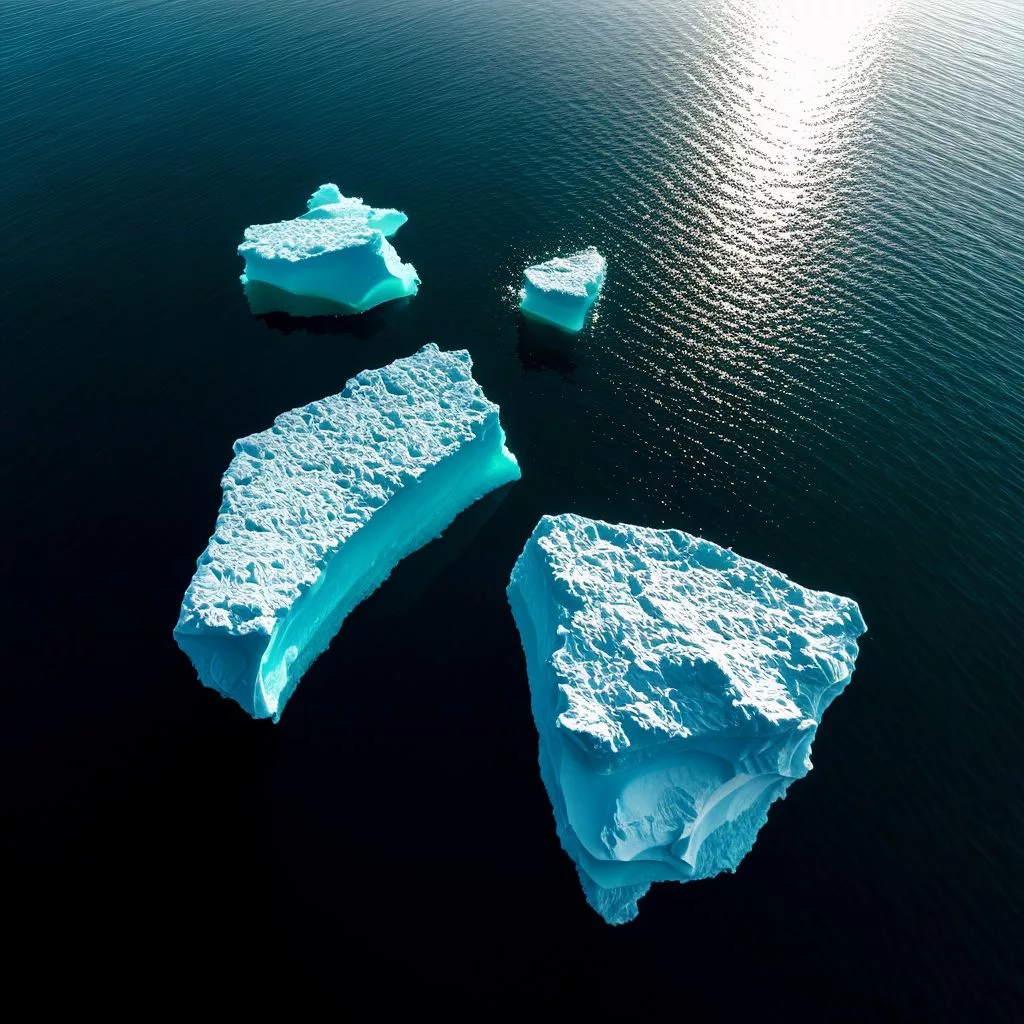
The Southern Ocean, once a steady guardian of Antarctica’s ice, is now changing in surprising ways. Instead of staying cold and fresh, its surface is growing saltier as warm, deep waters rise, melting sea ice and releasing ancient carbon into the air. This shift threatens Antarctic wildlife, like penguins and krill, and could speed up global warming while altering weather far beyond the South Pole. What seemed like a stable natural fortress is now a warning sign of a fragile climate, urging us to act before more damage unfolds.
What is causing the Southern Ocean’s climate crisis and why does it matter?
The Southern Ocean’s climate crisis is driven by a reversal in deep-water circulation, causing saltier surface waters and warmer, carbon-rich deep waters to rise. This disrupts sea ice formation, releases stored carbon, threatens Antarctic ecosystems, and influences global climate and weather patterns.
The Southern Ocean’s Legacy of Stability
Encircling Antarctica in an endless churn of wind and water, the Southern Ocean has long symbolized nature’s resilience. This vast expanse of churning grey waves, scattered icebergs, and howling winds has fascinated generations of explorers and scientists alike. For decades, the ocean’s steady rhythms inspired both awe and a sense of security; its immense Antarctic Circumpolar Current appeared to lock away the continent’s cold, keeping Antarctica’s ice intact and sheltering it from the warming influences to the north. Legendary adventurers such as Ernest Shackleton celebrated the ocean’s raw power and unwavering grip on the landscape, adding to its mythos as a bulwark against change.
Oceanographers embraced this image, trusting the Southern Ocean’s consistent patterns to provide balance to the climate system. The perpetual motion of its currents, circling Antarctica like a belt, reinforced the idea of a climate barrier—one that could keep warmer currents at bay and preserve the continent’s icy isolation. For much of modern scientific history, the Southern Ocean stood as a symbol of nature’s ability to sustain itself, a guardian of the delicate equilibrium beneath the polar sky.
But behind the familiar sights and sounds of this remote sea, subtle changes were taking place—shifts that would eventually upend long-held assumptions. The Southern Ocean’s apparent constancy, celebrated in early explorer journals and reinforced by mid-century science, masked a hidden vulnerability. Recent discoveries now reveal that what seemed immovable is, in fact, undergoing a profound and potentially destabilizing transformation.
Unmasking a Hidden Revolution
Over the twentieth and into the twenty-first century, researchers tracked a delicate interplay of temperature and salinity in the Southern Ocean. For years, the surface remained cold and fresh, thanks to the influx of meltwater from ice and snow. This upper layer encouraged the formation of sea ice each winter and locked away heat and carbon deep beneath the waves, creating natural reservoirs that buffered the planet against rapid climate shifts. The ocean’s layers acted much like protective veils, separating the frigid upper reaches from the warmer, saltier depths below.
Then, in a startling turn, scientists at the UK’s National Oceanographic Centre detected a phenomenon that upended all expectations. Their recent study, published in the Proceedings of the National Academy of Sciences, documented a dramatic reversal in the deep circulation of the Southern Ocean—something never observed before. Since 2016, the region south of 50° S has seen a surprising increase in surface salinity, even as vast amounts of Antarctic sea ice have disappeared. This shift ran contrary to established models, which predicted that melting ice would dilute the ocean’s surface, keeping it fresher.
Instead, as enormous swathes of sea ice vanished—an area equal to the entire landmass of Greenland—the ocean’s surface became saltier. This subtle but striking change, as understated as the earliest hints of modern art, signaled a fundamental reordering of the ocean’s dynamics. Warm, dense, carbon-rich waters that had been sequestered in the abyss began to rise, breaking through the former barrier of cold, fresh surface layers. Along with heat, these waters carried ancient carbon dioxide, stored for generations, towards the atmosphere. The Southern Ocean, once a fortress of stability, opened its deepest chambers, releasing their contents into the world above.
This transformation went far beyond surface appearances. The saltier surface allowed deeper, warmer water to mix upward more easily, changing the very structure of the ocean and setting the stage for a cascade of environmental consequences.
The Collapse of Climate Expectations
For generations, the Southern Ocean played a crucial role in the planetary climate system. As a massive engine redistributing heat and carbon around the globe, it acted as a thermostat—regulating temperatures not just in Antarctica, but across continents. As early as the nineteenth century, thinkers like Alexander von Humboldt suspected that the ocean’s powerful currents shaped weather patterns far from the polar regions. After World War II, scientific expeditions explored the ocean’s hidden depths and confirmed that its overturning circulation helped steady the climate from the tropics to the poles.
Up until recently, all signs pointed to enduring stability. Data from satellites and oceanographic surveys since the 1980s showed that the Southern Ocean’s surface was becoming colder and fresher, sustaining an environment where thick ice could form each Antarctic winter. Climate projections, built with both mathematical rigor and hopeful optimism, suggested that as global warming advanced, increased precipitation would further freshen the surface, paradoxically defending the ice sheet against rapid loss.
The recent observations, however, have fundamentally altered this understanding. Instead of reinforcing the continent’s icy defense, the Southern Ocean now appears to be exporting heat and carbon to the surface, accelerating the retreat of sea ice. What previously seemed a stronghold of endurance now looks like a stage for dramatic and rapid change, as the vast white landscapes that once inspired artists and explorers shrink at a pace never before recorded.
Saltier surface water, being denser, enables more robust mixing with the warmer, deeper layers below. The old layering system—cold, fresh water sitting atop warm, salty depths—has weakened, giving way to a new regime. As a result, the ocean’s ability to rebuild its winter ice has diminished. Each year, less ice forms, and as spring returns, the once-expansive frozen seascape retreats even further into memory.
The visual and climatic feedbacks compound each other. Where reflective ice used to bounce sunlight back into space, darker open water now absorbs it, intensifying the warming process—a feedback loop reminiscent of self-reinforcing patterns found in music and art. This process does not simply threaten Antarctic wildlife or local ice cover. It creates ripples with the power to affect climate far beyond the southernmost continent.
Cascading Impacts: From Antarctic Life to Global Weather Patterns
The Southern Ocean connects intimately with the planetary climate system, its currents weaving through the world’s oceans and affecting ecosystems, sea levels, and even distant weather. The reversal in deep-water circulation disrupts these patterns, with consequences that extend well beyond Antarctica’s icy margins.
Antarctic wildlife stands among the first to feel these effects. Emperor penguins, symbols of the continent, depend on stable sea ice for breeding. As ice shrinks, their colonies face existential threats, with long-standing traditions and survival strategies forced into rapid adaptation or extinction. The impact radiates outward through the food web: krill, tiny but vital crustaceans that support whales, seals, and seabirds, also require sea ice for breeding and feeding. As their habitats diminish, the entire ecosystem feels the strain, with far-reaching consequences for predators up the chain.
Meanwhile, the rising warm water brings ancient carbon dioxide, once safely locked away, back into contact with the atmosphere. If released in significant quantities, this stored carbon could drive atmospheric concentrations to new highs, intensifying global warming and hastening climatic changes worldwide. The Southern Ocean, once a powerful carbon sink, threatens to become a new source of greenhouse gases—a change with potentially dire consequences.
Alarmingly, the scale of these changes puts them on par with disruptions in the North Atlantic, particularly the much-discussed threat to the Atlantic Meridional Overturning Circulation (AMOC). Yet while the world’s attention often focuses on the North, the southern reversal holds equal, if not greater, potential to trigger abrupt and far-reaching shifts. Disturbances in Antarctic ocean currents could ripple outward, influencing weather patterns as distant as the Indian monsoon or the Amazon rainforest. The intricate web of global climate, as described by visionaries from Humboldt to James Lovelock, has never seemed more interconnected—or more vulnerable.
An Uncertain Future: Humanity at a Crossroads
Scientists now warn that we have entered a period of heightened risk—a tipping point where feedback loops could drive continued loss of ice and increased heat release for decades, even centuries. The Southern Ocean, rather than providing a buffer against human-driven change, has become a dynamic epicenter of climate transformation. Its fate is now tightly bound to our own, a stark reminder that no corner of the planet remains untouched by human influence.
In response, oceanographers and climate scientists are intensifying their efforts. Autonomous floats, advanced satellites, and coordinated field campaigns gather data at unprecedented rates, striving to parse the complex interactions driving these shifts. Their findings challenge not just scientific models but also cultural assumptions about the permanence of natural systems, forcing a reevaluation of what it means to live on a changing planet.
The Southern Ocean’s story is still unfolding, written in the language of currents, salt, and ice. As researchers race to understand and predict its next moves, the world faces a critical question: how will humanity respond to a climate system that is no longer predictable, and no longer stable? In the end, the evolving saga of the Southern Ocean serves as both a warning and a call to action—reminding us that even the planet’s most remote strongholds are part of our shared ecological destiny.
What is causing the Southern Ocean’s climate crisis?
The crisis stems from a reversal in the Southern Ocean’s deep-water circulation. This reversal brings warm, saltier, and carbon-rich deep waters to the surface, disrupting the previous layering of cold, fresh surface water over warm, salty depths. As a result, sea ice melts faster, surface waters become saltier, and ancient carbon stored in deep waters is released into the atmosphere. This phenomenon is driven by complex climate changes and ocean dynamics linked to global warming.
Why does the increasing salinity of the Southern Ocean surface matter?
Rising surface salinity signals a fundamental change in ocean dynamics. Saltier water is denser, which allows warmer deep waters to mix upward more easily. This mixing melts sea ice, reduces the ocean’s ability to form protective winter ice, and releases stored heat and carbon dioxide. The loss of reflective ice exposes darker water that absorbs more sunlight, intensifying warming in a feedback loop that accelerates climate change locally and globally.
How does the Southern Ocean affect Antarctic wildlife?
Antarctic species like emperor penguins and krill rely heavily on stable sea ice for breeding and feeding. As sea ice diminishes due to warming and increased salinity, these animals face habitat loss and population declines. Since krill are a foundational food source for many marine predators, disruptions to their life cycle ripple through the entire ecosystem, threatening whales, seals, seabirds, and the broader Antarctic food web.
What global impacts could arise from changes in the Southern Ocean?
The Southern Ocean is a crucial engine regulating global heat and carbon cycles. Its destabilization can amplify global warming by releasing ancient carbon dioxide and spreading heat through ocean currents. Moreover, shifts in its circulation patterns can influence weather far beyond Antarctica, potentially disrupting monsoons in India, rainfall in the Amazon, and broader climate systems worldwide. The changes rival those feared in the North Atlantic’s circulation, highlighting the Southern Ocean’s key role in Earth’s climate stability.
How has scientific understanding of the Southern Ocean’s stability changed?
For decades, scientists believed the Southern Ocean was a stable climate barrier that preserved Antarctica’s ice through cold, fresh surface waters. However, recent studies have revealed a surprising reversal in deep circulation since around 2016, with saltier surface waters and rising warm, carbon-rich deep water. This overturns previous models and expectations, revealing a fragile ocean system undergoing rapid and potentially irreversible transformation.
What are scientists doing to monitor and respond to these changes?
Researchers are employing advanced technologies such as autonomous ocean floats, satellites, and coordinated field expeditions to monitor temperature, salinity, and carbon fluxes in the Southern Ocean. These efforts aim to improve understanding of the complex processes driving change and to refine climate models. The data gathered are critical for predicting future impacts and guiding global climate policy, emphasizing the urgent need for coordinated action to mitigate further damage to this vital part of the Earth system.