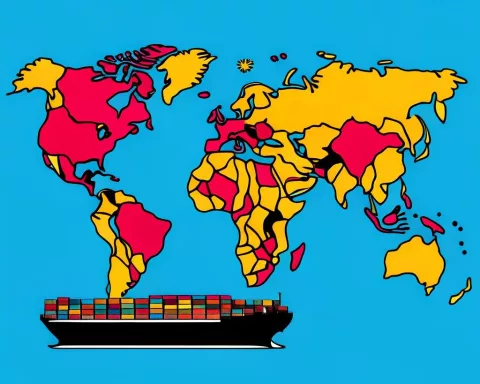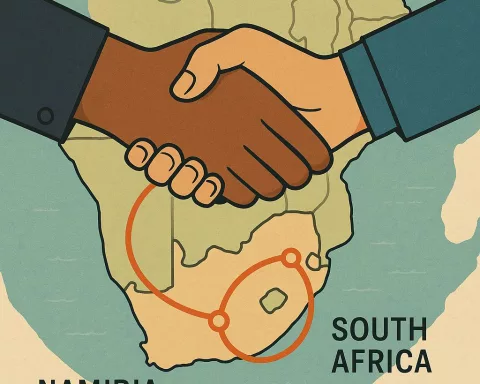
In 2024, South Africa faces a big threat as the US plans to slap 30% tariffs on its exports, risking up to 100,000 jobs, especially in cars and farming. This could shrink sales, raise prices, and hurt the country’s money value, making life harder for many people. Without strong trade deals like AGOA, South Africa’s industries and workers stand on shaky ground. The country must act fast, find new markets, and support its workers to ride out this tough storm and build a stronger future.
What is the impact of the US tariffs on South Africa’s economy in 2024?
The planned 30% US tariffs on South African exports threaten up to 100,000 jobs, mainly in automotive and agriculture sectors. These tariffs risk shrinking exports, increasing inflation, weakening the rand, and deepening economic vulnerabilities without protective trade agreements like AGOA.
Warning Bells and Economic Storm Clouds
In early 2024, Lesetja Kganyago, Governor of the South African Reserve Bank, delivered a stark forecast that jolted the nation’s financial community. He warned that up to 100,000 jobs could vanish if the United States enacts new tariffs on South African exports in August. His message struck a nerve, not only because of the sheer number of livelihoods at stake but also due to the magnitude of the threat—a threat that cuts to the heart of the country’s trade-driven economy.
The situation grows dire as the US prepares to levy a 30% tariff on goods imported from South Africa. With no protective trade agreement in place and negotiations yielding little progress, time is quickly running out. President Cyril Ramaphosa has acknowledged ongoing discussions with Washington, yet concrete results remain elusive. This lack of diplomatic breakthrough leaves two of South Africa’s most vital industries—automotive manufacturing and agriculture—standing on a precipice.
South Africa’s dependence on international trade is well-established, and this looming disruption exposes just how vulnerable the nation remains to external economic shifts. The risk is not abstract: should the tariffs take hold, they threaten to send shockwaves through both urban assembly lines and rural farmlands, undermining sectors that anchor the country’s employment and export earnings.
Automotive Industry: An Engine Under Pressure
The automotive sector forms a backbone of South Africa’s economy and social fabric. From the industrial hullabaloo of Port Elizabeth’s factories to the car-laden trains snaking out of Durban’s port, this industry accounts for more than 100,000 jobs. These positions sustain not just workers, but entire communities shaped by generations of industrial expertise and pride.
Recent developments, however, have brought anxiety to the factory floor. In the first half of 2024, South Africa watched as its exports of automotive components to the US tumbled by a staggering 82%. The catalyst: a 25% tariff imposed by the American administration. For supply chains built around access to US markets, this new reality feels like a gathering storm—uncertainty hangs heavy, with fears of further layoffs and plant closures looming large.
Not all companies face the same fate. Some have diversified into markets less exposed to US trade policy, allowing them to weather the turbulence. Others, however, remain tethered to American demand and find themselves squeezed by both tariffs and intensifying competition from Asian manufacturers, who often benefit from lower production costs. The sector’s future hinges on whether it can adapt swiftly enough or risk being overtaken by global rivals.
Meanwhile, the prospect of yet higher tariffs threatens to deepen the crisis. Should the US raise duties to 30% as planned, the ripple effect could devastate not only the automotive supply chain but also satellite industries and the broader communities that rely on steady factory employment.
Agriculture at a Crossroads
South Africa’s agricultural sector has enjoyed a banner year, with exports climbing to an impressive $13.7 billion in 2024. This achievement, however, masks underlying fragility. Farmers already contend with unpredictable weather and shifting global commodity prices, but now they face a new and formidable obstacle: protectionist trade policies.
Much of the agricultural workforce hails from rural areas where alternative jobs are scarce. Here, farm labor provides crucial income that supports families and keeps communities afloat. The impact of tariffs, therefore, extends far beyond balance sheets—it could deepen rural poverty and widen existing inequalities.
Unlike the automotive industry, which often commands higher wages and technical skills, agricultural employment remains predominantly low-skilled. If tariffs shrink export opportunities, thousands of workers could lose their livelihoods with few prospects for retraining or redeployment. The social toll would be profound, potentially destabilizing regions already vulnerable to economic shocks.
The broader agricultural value chain, including processing, logistics, and export services, would not escape unscathed. As international buyers turn to other suppliers, South Africa’s market share could erode, reducing foreign currency inflows and putting pressure on the rand. In a sector so central to both the economy and national food security, such disruptions carry far-reaching consequences.
The Erosion of AGOA and Potential Domino Effects
Since the early 2000s, the African Growth and Opportunity Act (AGOA) has provided South Africa with critical, duty-free access to the vast US consumer market. This agreement has fueled export-led growth, shored up employment across multiple sectors, and served as a cornerstone of the country’s trade strategy. For countless businesses, AGOA’s benefits have made the difference between expansion and contraction.
Today, however, this foundation shows worrying cracks. The mood in Washington has shifted, with policymakers floating the idea of restricting or even withdrawing AGOA privileges from South Africa. What once seemed a distant risk now figures prominently in the Reserve Bank’s scenario analyses and government deliberations.
The potential fallout is sobering. The Reserve Bank’s Monetary Policy Committee has modeled the likely effects: a 10% across-the-board increase in US tariffs would boost domestic inflation, push the rand as low as R21 to the dollar, and force interest rates higher. The loss of AGOA would amplify these disruptions, sparking a rapid depreciation of the currency and further increases in living costs. For an economy already battling stubborn unemployment and tepid growth, such shocks represent a clear and present danger.
Governor Kganyago has pointed out that the combination of AGOA withdrawal and new tariffs would deliver a far greater blow than either alone. The country risks repeating the economic traumas seen in other periods of sudden, large-scale shifts in global trade dynamics. The warning is not just theoretical; it is grounded in the memory of past crises, when protectionist policies abroad triggered deep, lasting scars at home.
Lessons From History and the Need for Strategic Reform
South Africa’s current predicament is not without precedent. The world has weathered similar storms before—most notably during the Great Depression, when the US’s Smoot-Hawley Tariff Act triggered a cascade of retaliatory measures and a collapse in global trade. In the aftermath, millions lost their jobs, and economies struggled to recover for years. These lessons underscore the risks inherent in protectionism and the importance of resilient, adaptive policy responses.
In the post-apartheid era, South Africa embraced integration into global markets as a pathway to prosperity. This openness yielded impressive gains but also exposed the country to the whims of international politics and the volatility of commodity cycles. The present crisis serves as a potent reminder of the delicate balance between opportunity and vulnerability.
To navigate this turbulent period, South Africa must pursue both internal and external strategies. Diversifying export markets—by deepening ties with Europe, China, and other regions—can help mitigate reliance on any single trading partner. Such efforts, however, require sustained diplomatic engagement and patient relationship-building.
Domestically, structural reforms are essential. By investing in skills development, technological innovation, and entrepreneurship, the government can help sectors adapt to new realities and uncover fresh opportunities. Targeted support for industries under threat, including retraining workers and incentivizing market exploration, will be key to cushioning the blow and fostering long-term resilience.
Comparative experience offers valuable insights. Countries like South Korea and Vietnam have responded to external trade pressures by pivoting toward higher-value industries and investing in competitiveness. While South Africa’s context is unique, these examples illustrate how crisis can serve as a catalyst for transformation, rather than decline.
The National Response: Creativity, Urgency, and the Road Ahead
South Africa has a long tradition of responding to adversity with creativity and determination. Throughout the nation’s history, periods of upheaval have often sparked bursts of innovation and collective resolve. The anti-apartheid struggle, for instance, galvanized society to overcome immense challenges and build new foundations for the future.
As the deadline for US tariffs approaches, urgency mounts. The Reserve Bank’s Monetary Policy Committee meets with increasing frequency, scanning global events for early signs of further instability. Local analysts and economists urge the government to act decisively—with robust diplomatic outreach, support for affected industries, and renewed efforts at meaningful reform.
Yet, time is short, and the stakes are high. Each passing week brings new developments, intensifying the pressure on policymakers to deliver solutions. The choices South Africa makes—both in the negotiating room and on the home front—will determine not only the immediate fate of threatened industries but also the long-term trajectory of the nation as a whole.
Ultimately, the looming tariff crisis offers a harsh but unmistakable lesson. In an interconnected world, economic security depends on agility, innovation, and the capacity to adapt in the face of shifting tides. South Africa’s ability to draw on its reserves of resilience and ingenuity will be critical as it charts a course through this storm, seeking not only to survive but to emerge stronger and more self-reliant on the other side.
What are the proposed US tariffs on South African exports in 2024, and which industries are most affected?
In 2024, the US plans to impose a 30% tariff on goods imported from South Africa, targeting key export sectors. The most affected industries are automotive manufacturing and agriculture, which together support up to 100,000 jobs. These tariffs risk shrinking export volumes, increasing production costs, and putting significant pressure on both industries’ supply chains and workers.
How could the US tariffs impact employment and local communities in South Africa?
The tariffs threaten up to 100,000 jobs, particularly in factories and rural farming communities. The automotive sector’s factory workers face potential layoffs due to decreased demand from the US, while agricultural laborers—mostly low-skilled workers from rural areas—could lose income with few alternative employment options. This job loss could deepen poverty and increase social inequalities in vulnerable regions.
What role does the African Growth and Opportunity Act (AGOA) play in South Africa’s trade with the US?
AGOA is a trade agreement that has provided South Africa with duty-free access to the US market since the early 2000s. It has been instrumental in boosting South Africa’s exports, supporting employment, and encouraging industrial growth. However, recent shifts in US policy threaten to restrict or withdraw AGOA benefits, which would exacerbate the economic damage caused by tariffs, increase inflation, weaken the rand, and raise living costs.
What broader economic consequences could arise if the US tariffs and AGOA restrictions take effect?
If the tariffs and AGOA restrictions are implemented, South Africa may face:
- Increased domestic inflation and higher prices for consumers.
- A weaker South African rand, potentially dropping to around R21 to the US dollar.
- Rising interest rates as the Reserve Bank attempts to control inflation.
- Loss of foreign currency inflows, hurting the balance of payments.
- Greater economic vulnerability, with risks of recession and worsening unemployment.
These effects would ripple beyond trade sectors, impacting the overall economy and financial stability.
What strategies can South Africa pursue to mitigate the impact of these US trade measures?
South Africa must adopt a multi-pronged approach:
- Diversify export markets by strengthening trade ties with Europe, China, and other regions to reduce dependence on the US.
- Invest in skills development, technological innovation, and entrepreneurship to increase competitiveness.
- Provide targeted support and retraining programs for workers affected by tariffs.
- Engage in robust diplomatic efforts to negotiate better trade terms or exemptions.
- Learn from countries like South Korea and Vietnam by pivoting toward higher-value industries and deeper integration into global value chains.
How is the South African government responding to this trade crisis, and what are the prospects ahead?
The government, led by President Cyril Ramaphosa, is actively engaged in discussions with US officials but has yet to secure concrete breakthroughs. The South African Reserve Bank is closely monitoring the situation, with its Monetary Policy Committee meeting frequently to assess risks. The urgency is high, and the government is urged to combine diplomatic outreach, domestic reforms, and industry support to navigate the crisis. While challenges remain significant, South Africa’s history of resilience and innovation provides hope that it can adapt and emerge stronger in a shifting global trade environment.