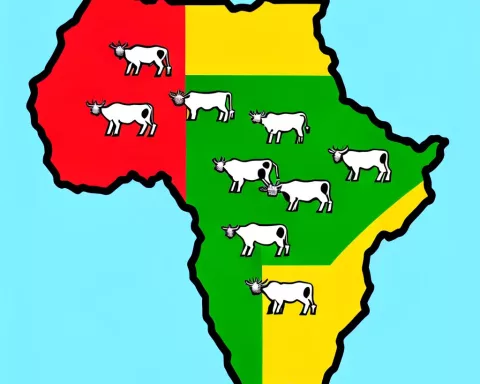
Across South Africa’s wide, sunlit farms, Foot and Mouth Disease (FMD) threatens the cattle that many families depend on for their lives and work. To fight back, the country is vaccinating hundreds of thousands of animals with vaccines made right at home, spending big on research, and tightening safety rules at markets. Farmers, scientists, and the government are joining hands, sharing knowledge and hope to stop the virus from spreading. This united effort is not just about saving animals—it’s about protecting jobs, communities, and the soul of South Africa’s farming heartland.
What is South Africa doing to combat Foot and Mouth Disease (FMD)?
South Africa combats FMD through a multi-faceted approach:
– Vaccinating over 900,000 animals with locally adapted vaccines
– Investing R1.2 billion in vaccine procurement and research
– Enhancing biosecurity measures at livestock markets
– Promoting collaboration among farmers, scientists, and government agencies to contain outbreaks and protect the economy.
A Storied Land Under Threat
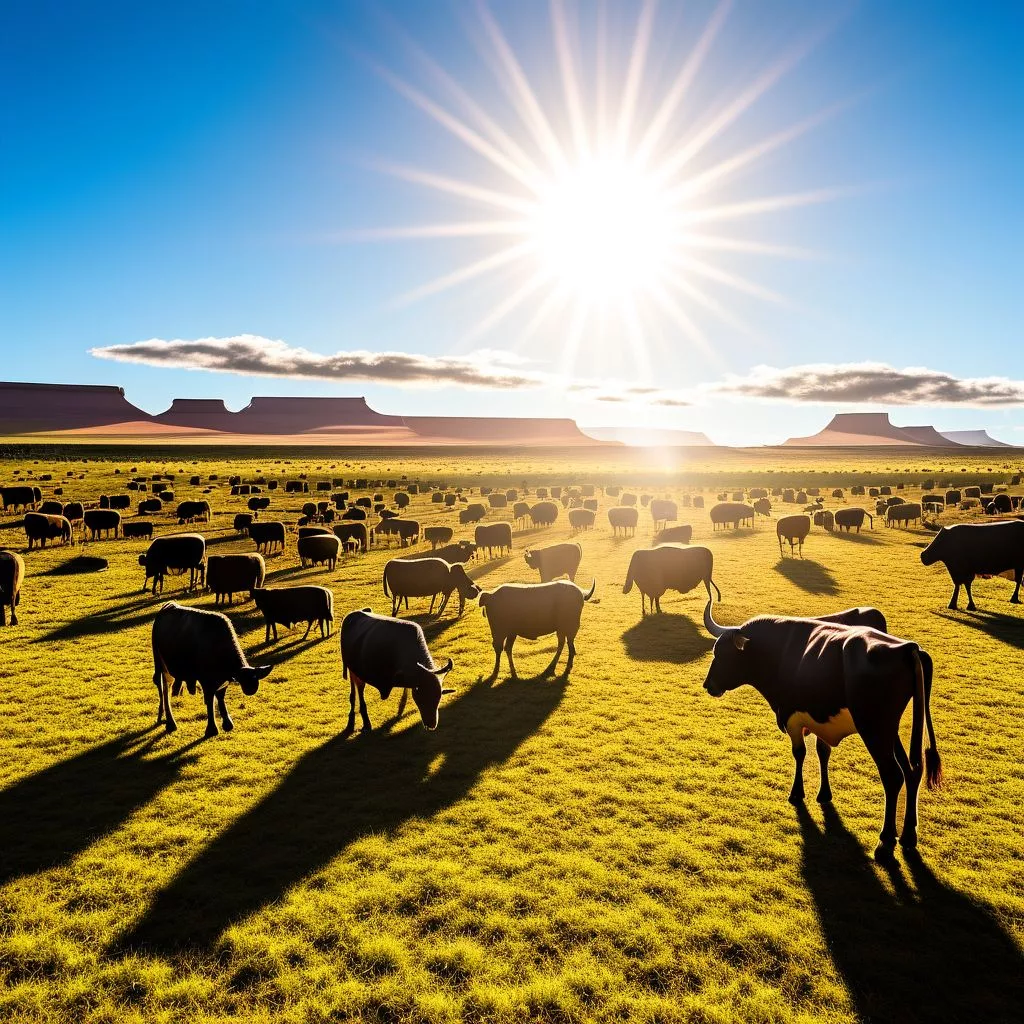
Across the expansive grasslands and sun-scorched fields of South Africa, cattle have long been a symbol of prosperity and a vital part of everyday life. Livestock farming forms the backbone of many communities, blending centuries of tradition with modern advancements. However, this vital sector now faces a formidable adversary—Foot and Mouth Disease (FMD). The arrival of this highly contagious illness has ignited concerns that stretch far beyond the farm, touching the nation’s economic stability, scientific community, and collective identity.
The warning signs appeared quickly, sending anxiety through every layer of South Africa’s agricultural sector. For those who depend on livestock, FMD is more than an animal disease—it’s a threat to livelihoods and a potential disruptor of entire communities. The virus, notorious for its rapid spread, can reduce once-flourishing herds to shadows of their former strength. As farms slow production, ripples of hardship extend outwards, hitting agricultural workers, processing plants, and even restaurants who rely on a steady supply of beef.
Karan Beef, a major player in South Africa’s meat industry, offers a stark example of FMD’s destructive power. Forced to close its three major feedlots for two months, Karan Beef experienced what Dr. Dirk Verwoerd, the company’s senior veterinarian, described plainly as “economic destruction.” Feedlots that usually teemed with activity stood silent, and the resulting losses shook not just the company, but also the vast network of suppliers, workers, and customers dependent on steady operations. The situation made it clear: FMD’s impact is both broad and deep, threatening the very roots of rural and national economies.
Mobilising Science and Resources for Containment
In the face of this crisis, South Africa’s response was swift and comprehensive. Government agencies, scientific bodies, and agricultural organisations joined forces to stop the outbreak in its tracks. Since the emergence of the most recent FMD cases, state authorities have poured over R72 million into acquiring about 900,000 doses of vaccine—an immediate move to curb the virus’s spread and protect vulnerable livestock.
Dr. Litha Magingxa, the President and CEO of the Agricultural Research Council (ARC), highlighted the significant strides made in developing a homegrown solution. “We have a vaccine that’s now being registered, and we are finalising some of the remaining trials,” he explained, reflecting a sense of achievement and hope. The urgency to create and license a South African vaccine stems from both scientific necessity and national pride, as a locally produced solution promises quicker access and better adaptation to regional viral strains.
The responsive strategy didn’t stop at vaccination. Recognising the multifaceted nature of the threat, the Department of Agriculture convened a two-day FMD Indaba—a pivotal conference designed to foster open communication and collective problem-solving. This gathering brought together public and private stakeholders, echoing the nation’s long-standing tradition of uniting in the face of agricultural challenges. Such efforts recall historic campaigns against animal diseases, proving that collaboration remains a powerful tool in South Africa’s arsenal.
Advancing Local Vaccine Production: A Strategic Imperative
Although reliance on imported vaccines provided a necessary stopgap, it also exposed vulnerabilities. High prices, potential delays, and supply chain complications underscored the urgency to produce vaccines on home soil. Local production not only promises speedier responses, but also ensures the vaccine matches the specific FMD strains circulating within South African borders, making disease control more effective and sustainable.
South Africa’s scientific community has risen to the challenge. The Department of Agriculture, ARC, Onderstepoort Biological Products (OBP), and the University of Pretoria have combined decades of expertise to accelerate the development of a domestic vaccine. Onderstepoort, renowned since its founding in 1908, has a legacy of breakthroughs against formidable animal diseases such as African horse sickness and bluetongue. Today, its laboratories hum with the energy of scientists determined to conquer FMD as well.
As final trials progress and registration looms, optimism builds that South Africa will soon gain full control over its vaccination programme. The government’s decision to earmark R1.2 billion for vaccine procurement in the 2025/2026 financial year demonstrates a commitment to long-term preparedness. Rather than viewing FMD control as a one-off campaign, officials have recognised it as an ongoing effort, crucial for safeguarding the nation’s agricultural and economic future.
Biosecurity Measures: A New Way Forward
While vaccination campaigns have formed the backbone of South Africa’s FMD response, attention has increasingly shifted toward biosecurity practices. Gaps in movement control and sanitation at animal auctions and markets played a role in the latest outbreak, highlighting the need for tighter protocols. Agriculture Minister John Steenhuisen responded by raising the profile of FMD control within the ministry, placing it under the Deputy Director-General for Agricultural Production, Biosecurity, and Natural Resources Management. A new directive targeting biosecurity at auctions is expected imminently.
These changes signal more than just a shift in policy—they represent a cultural transformation in how livestock farming is conducted. South Africa’s rich traditions, which include communal grazing and open marketplaces, now face the challenge of adapting to a tighter, science-driven approach to disease prevention. Much like the adjustments required during the Green Revolution, today’s farmers must blend traditional know-how with rigorous modern standards to protect their herds.
Moving forward, the public and private sectors are building a culture of vigilance. Workshops and community meetings aim to raise awareness about effective hygiene, movement controls, and prompt disease reporting. By instilling these practices at every level—from individual farmers to major producers—South Africa is laying a foundation for lasting resilience.
Collaboration and Community Engagement: The Indaba’s Enduring Impact
One of the most powerful outcomes of the Department of Agriculture’s FMD Indaba was its ability to bring together diverse voices. Farmers, veterinarians, industry leaders, and government officials met not just to exchange technical information, but also to share experiences—stories of hardship, innovation, and hope. The gathering underscored the fact that disease control is not the responsibility of any single group, but a collective challenge that demands unity.
Discussions during the Indaba moved beyond clinical reports, capturing the emotional landscape of the crisis. Farmers spoke of the heartbreak involved in culling infected animals, and veterinarians described the logistical hurdles of reaching remote communities. Government officials, meanwhile, encouraged private enterprises to invest in local vaccine production, framing this as both a smart business move and a patriotic duty that strengthens the nation’s resilience.
The Indaba’s collaborative spirit recalls historic assemblies that shaped South African agriculture, such as the Land Act Congresses of the early twentieth century. By fostering open dialogue and joint problem-solving, the forum ensured that every stakeholder had a voice in shaping the nation’s response to FMD.
Signs of Progress and Regional Adaptation
Despite the severity of the outbreak, recent developments offer reasons for cautious optimism. In key disease management areas like the Eastern Cape and Limpopo, effective interventions have made a tangible difference. Authorities expect to lift restrictions soon, reflecting successful containment efforts. Since July of the previous year, more than 144,000 animals have received vaccinations in the Kouga and Kou-Kamma municipalities alone—an impressive display of public health mobilisation and local engagement.
These successes highlight the importance of tailoring responses to South Africa’s varied landscapes. From the arid expanses of the Karoo to the lush Lowveld, each region brings its own set of challenges and requires nuanced strategies. Veterinarians and animal health technicians, many of whom have deep roots in the areas they serve, draw on both practical experience and formal training to reach even the most remote herds.
Regional management efforts build trust and cooperation between local communities and national authorities, showing that with the right strategies and resources, even the most daunting outbreaks can be contained.
Economic Stakes and the Road Ahead
FMD’s economic impact stretches far beyond individual farms. South Africa’s beef industry is a cornerstone of its export economy, sending products to buyers across Africa, the Middle East, and Asia. An outbreak can trigger sudden export bans, causing immediate financial loss and long-term reputation damage. Recognising these risks, the government’s significant investment in vaccine procurement and disease monitoring reflects both urgency and foresight.
As South Africa looks to the future, its strategy involves more than just emergency response. Plans include strengthening veterinary infrastructure, expanding research capacity, and bolstering public awareness. The push for locally produced vaccines has become a national goal—one that unites scientific ambition, economic security, and the country’s hard-earned resilience.
South Africa’s ongoing battle against FMD stands as a powerful testament to the strength of collaboration. Generations of farmers, scientists, and policy makers have built a legacy of ingenuity and determination. Today, as the nation faces down this latest challenge, that legacy continues—fueling a collective effort to safeguard the land, the herds, and the livelihoods that sustain the country’s heartland.
What is Foot and Mouth Disease (FMD), and why is it a threat to South Africa’s farming communities?
Foot and Mouth Disease (FMD) is a highly contagious viral disease that affects cloven-hoofed animals such as cattle, sheep, goats, and pigs. In South Africa, it poses a serious threat because it can rapidly spread among livestock, causing severe production losses. For many South African families and communities that rely on cattle farming, FMD threatens livelihoods, jobs, and the economy. Outbreaks can force farms and feedlots to close temporarily, disrupt meat supply chains, and lead to export bans, affecting both local and national economies.
How is South Africa responding to the FMD outbreak?
South Africa’s response to FMD is comprehensive and multi-pronged, including:
– Vaccinating over 900,000 animals with vaccines tailored to local FMD strains
– Investing over R1.2 billion in vaccine procurement and research to develop a domestic vaccine
– Implementing stricter biosecurity measures at livestock markets and auctions
– Facilitating cooperation between farmers, scientists, government agencies, and industry stakeholders through forums like the FMD Indaba
This coordinated approach aims not only to control the current outbreak but also to build long-term resilience against future cases.
Why is local production of FMD vaccines important for South Africa?
Relying on imported vaccines exposes South Africa to risks such as high costs, supply delays, and mismatches with local viral strains. Developing and producing vaccines domestically allows for faster, more effective responses tailored specifically to the FMD variants circulating in South Africa. Local production also strengthens national self-reliance, reduces dependency on global supply chains, and supports scientific innovation within the country. Institutions like the Agricultural Research Council (ARC) and Onderstepoort Biological Products (OBP) are leading this effort, bringing decades of expertise to the challenge.
What new biosecurity measures are being introduced to prevent the spread of FMD?
The government is tightening biosecurity protocols, especially at livestock markets and auctions, which were identified as key points of vulnerability during the latest outbreak. Measures include:
– Enhanced movement controls for animals
– Improved sanitation and hygiene practices at auction sites
– Training and awareness programs for farmers on disease detection and reporting
– Increased oversight by the Department of Agriculture under a dedicated biosecurity directorate
These changes represent a cultural shift toward a more science-driven approach that blends traditional farming practices with modern disease prevention techniques.
How does collaboration between different sectors help in managing FMD?
FMD control in South Africa is a collective effort involving farmers, veterinarians, scientists, government bodies, and private industry. Forums like the FMD Indaba create spaces for open dialogue, knowledge sharing, and joint problem-solving. This collaboration helps overcome logistical challenges, supports rapid vaccination campaigns, and builds trust between communities and authorities. By working together, stakeholders can respond more quickly to outbreaks, share resources, and develop strategies that reflect both scientific best practices and local realities.
What are the economic implications of FMD for South Africa, and what does the future look like?
FMD outbreaks can lead to significant economic losses by halting production, closing feedlots, and triggering export bans on beef products. The ripple effects extend beyond farmers to workers, suppliers, processors, and the broader rural economy. Recognizing these stakes, the government is investing heavily in vaccine development, disease monitoring, and veterinary infrastructure to protect this vital sector. Looking ahead, South Africa aims to maintain ongoing vigilance, improve regional disease management, and ensure sustainable farming practices—safeguarding both the agricultural economy and the communities that depend on it.