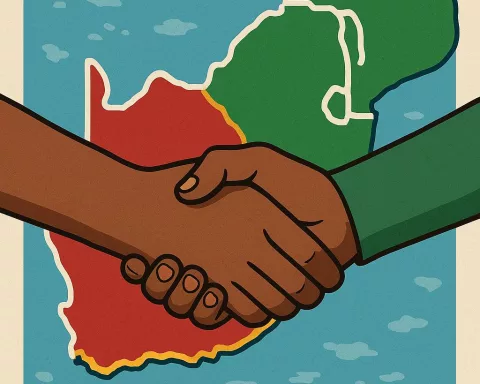
In Cape Town, people gathered outside a children’s hospital, banging pots and pans to call attention to the starving children in Gaza. They want the world to see how food and medicine are being blocked, causing innocent kids to suffer and die. Holding up signs and making noise, they stand united, echoing South Africa’s history of fighting for justice. Their protest is a powerful cry for help and a reminder that caring for others connects us all.
Why are people in Cape Town protesting with pots and pans for Gaza’s starving children?
People in Cape Town are protesting outside a children’s hospital using pots and pans to raise awareness about the deliberate starvation crisis in Gaza. Organized by solidarity groups, the protest demands urgent humanitarian aid, legal accountability, and global attention to the suffering of Gaza’s children amid a siege blocking essential food and medicine.
Echoes of Solidarity Beneath Table Mountain
Cape Town’s Red Cross Children’s Hospital stands as a silent witness to an unusual kind of commotion. On an ordinary day, the city’s noise rarely pauses, but on this afternoon, the clangor of metal reverberates along the avenue. Dozens of demonstrators gather shoulder to shoulder, not in anger but in urgent appeal, lifting their voices—and their pots and pans—in unity. Their demonstration, orchestrated by the Palestine Solidarity Campaign, Mothers4Gaza, and Healthcare Workers 4 Palestine, transforms the air into a haunting rhythm that mirrors the emptiness in Gaza’s kitchens and wards.
Handmade placards with raw, heartfelt messages flash above the crowd: “Let babies live,” “Arrest Netanyahu.” These are not merely slogans, but cries of collective heartbreak, a demand for the world’s attention. Protestors channel their grief and outrage into this demonstration, using the tools of daily life—cooking pots, kitchen utensils—as instruments of both noise and hope. Their gathering at the entrance of a children’s hospital carries deep historical resonance, drawing from South Africa’s own tradition of protest, where health institutions have long served as both sanctuaries and stages for social movements.
The organizers chose the hospital setting deliberately, evoking the memory of the 1980s when communities rallied around these spaces as fortresses during the anti-apartheid struggle. Today’s protestors draw a direct line from those historic gatherings to their present cause, linking solidarity with Gaza’s children to a broader tradition of standing up for justice and human dignity.
Starvation as a Weapon: The Crisis Unfolds
The roots of this demonstration stretch far beyond South African soil. Recent reports from Gaza reveal a devastating toll: over 40 deaths from starvation in one week alone, pushing the grim total past 110. These deaths are not simply the outcome of crop failures or economic misfortune. Protestors, including Dr. Gonda Perez, a well-respected physician, insist that these are the results of willful deprivation. “This is not hunger caused by nature. This is intentional,” she declares, lending her expertise and moral outrage to the gathering.
Over 100 humanitarian organizations, among them Médecins Sans Frontières and Amnesty International, have accused the Israeli government of blocking aid intended for Gaza’s most vulnerable. Their voices converge in a powerful open letter that describes warehouses brimming with essential supplies—food, water, medicine, and shelter—just out of reach for those inside Gaza. These resources, trapped behind checkpoints and red tape, symbolize the cruel absurdity of the situation: relief sits just across the border, while children and families grow weaker by the day.
The language used by these organizations remains clinical and precise: “The government of Israel’s restrictions, delays, and fragmentation under its total siege have created chaos, starvation, and death.” Yet the implications resonate with devastating clarity. The siege has turned the basic ingredients for survival into symbols of impotence, fragmenting relief efforts and amplifying human suffering beyond measure.
Ayesha Bagus, representing Mothers4Gaza, articulates a personal response to this crisis. The sight of malnourished children with hollow eyes and skeletal frames haunts her. “What have we become, to allow this?” she asks, her question serving as both a challenge to society’s conscience and a confession of collective failure. For Bagus and so many others, protest becomes a means to push back against apathy, refusing to let compassion become a casualty of endless tragedy.
Historical Memory and Modern Crisis
The use of famine as a weapon spans the dark annals of history. Siege warfare from Leningrad to Yemen, the forced starvation under Stalin, and the economic blockades that crippled nations—all remind us that hunger often serves as a tool of domination and control. What distinguishes Gaza’s crisis today is the instant and global visibility brought by modern media and relentless advocacy. These images and reports cut through the noise, exposing the raw realities of war to a world audience.
Dr. Louis Reynolds, a voice from the People’s Health Movement of South Africa, frames the crisis within a collapsing health system. Speaking as both a healer and an observer, he highlights the impossibility of treating severe malnutrition amid ruined hospitals and shattered supply chains. “Gaza faces a medical emergency,” he explains. “With services destroyed, doctors make impossible choices and families endure unimaginable loss.” His words give context to the anguish, rooting the protest in the stark facts of medical disaster.
This Cape Town protest is just one node in a global network of resistance. Demonstrations spring up at health facilities across the city and around the world, united by a shared call for justice. The protestors’ banging pots recall not just South Africa’s own history, but also global movements—the French cacerolazo, the Irish hunger strikes, the actions that forced society to confront the politics of deprivation. In South Africa, these gestures resonate with the spirit of ubuntu—a reminder of our shared humanity in times of crisis.
Performance, Politics, and the Power of Witness
The protest outside the hospital vibrates with dual energy: a public performance and a heartfelt plea. The rhythmic noise, the visible signs, the communal singing—all force passersby to grapple with the reality of distant suffering, creating a bridge between Cape Town and Gaza. At the same time, these actions reveal the genuine pain and solidarity of those gathered; they refuse to let the normalization of atrocity go unchallenged.
Political demands shape the protest’s message. Calls for the arrest of Israeli Prime Minister Benjamin Netanyahu highlight the urgency for legal accountability, echoing the international laws forged in response to humanity’s darkest moments. Organizers draw explicit connections between local and global struggles, framing the crisis in Gaza as not just a humanitarian issue but as a matter of moral reckoning for the world community.
The visual power of the demonstration draws on artistic traditions as well. Everyday objects—pots, pans, handwritten placards—transform into potent symbols of resistance. This approach recalls the works of artists like William Kentridge, as well as the radical tactics of Dada and Fluxus, who blurred the boundaries between art, protest, and daily experience. Through these methods, the ordinary becomes extraordinary, and the protest itself becomes a living artwork of dissent.
Despite the heavy reality they confront, protestors maintain a spirit of determination and unity. Many come as health workers or parents, finding strength in shared purpose. Through storytelling, singing, and small acts of defiance, they build community and resilience. Their actions feed a movement that stretches from Cape Town to other cities, reminding us that solidarity can ripple outward, crossing continents and cultures.
Bearing Witness and Demanding Change
History suggests that while no single protest reshapes the world overnight, collective action can spark profound shifts in public consciousness. The echoes of anti-apartheid boycotts, Vietnam War marches, and global climate strikes all began with individuals who chose not to remain silent. In today’s interconnected era, the image of pots and pans banging outside a South African hospital may travel far, provoking thought and debate in distant homes and halls of power.
The Gaza crisis, as highlighted by demonstrators and humanitarian groups, renews urgent questions about the ethics of war and the duties of the global community. The deliberate withholding of food flies in the face of well-established humanitarian principles, which forbid targeting civilians or blocking vital aid. Yet, as the protestors remind us, legal frameworks often falter when political interests take precedence, leaving ordinary people to fill the moral void.
Within the gathering, a mosaic of voices and motivations emerges. Some, like Dr. Perez, act from professional and ethical duty. Others, like Bagus, are driven by maternal empathy and the visceral shock of seeing suffering children. Many join out of historical memory, recalling South Africa’s own battles against injustice. Together, they form a chorus of dissent, insisting that Gaza’s agony not fade into background noise.
As darkness settles over Table Mountain, the protest endures. The sound of banging metal and raised voices lingers in the night, testifying to the persistence of solidarity. These acts, however small, assert that compassion must not yield to despair. In the shadow of the children’s hospital, Cape Town’s protestors offer a reminder: across borders and headlines, the fight for justice and humanity endures—one pot, one voice, one act at a time.
FAQ: Pots, Pans, and Protest – Cape Town’s Stand for Gaza’s Starving Children
1. Why are people in Cape Town protesting with pots and pans for Gaza’s starving children?
People in Cape Town are using pots and pans in a protest outside a children’s hospital to draw urgent attention to the starvation crisis in Gaza. The protest highlights how food, medicine, and humanitarian aid are being deliberately blocked from reaching Gaza’s vulnerable children, causing widespread suffering and death. This method of protest—making noise with everyday kitchen utensils—symbolizes the emptiness and silence of Gaza’s starving households, while connecting to South Africa’s rich history of using public demonstrations to fight injustice.
2. What is causing the starvation crisis in Gaza according to the protestors and experts?
The starvation crisis in Gaza is not due to natural causes but is described as “intentional” by medical professionals like Dr. Gonda Perez and supported by humanitarian organizations such as Médecins Sans Frontières and Amnesty International. They report that the Israeli government’s blockade and restrictions have created a total siege, blocking essential food, water, medicine, and shelter supplies. Warehouses filled with aid sit just outside Gaza, but bureaucratic and military barriers prevent these from reaching the people in need, turning hunger into a weapon of war.
3. Why was the protest held outside Cape Town’s Red Cross Children’s Hospital?
The protest’s location carries symbolic weight. Cape Town’s Red Cross Children’s Hospital has historically been a place where communities rallied during social struggles, including the anti-apartheid movement of the 1980s. By choosing this site, protestors connect their current cause with a legacy of health institutions as sanctuaries and stages for justice. The hospital setting highlights the shared humanity and urgency of protecting children from harm, both locally and globally.
4. How does this protest relate to South Africa’s history and global movements?
The protest draws deep parallels with South Africa’s own traditions of resistance and solidarity, including the anti-apartheid struggle where health facilities were pivotal. It also resonates with international protest practices, such as the Latin American cacerolazo (pot-banging protests) and Irish hunger strikes. These actions evoke the spirit of ubuntu—a philosophy emphasizing interconnectedness and compassion—reminding the world that the suffering of Gaza’s children is a collective moral concern transcending borders.
5. What legal and political demands are the protestors making?
Protestors demand urgent humanitarian access for Gaza’s children and families, and they call for international legal accountability, including the arrest of Israeli Prime Minister Benjamin Netanyahu, who they hold responsible for the blockade and resulting humanitarian crisis. Their demands emphasize enforcing international laws that protect civilians during conflict, including the prohibition of using starvation as a weapon of war, and ensuring that political interests do not override basic human rights.
6. What impact do the protestors hope to achieve with their demonstration?
While no single protest can instantly resolve the crisis, the demonstrators aim to break the silence and apathy surrounding Gaza’s starvation emergency. By creating a powerful visual and auditory spectacle, they seek to raise global awareness, provoke discussion, and inspire collective action. Their hope is that sustained solidarity and pressure will lead to humanitarian relief, policy changes, and a renewed commitment to justice and human dignity worldwide—reminding everyone that even small acts of protest contribute to larger movements for change.
If you want to learn more about Gaza’s humanitarian crisis or get involved in solidarity efforts, consider following organizations like the Palestine Solidarity Campaign, Mothers4Gaza, Healthcare Workers 4 Palestine, Médecins Sans Frontières, and Amnesty International.