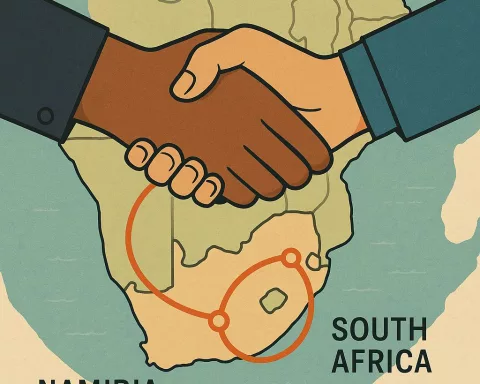
The South Africa-Germany partnership is a powerful effort to help South Africa move from coal toward clean, fair energy. With a €500 million loan, they are working to build better energy systems that protect the environment and create new jobs. This plan focuses not just on technology, but also on making sure communities and workers affected by change are supported. Together, they aim to build a future where energy is cleaner, growth is fair, and old inequalities are healed. It’s a hopeful story of two countries teaming up for a brighter, greener tomorrow.
What is the South Africa-Germany partnership for a Just Energy Transition?
The South Africa-Germany partnership supports South Africa’s Just Energy Transition (JET) with a €500 million loan to modernize energy infrastructure. It promotes sustainable energy, climate mitigation, social equity, and economic growth by combining international finance, technical expertise, and community-focused reforms.
A New Era in International Climate Collaboration
Around the world, the landscape of climate action grows ever more intricate, with certain alliances shining brightly for their impact and ambition. Among these, the partnership between Germany’s KFW Development Bank and the South African government stands out as a beacon of cooperation. Their recent agreement – a €500 million loan dedicated to South Africa’s Just Energy Transition (JET) plan – signals not just financial support, but a deeper commitment to rewriting the narrative of energy and equity in the twenty-first century.
This moment of collaboration bridges technical expertise with urgent necessity. The loan, which forms part of South Africa’s third Development Policy Operation, draws together a formidable alliance of global backers: the World Bank, African Development Bank, Japan International Cooperation Agency, and the OPEC Fund. Their collective involvement demonstrates a shared conviction: sustainable energy, environmental responsibility, and social justice must move forward hand in hand if humanity is to navigate the crossroads of industrial legacy and ecological responsibility.
Yet, this is more than an exercise in international finance or policy. The partnership draws inspiration from historical examples of bold transformation – recalling the postwar reconstruction spirit and the ideals of progress that shaped eras such as the Enlightenment. At its core, the JET plan embodies the belief that we can remake societies for the better, blending environmental ambitions with a drive for economic growth that’s both inclusive and just.
Transforming South Africa’s Energy Landscape
South Africa’s path toward energy reform is paved with both ambition and challenge. While the country has explored sustainable energy options for years, the scale of this latest financial package marks a significant step forward. The JET plan seeks to modernize the nation’s energy sector by focusing on resilient, efficient, and sustainable infrastructure. According to the National Treasury, these reforms will enhance the country’s capacity to deliver essential services while centering the energy sector and climate mitigation at the heart of development.
Germany’s consistent backing demonstrates a long-term commitment to South Africa’s journey. Since its pledge at COP26 to support the Just Energy Transition Partnership (JETP), Germany – through KFW – has provided three policy loans totaling €1.3 billion. This sustained investment protects South Africa’s transition and weaves the partnership into a global mosaic of climate solutions, where financial support acts as a catalyst for systemic transformation.
Yet the true gravity of these efforts emerges in their impact on the ground. The partnership targets not just environmental goals but also addresses historic inequalities, especially in communities long marginalized by apartheid. South Africa’s strategy revolves around “structural reforms that strengthen public institutions, attract private investment, and improve service delivery in priority sectors,” as the Treasury explains. This approach ensures that climate initiatives remain tethered to the pursuit of long-overdue social equity.
Navigating Transition: Challenges and Opportunities
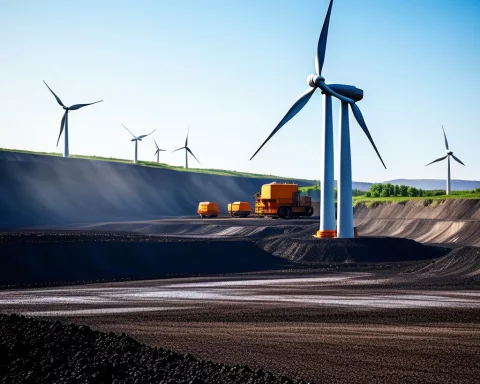
In the coal-rich province of Mpumalanga, the practical realities of the JET plan unfold in vivid detail. For generations, coal mining shaped the region’s identity, providing livelihoods but also sowing pollution and economic uncertainty. Today, as investment pours into renewable energy and grid modernization, communities brace for change. Some residents, like young people training for careers in the solar industry, see new possibilities blossoming. Others – veteran miners with deep roots in the coalfields – grapple with nostalgia and anxiety over the future.
Finance Minister Enoch Godongwana frequently highlights the complexity of guiding this transition. He emphasizes that South Africa’s energy transformation must go hand in hand with energy security, decarbonization, and inclusive growth. Job creation, economic revitalization, and social progress must all advance together. Godongwana’s vision reflects a modern understanding: in the current era, economic expansion cannot simply extract resources; it must also heal, redistribute, and bring people together.
KFW’s Country Director for South Africa, Cornelia Tittmann, underscores the importance of aligning energy reforms with South Africa’s climate commitments. By encouraging private sector participation and deepening bilateral economic cooperation, these reforms aim to foster innovation without neglecting the public interest. The JET plan leverages the creative tension between government vision and entrepreneurial drive, seeking to blend the strengths of each to propel the energy transition forward.
Designing a Just and Inclusive Transition
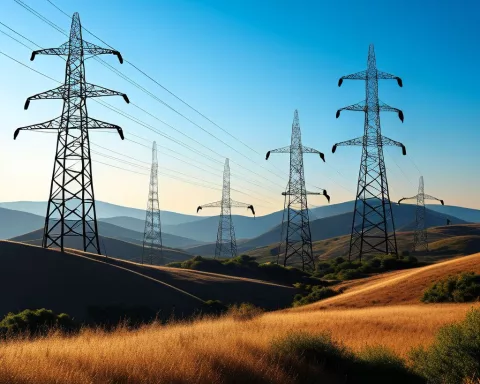
The architecture of the Just Energy Transition plan reflects its complexity and ambition. Rather than focusing on a single project, the plan coordinates a range of investments, regulatory updates, and capacity-building programs. One critical area targets the upgrading of South Africa’s electricity transmission grid, which suffers from years of underinvestment and inefficiency. By revamping this infrastructure, the government hopes to unlock a wave of renewable energy initiatives, decentralize energy production, and reduce the nation’s overwhelming reliance on coal – a legacy of its industrial past.
Moving away from an 80% dependence on coal will not come easily. The process requires not just technical upgrades but also careful management of labor transitions, community participation, and political negotiations. The government champions the principle of a “just transition,” ensuring fairness in distributing both the benefits and challenges of change. This commitment echoes philosophical arguments for justice, which call for special consideration of those most vulnerable during times of transformation.
Global institutions like the World Bank and African Development Bank, once focused mainly on large-scale infrastructure, now place climate change at the center of their mission. The KFW loan embodies this shift, demonstrating how traditional development finance can adapt to promote sustainability and inclusion. The partnership between South Africa and Germany thus becomes a model for international cooperation in the era of climate urgency.
A Blueprint Informed by History and Innovation
Looking back, the world has witnessed several energy revolutions – the move from wood to coal, then to oil and hydropower. Each shift reshaped economies, cities, and daily life. Today’s transition carries even greater stakes, as nations unite across historic divides to combat a crisis that transcends borders. Germany’s own journey – from leading the Energiewende to pioneering renewable energy policies – offers valuable lessons, not as a rigid formula but as guidance for designing adaptive, inclusive change.
This partnership honors both pragmatism and idealism. The JET plan focuses on tangible outcomes: new jobs, training centers, modern infrastructure, and social uplift. At the same time, it insists on the possibility – and necessity – of a different future for energy and society. In the townships surrounding Johannesburg, emerging training hubs for green jobs present glimpses of transformation, even as old patterns of extraction slowly yield to fields of solar panels and wind turbines.
No transformation comes without setbacks. Regulatory challenges, community resistance, and the uneven pace of change remain real obstacles. But the shift is underway, powered by the interplay of local ingenuity, international support, and a shared refusal to accept the status quo.
Charting the Path Forward
At its heart, the South Africa-Germany partnership represents a dynamic negotiation between tradition and innovation, local circumstances and global imperatives, public leadership and private initiative. Out of this interplay, new forms of creativity and cooperation emerge, pushing the boundaries of what is possible in climate action.
This alliance is not simply about technical solutions or financial transactions. It is a living experiment in how nations can collaborate to ensure that the transition to clean energy uplifts communities, strengthens economies, and repairs the injustices of the past. The JET plan stands as a testament to the power of partnership – rooted in shared purpose, informed by history, and committed to building a future in which prosperity and sustainability walk hand in hand.
What is the South Africa-Germany partnership for a Just Energy Transition?
The South Africa-Germany partnership is a joint initiative focused on supporting South Africa’s transition from coal-based energy to cleaner, more sustainable sources. Germany, through its KFW Development Bank, has provided a €500 million loan as part of South Africa’s Just Energy Transition (JET) plan. This partnership combines financial support, technical expertise, and policy reforms to modernize South Africa’s energy infrastructure while promoting social equity, climate mitigation, and economic growth.
Why is the Just Energy Transition important for South Africa?
South Africa’s economy and energy sector have long relied on coal, which has created environmental pollution, economic challenges, and social inequalities – especially in historically marginalized communities. The Just Energy Transition aims to reduce dependence on coal, upgrade aging energy infrastructure, and expand renewable energy sources. Importantly, it focuses on ensuring that workers and communities affected by the shift receive support, including retraining and job creation, making the transition fair and inclusive.
How does the €500 million loan from Germany support the energy transition?
The €500 million loan is part of South Africa’s third Development Policy Operation and funds projects that improve energy systems – such as modernizing the electricity grid, boosting renewable energy uptake, and enhancing energy efficiency. This financial backing also supports structural reforms that attract private investment, strengthen public institutions, and improve service delivery, all while aligning with South Africa’s climate commitments and social goals.
What challenges does South Africa face in moving away from coal?
Transitioning from coal is complex due to South Africa’s heavy reliance on it for electricity (around 80%) and the economic importance of coal mining, especially in provinces like Mpumalanga. Challenges include managing job losses in coal sectors, upgrading outdated infrastructure, ensuring energy security, and addressing community concerns. The JET plan addresses these by balancing decarbonization with social inclusion, promoting new green jobs, and involving affected communities in the process.
How does the partnership ensure that the energy transition is just and inclusive?
The partnership emphasizes fairness by supporting social programs that help workers and communities affected by the energy shift. This includes job training for emerging green industries (such as solar and wind), strengthening governance to deliver equitable services, and designing policies that distribute benefits and burdens fairly. The approach recognizes historical inequalities and aims to heal those through structural reforms and community participation.
What global significance does the South Africa-Germany partnership hold?
This partnership exemplifies modern international cooperation on climate action by blending finance, technical knowledge, and social justice. It includes collaboration with other global institutions like the World Bank and African Development Bank, reflecting a shift in development finance to prioritize sustainability and inclusion. Germany’s experience with its Energiewende (energy transition) provides valuable lessons, making this a potential model for other countries navigating energy transitions in ways that promote both prosperity and environmental responsibility.