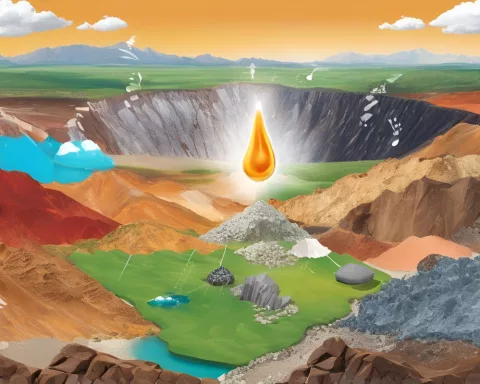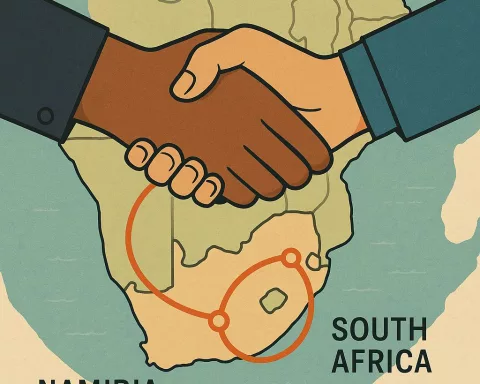
The G20 is working hard to make sure critical minerals like lithium and cobalt are used in a fair and smart way to help build a cleaner, greener future. They want mining to be ethical, with local communities benefiting through jobs and businesses, not just exporting raw materials. By encouraging new technology, transparency, and cooperation between countries, the G20 hopes to protect the environment and create better lives for people around the world. This is about more than minerals – it’s about building a fair and sustainable world for everyone.
What is the G20’s role in managing critical minerals for a sustainable future?
The G20 promotes responsible critical minerals management by encouraging ethical mining, local value addition, and community inclusion. It supports innovation, transparency, and global cooperation to ensure these minerals drive clean energy, economic growth, and social equity worldwide.
The Global Stage for Critical Minerals
Delegates gathered at the Radisson Blu in Johannesburg, their conversations echoing beneath the vaulted ceilings. The winter light streamed in, illuminating a truly international assembly: government officials, industry specialists, and activists, all gathered for the G20’s Critical Minerals Dialogue. Deputy Minister Phumzile Mgcina, notable for her poise and conviction, presided over the closing session. She urged participants to look beyond South Africa’s boundaries and consider a future shaped by more than just commerce.
At the heart of these discussions lay the earth’s most precious resources: lithium, cobalt, nickel, graphite, and others. These elements do more than keep economies moving; they form the backbone of clean energy technologies, digital infrastructure, and new manufacturing. Their importance is undeniable in a world seeking both climate resilience and economic transformation. As nations strive for cleaner growth, the demand for these minerals – and the responsibility to manage them wisely – has never been greater.
Critical minerals link resource geology with modern aspirations. Their efficient and fair use will influence not only individual economies, but the global balance of power and the very shape of technological progress. The G20’s critical minerals agenda, therefore, is about more than mining: it is about the kind of future we build and who gets to share in it.
A Blueprint for Value and Inclusion
Throughout history, mineral-rich regions have often exported raw materials, gaining little in return beyond fleeting booms and environmental scars. Deputy Minister Mgcina’s address challenged this legacy. She called for a decisive shift from simply exporting ore to processing and refining it locally. This approach – known as beneficiation – enables producer countries to create industries, jobs, and technological expertise at home. When nations like South Africa or Brazil refine their own manganese, for example, they stimulate new businesses, encourage innovation, and anchor sustainable economic growth.
Past models left many communities behind, with profits flowing outward and few long-term benefits for local people. In Johannesburg, the G20’s framework put community empowerment at the center of minerals policy. Governments and companies alike must now explore ways to build supply chains that add value and encourage entrepreneurship where mining takes place. This vision requires investment in infrastructure, education, and local enterprise, creating a new generation of skilled workers and business owners.
Local value addition marks not just an economic change, but a social one. It is about dignity – ensuring that the wealth buried beneath the soil brings tangible improvements in daily life. When the resources of a nation fuel its own development, rather than amassing profits for distant investors, the entire society benefits.
Ethics, Equity, and Responsible Extraction
The push for critical minerals must not sacrifice ethics or human well-being. Deputy Minister Mgcina emphasized that responsible mining involves more than just compliance – it is a moral imperative. Companies must protect workers’ rights, uphold safety and health standards, and ensure that communities share in the benefits of extraction. Social and Labour Plans (SLPs) – which obligate companies to invest in local health, education, and infrastructure – have become a model for responsible resource management.
Mining regions around the world bear the scars of environmental neglect and economic exclusion. From Zambia’s copper mining towns to South Africa’s platinum belt, communities have too often been left with dust, noise, and little else. The G20’s renewed focus on social responsibility aims to reverse this trend by mandating meaningful consultation, transparent governance, and ongoing investment in affected areas.
A critical dimension of the new framework is its emphasis on inclusion. Women, who have historically been sidelined in the mining sector, and young people, who inherit the world now being shaped, both deserve opportunities. In Ghana, for instance, women’s mining cooperatives are opening doors to finance and markets previously closed to them. The G20’s approach urges all nations to break down barriers, create apprenticeships, and support leadership among marginalized groups.
Governance, Innovation, and Global Cooperation
Illicit mining remains a persistent threat, draining public revenue, undermining trust, and often fueling conflict. The Deputy Minister called for robust systems of oversight and public accountability. Countries like Chile, with its transparent mineral licensing and stakeholder engagement, offer a roadmap for others. Open records, independent audits, and community monitoring help ensure that resource wealth supports national development and not just private gain.
Technology is transforming every aspect of mineral exploration, extraction, and processing. Advances like satellite mapping, real-time environmental sensors, and AI-driven logistics promise greater efficiency and reduced environmental harm. Still, these innovations present challenges. Automation, for example, can improve safety but also reduce the number of traditional jobs; new extraction methods may introduce ethical dilemmas even as they solve others.
The G20’s critical minerals agenda supports a balanced approach. Governments and corporations must work together to harness technology in ways that protect jobs, foster skills development, and prioritize environmental stewardship. Cleaner production, improved recycling, and transparency tools all play a role in building a modern, sustainable industry.
Charting a Collaborative Path Forward
As the session came to a close, participants reflected on the day’s achievements and ongoing work. The G20 Critical Minerals Framework is more than a plan; it is an evolving guide designed to promote shared prosperity, ethical practice, and environmental health. Its strength lies in its inclusivity: a wide range of voices, from technical experts to local activists, shape its priorities and hold its leaders accountable.
The conversations in Sandton, Johannesburg, represented a microcosm of the world’s hopes and challenges. For the G20, critical minerals are not just commodities – they are the building blocks of a new era, one that can be defined by fairness, innovation, and the responsible stewardship of the planet. By embracing local value creation, ethical leadership, and technological progress, nations can transform their mineral wealth into a lasting foundation for human well-being.
This collective effort, built on transparency, inclusion, and shared responsibility, offers a path toward a future where critical minerals fuel not only economies, but also sustainable, equitable societies. The story of critical minerals is still unfolding, and its next chapters will be written by the decisions made in meeting rooms like those in Johannesburg – and by the communities whose lives will be touched by what comes next.
What is the G20’s role in managing critical minerals for a sustainable future?
The G20 promotes responsible management of critical minerals – such as lithium, cobalt, nickel, and graphite – by encouraging ethical mining practices, local value addition (beneficiation), and community inclusion. It supports innovation, transparency, and international cooperation to ensure these minerals help drive clean energy, economic growth, and social equity worldwide. The goal is to balance economic development with environmental protection and social well-being.
Why does the G20 emphasize local value addition rather than just exporting raw minerals?
Historically, many mineral-rich countries have exported raw materials with little local benefit, resulting in fleeting economic booms and environmental damage. The G20 encourages beneficiation – processing and refining minerals locally – to create jobs, build industries, foster innovation, and stimulate sustainable economic growth. This approach anchors wealth within mining regions, empowering communities and ensuring the mineral resources contribute meaningfully to national development and social progress.
How does the G20 framework address ethics and social responsibility in mining?
The G20 considers responsible mining a moral imperative. It stresses protecting workers’ rights, enforcing safety and health standards, and ensuring that local communities share in mining benefits. Social and Labour Plans (SLPs) require companies to invest in local health, education, and infrastructure. Moreover, the framework promotes meaningful community consultation, transparent governance, and inclusion of marginalized groups – especially women and youth – to build equitable mining sectors worldwide.
What measures does the G20 support to improve governance and combat illicit mining?
The G20 advocates for robust oversight, transparency, and public accountability to tackle illicit mining, which drains revenue and fuels conflict. It highlights best practices from countries like Chile, including transparent mineral licensing, stakeholder engagement, open records, independent audits, and community monitoring. These governance tools help ensure that mineral wealth benefits national development rather than private interests or illegal operators.
How is technology shaping the sustainable management of critical minerals according to the G20?
Technological advances – such as satellite mapping, real-time environmental sensors, AI-driven logistics, and automation – offer opportunities for safer, more efficient, and environmentally friendly mineral exploration and processing. The G20 promotes balancing technological innovation with job preservation, skills development, and environmental stewardship. It also encourages cleaner production methods, improved recycling, and digital transparency tools to modernize mining while minimizing its ecological footprint.
What is the broader vision behind the G20’s critical minerals agenda?
Beyond minerals and mining, the G20’s agenda is about building a fair, sustainable, and inclusive future. It seeks to transform how mineral wealth is used so that economic benefits are widely shared, social equity is promoted, and environmental health is prioritized. By fostering global cooperation, ethical leadership, and local empowerment, the G20 envisions critical minerals as foundational to a new era of clean energy, technological progress, and improved quality of life for communities worldwide.