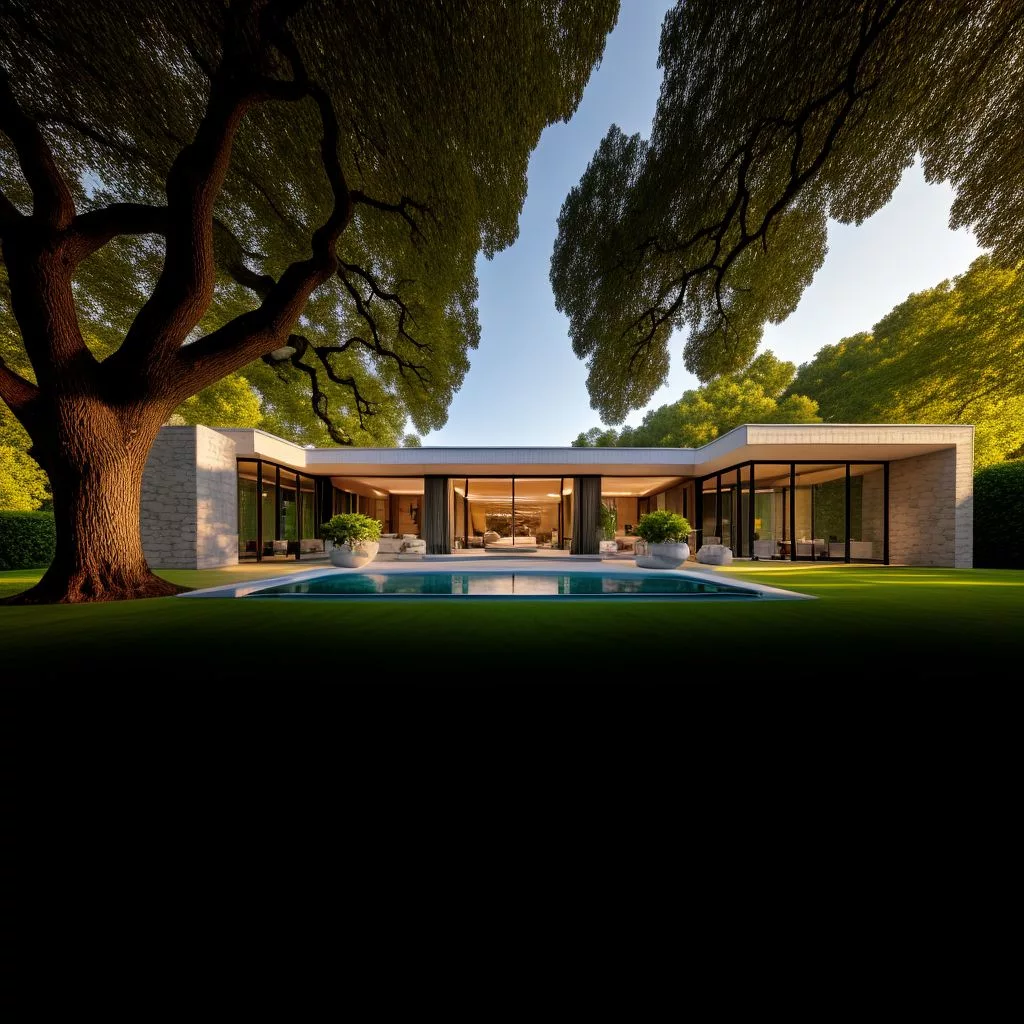
Paul Mashatile’s expensive Constantia mansion has sparked big questions in South Africa. Many wonder how he can afford such a luxury home on his official salary, especially since the monthly costs far exceed his declared income. The house, along with other pricey properties linked to him and his family, has led to accusations of corruption and hidden wealth. This controversy shines a light on deeper worries about fairness, trust, and power in the country. For many, the mansion is not just a house but a symbol of the ongoing fight for honesty and equality in South Africa.
Why is Paul Mashatile’s Constantia mansion controversial?
Paul Mashatile’s Constantia mansion is controversial due to questions about how he can afford the R28 million property on his official salary. Concerns include:
– Potential undisclosed sources of income
– Ownership links to family members
– Allegations of corruption and nepotism
– Ongoing investigations by the Hawks and opposition parties
The Constantia Villa: More Than Just Modern Architecture
In the leafy heart of Constantia, Cape Town’s legendary suburb known for its grand estates and centuries-old oak trees, a striking villa towers above its surroundings. The home’s sleek combination of glass and stone sparkles in the Western Cape sunlight, drawing inevitable attention from locals and visitors alike. Yet, the growing curiosity surrounding this R28 million residence has little to do with its cutting-edge design or architectural merit. Instead, it has become ground zero for a national conversation about power, privilege, and the blurred lines between public duty and private gain in post-apartheid South Africa.
As news of the property spread, the focus quickly shifted from the house itself to its most notable occupant: Paul Mashatile, South Africa’s Deputy President. Known for his resilience in the turbulent world of national politics, Mashatile has cultivated a reputation as someone who can weather both personal and political storms. His journey from the trenches of activism to one of the nation’s highest offices reflects the complex narratives that have shaped modern South Africa. Now, however, the revelation that Mashatile possesses – directly or indirectly – not just this Constantia villa but also two other luxury properties worth a combined R65 million, has sparked debate and concern. The controversy goes beyond real estate; it speaks to wider issues of integrity, transparency, and the persistent legacy of inequality.
The questions swirling around Mashatile’s property holdings are not unfolding in isolation. They resonate within a society still grappling with its past, where the appearance of sudden wealth in the hands of a public official inevitably rekindles suspicion. In a country where the memory of apartheid’s engineered inequalities remains fresh, and where many still struggle to access adequate housing, the story of a single luxury mansion commands attention – and demands answers.
The Math Behind the Mansion: Financial Realities and Public Scrutiny
The loudest voice in the current debate belongs to Zwelinzima Vavi, the former general secretary of COSATU, whose roots in the labour movement have earned him a reputation for fearless advocacy. Vavi has taken to social media platform X to lay out a meticulous, point-by-point challenge to the official narrative. He has dissected the publicly available numbers, questioning how a public servant like Mashatile, who earns an official annual salary of R3.2 million (about R161,200 after deductions each month), could afford monthly mortgage repayments that would far exceed that income.
To drive his point home, Vavi calculated that the monthly payment on a R28 million home would clock in at around R248,000 – well beyond Mashatile’s means according to his government salary. “No bank will approve the loan based on the government salary,” Vavi wrote, suggesting that another source of income must be at play. This line of reasoning cuts to the heart of South Africa’s ongoing struggle to reconcile the realities of high office with the ideals of accountability and openness.
Vavi’s concerns echo broader anxieties that have long plagued South African politics: the fear that public office is sometimes used as a stepping stone to personal enrichment. These suspicions grow louder in a context where many see little improvement in their own day-to-day lives, despite promises of transformation and redress.
Luxury property specialists have weighed in as well. Gary Phelps, who deals with some of Cape Town’s most exclusive homes, tells a similar story. In a televised interview, he broke down the numbers: not only does the Constantia property require a quarter of a million rand each month in mortgage payments, but rates and taxes alone can run up to R40,000, even before factoring in regular maintenance and other costs. Phelps estimates that a potential buyer would need a monthly income of around R1.2 million to comfortably afford such a home. This analysis only intensifies the scrutiny on Mashatile, whose declared income falls far short of these requirements.
Layers of Ownership: Family Ties and Public Doubt
The intrigue deepens when one considers that Constantia is not Mashatile’s sole luxury asset. He also owns a mansion in Waterfall, Midrand, valued at R39 million, as well as another high-end residence in Kelvin, Johannesburg. Each property comes with its own set of questions, expanding the scope of public interest and deepening the sense of mystery surrounding Mashatile’s finances.
Official asset declarations, meant to ensure transparency among government leaders, list only a pension fund and an Old Mutual investment trust under Mashatile’s name. The absence of any businesses or other sources of income in these disclosures raises red flags. In response to the mounting questions, Mashatile has denied direct ownership of the Cape Town and Johannesburg homes. He attributes the Constantia villa’s purchase to his son-in-law, Nceba Nonkwelo, who is married to Mashatile’s daughter, Palesa. As for the Waterfall estate, Mashatile claims his sons and son-in-law acquired it together, financing it through a standard bank loan, and use it as a secure family residence. The Hawks, South Africa’s elite crime investigation unit, are reportedly probing these transactions.
Family connections have always played a central role in South African life, serving both as sources of strength and, at times, as shields against outside scrutiny. This dynamic is hardly unique to South Africa. History offers countless examples, from the Medici dynasty of Renaissance Florence to the powerful clans of modern democracies, where family ties often blur the boundaries between public responsibility and private interest. In Mashatile’s case, the reliance on family members to explain the origins of his property empire only intensifies public suspicion.
Keith Khosa, Mashatile’s spokesperson, insists that the Deputy President’s sons, Thabiso and Tinyiko, have not benefited from government tenders linked to departments their father managed. Still, such denials have not calmed the growing sense of unease. The opposition Democratic Alliance (DA) has seized the moment, filing criminal complaints alleging corruption, nepotism, and patronage. The DA contends that Mashatile ultimately benefits from a complex network of transactions, though investigations remain ongoing.
Property, Power, and the South African Dilemma
The controversy around Mashatile’s residences taps into longstanding currents of distrust toward government officials, especially around issues of wealth accumulation and transparency. In the years since Nelson Mandela’s presidency, South Africa has witnessed several high-profile scandals where public service appeared intertwined with personal prosperity. These episodes have eroded the belief that holding office equates to a life of sacrifice, fuelling the impression that political positions can open doors to privilege.
The Constantia villa itself, with its expansive windows and perfectly landscaped grounds, stands as both a literal and symbolic structure. On one hand, it represents the aspirations of a country eager for modernity, progress, and global stature. On the other, it serves as a stark reminder of the persistent gap between those who hold power and those left behind by history and policy. The sight of such luxury in a city marked by deep economic divides and lingering effects of apartheid-era exclusion provokes uncomfortable comparisons. The writings of thinkers like Frantz Fanon and Steve Biko, who both warned about the resilience of inequality, find renewed relevance in this context.
Media scrutiny, public investigation, and ongoing debate continue to keep the story alive. The DA’s legal action, the Hawks’ probe, and relentless questions from civil society ensure that Mashatile’s properties remain in the spotlight. The unresolved nature of the controversy means that the Constantia villa stands not only as a monument to individual ambition, but also as a reminder of the unfinished work of building a transparent and just society.
The Larger Conversation: Wealth, Accountability, and South Africa’s Future
As the saga unfolds, the significance of Mashatile’s property portfolio extends far beyond the boundaries of Constantia or even the specifics of a single politician. The debate speaks to the deeper challenges facing South Africa’s democracy: how to create a political culture anchored in accountability, how to confront the enduring legacies of inequality, and how to ensure that public office serves the many rather than the privileged few.
Historical parallels offer sobering lessons. In 19th-century France, the Dreyfus Affair laid bare the corrosive effects of secrecy and showed that transparency remains essential for any republic to thrive. The opulence of America’s Gilded Age, with its palatial mansions and spectacular fortunes, eventually sparked public outrage and demands for reform. In each case, the interplay between the architecture of power – both literal and metaphorical – and the expectations of the people shaped the nation’s destiny. South Africa finds itself at a similar crossroads.
Ultimately, the questions raised by this case are not merely about bank statements or property deeds. They go to the heart of what it means to lead in a democracy, and the trust that citizens place in elected officials. Mashatile’s story, with its mix of familial complexity, financial ambiguity, and political intrigue, plays out like a contemporary drama echoing themes from both history and literature: loyalty, suspicion, ambition, and accountability.
While the future of the Constantia villa and the investigations surrounding it remains uncertain, one thing is clear: South Africans will continue to demand answers about who benefits from the country’s resources and how those in power are held to account. In this sense, the house beneath Constantia’s ancient oaks has become more than just a home – it has become a symbol of the broader struggles still shaping the nation’s democratic journey.
FAQ: Power and Property – The Controversy Around Paul Mashatile’s Constantia Mansion
1. Why is Paul Mashatile’s Constantia mansion at the center of controversy?
Paul Mashatile’s Constantia mansion, valued at around R28 million, has sparked controversy because many question how he can afford such a luxury home on his official government salary of approximately R3.2 million per year. The monthly mortgage repayments alone (estimated around R248,000) far exceed his declared income, raising suspicions of undeclared income sources, corruption, and nepotism. The controversy extends to other luxury properties linked to Mashatile and his family, fueling public debate about transparency, fairness, and accountability in South African politics.
2. How does Paul Mashatile explain ownership of the Constantia mansion and other properties?
Mashatile denies direct ownership of the Constantia mansion and the other luxury properties. He states that the Constantia villa was purchased by his son-in-law, Nceba Nonkwelo, who is married to his daughter. The Waterfall estate, valued at R39 million, is reportedly owned jointly by his sons and son-in-law, financed through a bank loan and used as a family residence. Despite these claims, questions remain about financial transparency and the sources of funds, leading to investigations by the Hawks (South Africa’s elite crime investigation unit).
3. What financial concerns have experts and critics raised about the mansion?
Financial experts and critics like former COSATU general secretary Zwelinzima Vavi highlight a glaring mismatch between Mashatile’s official salary and the costs of maintaining the Constantia mansion. Vavi points out that monthly repayments and upkeep would require an income of around R1.2 million monthly, vastly exceeding Mashatile’s official earnings. Luxury property agents confirm that mortgage, rates, taxes, and maintenance costs combine to make such properties unaffordable on a public servant’s salary, intensifying suspicions of hidden wealth or improper financial gain.
4. What role do family ties play in this controversy?
Family connections are central to the narrative, as many of the luxury properties are officially held by Mashatile’s relatives – his son-in-law and sons. While family ownership can be legitimate, critics argue it may act as a facade to mask Mashatile’s involvement or benefits, complicating transparency. The Deputy President’s spokesperson denies that Mashatile’s children have received government tenders linked to his offices, but opposition parties, like the Democratic Alliance (DA), allege nepotism and corruption, demanding full disclosure and accountability.
5. What investigations are ongoing regarding these properties?
The Hawks are actively investigating the property transactions linked to Mashatile and his family, focusing on possible corruption, money laundering, and abuse of public office. The opposition DA has filed criminal complaints alleging corruption and nepotism. These investigations aim to clarify ownership, trace sources of wealth, and determine if any laws were broken. However, as of now, no conclusive public findings have been released, and the issue remains a point of heated public discourse.
6. Why does this controversy matter for South Africa’s broader political and social context?
The controversy around Mashatile’s mansion symbolizes deeper challenges facing South Africa, including government transparency, inequality, and trust in public officials. In a country still grappling with apartheid’s legacy and widespread economic disparity, the appearance of sudden wealth among high-ranking politicians fuels public cynicism and unrest. The mansion is seen not just as a private residence but a metaphor for the ongoing struggle to ensure political power is exercised with integrity, fairness, and accountability, reflecting the hopes and frustrations of many South Africans.
For further reading on public service accountability and South Africa’s political landscape, references to historical cases of transparency and corruption, such as the Dreyfus Affair and the Gilded Age, highlight the global importance of these issues.